The Most Charming River Towns In West Virginia
West Virginia’s river towns developed along scenic shores that shaped the state’s history and continue to support outdoor recreation. The Potomac River played a pivotal role in American history in Harpers Ferry and Shepherdstown, while the New River in Gauley Bridge is well-known for challenging whitewater rafting. In Wardensville, the Cacapon River watershed balances agricultural heritage and recreational appeal, and Marlinton’s Greenbrier River provides a scenic backdrop for fishing and kayaking.
Home to approximately 46 named rivers, West Virginia’s rugged terrain is shaped by waterways flowing through the Blue Ridge and Allegheny Mountains. Portions of the George Washington and Jefferson National Forest also contain landscapes carved by these rivers and streams. Across the Eastern Panhandle, the Potomac Highlands, and the New River-Greenbrier Valley, the most charming communities blend history, natural beauty, and recreational opportunities.
Gauley Bridge

Located at the junction where the New River and the Gauley River form the Kanawha River, Gauley Bridge is distinguished by an outdoor lifestyle and the scenic beauty of whitewater rapids and waterfalls.The area includes Cathedral Falls, which cascades 60 feet over a shale and sandstone ledge. The Appalachian Mountain town is named for a wooden bridge that crossed the Gauley River, first built in the 1800s by the James River and Kanawha Turnpike Company as part of a route between the Ohio River and the Atlantic Ocean.
Originally constructed in 1893, the Gauley River Iron Bridge is a former railroad bridge that now serves pedestrians. It spans an estimated 200 to 250 feet across the Gauley River. Another riverfront landmark, the Bus on a Rock sits on a rock in the middle of the New River along Route 60. The 1934 Greyhound city bus was purchased by Walter A. “Bruiser” Cole to use as a fishing lodge in 1954. He put it on a barge and floated it down the river, attaching it to the rock. It is privately owned and makes a unique riverside landmark.
Harpers Ferry

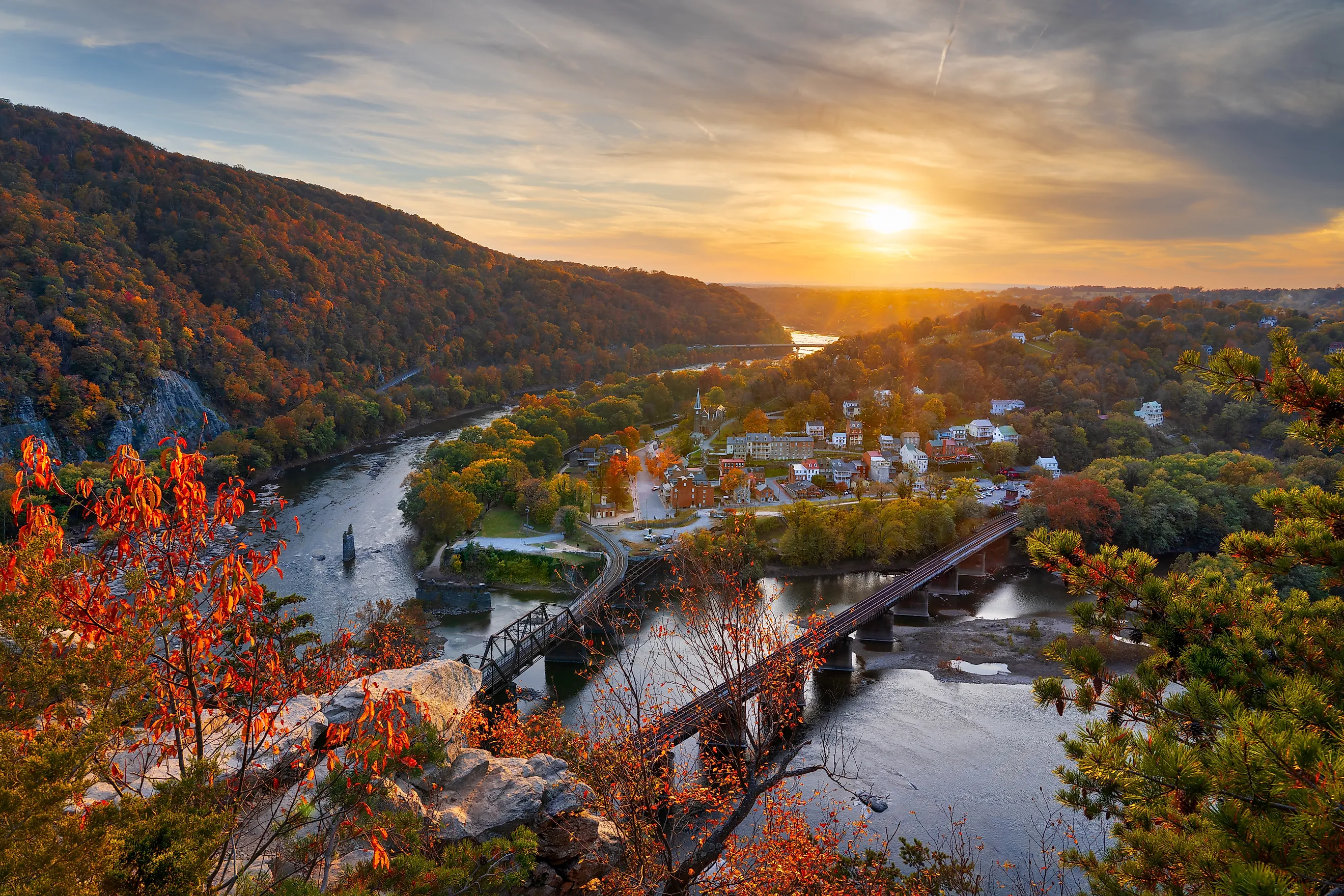
Steep mountain slopes and river valleys surround Harpers Ferry, found where the Potomac River and the Shenandoah River meet in the Blue Ridge Mountains. Walkable streets with 19th-century architecture and historic landmarks dominate the downtown area, while the rivers are natural choices for fishing, kayaking, and whitewater rafting.
The town is the famous site of John Brown’s Fort, on the National Register of Historic Places. Abolitionist John Brown and his group attempted to seize the federal arsenal in 1859, helping intensify events leading to the Civil War. The C&O Canal Towpath follows part of the route associated with Brown's march to rebellion, now a scenic area for hiking and bicycling. Harpers Ferry National Historical Park has multiple historic buildings, living history museums, and 22 miles of trails for hiking and bicycling, along with a portion of the Appalachian Trail.
Marlinton

The Greenbrier River, in West Virginia's New River-Greenbrier Valley region, provides ample opportunities for recreation and wildlife viewing in Marlinton. A total of 173 miles, it is one of the longest fully free-flowing undammed rivers in the Eastern US, and a tributary of the New River and Mississippi River watershed. Among the earliest English settlements in present day West Virginia west of the Allegheny Mountains, Marlinton was a regional lumber hub in the early 20th century.
Marlinton’s historic downtown has local shops and restaurants, while the river’s calm waters are suitable for fishing and kayaking. The 78-mile Greenbrier River Trail is a rail-trail used for hiking, cycling, and horseback riding. Located along the trail, the Marlinton C&O Railroad Depot, on the National Register of Historic Places, is now an art gallery, home to the Pocohontas County Artisan Co-Op. Originally constructed in 1901, it was reconstructed in 2008 after a fire.
West Virginia’s largest state park, Watoga State Park, has over 10,000 acres of forest for camping, boating, and fishing. Deer and black bears can sometimes be seen.
Davis

The 34-mile-long Blackwater River runs past the town of Davis in the High Allegheny Mountains, creating an Appalachian backdrop combined with access to natural beauty and outdoor recreation. At approximately 3,520 feet in elevation, the former timber industry town features a lively and walkable downtown with small shops and craft breweries, as well as recreational outfitters, including bicycle rentals. Originally used to transport lumber and coal, the Blackwater Canyon Rail Trail runs along the river, making a challenging hiking and mountain biking destination.
The Davis Trailhead of the Allegheny Trail, which stretches about 330 miles from the Virginia border to the West Virginia/Pennsylvania border, is a scenic area for hiking and wildlife viewing. The Davis section of the Allegheny Trail extends from Blackwater Falls State Park to the Canaan Loop Road, about 2.6 miles. Blackwater Falls State Park, with a 62-foot waterfall, is where the Blackwater River leaves Canaan Valley and enters the Blackwater Canyon. A boardwalk trail takes hikers through the park.
Shepherdstown

The Potomac River winds its way past Shepherdstown, anchoring the town and serving as a border between West Virginia and Maryland in the Eastern Panhandle of the lower Shenandoah Valley. Characterized by American history and riverfront recreation, Shepherdstown is one of the oldest towns in West Virginia. Along with Romney, it was chartered in 1762 and served as a field hospital after the nearby Battle of Antietam. The downtown area features 18th-century structures, home to small businesses and local restaurants.
Between tubing and fishing on the river and hiking along the C&O Canal Towpath, the Potomac River plays an integral role in the town’s recreation options, along with serving as a reminder of local achievements. A 75-foot-tall James Rumsey monument stands at Rumsey Monument Park along the river, commemorating the site where local inventor James Rumsey demonstrated one of the world’s earliest successful steam-powered boats in 1787. The demonstration took place 20 years before Robert Fulton launched the first commercially successful steamboat.
The James Rumsey Bridge also spans the river. Nearby, the Princess Street Boat Ramp allows launching access for kayaks and canoes.
Moorefield

Set at the confluence of the South Branch Potomac River and the South Fork South Branch Potomac River, Moorefield merges American history and an agricultural background with the recreation of the riverfront. The South Branch served as a natural barrier and transportation corridor during the Civil War, as both sides wanted control of the valley’s supply networks and agricultural benefits. The Union win at the Battle of Moorefield in 1864 was a significant loss for the Confederate cavalry in the Shenandoah Valley.
One of the oldest towns in West Virginia, established in 1777, the Moorefield Historic District has buildings that date to the 18th century, with Queen Anne and Greek Revival architecture, backed by the spruce and pine forests of the Allegheny Mountains. Running between Romney, Moorefield, and Petersburg, the Potomac Eagle Scenic Railroad offers rides along the river, passing mountains and forests. Breezewood Adventures is a local outfitter of kayak and canoe rentals, making it convenient to get out on the water. Other riverfront activities include fishing and tubing.
Wardensville
About 20 miles east of Moorefield, Wardensville is situated along the Cacapon River, a waterway sharing a unique geographic attribute, an agricultural environment, and ties to American history. A protected waterway, the Cacapon appears to “disappear” when it flows under Sandy Ridge, reemerging near Wardensville. Well-known for float fishing, the river has calm water for swimming and tubing. As part of the Potomac River watershed, the Cacapon is part of the federally designated American Heritage River system, established to support environmental protection, economic revitalization, and historic and cultural preservation.
This Eastern Panhandle town is bordered by the George Washington National Forest, with the riverbanks serving as outpost sites during the French and Indian War, including Fort Warden. Wardensville has a village setting with family-owned restaurants, a general store, and artisan shops, including Dakota Glassworks and pre-Civil War era structures. The Wardensville Garden Market reveals the town’s agricultural side with baked goods, fresh produce, and locally sourced meat.
Durbin

The Greenbrier River, in the Allegheny Mountains of Durbin, plays a prominent role in the historic town, which was built for logging and railroads. At a total of 173 miles in length, it is one of the longest undammed rivers in the Eastern US, popular for canoeing and trout fishing. Railroad history is preserved by the Durbin and Greenbrier Valley Railroad and its 1920s steam locomotive, the Durbin Rocket, which features scenic rides.
Hikers can explore portions of the Allegheny Trail, currently spanning a total of about 311 miles from the Virginia border to the Pennsylvania border, passing state parks and national forests along its course. The trail will eventually be 330 miles long when complete. The Mower Basin Trail System has more than 30 miles of challenging mountain biking and hiking trails through meadows and spruce forests. There are also camping sites.
Charming West Virginia River Towns
Rivers in West Virginia flow through and past former railroad and logging towns, creating opportunities for outdoor activities while showcasing the scenic landscapes and native wildlife of the Shenandoah Valley and the Blue Ridge Mountains. The Potomac River rises in the Allegheny Highlands and stretches to the Chesapeake Bay, passing historic communities such as Shepherdstown, where its shores reflect the region's engineering and military history. In Davis, the Blackwater River plunges 62 feet over Blackwater Falls before entering Blackwater Canyon. One of the oldest rivers in the United States, the New River invites whitewater rafters and anglers to its shores. Together, these rivers anchors small towns and create welcoming communities, linking their history with the natural landscapes that define them.