8 Bucket-List Small Towns In Kansas
These eight Kansas destinations deserve a place on your bucket list. In Lucas, the Garden of Eden, Bowl Plaza, and the Grassroots Art Center make the town one of the state’s most unusual art stops. In Hutchinson, the Cosmosphere and Strataca pair space exploration with an underground salt mine in a way few places can match. Together, these places highlight the history and character that make Kansas worth exploring.
Abilene

The last stop on the Chisholm Trail should be on your bucket list of places in Kansas to make sure you visit. Right off Interstate 70, this town is steeped in history, which is on display at the Dickinson County Heritage Center. Here, you’ll learn about the county’s famous former residents, including Abilene’s former town Marshal Wild Bill Hickok and Joseph McCoy, who brought hundreds of thousands of cattle to Abilene in the 1860s, making Abilene into a booming cowtown. While there, take a spin on the 1901 C.W. Parker Carousel, believed to be the oldest operating Parker carousel in existence.
Over the decades, Abilene stayed in the public eye as its most famous son, Dwight D. Eisenhower, earned his first general star during World War II. Take time to explore the Eisenhower Presidential Library, Museum and Boyhood Home.
Named one of the Eight Wonders of Kansas for its architecture, the Seelye Mansion was built in 1905 and is open for guided tours. Most of the home’s furnishings were purchased the year before at the 1904 St. Louis World's Fair. Visitors can even bowl on the 1904 Box Ball Alley that was purchased at the fair. Guided tours take guests through the Georgian-style mansion and offer a glimpse into early 20th-century life.
Two oversized Western landmarks make a bold statement in Abilene: a massive spur stands 28 feet high, balanced on its ends to form an arch, and weighs about a ton; it held the title of the World’s Largest Spur from Guinness World Records until 2017. The town is also home to the World’s Largest Belt Buckle, which measures 19 feet 10½ inches wide and 13 feet 11¼ inches tall, not including its frame.
Hays

Are you ready to do a little time traveling? Along the brick streets of downtown, 25 bronze plaques make up the Historic Hays Walking Tour, offering glimpses of local life and colorful characters, including Wild Bill Hickok, Buffalo Bill Cody, and General George Armstrong Custer.
The travel into the past continues at Fort Hays State Historic Site, where the original blockhouse, guardhouse, and officers' quarters of this Army Fort, which was established in 1867, remain. Exhibits tell the stories of the Buffalo soldiers, enlisted men, officers' wives, and laundresses.
To take a real leap into the past, stop by the Sternberg Museum of Natural History, which houses more than three million paleontology, zoology, and geology specimens that document life and environments in the Great Plains region of North America.
Dodge City

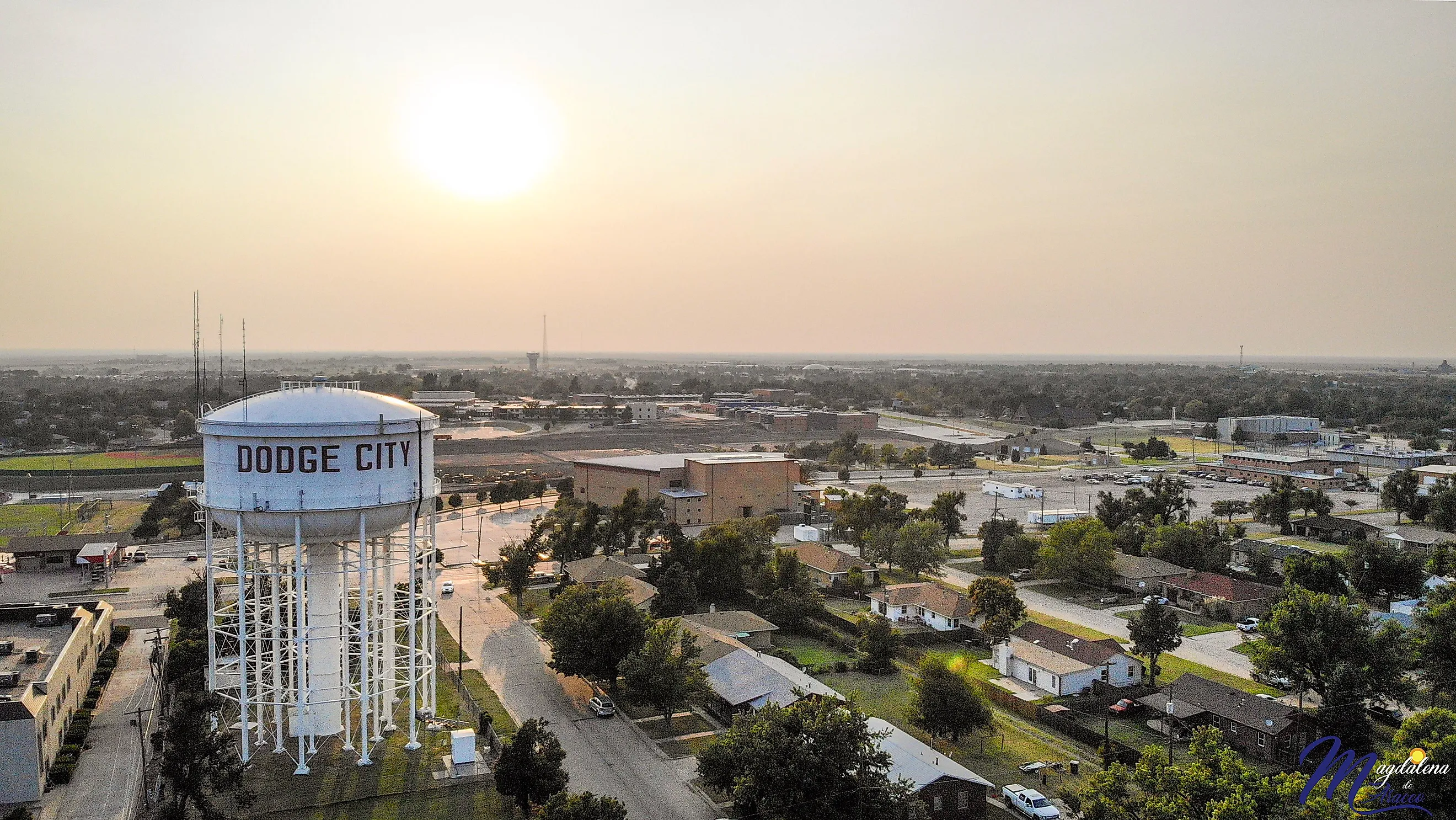
A Kansas bucket list would not be complete without including Dodge City, the Wild West history the Queen of the Cowtowns. The Boot Hill Museum is open year-round, but the summer season is when the quiet, little open-air and indoor complex, designed to replicate the rowdy 1870s Old West, comes alive. Gunfights take place outside, while Can Can Girls twirl their skirts on stage at the Long Branch Saloon. Visitors can also visit the General Store and Boot Hill Cemetery.
Stop by the visitor’s center and pick up a map of the Dodge City Trail of Fame walking tour. As you remain on the lookout for sidewalk medallions and statuary, enjoy the Western-themed shops and restaurants along the way.
Although Dodge City’s history is rooted firmly in the Old West, the town has more to offer. The Carnegie Center for the Arts is an architectural landmark in downtown. The distinctive two-story brick building showcases turn-of-the-century flair and is a work of art in itself. Today, it is home to the Dodge City Area Arts Council and has gallery space for local artisans.
Lecompton

Known as the Civil War birthplace and where slavery began to die, Lecompton was the only official capital of Kansas Territory from 1855 to 1861 and played a central role in the Bleeding Kansas conflict over slavery. To understand the pivotal role that Kansas played in the Civil War, you’ll want this town on your bucket list.
Two museums will take you back in time and walk you through how and why the state earned the moniker “Bleeding Kansas.” The Territorial Capital Museum occupies the building begun in 1855 as the intended Kansas territorial capitol. After that project was abandoned, it became Lane University. One of the exhibits at this museum covers Dwight D. Eisenhower’s parents, who met and got married when they were students there.
Constitution Hall, built in 1856, served as the meeting place for the pro-slavery Lecompton Constitutional Convention in 1857. It is the oldest wood-frame building in Kansas to still stand in its original location. Among the artifacts on display are a bound volume of the 1855 Statutes of Kansas Territory, written by proslavery legislators and called the “Bogus Laws” by antislavery men; a candle box in which John Calhoun buried fake ballots that were cast in a vote for the Lecompton Constitution; and an office safe owned by Charles Robinson, the first Governor of Kansas.
A tour of this little town that made a big impact on the nation includes the Lecompton city jail, a replica of the fortified home of Colonel Henry Titus, the site of the Battle of Fort Titus, and the Kansas River Water Trail.
Council Grove

Getting to Council Grove takes the visitors through the gorgeous rolling Flint Hills and celebrates the town's history and outdoor beauty.
Just outside of the city limits is the Council Grove Lake, complete with nature trails for hiking and an all-terrain vehicle trail. There’s a swimming beach, campgrounds, and boat ramps. Council Grove is on the Flint Hills National Scenic Byway, which offers incredible views of the native grasses and flowers of the tallgrass prairie, one of the last remaining such landscapes left in the world.
Council Grove has a vibrant downtown that ties its past as a rendezvous on the Santa Fe Trail with modern preservation. Pick up a brochure of 25 historic sites, including the Post Office Oak, where travelers would leave messages; the Last Chance Store, aptly named, it was the last chance to pick up supplies before getting to Santa Fe; and the Kaw Mission Historic Site and Museum.
You can grab a bite to eat at one of the 25 historic sites. Hays House Restaurant, built in 1857, is widely promoted as the oldest continuously operating restaurant west of the Mississippi.
Lucas

A quirky arts oasis in the middle of the prairie, Lucas is a Grassroots Art community.
The Garden of Eden is a visionary sculpture stone log cabin. Internationally known as a prime example of the Grassroots Art genre, the home was sculpted by a Civil War veteran who is interred in a glass-top coffin in a self-built mausoleum on site.
Lucas has also been nationally recognized for having the quirkiest restroom. Bowl Plaza has an entire building shaped like a toilet tank. You enter through a raised toilet lid, after doing your business, have a seat on the benches in the plaza that represent a curved toilet seat, or walk along the path that represents an unrolled roll of toilet paper. Detailed mosaics cover this quirky bathroom, inside and out.
Several galleries are found around town, including Switchgrass Art Coop and the Grassroots Art Center, which has developed the Great Post Rock Limestone Courtyard, an exhibit to celebrate the architectural, historical, and cultural value of post rock limestone.
Fort Scott

Whether you’re into shopping and dining, history, the arts, or the great outdoors, Fort Scott should be on your list of places to check out.
The Gordon Parks Museum tells the story of the renowned photographer, filmmaker, writer, poet, and composer, who became the first African-American photojournalist to work for LIFE magazine and the first African-American to direct a major Hollywood production. A self-guided tour will take you along The Learning Tree Film Scene and Sign, where The Learning Tree was filmed.
Fort Scott National Historic Site preserves the story of a U.S. Army frontier fort from the 1840s. The site includes 20 historic structures; some original buildings and some reconstructions built on their original foundations. They are furnished to reflect life during the fort’s early years. Through interpretive exhibits, period furnishings, living history programs, and artillery demonstrations, visitors experience the daily routines of soldiers stationed there.
Throughout Fort Scott are 52 homes that showcase the Victorian architecture. You can pick up a brochure from the Visitor Information Center and take a self-guided tour to see amazing structures that sprang up on the Kansas prairie between 1842 and 1919.
End a day of exploring the downtown, which features boutiques, antique stores, and plenty of places to choose for a bite to eat.
Hutchinson

With a waterpark, a zoo, museums, the Cosmosphere, and much more, you might need to take a few trips to Hutchinson before you cross it off your bucket list.
The Cosmosphere International Science Education Center and Space Museum tells the story of the U.S. and former Soviet space race through its collection of artifacts. The museum also houses spacecraft flown in all three early manned spaceflight programs, the Mercury Liberty Bell 7, the Gemini X, and the Apollo 13 Odyssey.
From outer space to deep underground, visit the Strataca, the Kansas Underground Salt Museum. Journey 650 feet into the depths of an active salt mine that has been operational since the 1920s. Tours provide a glimpse into the history and geology of salt mining.
Between outer space and the salt mines are many more sites to see and things to do. Head over to downtown, where you’ll find boutiques, shops, a riverwalk, a water spray park, and plenty of green spaces. The antique lover will be in paradise as they get lost in one of the state's largest owner-operated antique districts.
Cross it off your bucket list
Some of these eight places might need a weekend stay or a few visits before you’ve explored them enough to cross them off your bucket list.
These Kansas towns showcase the surprising variety of experiences found across the state, blending frontier history, Civil War landmarks, quirky art, and unique attractions. From Abilene’s Eisenhower legacy and Dodge City’s Wild West roots to Lecompton’s role in the fight over slavery and Council Grove’s Santa Fe Trail heritage, each destination offers a strong sense of place. Visitors can also explore natural history in Hays, discover grassroots art in Lucas, step into frontier military life in Fort Scott, or experience both space exploration and underground salt mining in Hutchinson.