8 Best Towns In Illinois To Retire Comfortably
Illinois does something only a handful of states do: it taxes none of your retirement income. Not Social Security, not a public or private pension, not a dollar you pull out of a 401(k) or an IRA, not military retirement pay. Then it turns around and charges the highest median effective property tax rate in the country, about 1.92%. So retiring here is not a question of whether the state is cheap. It is a question of which town's tax bill and housing costs let that exemption actually work for you. These eight do, and each one throws in something worth getting out of the house for.
Dixon

Dixon's housing math is the best argument for it: a median sale price in the neighborhood of $166,000 against a statewide median closer to $280,000. That gap is the difference between a mortgage and no mortgage.
What you get for it is a town that punches above its size on history. Ronald Reagan spent his boyhood here, and the preserved house on Hennepin Avenue is open for tours, but the better story is at Lowell Park: Reagan worked seven summers as a lifeguard on the Rock River there and is credited with pulling 77 people out of the water. The park is still 200 wooded acres of trails and river views. A block from downtown, the Lincoln Monument State Memorial marks where Abraham Lincoln mustered into the militia during the Black Hawk War, and six miles up the road at Grand Detour, the John Deere Historic Site runs live blacksmith demonstrations on the ground where Deere built the self-scouring steel plow. Come July, the Petunia Festival fills the streets with parades and fireworks.
Alton

Alton is the cheapest entry on this list, with typical home prices running near $100,000 in a town of just under 26,000 people. It sits on bluffs above the Mississippi north of St. Louis, which is both the appeal and the caveat: this is a river town, and the floodplain below it has a long memory. Budget for flood insurance if you buy low.

For a small city, the roll call is absurd. Miles Davis was born here. So was Robert Wadlow, who reached eight feet eleven inches and remains the tallest man ever reliably recorded; there is a life-size bronze of him on College Avenue, and standing next to it is genuinely disorienting. Alton also hosted the seventh and final Lincoln-Douglas debate in October 1858. The Great River Road runs right through town along the Mississippi bluffs, and the National Great Rivers Museum at the Melvin Price Locks and Dam explains how the river actually works. The town leans hard into a haunted reputation, and the ghost tours are a real local industry.
Princeton

Princeton sits in north-central Illinois with a median home price around $161,000 and a downtown that has kept its storefronts occupied, which is not a given in this part of the state. Bureau County property taxes run well below the Cook County rates that scare retirees off Illinois in the first place, and that is the whole point of moving out here.
The town's moral center is the Owen Lovejoy House, home of a congressman and abolitionist minister whose brother Elijah was murdered by a pro-slavery mob in Alton in 1837. Owen kept the fight going and ran his Princeton house as an Underground Railroad stop; it is a National Historic Landmark and open to visitors. Each September the Homestead Festival takes the streets with a parade, music, and a pork chop barbecue that locals will argue about. Zearing Park and City County Park cover the walking, and the Bureau County Historical Society fills in the rest.
Freeport

Freeport calls itself Pretzel City, USA, and means it; the high school teams are the Pretzels. Median home prices sit around $116,000, the lowest-to-middling end of this list, in a county where the tax rate does not eat the savings.

The statue of Lincoln and Douglas downtown is not decoration. Freeport hosted the second of the seven debates in August 1858, and it is the one that mattered most: Douglas's answer here, that a territory could keep slavery out by simply declining to pass laws protecting it, became known as the Freeport Doctrine and split the Democratic Party badly enough to help put Lincoln in the White House two years later. For daily life, the Freeport Park District maintains more than 800 acres, and Krape Park is the crown jewel, with a waterfall, a restored carousel, tennis and pickleball courts, disc golf, and a duck pond that functions as the town's living room.
Clinton

For one weekend every September, a town of about 7,000 hosts roughly 100,000 people. The Apple and Pork Festival has been running since 1968, and it is the reason anyone outside DeWitt County knows Clinton exists. The rest of the year it is a quiet county seat with a median home price near $135,000.
Weldon Springs State Park covers 550 acres a few minutes south, with flat walking trails around the lake and fishing that does not require a boat. The DeWitt County Museum occupies the Mansion House downtown. The Clinton Country Club runs nine holes that are harder than they look. May Days brings the carnival in spring. It is not a complicated place, and the appeal is that it does not try to be.
Ottawa

Ottawa is the most expensive town here at roughly $200,000, and it earns the premium by sitting at the front door of the best hiking in the state. Starved Rock State Park is fifteen minutes away, with eighteen sandstone canyons that run with waterfalls every spring thaw. Buffalo Rock State Park next door holds the Effigy Tumuli, five enormous earth sculptures of native animals built across a reclaimed strip mine in the 1980s.

In town, Washington Square is the site of the first Lincoln-Douglas debate, held in August 1858 in front of a crowd that overwhelmed a city of a few thousand. The 1855 Reddick Mansion overlooks it, 22 rooms of Italianate brick that was among the most elaborate private homes in the state before the Civil War, and it is free to walk through. Ottawa also sits where the Fox River meets the Illinois, which means two rivers' worth of paddling and barge-watching.
Pontiac

Pontiac costs about $140,000 for a house and delivers an unusually dense downtown for a county seat of 11,000. There are more than twenty outdoor murals painted across the building walls, which turns an ordinary errand into a walk.

Route 66 runs through, and the Route 66 Association of Illinois Hall of Fame and Museum occupies the old city hall with memorabilia, a restored 1940s interior, and Bob Waldmire's hand-painted VW bus parked out back. The Pontiac-Oakland Auto Museum covers the cars the town's name went on. The Livingston County War Museum was built by local veterans and is staffed by them, which makes the tours something other than a museum visit. Three swinging footbridges cross the Vermilion River, left over from the days mill workers used them to get to work.
Belleville

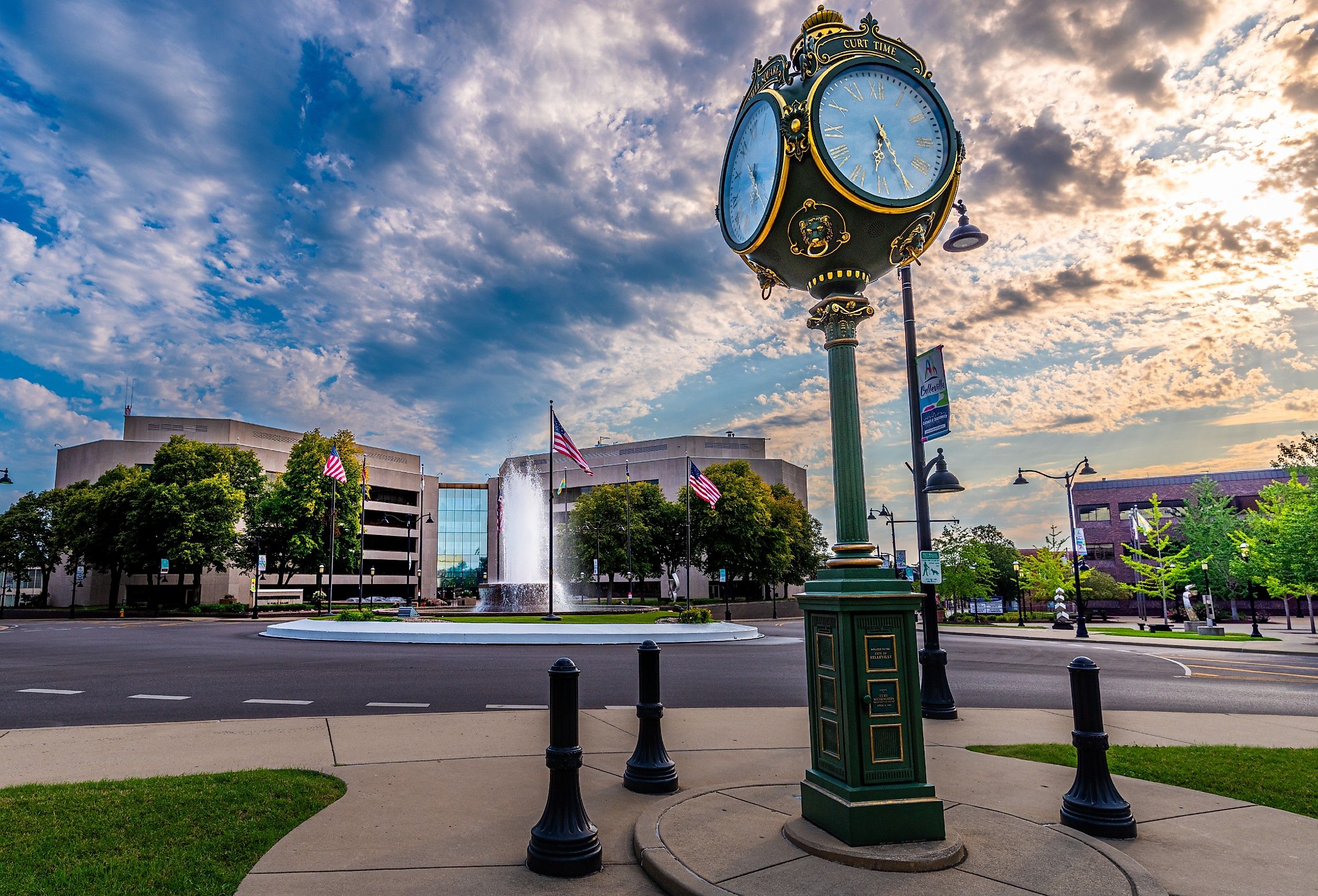
Belleville is the biggest town on this list at around 42,000 and the closest to a metro area, sitting about twenty minutes from downtown St. Louis. That buys you an international airport, major hospitals, and a MetroLink light rail stop, all while the median home price stays near $148,000. For retirees who want quiet without being an hour from a specialist, this is the compromise.

German immigrants shaped the place, which is why the Christmas market downtown is a Christkindlmarkt and why the old stove works made Belleville a manufacturing name in the 1800s. The National Shrine of Our Lady of the Snows spreads across some 200 landscaped acres on the edge of town and is open to anyone, religious or not, particularly during its winter light display. Fifteen miles northwest at Collinsville, Cahokia Mounds preserves the largest pre-Columbian settlement north of Mexico, a UNESCO World Heritage Site where you can climb a platform mound built a thousand years ago.
Running The Numbers
The exemption is the same in all eight towns; what changes is what you pay to sit in one. Alton and Freeport are the cheapest way in, and Alton adds river risk to the ledger. Dixon, Clinton, and Pontiac land in the middle with the lowest friction. Ottawa costs the most and is worth it if you intend to use Starved Rock more than twice a year. Belleville buys metro access at a small-town price. Three of them, Ottawa, Freeport, and Alton, hosted Lincoln-Douglas debates in a single autumn in 1858, which is a strange thing for one retirement list to have in common and a decent excuse to visit all three before deciding.