8 Best Towns In Idaho For Retirees
Idaho offers a wide range of small towns that balance affordability and outdoor recreation. Social Security income is exempt from state tax in Idaho. The Property Tax Reduction Program can cut annual property tax bills by up to $1,500 for eligible homeowners. These towns all come in under Idaho's average home value of $477,506, with hospitals or medical centers within reach. Discover some of the best towns in Idaho for retirees across the state.
Wallace

Wallace gives retirees one of Idaho's most affordable historic small-town settings, with an average home value of $255,450, the lowest on this list. The town's entire downtown core sits on the National Register of Historic Places, and its mining heritage remains central to daily life. The Lucky Friday Mine, operating in the Coeur d'Alene Mining District since 1942, reflects the broader Silver Valley's long silver-production history, which stretches back to the 1800s and totals more than 1 billion ounces. For residents who enjoy local history without leaving town, the Sierra Silver Mine Tour runs a trolley through downtown and into a working shaft, where a retired miner leads visitors underground through actual mining equipment. A few blocks away, the Oasis Bordello Museum preserves a former brothel closed in 1988, left much as its occupants abandoned it, with groceries still bagged on the counter and personal items on the dressers.
Wallace also offers a manageable pace with seasonal attractions close by. The restored 1901 Northern Pacific Railroad Depot Museum covers the railroad era through photographs and original artifacts and is open from mid-April through mid-October. In summer, the Route of the Hiawatha rail-trail draws cyclists through nine tunnels and seven trestles in the Bitterroot Mountains, giving active retirees a scenic regional outing within reach. Healthcare access is also practical for a small mountain town. Shoshone Medical Center in Kellogg is about 15 minutes west on I-90, meaning routine and urgent care are close to home.
Montpelier

Welcome to Montpelier, Idaho, a town where nearly 20% of residents are 65 or older. Highways 89 and 30 cross in Montpelier, a junction the Oregon Trail reached in the 1840s, and which still puts Salt Lake City and Jackson Hole within easy driving distance. Bear Lake Memorial Hospital opened in 1950, built with a $200,000 county bond, and its campus now includes a skilled nursing facility and Bear Lake Manor assisted living center. For retirees looking to purchase a home, the average home value is $282,879.
The National Oregon/California Trail Center on the north end of town uses live actors to run a wagon train simulation. Three blocks south, the Butch Cassidy Museum marks the site of Cassidy's first documented heist, a bank robbery pulled in 1896. About 12 miles south, Idaho's Bear Lake State Park provides access to Bear Lake, a 20-mile-by-8-mile lake split between Idaho and Utah. The broader lake area has multiple boat ramps, and the Utah marina in Garden City has 305 slips. The lake's turquoise color comes from suspended calcium carbonate rather than algae, a fact that still surprises most first-time visitors. Fishing runs year-round for Bear Lake cutthroat, lake trout, and four endemic species, including three unique whitefish and the Bear Lake sculpin, found nowhere else on earth.
Orofino

Orofino gives retirees a lower-cost Clearwater Valley base with strong ties to Idaho history and year-round outdoor recreation. Its name comes from "oro fino," Spanish for fine gold, a reference to the prospectors who moved through the valley in the 1860s. Today, Orofino is the seat of Clearwater County and has an average home value of $328,521. Healthcare is available in town through Clearwater Valley Hospital & Clinics, while the nearest regional trauma center is about an hour west in Lewiston on Highway 12.
The town's biggest recreational asset is Dworshak Reservoir, which gives retirees easy access to fishing, camping, boating, and scenic day trips. Dworshak Dam, completed in 1973, stands 717 feet tall, making it the tallest straight-axis concrete dam in the Western Hemisphere, and the Army Corps of Engineers runs free guided tours throughout the summer. Behind it, the 54-mile Dworshak Reservoir stays fishable year-round for trout, kokanee, and bass. Dworshak State Park, on the reservoir's western shore, adds full-hookup campsites, a marina, and trails through old-growth ponderosa. Back in town, the Clearwater Historical Museum offers a quieter cultural stop, with more than 4,500 photographs and a Nez Perce collection covering the Lewis and Clark period and the gold rush years.
Burley

The Snake River bends through Cassia County in long, slow arcs, and outfitters on the water rent kayaks and stand-up paddleboards by the hour. Intermountain Health Cassia Regional Hospital handles emergency and specialty care in town. Both Pomerelle Place Senior Living and Rosetta Assisted Living operate locally, and for those looking to purchase, the average home value is around $330,597.
Pomerelle Mountain Resort sits roughly 40 miles southeast of Burley in the Sawtooth National Forest near Albion, running from November through April. Adult day passes run $55 online and $70 at the window, with reduced rates for seniors and youth. City of Rocks National Reserve is a separate trip, about 40 to 45 miles from Pomerelle through Albion, Elba, and down to Almo. The granite formations there marked the California Trail in the 1840s and 1850s, and dozens of names carved by emigrants into the rock faces are still legible. About 33 miles northwest of Burley, Minidoka National Historic Site preserves the remains of a World War II-era Japanese American incarceration camp with a visitor center that covers the subject.
Salmon

At 2.3 million acres, the Frank Church-River of No Return Wilderness begins where Salmon's outskirts end. The town has around 3,100 residents and an average home value of $350,407. The Sacajawea Interpretive, Cultural and Educational Center sits two miles east on the Lemhi River, with 71 acres holding an interpretive trail, tipi exhibit, fishing weir replica, and an amphitheater where the Agaidika Shoshone hold their annual gathering each summer. Steele Memorial Medical Center has been running since 1950, covering emergency care, surgical procedures, and full outpatient services.
The Lemhi County Historical Museum downtown holds Shoshone-Bannock artifacts and mining photographs going back to the 1880s. The Salmon River draws fly fishers each fall for A-run steelhead, with prime fishing and guided trips running mid-October through November. Trails into the Salmon-Challis National Forest start within a few miles of the town center.
Twin Falls

Twin Falls, on the Snake River Canyon floor at roughly 3,700 feet, runs warmer and drier through winter, with an average home value of $370,372. Shoshone Falls drops 212 feet into the canyon, taller than Niagara, at $5 per vehicle. The 12-mile Snake River Canyon Rim Trail runs the canyon edge past Perrine Bridge, 486 feet above the canyon floor. St. Luke's Magic Valley Medical Center is a Level III trauma center with a full cancer care program.
The Herrett Center for Arts and Science at the College of Southern Idaho holds one of the largest pre-Columbian artifact collections in the Pacific Northwest. Museum admission is free, and evening Faulkner Planetarium shows start at $7.50 for adults. Downtown's First Friday art walks run monthly along Main Avenue with local galleries, food vendors, and live music. The city has several senior living communities, including Canyons Retirement Community on Cheney Drive West.
Blackfoot

Blackfoot gives retirees an affordable eastern Idaho base with practical healthcare access and easy recreation. The town has an average home value of $372,942, and Bingham Memorial Hospital, a 65-bed Level IV trauma facility, has been in operation since 1950. Bingham County grows more potatoes than most US states, and the Idaho Potato Museum, housed in a 1913 railroad depot, turns that agricultural history into an easy afternoon outing. Exhibits include the world's largest potato chip at 25 by 14 inches, pre-Columbian storage vessels from Peru, a timeline of American potato consumption, and a potato hall of fame. The cafe even serves potato ice cream.
For retirees who want unhurried outdoor access close to town, Jensen Grove Park sits about a mile west of downtown with a 55-acre lake, a two-mile paved path, a disc golf course, and paddle boats. Blackfoot also has a full calendar of community events and local history stops. Every Labor Day weekend, the Eastern Idaho State Fair runs for nine days at the Blackfoot fairgrounds, drawing more than 250,000 visitors for livestock shows, rodeos, and concerts. The Bingham County Historical Museum occupies a 15-room lava rock mansion built in 1905, with pioneer-era furnishings and Native American artifacts still displayed in the rooms the original owner designed them for.
Lewiston

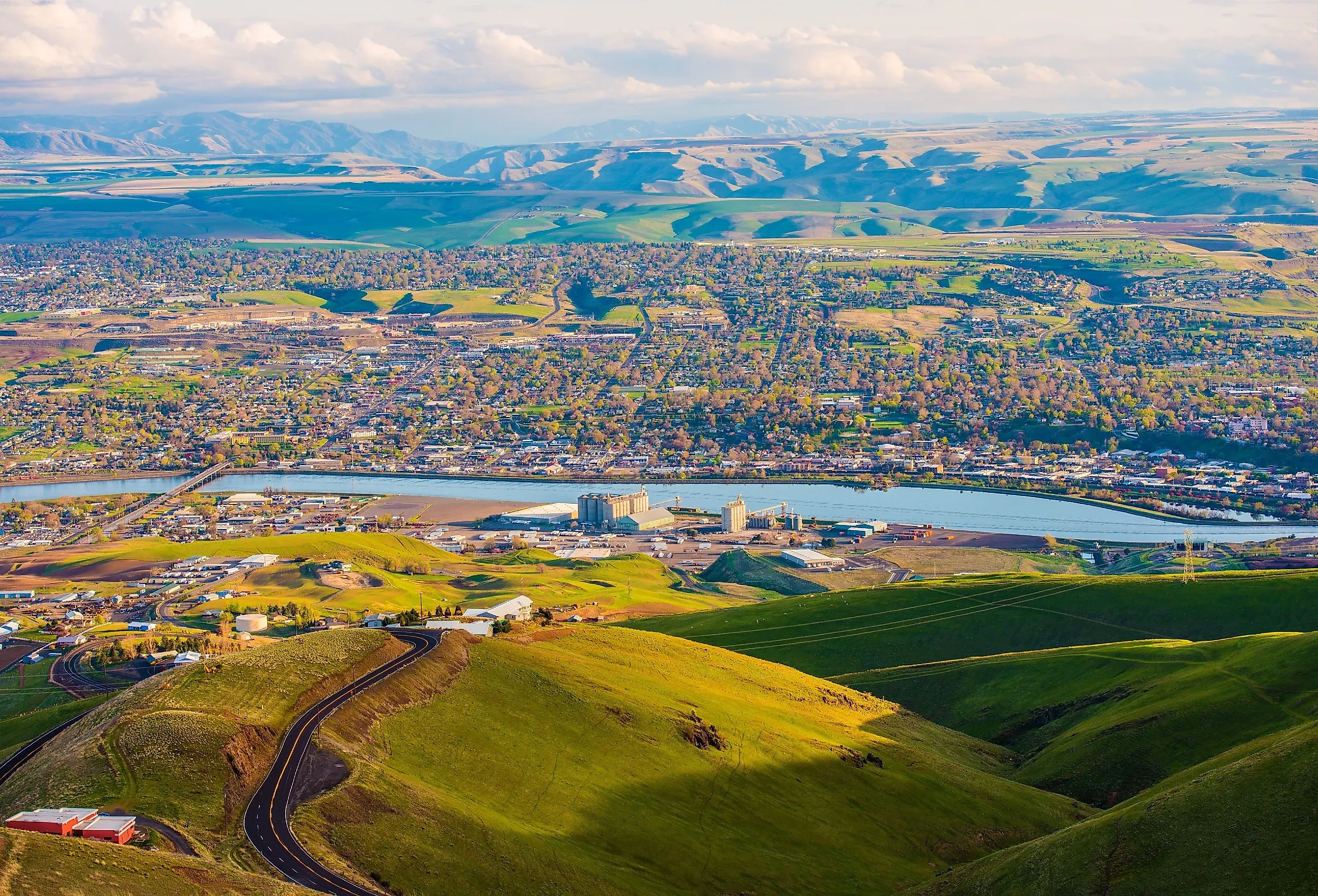
Lewiston stands out for retirees who want one of Idaho's mildest winter climates without leaving the state. The city sits at 738 feet above sea level, well below the Snake River Plain, which helps keep it snow-free through most of winter. Its average home value is $386,403, and St. Joseph Regional Medical Center, operating since 1902, remains the largest full-service hospital between Boise and Spokane, with specialist clinics and imaging centers on the same campus.
Outdoor access is close and relatively easy to enjoy. Hells Gate State Park, on the south bank of the Snake River, has almost 12 miles of trails, a marina, and a beach. April through October, jet boat tours run from the park into Hells Canyon, North America's deepest river gorge at more than 7,900 feet at its deepest point. Lewiston also gives retirees quieter cultural and social options close to home. A few miles east, Lindsay Creek Vineyards, which began with 150 vines in 2007, now farms more than 15 acres in the Lewis-Clark AVA and offers tastings on Fridays and Saturdays. The Nez Perce County Historical Society Museum covers the Snake River's volcanic geology, the Lewis and Clark expedition, and the Nez Perce story in a fully renovated permanent gallery completed in 2019.
Choosing Among Idaho's Best Retirement Towns
Healthcare coverage is the one variable worth checking before committing to any of these towns. Lewiston and Twin Falls have regional trauma centers with full specialist programs. Wallace and Salmon rely on smaller critical-access facilities, which work fine for routine care but matter more for anyone managing ongoing conditions. Beyond medical access, the Idaho Commission on Aging coordinates in-home care, senior center funding, and caregiver support programs across all eight communities. Wallace and Montpelier are the most affordable on the list. Lewiston is the mildest in winter, staying largely snow-free while the rest of the state deals with months of ice. Twin Falls has the largest selection of senior living communities, with 26 facilities covering independent retirement through memory care.