8 Best Small Towns To Visit In California's Sierra Nevada
California's Sierra Nevada runs roughly 400 miles down the eastern side of the state, and folded into its canyons and foothills is a string of small towns where the mountains start right at the end of Main Street. Some got their start in the Gold Rush and never quite shook off the 1850s. Others live for the powder, the trailhead, or the lake around the next bend. Bring a jacket for the evenings, because even in July the air up here has a bite to it. Here are eight Sierra towns worth pointing the car toward, with a couple of the best hikes in the state thrown in along the way.
Nevada City

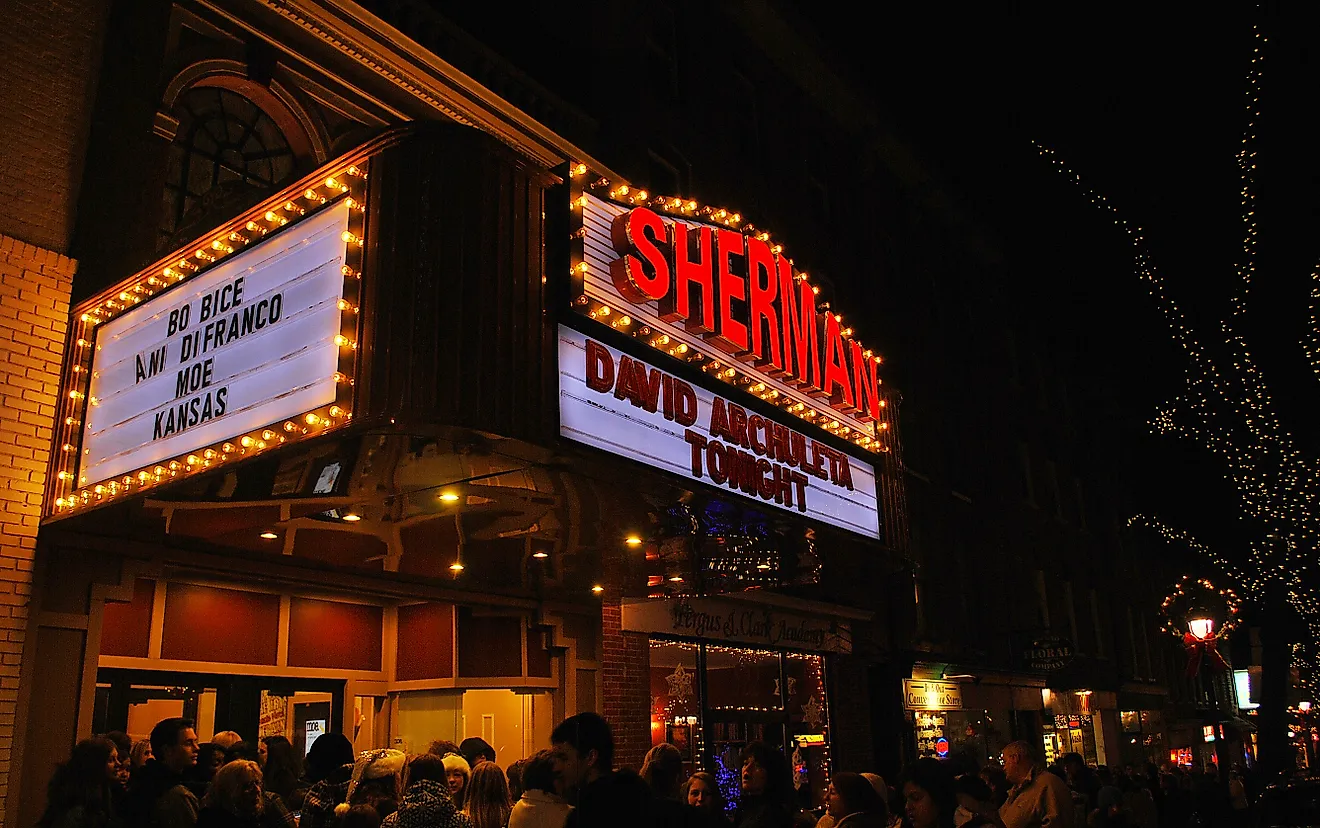
Nevada City calls itself the best-preserved Gold Rush town in California, and after one walk down Broad Street you will not argue. The Victorian storefronts are the real thing, and so is the Nevada Theatre, which opened in 1865 and has been putting on shows longer than just about any theater on the West Coast. Book a night at the National Exchange Hotel if you want to sleep inside the history; it has been taking in guests since 1856.
When you have had your fill of the gaslamp-era downtown, the gold is still in the hills. Empire Mine State Historic Park preserves one of the richest hard-rock mines in the state, and at nearby South Yuba River State Park you can still swirl a pan in the current and, once in a while, come up with a fleck. Do not skip the Miners Foundry, an 1859 ironworks that now hosts concerts instead of casting mining gear.
Truckee

Truckee wears its railroad past on its sleeve. The transcontinental line punched through in the 1860s, and the historic downtown along the tracks still looks the part, all brick facades and old hotel signs, except the storefronts now hold coffee roasters and ski shops. It is also one of the snowiest towns in the country, so winter is prime time: the resorts around Donner Summit pile up serious powder, and the whole downtown goes gold with lights come Christmas.
Summer flips the script. Locals slip off to the beaches on Donner Lake, where West End Beach is the go-to for a swim and a paddle. There is a darker history in the water, too; the lake is named for the Donner Party, the wagon train that got trapped here through the winter of 1846-47, a story the Emigrant Trail Museum tells without flinching. Bring the kids to the KidZone Museum, hike up to the Martis Peak fire lookout for a straight shot down at Lake Tahoe, and eat well downtown before you leave.
South Lake Tahoe

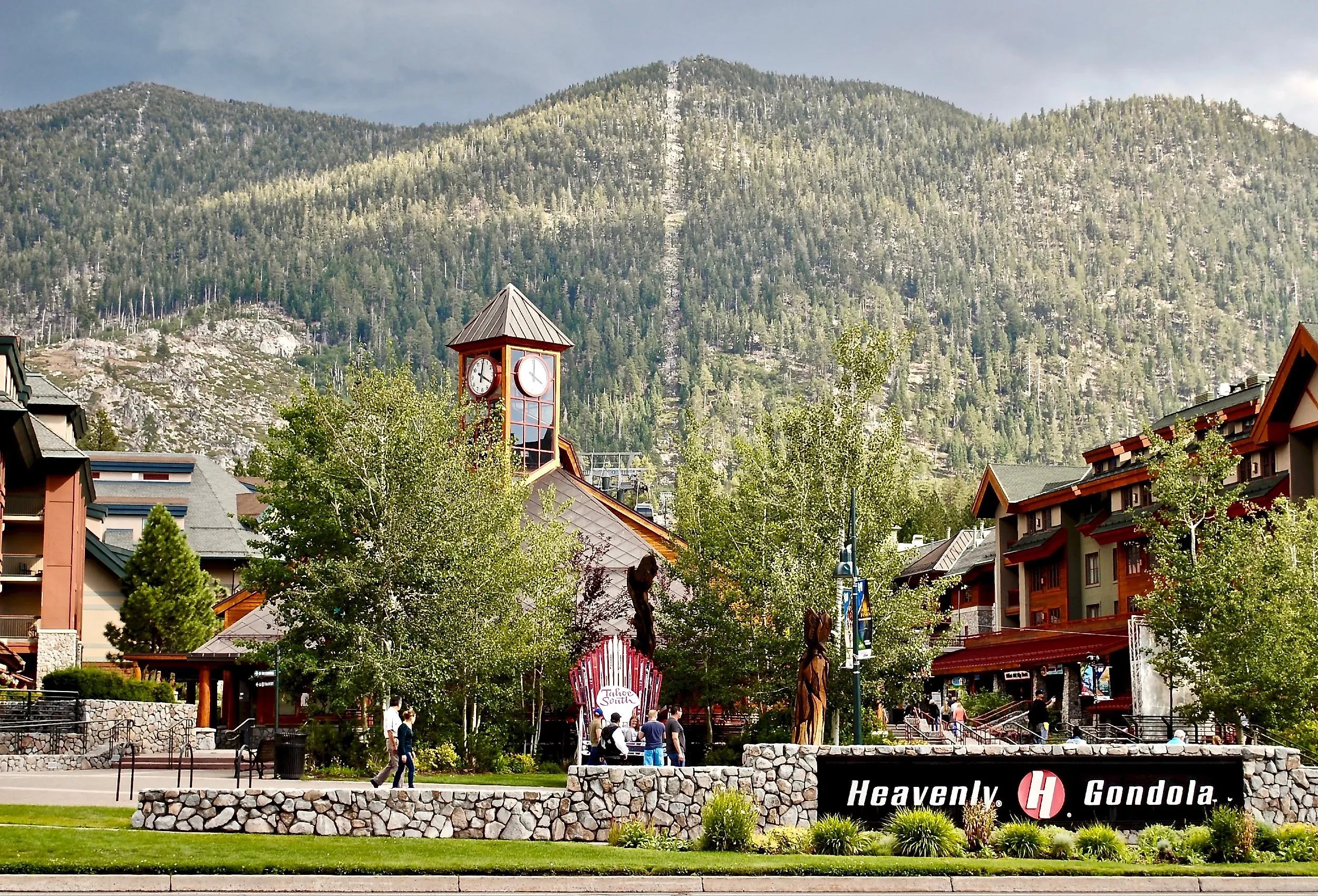
Lake Tahoe is the largest alpine lake in North America, and it runs so clear that in the shallows you can watch your own shadow slide across the bottom. South Lake Tahoe is the busy, friendly end of it, a town built for year-round play, with a main drag of taco joints, coffee shops, breweries, and bike rentals all within a block of the water.
The showstopper is Emerald Bay, the cove on the southwest shore where a short, steep trail drops down to Vikingsholm, a 1929 mansion built to look like a Scandinavian castle. Rent a paddleboard, picnic on the sand, and in winter ride the Heavenly resort straight up the ridge above town. When the California shore gets shoulder-to-shoulder, drive around to the quieter East Shore beaches over on the Nevada line.
Placerville

Placerville has worn a lot of names. It started as Dry Diggins, became Hangtown in 1849 after some frontier justice on a Main Street oak, and finally settled on the respectable Placerville in 1854, by which point it was the third-largest town in California, behind only San Francisco and Sacramento. It sits right where Highway 49 crosses U.S. 50, which made it a natural pit stop for anyone bound for Lake Tahoe, then and now.
The Gold Rush left its mark on the plate, too. The Hangtown Fry, an omelet of eggs, bacon, and oysters, supposedly got its start when a newly rich miner strode into a hotel and demanded the priciest meal in the house. And keep an eye out for the Studebaker name around town: before "Wheelbarrow Johnny" Studebaker built an automobile empire, he built wheelbarrows for miners right here in Hangtown. These days Main Street trades in antiques, tasting rooms, and small-batch everything.
Sonora

Sonora goes by the "Queen of the Southern Mines," and it earned the crown. Founded in 1848 by miners from the Mexican state of Sonora, who handed it their home region's name, it grew into one of the biggest and rowdiest camps in the Mother Lode. These days the wild part is behind glass: the old county jail on West Bradford Street, which locked up prisoners until 1963, is now the Tuolumne County Museum, stocked with gold, antique firearms, and Gold Rush odds and ends.
Sonora also sits on some absurdly rich ground. On Piety Hill, right by the deep-red St. James Episcopal Church that everyone just calls the Red Church, the Bonanza Mine hit a single pocket in 1879 that gave up 990 pounds of gold in one week. Park the car and wander; the town sits at the junction of Highways 49 and 108, and two more time capsules, Jamestown and the preserved Gold Rush streets of Columbia, are a short drive away.
Twain Harte

Here is a trivia gem: Twain Harte is named after two writers, Mark Twain and Bret Harte, both of whom worked the Gold Country and wrote it into legend. The town itself sits at about 3,600 feet on Highway 108, high enough for genuine winters and pine-scented summers but low enough that the cold rarely turns brutal, which makes it a reliable family base in any season.
The area's best trick is its geology. The Trail of the Gargoyles traces a cliff edge past knobby volcanic hoodoos, and the nearby Columns of the Giants show off a wall of hexagonal basalt left by an old lava flow. Push higher up 108 toward Sonora Pass and Leavitt Meadows for alpine lakes cold enough to make you gasp. Come winter, Dodge Ridge handles the skiing while Leland High Sierra Snowplay, one of the biggest snow-play parks in the state, handles the tubing and the snowman-building.
Mariposa

Mariposa is Spanish for butterfly, and it is the last real town on Highway 140 before Yosemite's Arch Rock entrance, which makes it a favorite final-night stop before the main event. Slow down and it pays you back: a walkable downtown of galleries, cafes, and tasting rooms, anchored by the Mariposa County Courthouse, built in 1854 and still hearing cases, which makes it one of the oldest working courthouses in the state.
The Gold Rush ran deep here, and the proof is on display. The California State Mining and Mineral Museum, out at the county fairgrounds, keeps the state's official gem collection, including a crystalline gold specimen called the Fricot Nugget that is well over a century old. Fill in the rest of the story at the Mariposa Museum and History Center, then pour a glass of local wine before the climb up into Yosemite.
Mammoth Lakes

Save Mammoth Lakes for last, because it hits the highest note in the range. At 7,880 feet on the steep eastern side of the Sierra, it is a full-blown mountain resort town, and Mammoth Mountain looming over it is the highest lift-served peak in California, with a ski season that can hang on into June. When the snow finally quits, the same slopes turn into bike trails and the gondola keeps running for the view.
The name is not an exaggeration. The Lakes Basin above town is studded with alpine lakes, among them Mary, Horseshoe, and Twin, all good for a paddle or a cold plunge. Drive over Minaret Summit to Devils Postpile National Monument, a cliff of hexagonal basalt columns, then walk on to 101-foot Rainbow Falls. Soak in one of the wild hot springs out on the valley floor, grab a pint at a local brewery, and if the timing lines up, Yosemite's back door at Tioga Pass is only about an hour away.
What ties these eight together is not one look or one season. Nevada City is all Victorian brick, Mammoth is all altitude, Sonora is all gold-camp swagger, and Tahoe is all water. The through-line is that in the Sierra Nevada, the wild country is never more than a few steps past the last streetlight. Whichever one you point the car toward, keep that jacket handy.