9 Best Places To Retire In The Pacific Northwest
Retiring in the Pacific Northwest can look different depending on where you land. Home prices matter, of course, but taxes can make a big difference, too. Washington has no state income tax, which can help retirees with pensions, retirement accounts, investments, or other taxable income. The trade-off is a 6.5% state sales tax, plus local rates. Oregon flips that around. It has no general sales tax, but pensions and many other types of income are taxable. Social Security benefits are not. Idaho sits somewhere in the middle, with no tax on Social Security benefits, a 6% statewide sales tax, and a flat individual income tax of 5.3%.
That is why the right town is about more than finding an affordable house. Across Oregon, Washington, and Idaho, smaller communities offer healthcare access, walkable downtowns, local events, and plenty of ways to stay active. Some sit by the coast. Others are close to vineyards, forests, or mountain views. For retirees looking for a quieter place with everyday convenience, these Pacific Northwest towns offer a closer look at how taxes, housing, and quality of life come together.
Florence, Oregon

Riverwalk in the Siuslaw River in Florence, Oregon.
Florence gives retirees a great mix for a smaller coastal town. There is access to the beach, a local hospital, and numerous everyday services and activities. Peace Harbor Medical Center provides emergency care, primary care, and home health services in town.
Old Town gives residents a compact place for riverfront walks, meals, galleries, and everyday outings along the Siuslaw River. Other easy outings around town include: Heceta Head Lighthouse, Sea Lion Caves, and the Oregon Dunes. With an average home value of $437,955, housing is below the state average of $502,934.
Brookings, Oregon

Brookings appeals to older adults who want coastal living with a smaller-town housing market. The average home values around $486,263. Residents benefit from important health services close by, including primary care, same-day office visits, and 24/7 emergency care at Curry Medical Center.
Harris Beach State Park, Chetco Point Park, and the downtown area give residents easy choices for casual walking, ocean views, and local shops. The warmer “banana belt” climate is another reason Brookings is appealing for retirees. You get the coast without the chillier feel of many Northwest beach towns.
Bandon, Oregon

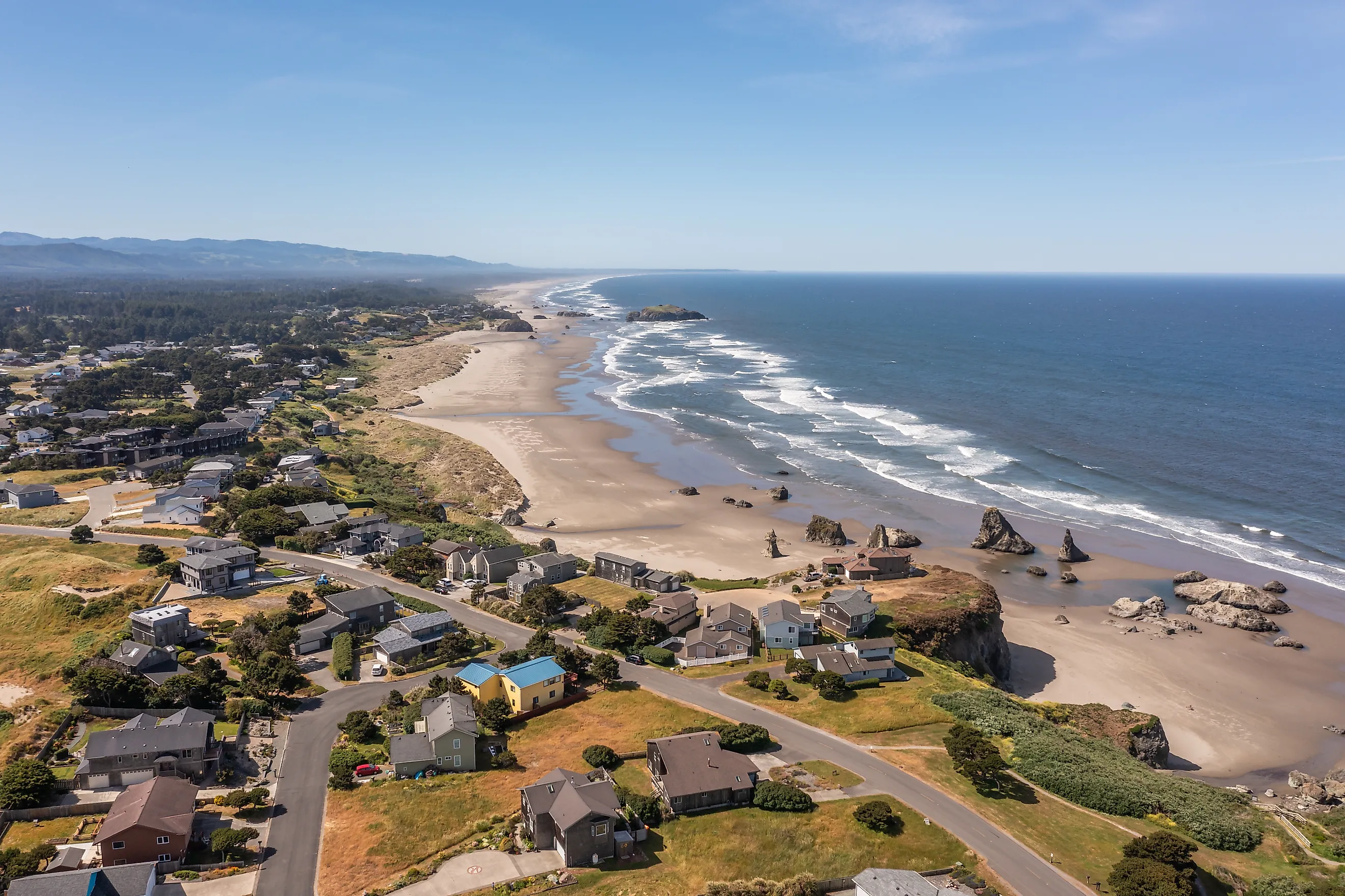
Bandon, Oregon
For retirees, Bandon offers convenience on a small scale. Old Town covers about 10 blocks near the Coquille River. It has compact areas for meals, galleries, and waterfront walks. The town’s beach access and nearby parks add practical outdoor space for seniors. Coquille Point gives residents a place for coastal walks and wildlife viewing, while Bullards Beach State Park has picnic areas and open beach access. The Coquille River Lighthouse is a familiar local landmark near the river mouth.
The average home value is around $480,125. Southern Coos Hospital & Health Center adds important medical support in town, including 24-hour emergency care, inpatient care, surgery, and swing bed care.
Cottage Grove, Oregon

Chambers Covered Railroad Bridge in Cottage Grove, Oregon.
Cottage Grove gives retirees western Oregon’s greenery and mild weather in an easygoing inland setting. Average home values are about $401,624, and the town has a local PeaceHealth medical center with emergency care and routine services. Eugene is less than 30 minutes away for broader medical needs.
The Row River Trail adds a paved route for walking or biking near Dorena Reservoir, with trailheads and places to stop along the way. The town’s covered bridges are another low-key outing option, especially the restored Chambers Railroad Bridge. Main Street, public murals, seasonal farmers markets, and nearby lakes help round out the area.
Sequim, Washington

A scene from Sequim, Washington.
Sequim falls inside the Olympic rain shadow, what locals call the Blue Hole. It's far drier and sunnier than the rest of western Washington, a real factor for anyone weighing year-round comfort in retirement. Healthcare is close at hand. Olympic Medical Center operates a primary care office, a seven-day walk-in clinic, and a regional cancer center in town. Its hospital and emergency room, including a Level III trauma center, are in Port Angeles, about 17 miles west. Home values average around $565,000, under the state figure.
Downtown Sequim centers on Washington Street, where local restaurants, coffee shops, shops, banks, and everyday services sit close together. The area also has public art, small plazas, and the Sequim Civic Center. The Irrigation Festival takes over each May.
Ocean Shores, Washington

View from the rock jetty on a clear day at Ocean Shores, Washington.
One of Washington’s smaller coastal communities, Ocean Shores has an average home value of about $345,043. The town’s layout also gives residents several outdoor spaces within the community, including beach access points and Duck Lake. There are also freshwater canals, neighborhood parks, and the Ocean Shores Golf Course. The convention center holds events such as the Sand and Sawdust Festival bringing sand carving, wood carving, vendors, and residents together each summer.
Healthcare access includes Sea Mar’s Ocean Shores Medical Clinic and Harbor Regional Health’s family medicine and walk-in clinic in town, with hospital care available in Aberdeen.
Prosser, Washington

The 25th Annual Great Prosser Balloon Rally in Prosser, Washington.
Prosser is a Yakima Valley agricultural town with average home values of around $421,478. Farms, wineries, and tasting rooms offer retirees multiple options for days or evenings out, with many wine-related stops in and around the community. The Yakima River runs near downtown, where restaurants, shops, and local businesses give residents a central place for errands and meals. The Great Prosser Balloon Rally adds a major fall gathering to the calendar, bringing hot air balloons over the valley each year.
Medical access comes through Prosser Memorial Health Hospital, which provides hospital and emergency care in town.
Moscow, Idaho

Shops, galleries and cafes line Main Street in the historic downtown area of Moscow, Idaho.
Moscow, Idaho, provides retirees with a traditional downtown lined with restaurants, shops, public events, and the Moscow Farmers Market, which runs on Saturdays from May through October. Medical access is available through Gritman Medical Center, including local hospital care, around-the-clock emergency services, primary care, and walk-in care. Average home values are about $479,187.
The University of Idaho Arboretum and Botanical Garden adds 63 acres of public outdoor space on the south side of campus. Retirees can use its walking paths, gardens, tree collections, ponds, and open lawns for low-key exercise or quiet time outside.
Bonners Ferry, Idaho

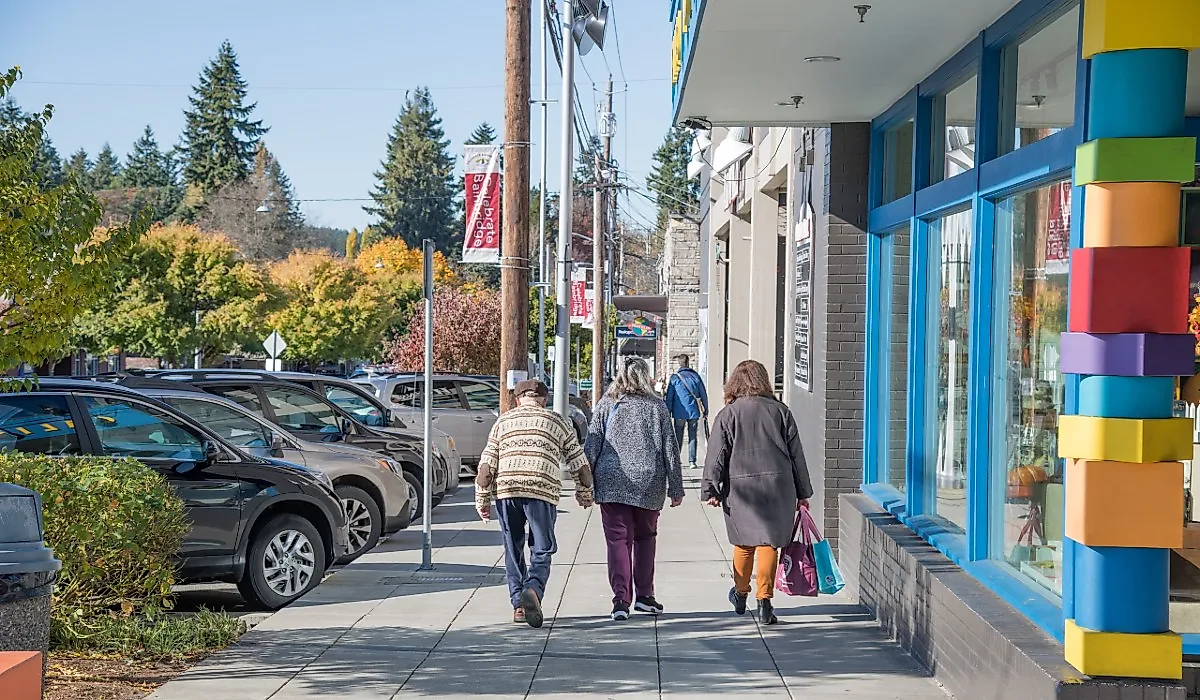
View of people on the main street in Bonners Ferry, Idaho.
Bonners Ferry is a small North Idaho town along the Kootenai River. Average home values are about $466,962, and Boundary Community Hospital provides local hospital and other health services. The Bonners Ferry Farmers Market runs from late April into early October, giving residents a regular Saturday event with local food and vendors.
Downtown also has the Boundary County Museum, with local history exhibits, and the Historic Pearl Theater, which hosts performances and community events. During warmer months, the municipal pool offers adult lap swim, family swim, and open swim times, while Riverside Park and Kootenai National Wildlife Refuge give nearby places for short walks, birding, or a low-effort drive through protected habitat.
Small-Town Living in the Pacific Northwest
Choosing a retirement town in the Pacific Northwest comes down to practical details as much as personal preference. Housing costs, healthcare access, taxes, local services, and year-round activities all affect how well a smaller community works for daily life. Oregon, Washington, and Idaho each bring different financial considerations, while individual towns vary in medical access, home values, and community resources. For retirees comparing smaller places to live, the best fit will likely come from balancing housing costs with the services and routines that matter most.