The Cheapest Beautiful Towns To Live In Texas
Redfin put the statewide median home price in Texas at $343,779 in May 2026. In Goliad you can pay less than half that. Buy there and you get a restored 1749 Spanish presidio on the San Antonio River a few blocks away. Buy in Alpine and you get downtown murals under the Davis Mountains for almost $100,000 below the state median. These are 10 of the cheapest beautiful towns to live in Texas.
Alpine
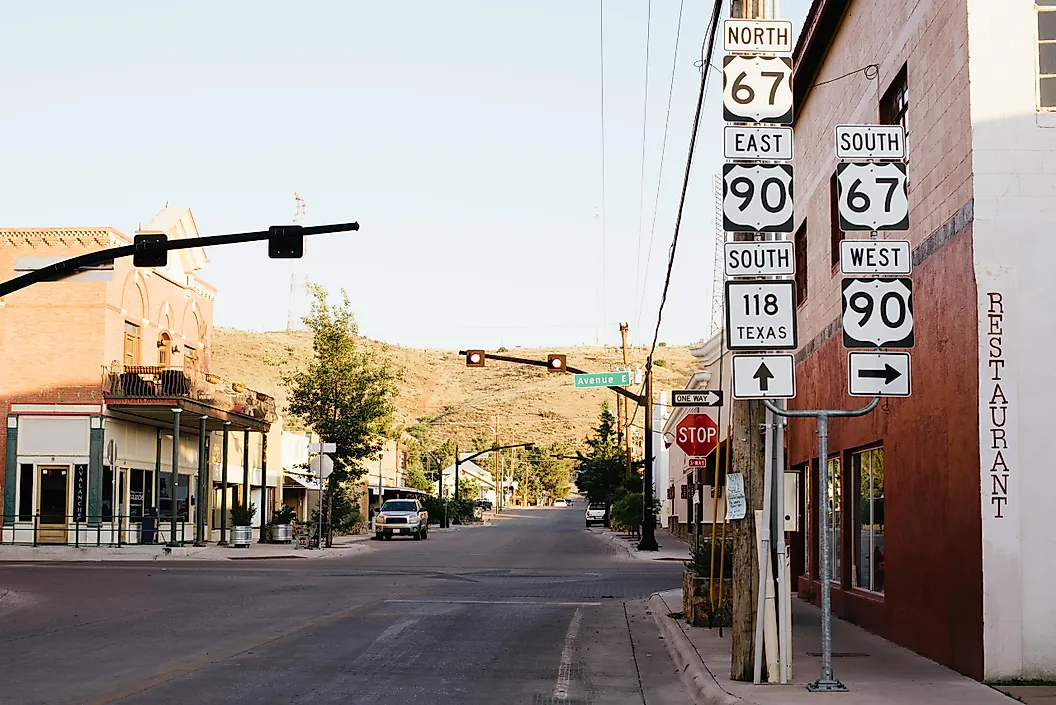
Sitting in a high-desert valley ringed by the Davis Mountains in far west Texas is Alpine, a town of around 6,000 people and the aforementioned median sale price almost $100,000 under the statewide median. No matter which way residents look, the Davis Mountains fill the horizon, with easy access to the Davis Mountains Scenic Loop and the McDonald Observatory. The Big Bend National Park's western entrance is only 80 miles south of Alpine. Back in town, the Hancock Hill trail system runs behind the Sul Ross State University campus and leads to the popular Sul Ross Desk vista point with an actual desk.
Even with the town's small size, Alpine is the area's service center, with all the necessary amenities. Big Bend Regional Medical Center is the region's main hospital, with 24-hour emergency care. One of the top employers in town is Sul Ross State University, which has Division II sports and a theater for touring events and lectures. Throughout the year, those living in Alpine can attend numerous cultural events: the Viva Big Bend music festival in July (held across multiple surrounding cities), the Lone Star Cowboy Poetry Gathering in February, and the Artwalk Alpine art festival in November.
Canadian

The first commercial rodeo in Texas, in the summer of 1888, was held in the town of Canadian. This two-day celebration, focused on steer-roping, continues today as the annual 4th of July Rodeo. The history of the rodeo and general county history fills the River Valley Pioneer Museum. Located downtown, the museum sits near the restored Palace Theater and the Renaissance-style Hemphill County Courthouse, both built in 1909. Around the corner is the Citadelle Art Museum in a landmark 1910 building, originally built as the First Baptist Church.
As the rodeo suggests, ranching and farming form the historic foundation of Canadian. Cattle ranching covers much of the surrounding acreage, feeding into the massive Texas Panhandle beef production network and supporting local suppliers, veterinary practices, and feed stores. That economy, combined with the scenic trails of the Canadian River valley, sits alongside a surprisingly low median sale price of $159,000, second-lowest on this list.
Llano

Llano's median sale price is $261,843, 24% under the state median. That slightly higher price reflects the granite country the town sits in. The Llano River runs over pink granite ledges right in the center of town. Swimming, fishing, and kayaking are all accessible at Grenwelge Park, also in the middle of town, and at the Llano River Park ramp. The Roy B. Inks Bridge is a truss bridge with pedestrian walkways on both sides, crossing the river next to Grenwelge Park. The nearby Llano Cultural District downtown holds the 1893 Llano County Courthouse, the Llano County "Red Top" Jail (active from 1895 to 1982), and the 1927 LanTex Theater, one of the few single-screen theaters still showing new releases.
Beyond the postcard views around the river, Llano has a secure, self-sustaining community infrastructure. Daily errands run through the local grocery store Lowe's Market and the famous Miller's Meat Market and Smokehouse. The largest employer in the region is the healthcare and social assistance sector, with care available at Llano Regional Hospital and the Baylor Scott & White Clinic. Every April, the town holds the annual Llano Crawfish Open, which over the years has grown into a staple Texas Hill Country tradition that cooks up more than 22,500 pounds of crawfish alongside jambalaya and Texas barbecue.
Brady

Being the town closest to the geographic center of Texas, Brady considers itself the "Heart of Texas," and that distinction shows up all over town. A Texas-shaped stone monument marks the spot in the grassy area around the McCulloch County Courthouse, which was restored through the Texas Historic Courthouse Preservation Program and stands hemmed in by the historic commercial district. The nickname carries through to the 24-hour Heart of Texas Healthcare System and the Heart of Texas Country Music Museum, with memorabilia from over 100 country artists.
Green space surrounds Brady, with the 44-acre Richards Park in town and the Brady Lake and Brady Creek Reservoir five miles west of city limits. Along its 25 miles or so of shoreline, Brady Lake Park is a spot for fishing, swimming, and scenic lake views at sunset. And at half the state median, Brady's median sale price sits at $164,901, an impressive bang for your buck.
Uvalde

Uvalde is the regional hub for some of the best Hill Country outdoor recreation. The Leona River, just south of town, holds the remains of Fort Inge on its bank. Now a riverside park, this was a US Army frontier post, established in 1849, that guarded the San Antonio-El Paso mail road and the settlers along it. Not much of the fort remains, but the area is a quiet stretch of the river with unusual landscapes. Closer into town, the river's floodplain begins at Uvalde Memorial Park and continues with trails along the water and through the city. A little over 30 miles north are Garner State Park and the Frio River, with deep canyons, towering cypress trees, and cool, spring-fed waters. One of the state's most beloved getaways, it makes Uvalde a basecamp for exploring the western Hill Country.
Originally opened in 1949, Uvalde Memorial Hospital expanded in 2022 into a 180,000-square-foot hospital campus right across the street from the old facility, serving a five-county region. The region's economy runs on agriculture, mainly vegetable processing and honey. Bees feeding on the region's native guajillo bushes produce a prized, exceptionally clear honey that has drawn culinary attention since the late 19th century. All of this comes at a median sale price of $252,348.
Goliad

Those in Texas will always know Goliad because of the events here during the Texas Revolution. And history is still strong here. Presidio La Bahía, established at this site in 1749, is the only fully restored Spanish presidio west of the Mississippi. Goliad State Park and Historic Site takes in a lot: Mission Espíritu Santo on the San Antonio River, the ruins of Mission Rosario nearby, and the El Camino Real de los Tejas visitors center not far off. Locals and visitors come to the area's 276 acres for camping, paddling, and birding along the Aranama Trail. The state park connects to the 1894 Goliad County Courthouse square and the town center by the Angel of Goliad Hike & Bike Trail.
The courthouse sits in a nine-block historic district, added to the National Register in 1976, with 40-plus historic buildings and several streets interrupted by preserved live oaks. History tourism supports the local economy and makes the town's affordability even more surprising. As maybe the best example of what money can buy, Goliad has a median sale price of only $145,000, the lowest median on this list, 58% under the state figure.
Palacios
Some consider salt water a necessary requirement for livability, and Palacios delivers. A shrimping town on Tres Palacios Bay, which opens out to Matagorda Bay, Palacios has a 1.5-mile concrete seawall facing the water. Along it are a working shrimp fleet at the docks, several fishing piers, and a small public beach with sunset views over open water. The City by the Sea Museum carries the maritime story inside, with artifacts from La Belle, La Salle's ship that sank in Matagorda Bay in 1686 and was raised in the 1990s. Between the shrimping, fishing, and birding around the bay, local outdoors types can fill every weekend.
The Palacios Educational Pavilion is a meeting place for this active lifestyle, extending out over the waters of the bay, where the community holds celebrations, seasonal seafood festivals, and live music performances. Because the area has avoided overdevelopment and high-rise hotels, it keeps an unhurried atmosphere. That lack of commercial crowding helps keep the local real estate market accessible for a waterfront town, with a median sale price of $168,399. With a bayfront address, homeowners also have to factor windstorm insurance into the math of owning here.
Nacogdoches

Nacogdoches is the home of Stephen F. Austin State University, and as a college town, it has an impressive median sale price of only $207,526. That price tag comes with beauty of several kinds. The architecture shows in the red-brick downtown streets, laid in 1923, and the Victorian storefronts along them. Billing itself as the oldest town in Texas, Nacogdoches started as a Caddo village before a Spanish mission arrived in 1716, then a pueblo in 1779. For natural beauty, the SFA campus holds the 11-acre Ruby M. Mize Azalea Garden, the largest azalea garden in Texas, with over 7,000 azaleas. The flowers continue across the 25 miles of Azalea Trails through town.
The university is the largest employer in town, with a full sports, arts, and culture calendar across the year. In any given week, residents can cheer on the Lumberjacks at Homer Bryce Stadium, catch national touring acts through the University Series at Turner Auditorium, or take in rotating visual art exhibits at downtown's Cole Art Center. That steady run of campus events sits alongside the town's historic small-town character, and the mix feels livelier than the price tag suggests.
Palestine

The town of Rusk and the town of Palestine are connected by the Texas State Railroad, a 25-mile historic steam and diesel excursion train that carries visitors through the Piney Woods between the towns. Palestine has been a railroad town since the 1870s, and that history shows in the beauty of its Main Street district: 44 blocks of Victorian commercial buildings, adding up to over 1,800 historic properties on or associated with the National Register, all built on the economy of the railroad.
Beyond the railroad history, Palestine offers a practical environment for daily living. The town has two higher-education branches (Trinity Valley Community College and a local University of Texas at Tyler campus), a regional medical center, and stable employment from major logistics and agricultural hubs. That foundation of everyday livability becomes even more appealing alongside the local real estate market, where buyers can find a home at an accessible median sale price of $195,783.
Jefferson

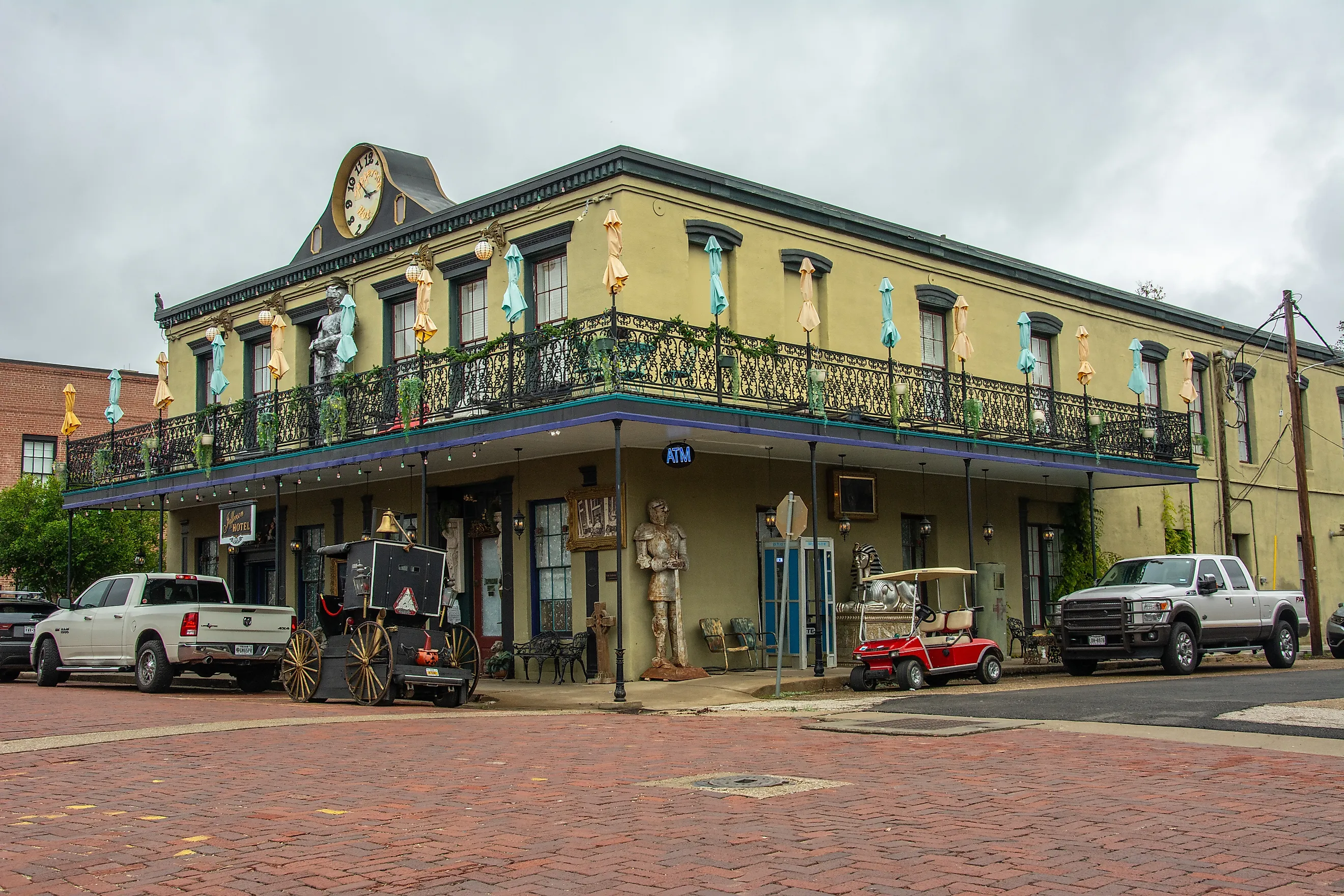
Jefferson was a steamboat-era riverport that once ranked among the busiest ports in Texas. Today, its median sale price of $180,000 comes with the history of the late 1800s all around. The Excelsior House Hotel, the oldest continuously operating hotel in Texas, has hosted guests since the 1850s, with Grant and Oscar Wilde among them. More than 70 other historic buildings line the brick streets of Jefferson's downtown, among them the Jefferson Historical Museum in a 19th-century former federal courthouse and post office and the Jefferson General Store with its old-fashioned soda fountain.
With Caddo Lake State Park just 11 miles away, the local economy runs on bed-and-breakfasts, antique shops, and riverboat tours from the old riverfront, on Big Cypress Bayou heading toward Caddo Lake. The state park has bald cypress draped in Spanish moss on the state's only natural lake, with canoe and kayak rentals year-round and CCC-built 1930s cabins. That moss-draped canopy is the scenic backdrop for the town's steady outdoor recreation tourism, which keeps Jefferson's 19th-century maritime legacy a living part of the modern community.
Affordable and Beautiful Overlap in Texas
All 10 of these towns, whether county seats or trade towns, had money from their railroad, riverport, or ranches to build a handsome downtown between the 1880s and 1930s. Growth moved elsewhere, freezing the architecture and the price tag in place. The scenery (desert mountains, granite rivers, pine forests, or open bays) comes free with the address, and every town on the list still works as a home. Hospitals in town or within 30 miles, working squares or docks, and a full festival calendar all make each one worth calling home.