8 Best Cities To Retire In Switzerland
Switzerland regularly ranks near the top of global retirement indexes, and the case holds up at street level. Zurich's summer afternoons revolve around public lakefront baths, some dating to the 1800s. Lucerne anchors the country's classical music calendar from a Jean Nouvel concert hall on the lake. Bern stays walkable in any weather thanks to six kilometers of medieval arcades through its old city. The eight cities here each make a different case for the same idea, retiring comfortably in one of Europe's most reliable countries.
Zurich

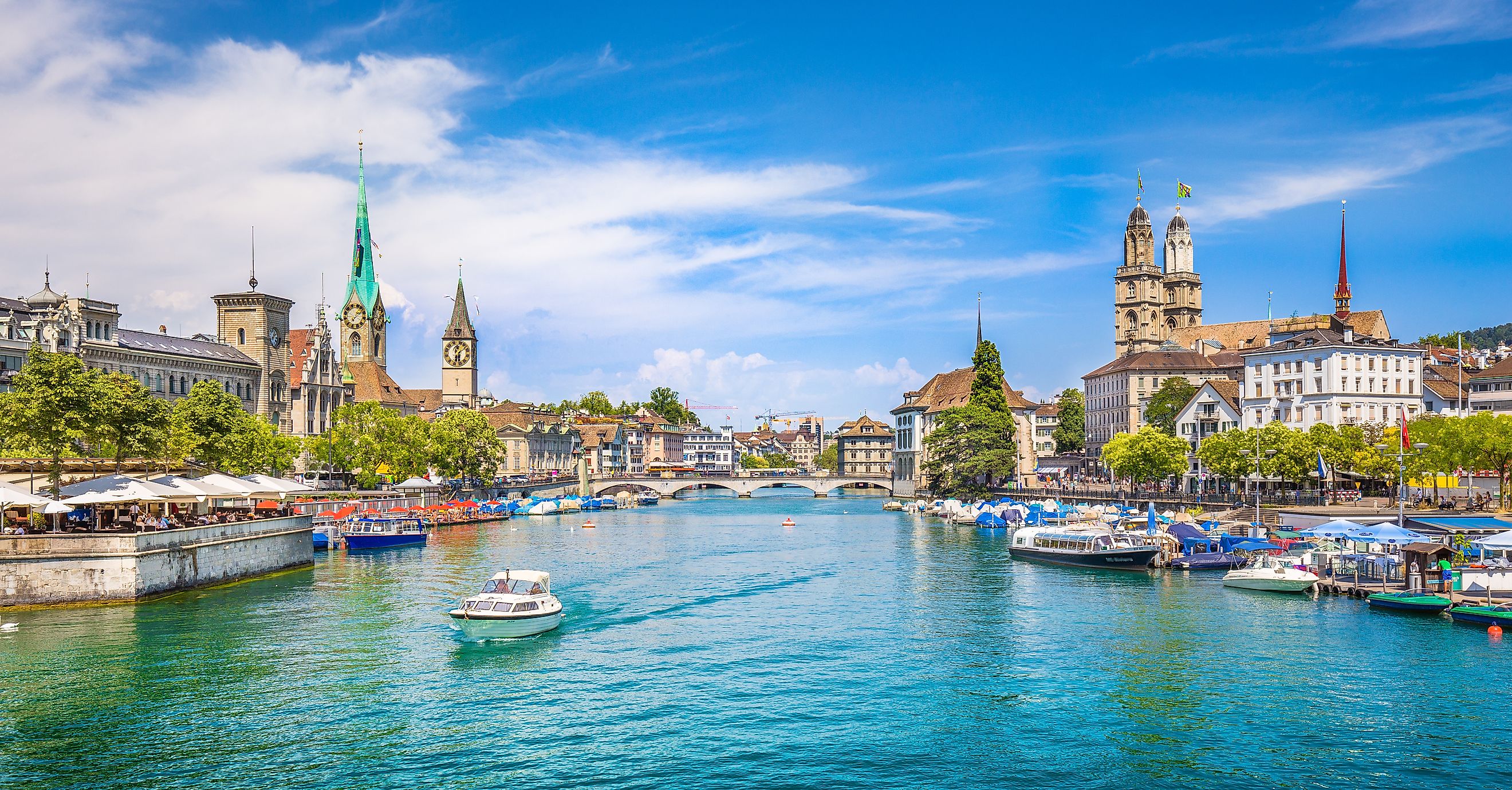
Zurich delivers urban convenience alongside the Badi system, the city's network of historic public lake and river bathing facilities, some operating since the 1860s. Seebad Utoquai on the lakeside promenade between Bellevue and Zürichhorn has welcomed swimmers since the 1890s, and the Zurich Opera House sits a fifteen-minute walk from Seefeld. The architecture, acoustics, and lake views together make a regular night out feel like an event. As for neighborhoods, Seefeld and Enge occupy the lakeshore with green spaces, parks, and a lively waterfront scene in summer.
The tram network is thorough enough that a morning at Bürkliplatz Saturday market, an afternoon swim at Mythenquai, the only Badi with a sandy beach, and an evening chamber concert at the Tonhalle, where ceiling frescoes shape the room's acoustics, all happen without much planning. The downside is real, and well known. Zurich is one of the most expensive cities on earth. The upside for retirees who can manage it is that almost everything else works, from healthcare to public transit to the lake at the doorstep.
Basel

Basel leads the Swiss retirement scene on one specific measure, the density of serious art relative to city size. The city counts roughly forty museums in a compact downtown core. Kunstmuseum Basel holds the oldest publicly accessible art collection in the world, with exhibits spanning eight centuries, including the historic Amerbach Collection, built around a circle of Basel humanists that included Erasmus. The Fondation Beyeler in the suburb of Riehen carries one of the most significant private collections of modern art in Europe.
The kinetic sculpture rooms of the Museum Tinguely hold the largest collection of works by Jean Tinguely, the pioneer of post-war kinetic art. For residents, the real gift is off-season access. Picture the Fondation Beyeler on a rainy Tuesday in November, essentially to yourself. It is not all art, either. The Rhine occupies a prominent role in city leisure, and Basel sits at the literal junction of Switzerland, Germany, and France. For a retiree who wants European wandering on a whim, that geographic position is worth real money.
Bern

Bern rewards retirees who prioritize walking. The Old City is a UNESCO World Heritage Site, and its roughly six kilometers of arcades make it one of Europe's longest weather-sheltered shopping and strolling corridors. Rain, snow, or shine, residents stay on foot without much thought. The medieval core is flat enough at street level for older legs, and the tram-free center keeps it unusually quiet for a national capital. The Aare River, which loops almost completely around the old city in a dramatic oxbow, is the city's leisure spine.
Locals swim in the Aare on weekends and ride the Gurten summer toboggan run for tight bends, fast straights, and the small tunnel that surprises first-time riders. The track also opens views of the Alps and across the federal capital. The Münsterplattform behind the Bern Minster cathedral is built for slow afternoons and impromptu picnics. Keep in mind that Bern is the seat of the Swiss federal government, which means a gentler pace of life than Zurich or Geneva, and a population of diplomats and civil servants that creates a cosmopolitan social infrastructure without the matching frenzy.
Lausanne

Lausanne climbs steeply from the Lake Geneva shoreline to the hills above, and navigating it without a tram requires actual effort. For retirees who settle in the lakeside Ouchy district or the terraced neighborhoods above it, that drama is the appeal. A morning might begin with coffee overlooking the rooftops before a walk through the nearby Lavaux vineyards, where medieval wine terraces stretch along the shoreline. By noon, you can be back in the city and catching a boat to Montreux, Geneva, or France across the lake.
The practical advantages match the scenery. The CHUV hospital ranks among the top ten hospitals in the world by Newsweek's annual list, which alone justifies the move for retirees thinking about long-term care. Local universities welcome seniors to lectures and events, and Connaissance 3 offers seniors a calendar of conferences, courses, and cultural visits across the canton. Lake Geneva boat services connect Lausanne directly to Geneva past beautiful Swiss towns and castles, a commute that doubles as a daily reason to stay.
Lucerne

If classical music sets the tone for an ideal retirement, Lucerne checks every box. The KKL, short for Culture and Congress Centre, designed by Jean Nouvel and sitting directly on the lakefront next to the train station, hosts the Lucerne Festival each August, one of Europe's premier classical music events. In winter, the plaza in front of the KKL becomes an outdoor ice skating rink alongside Lake Lucerne. Europaplatz Luzern is a busy crossroads where you can watch Swiss efficiency in action while pretending you know where you are going. It works as a place to meet friends and family, especially with the lake views and the ferry service to towns along the shore.
Lucerne is also compact and walkable. A morning stroll takes you past the historic Kapellbrücke, the Chapel Bridge, among baroque guild houses and waterfront café terraces. The bridge dates to the 14th century and is one of Europe's oldest covered wooden bridges. From Lucerne, the rack railway to Mount Pilatus, the city's own "Dragon Mountain," and steamship cruises across the lake are everyday pleasures rather than tourist add-ons. Historic paddle steamers leave from the pier for excursions to the lakeside villages.
Winterthur

Because Zurich sits just twenty minutes to the southwest, Winterthur tends to get overlooked. The city is billed as Switzerland's greenest, and the pace registers immediately as more relaxed and personal than the metropolis next door. The Villa and Garden tour, typically two hours, connects historic private estates turned into parks, and the Töss river walking paths extend well beyond city limits into vineyard and forest country. Add fifteen museums of regional and international standing, and the cultural depth becomes hard to argue with. The Swiss Science Center Technorama is one of the largest hands-on science centers in the world, drawing more than three hundred thousand visitors a year.
The Oskar Reinhart Collection at Am Römerholz, displayed in a villa hidden behind old trees and a quiet garden, holds one of the most outstanding private art collections of the 20th century. Visiting on a slow afternoon, when the gallery rooms are nearly empty, feels like a privilege the price tag does not match. Fotomuseum Winterthur, together with Fotostiftung Schweiz, runs one of Europe's most respected photography programs and opens serious workshops to the public. The best part remains the cost line. Numbeo puts Winterthur's overall cost of living about 20 percent below Zurich, and rent prices closer to 48 percent below.
Geneva

Geneva is the obvious choice when an international social world or daily English-language access matters most. The UN agencies and global banks clustered around Lake Geneva create an environment where English works seamlessly for daily errands, appointments, and community life. The lakefront is Geneva's greatest asset. The stretch is a beautiful place to enjoy perch fillets with a lake view, and the ice cream at Arlecchino, a legendary parlor with up to fifty homemade flavors, is a fair argument on its own. Pastries at Bakery Mage on a shaded outdoor terrace round out a slow afternoon.
On clear days, which are frequent, the Mont Blanc massif frames the far end of the lake in a view that does not become ordinary. The Parc des Bastions, with its Reformation Wall sculpture, sits five minutes from the old town center. The four towering statues, each standing five meters tall, depict Reformation leaders including John Calvin and William Farel. The Senior Citizens' Centre on Rue de Lausanne in Geneva's Pâquis district handles tax-return help, lectures, computer access at reduced rates, and a cafeteria for an affordable coffee, a flip through the Tribune de Genève, and conversation with neighbors.
Lugano

Lugano is the closest you get to retiring in Italy while keeping Swiss healthcare, security, and infrastructure. Milan sits one hour away by train, which makes spontaneous opera nights or airport access practical. Summer evenings come alive around Lake Lugano, the 12,000-acre lake that straddles the Swiss-Italian border. For shoppers, Via Nassa is known as the Fashion Valley for the cluster of luxury stores running its length, including Hugo Boss, Gucci, Louis Vuitton, and others.
A morning espresso in Piazza della Riforma, a midday lake walk or boat ride, and a long lunch at a grotto turn ordinary days into vacation memory. The Olive Trail above the city connects the districts of Castagnola and Gandria across an hour of easy walking with the best elevated lake views in town. Monte Brè and Monte San Salvatore stand accessible by funicular for longer rambles. The LAC, short for Lugano Arte e Cultura, blending contemporary architecture with the historic Franciscan monastery, runs cultural events year-round.
Choosing Your Swiss Address
Zurich and Geneva run on Switzerland's reputation, and they earn it, but they cost what they cost. Bern delivers walking infrastructure, federal-capital culture, and a quieter day-to-day life. Lausanne pairs dramatic topography with top-tier hospital care, and Basel concentrates an outsized art scene at the tri-country border. Lucerne settles the question for music lovers, and Lugano answers it for anyone with an Italian-Mediterranean retirement in mind. Winterthur is the quiet financial-sense pick. Across all eight, the underlying system holds. Mandatory health insurance, reliable public transit, and a public realm built for daily use make the country itself the strongest argument for retiring here.