7 Best Cities To Retire In British Columbia
Retirement in British Columbia buys a rare kind of morning. You can walk an oceanside seawall with snow-capped mountains filling the horizon. The coastal cities of Vancouver, North Vancouver, and Victoria pair that scenery with strong healthcare and reliable transit. Inland, Kelowna and Chilliwack trade the ocean for warm lake days on the water. Farther north, Prince George stretches a retirement budget further while keeping wilderness close. These British Columbia cities give retirees the scenery, services, and opportunities to make the most of their next chapter.
Vancouver

Vancouver is an Olympic host city with a rich leisure and cultural scene, set against the snow-capped Coastal Mountains and the Pacific Ocean. With about 662,000 residents, it is the largest city in British Columbia, and its housing is among the priciest in the country, with a typical home benchmarked around CDN$1.1 million across Metro Vancouver. Vancouver is one of the most ethnically and linguistically diverse cities in Canada, and it ranks consistently among the world's most liveable places on measures of healthcare, culture, environment, education, and infrastructure. Stanley Park is the city's crown jewel, a large urban park with a world-famous seawall along Vancouver Harbour that suits a stroll, a jog, or a ride.
On the other side of downtown, Granville Island is a lively public market full of shopping and food, from pies and pastries to fresh-caught seafood, cheese, and local produce. BC Place hosts professional and amateur sports as well as major concerts, and Science World fills an afternoon with permanent interactive exhibits. Getting around is easy, since Vancouver's public transit system ranks consistently among the best in North America.
North Vancouver

Reached from downtown Vancouver by the reliable SeaBus, North Vancouver is a busy municipality with a far more outdoorsy feel than its larger neighbor across Burrard Inlet. The City of North Vancouver has about 58,000 residents, and together with the surrounding District, the North Vancouver area holds roughly 146,000 people, all with quick access to mountain trails, dense rainforest, and beaches. In the neighbouring District of North Vancouver, Grouse Mountain offers the Grouse Grind and winter skiing, while Capilano Suspension Bridge Park and Lynn Canyon Park feature suspension bridges and rainforest trails.
Getting around North Vancouver is generally efficient thanks to an integrated transit network run by TransLink, though the Lions Gate Bridge and the Ironworkers Memorial Second Narrows Bridge are best avoided at rush hour. Housing runs high here and varies widely by type. Detached homes carry a benchmark near CDN$2.1 million, while condos sit closer to CDN$700,000, giving downsizing retirees a more attainable entry point than a house.
Victoria
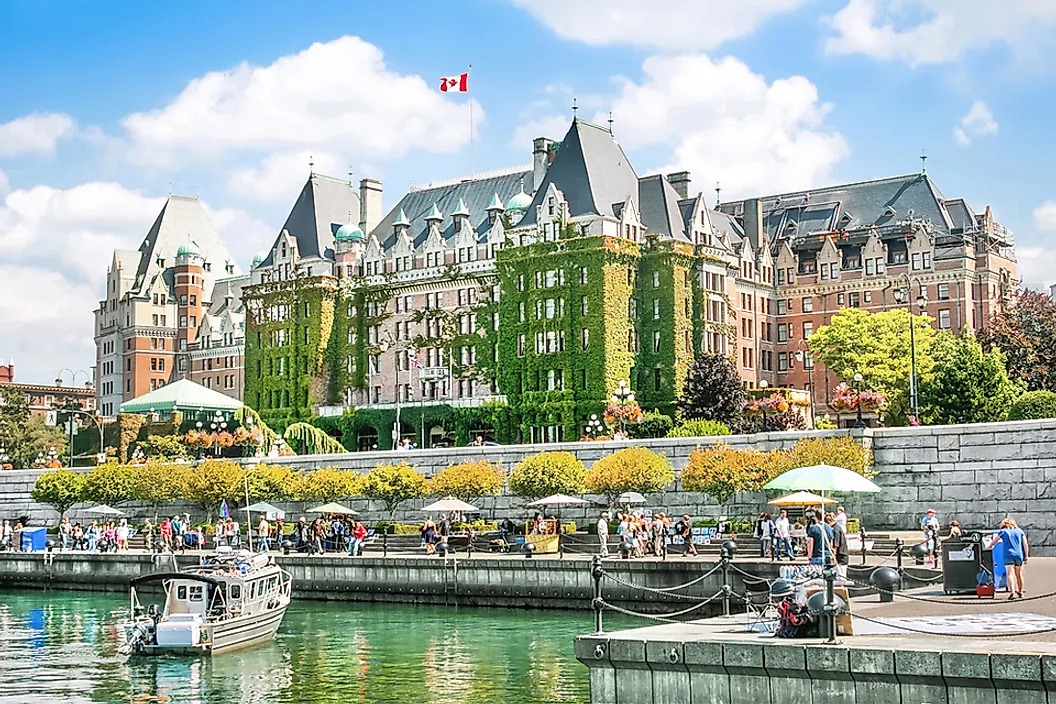
With a mild climate, a high quality of life, and coastal scenery, Victoria ranks consistently among Canada's most desirable cities for retirement. The region offers major healthcare resources, including Royal Jubilee Hospital in Victoria and Victoria General Hospital in neighbouring View Royal. Victoria's downtown core is the heart of the city, known for its colonial architecture, its shopping, and restaurants like Swans Brewery and Pub. The Royal BC Museum and IMAX Victoria sit beside the Inner Harbour, while the Art Gallery of Greater Victoria occupies its historic Moss Street location farther east.
Kelowna

Kelowna is the largest city in the Okanagan Valley, with about 145,000 residents in the city proper and a downtown set on the east shore of Okanagan Lake. It receives more than 2,000 hours of sunshine a year, making it one of the sunniest spots in Canada. Kelowna offers Hot Sands Park, Konquer Motorcycles, JOEY Kelowna, HUMO, and Soma Craft Cidery, while Mission Hill Family Estate is a short drive across the lake in West Kelowna. For those who prefer pedal power, the Kettle Valley Railway trail is a fine way to get exercise and take in the area's history and scenery. Kelowna General Hospital provides local healthcare, while Kelowna International Airport sits minutes from the city center and connects to destinations across North America.
Chilliwack

Chilliwack is one of British Columbia's fastest-growing mid-sized cities, in the eastern Fraser Valley about 100 kilometers east of Vancouver on the Trans-Canada Highway. It sits at the foot of the North Cascades, with the peak of Mount Cheam as its backdrop, while the city itself lies on mostly flat terrain that makes biking and walking easy.
Recreation is plentiful. There is fishing on the well-known Chilliwack River, boating at nearby Cultus Lake, hiking with views over the Fraser Valley, and several golf courses, including The Falls, built on a mountainside 750 feet above the valley. Chilliwack's downtown dining includes Mosaic Plate on Yale Road, which serves an all-day breakfast menu alongside lunch and dinner. Compared with other Lower Mainland communities, Chilliwack offers relatively attainable housing, with detached homes posting a median sale price of around $912,500 in the first quarter of 2026.
Nanaimo

Nanaimo has drawn retirees for decades on the strength of its small-town feel, its beaches and parks, moderate housing prices, and a walkable downtown. Stretched along the central east coast of Vancouver Island, this city of just under 100,000 people keeps a laid-back, unhurried pace. A favorite waterfront outing is an ice cream at Waterfront Confections, followed by a stroll past the boats in Nanaimo Harbour and a look out for harbour seals. It is not unusual to spot a pod of orcas or sea lions in Departure Bay, Pipers Lagoon, or Neck Point.
Water sports thrive here, with kayaking and outrigger canoeing around Newcastle and Protection islands, plus plenty of hiking and mountain biking. Served by BC Ferries, Nanaimo is a 90-minute sail to Vancouver, with float planes and helicopter services also available. Nanaimo Airport connects easily to Vancouver International Airport and its worldwide destinations.
Prince George

Prince George is increasingly recognized as an affordable retirement community in British Columbia. In the central part of the province, this city of about 77,000 people offers a much lower cost of living and more attainable housing than southern BC. It serves as the region's primary healthcare hub and is home to the University Hospital of Northern British Columbia and BC Cancer - Prince George, also known as the Centre for the North. Set at the confluence of the Nechako and Fraser rivers, Prince George is a strong fishing destination, known for trout, char, and Arctic grayling.
When winter arrives, the region turns into a snowy playground, with alpine skiing at Hart Ski Hill, cross-country trails at Caledonia Nordic Ski Club, and skating under the stars at the Prince George Outdoor Ice Oval. The city hosts its Downtown Winterfest each February, and its craft breweries are worth a visit, among them Trench Brewing and Distilling, CrossRoads Tap and Kitchen, and Deadfall Brewing Company. Known for a close-knit spirit, Prince George is often called the Volunteer City, and residents take pride in a small-town, neighbourly culture.
The Case For Retiring In British Columbia
British Columbia cities are not only scenic, but they are also capable and connected. Healthcare is close when needed, transit gets retirees where they want to go, and outdoor recreation is right in the backyard. Nanaimo brings laid-back seaside parks, Kelowna a lake-day downtown, Victoria a deep culture and museum scene, and Vancouver a slate of big-city attractions. Weighed together, these cities keep retirees moving, healthy, and busy.