7 Wallet-Friendly Small Towns To Retire In England
In Bishop Auckland, the average home sold for about £147,000 over the past year, roughly half the £292,095 that the UK House Price Index puts on a home in England. Whitehaven runs about £164,000. Neither town has given up on itself: one has a restored bishops' palace and a gallery of Spanish Old Masters, the other 250 listed Georgian buildings and a working harbour. What really counts is living well. These seven towns have personality of their own: working harbours, Victorian market halls and a gallery of Spanish Old Masters. Each one shows that a good retirement shouldn't come with an asterisk.
Barnard Castle

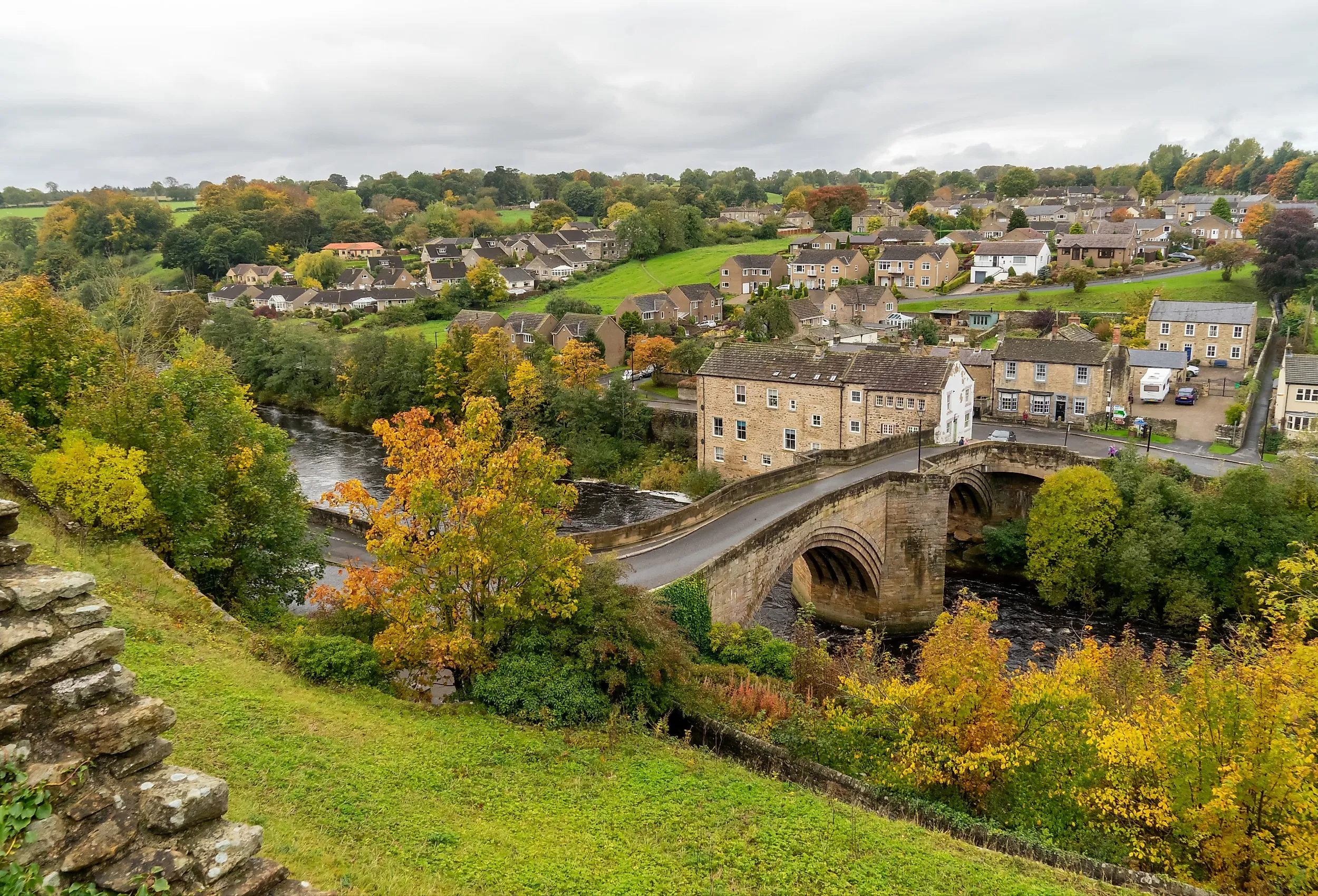
This historic market town sits beside the River Tees in County Durham, with the Pennine countryside rising around it. Barnard Castle grew up around the medieval fortress that still keeps watch over the river. Homes are affordable here, with sales over the past year averaging about £227,000, well under England's average. The ruined castle continues to draw visitors, standing directly above the Tees, where it overlooks farmland that seems to go on without end.
The Bowes Museum occupies a grand 19th-century building designed in the style of a French château. John and Joséphine Bowes created it to house the collection of European art they assembled together, and paintings by Goya, Canaletto and Van Dyck hang inside. So does the 18th-century Silver Swan automaton. Once a day, in the early afternoon, it is wound up to preen, dip for a fish and swallow it, all in time with its own music. On Wednesdays, the aptly named Wednesday Market brings sellers to Market Place and keeps the town's market custom going. For time outdoors, follow the Teesdale Way along the River Tees towards the ruins of Egglestone Abbey.
Retford

Trading built this town, and its Market Square still shows off that heritage. Stalls fill the square on Thursdays and Saturdays, selling produce, plants and secondhand books. An antiques market takes over on Fridays. Average home prices here sit around £207,000, well under the national average. Retford Hospital on North Road covers outpatient, diagnostic and community services. For older residents, Bassetlaw District Council runs Independent Living schemes in the town. These are one and two-bedroom flats with communal rooms, gardens and a warden on site.
A short walk away, the Bassetlaw Museum fills Amcott House, a Grade II* Georgian townhouse on Grove Street. Its collection runs through North Nottinghamshire archaeology, an Anglo-Saxon log boat and the Pilgrims Gallery, which tells the story of the Mayflower separatists who came from this corner of the county. Kings' Park adds green space along the River Idle, with the Chesterfield Canal cutting across its southern edge. The Majestic Theatre has drawn audiences since 1927, when it opened on Coronation Street as a cine-variety house. Volunteers run it now, with plays, live bands and the occasional comedy night. The town also keeps a few storied pubs, including The Turk's Head on Grove Street, where the timber-panelled bar has barely changed in decades.
Berwick-upon-Tweed

Sitting a couple of miles from the Scottish border, this ancient seaside town occupies England's far northeast, where the River Tweed meets the North Sea. Homes changed hands for about £241,000 over the past year, a good deal less than the national average. One of Berwick's advantages is its own stop on the East Coast Main Line, which puts Edinburgh about 45 minutes away and Newcastle roughly the same.
Berwick's Elizabethan Walls give an up-close look at defences built through the long back-and-forth between England and Scotland. Much of the circuit survives, with views across the Tweed and out to the North Sea. Just across the water, Spittal Beach offers a long stretch of sand and a promenade path running along the back of it. The Lowry Trail links several spots around town associated with the artist L.S. Lowry, who first visited in the 1930s and returned regularly over the following decades, capturing its streets and buildings in numerous drawings and paintings.
Whitehaven

Whitehaven grew around a harbour that shipped coal out to Ireland and brought tobacco, sugar and rum back across the Atlantic, giving the town a seafaring character most retirement spots cannot match. More than 250 buildings here are nationally listed, many of them Georgian, dating from the era when Sir John Lowther laid the streets out on a grid. The typical home sold for about £164,000 over the past year, far below England's average. West Cumberland Hospital sits in the town itself, running a full range of NHS services on site.
The harbour is the obvious choice for an afternoon, with two 19th-century lighthouses on the West Pier and the North Pier marking its years as a major trading port. Over on West Strand, the Beacon Museum covers the town's mining and maritime past, with changing exhibitions in its upper galleries. The Rum Story takes on a darker chapter. It occupies the Jefferson family's original 18th-century shop, cellars and bonded warehouses on Lowther Street, and its displays examine Whitehaven's rum trade and its ties to slavery in Antigua. St James' Church is worth a stop for the architecture alone. Nikolaus Pevsner called its Georgian interior the finest in the county.
Todmorden

High in the Upper Calder Valley, this town lies close to the Lancashire border, surrounded by the steep hills of the South Pennines. The housing market makes a strong case for budget-conscious retirees, with homes selling for an average of about £228,000 over the past year. Regular trains connect the town with Manchester and Leeds. Todmorden Market Hall has occupied the town centre since the Victorian era, with traders selling local produce alongside books and household goods.
For something out of the ordinary, walk the Incredible Edible Trail, where community vegetable beds and herb patches are planted in public spaces around town. Whatever is growing is there for anyone to pick. Above the valley stands Stoodley Pike, a 121-foot (37 m) obelisk reached by a walk across the moors. The bold can climb the 39 steps of its unlit spiral staircase to the viewing gallery. Closer to town, the Rochdale Canal towpath passes the retaining wall locals call the Great Wall of Tod and ducks under the Victorian Gauxholme Viaduct.
Bridlington

If you want to retire near the water without the prices that come with many English coastal towns, Bridlington makes a strong case. Its long sandy beaches face Bridlington Bay on the Yorkshire coast, north of Hull. Property is where the town stands out. Homes sold for an average of about £194,000 over the past year, and terraced houses went for around £152,000.
Much of the daily activity centres on the waterfront. Bridlington Harbour is still a working fishing port, and the crab and lobster landed here reach kitchens across Europe. North of the town, Sewerby Hall and Gardens occupy an early Georgian house of 1714 on the cliff top. Inside are local history displays and a room devoted to the aviator Amy Johnson, and the gardens run out towards the cliffs. Bridlington Priory is worth seeing for its medieval church and broad west front. When the weather is fine, the promenade offers several miles of easy coastal walking. Bridlington Spa hosts touring musicians and theatre shows, including in the Art Deco Royal Hall, rebuilt after a fire in 1932, which looks out over South Beach.
Bishop Auckland

Years of investment have given Bishop Auckland a new lease of life, particularly around its historic centre. Housing remains one of the strongest arguments for retiring here, with homes selling for an average of roughly £147,000, about half England's average. Traditional shops still run along Newgate Street, while the Auckland Project has restored several heritage buildings and opened new cultural venues around them.
At Auckland Palace, you can walk through what was the residence of the Prince Bishops of Durham, taking in the Georgian state rooms and Francisco de Zurbarán's series Jacob and his Twelve Sons, bought by Bishop Trevor in 1756. Outside are a 17th-century walled garden and the 150-acre deer park the bishops once hunted. Art lovers should not skip the Spanish Gallery on Market Place. It holds one of the largest collections of 16th and 17th-century Spanish Golden Age art outside London, with work by El Greco, Murillo and Velázquez. No. 42 brings residents together through hands-on creative sessions, exhibitions by local artists and a monthly makers' market. The town's own market fills the Market Place every Thursday and Saturday with produce, crafts and street food.
Making the numbers work
Choosing where to retire means thinking about the years ahead, not just finding somewhere attractive to settle. A town has to hold your interest. It also has to make ordinary things, like reaching a doctor or the town centre, simple rather than a daily obstacle. The purchase price is only part of the calculation, since council tax bands and bills vary widely between authorities, so it is worth checking what a given address costs to run before committing. England still has smaller towns where those pieces come together without the weight of a large city. These seven prove that a lower price does not mean a less satisfying retirement.