7 Towns in Michigan that Transport You to the Past
Michigan holds onto its past well. Some of its towns were built by German settlers who never quite left their homeland behind. Others grew up around rivers, lakes, and railways that shaped the American Midwest. Walk down the right street and you might find some of the state's oldest surviving buildings, a working blacksmith shop, or a windmill shipped over from the Netherlands. Start with these seven towns if you want to understand how Michigan came to be.
Mackinac Island

Stepping onto Mackinac Island means leaving cars behind; the island has banned motor vehicles since the late 1890s, which gives the place a pace that no other Michigan town can match. Fort Mackinac is the headline attraction, with 14 preserved structures including the Officers' Stone Quarters, often cited as Michigan's oldest building. The exhibits cover battles, daily military life, and 19th-century medicine. Above town, Fort Holmes is a smaller site on the island's highest point, built by the British during the War of 1812 and returned to the United States under the Treaty of Ghent.
For a broader view of 18th- and 19th-century life on the island, the Benjamin Blacksmith Shop works as a living-history museum on a trade that supported island life into the 1880s. The Biddle House, one of the oldest private homes on Mackinac, now houses the Mackinac Island Native American Museum, which opened in 2021. The McGulpin House, dating to around 1790, is one of the oldest surviving structures on the island.
Frankenmuth

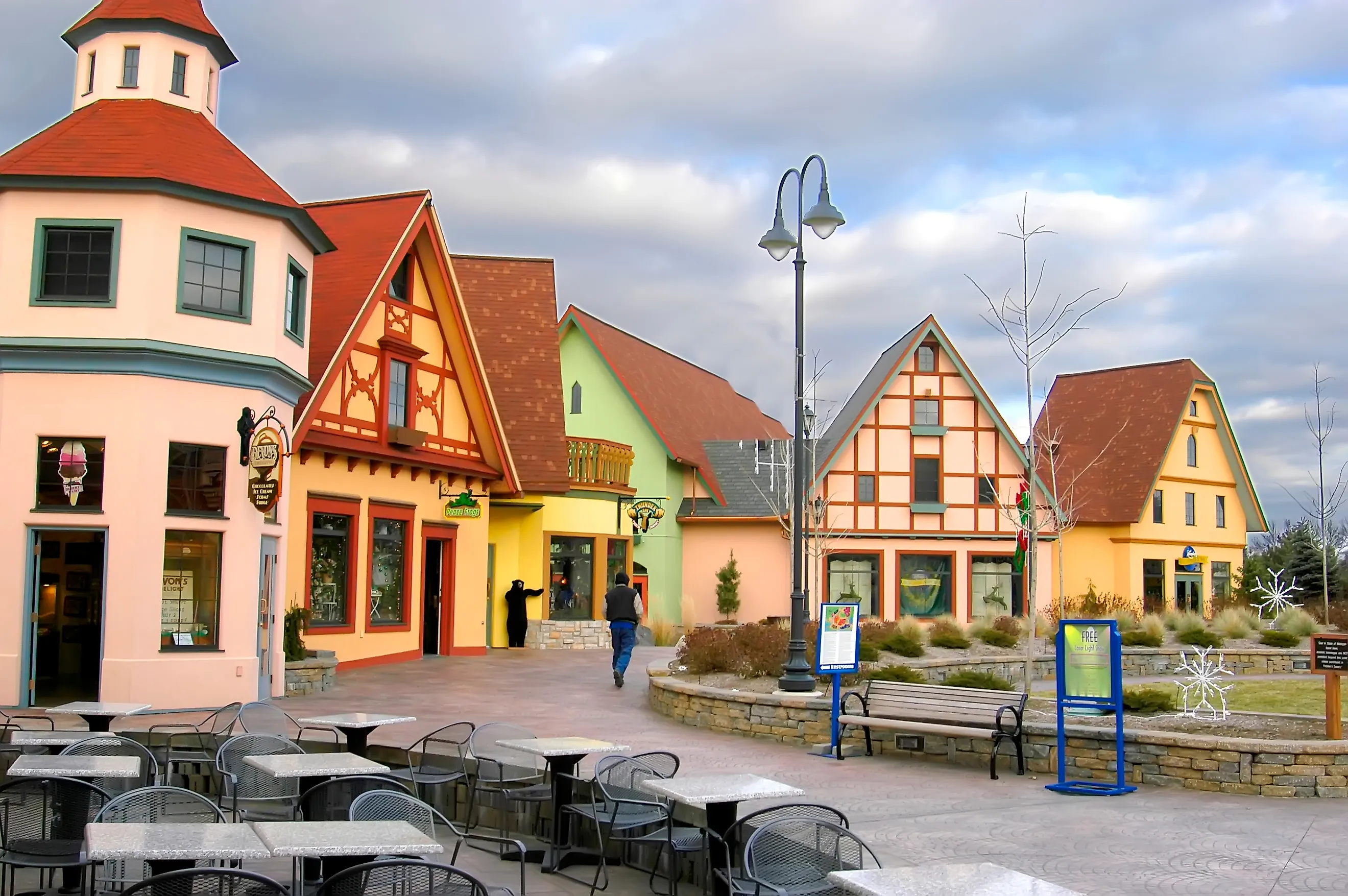
A group of German colonists founded Frankenmuth as a Bavarian-Lutheran community in 1845, and the town has leaned into its German heritage ever since. The Bavarian Festival in summer and the annual Oktoberfest are the two biggest events on the calendar, with traditional food, dance, and music. Since the late 1980s, Zehnder's Snowfest has drawn crowds in late January for elaborate snow sculptures and ice carvings along the main stretch of town.
For the historical side of Frankenmuth's story, the Frankenmuth Historical Museum runs permanent and rotating exhibits on the 1845 settlement and its Bavarian roots. Families usually add Grandpa Tiny's Farm, a working historical farm that doubles as a petting zoo, to the day.
Charlevoix

Ernest Hemingway spent much of his youth in northern Michigan and married his first wife, Hadley Richardson, at Horton Bay on the shore of Lake Charlevoix in 1921. Visitors can view the original marriage license at the Charlevoix Historical Society. Hemingway's regular stops included the Perry Hotel, where he stayed after a walking trip at age 17, and the Horton Bay General Store, which has been running as a shop and tavern since 1876.
A different kind of local legacy shows up in the Earl Young Mushroom Houses around Charlevoix. Young built roughly 30 houses between 1919 and his death in 1975, using fieldstone, limestone, and glacial boulders gathered from around northern Michigan. The houses are private residences and not open for tours, but the exteriors are easy to walk past. The Thatch Roof House, Half House, and the cluster near Boulder Park are the best-known examples.
Holland

In 1847, a group of Dutch Calvinist separatists led by Albertus van Raalte settled the town now known as Holland. The Settlers House is a small living museum that recreates the early pioneer period, and the Holland Museum holds a collection of Dutch artifacts and 17th-through-20th-century paintings that runs through the Netherlands end of the story.
Windmill Island Gardens is the town's most recognizable attraction. De Zwaan, the working Dutch windmill at the center of the site, was built in the Netherlands in 1761 and is generally cited as the only authentic working Dutch windmill operating in the United States. The grounds include a hand-painted antique carousel, a Dutch street organ, and tulip beds that hold about 150,000 bulbs in spring.
Manchester

Manchester came later than most southern Michigan towns, settled first by New Englanders and then by German immigrants. The River Raisin runs through town, and a trio of old mill dams along its course powered local factories and mills through the 19th century. A self-guided walking tour covers the Old Village Hall, the Whistle Stop, and the Manchester Mill.
The Manchester Tour de Barn Quilts is a self-guided bike route that passes large painted quilt squares hung on barn walls along rural roads outside town. The loop also takes in historic barns, churches, a farm stand, and Henry Ford's Manchester Village Industries plant (a 1935 hydroelectric facility that was one of Ford's experiments in rural manufacturing).
Ypsilanti

Ypsilanti has a deep automotive and aviation history and runs it through several local museums. The Ypsilanti Automotive Heritage Museum is the main stop, with exhibits on Tucker, Chevrolet Corvair, Hudson, Kaiser-Frazer, and the General Motors Hydra-Matic, all of which had local production or development ties. A few minutes away, the Michigan Flight Museum (formerly the Yankee Air Museum) keeps restored military aircraft and runs flight experiences on vintage warbirds. The Michigan Firehouse Museum rounds out the set, and the town sits inside the MotorCities National Heritage Area, the federal designation covering southeast Michigan's auto heritage.
For a slower afternoon, Ypsilanti's antique scene is worth working through. Lucky Haskins Antique & Retro carries hundreds of vintage toys, and Salt City Antiques specializes in mid-century furniture and decor.
South Haven

South Haven sits on Lake Michigan and takes its maritime past seriously. The Michigan Maritime Museum on the waterfront is the right place to start, with hands-on exhibits and rotating access to a traditional tall ship.
The Maritime District Harbor Walk runs pierhead to pierhead along the Black River, with historical markers and views out to the lake. The South Haven South Pier Lighthouse, built in 1903 and painted fire-engine red, has anchored the harbor entrance for more than 120 years and is the town's most photographed landmark.
Michigan's Layered Past
Michigan's history shows up in concrete places: a ban on cars at Mackinac Island, a 1761 windmill in Holland, a Bavarian-Lutheran settlement still running Oktoberfest in Frankenmuth, a railroad executive's summer town at Ypsilanti, and a 1903 pierhead lighthouse still working in South Haven. From prehistoric Native American sites to 20th-century automotive heritage, these seven towns build out a surprisingly full picture of how the state came together, and most of them reward a slow visit more than a fast one.