7 Safest Towns In Queensland For Senior Living
Queensland's towns range from granite tablelands 800 meters above sea level to coasts lined with Norfolk Island pines, and the ones best suited for retirement have been gradually claimed by seniors over decades. In Bargara, the Esplanade's flat paths say as much about the town's older population as any census figure does. Similarly, towns like Maleny and Warwick, with slower growth and less through traffic, tend to report fewer offenses per capita than the state's busier corridors, and most keep their centers compact enough that daily errands rarely need a car. These seven towns fit that pattern, with crime rates below state averages and hospitals within a manageable drive of each.
Warwick

Warwick, a Darling Downs town of around 15,000 people on the Condamine River, lies roughly two hours southwest of Brisbane. Crime rates remain modest by regional Queensland standards, with the reported offenses that do surface weighted heavily toward property crime rather than violence. Warwick Hospital manages emergency, inpatient, and surgical care within the town, with referrals to Toowoomba Base Hospital for more specialized treatment. Median house prices in Warwick are now about $585,000.

The town's sandstone heritage shows up across its civic buildings, including Warwick Town Hall, St Mary's Catholic Church, and the Pringle Cottage Museum complex, all within walking distance of the main commercial strip on Palmerin Street. Leslie Park anchors the town center with shaded lawns, a rotunda, and the Warwick Visitor Information Center, while Queens Park to the east adds gardens and walking paths along the river. The Warwick Senior Citizens Association holds regular social meetings, indoor games, and monthly excursions for older residents, and STAR Community Services adds practical support through affordable transport for medical appointments and errands. That combination of in-town hospital access, an active senior support network, and a compact heritage center that residents can walk through without crossing a major road is what gives Warwick its quietly strong reputation as a safe place to age in southeast Queensland.
Montville

Montville, a hinterland village of just 1,092 residents in the Sunshine Coast Region, occupies the Blackall Range, a few kilometers north of Maleny at a similar elevation. Queensland Police Service data shows very few reported offenses across the locality, partly because the village is so small and partly because it serves as a day-trip destination rather than a gateway to anything larger. Maleny Soldiers Memorial Hospital, roughly 15 minutes south, covers routine medical needs, with Sunshine Coast University Hospital reachable within an hour for emergencies and specialist care. Median house prices in Montville are now about $1.37 million.

Main Street through Montville lines up galleries, cafes, and craft shops along a tight, walkable stretch, with the Blackall Range as a backdrop. On the northern edge of the locality, Kondalilla National Park protects rainforest and the 90-meter Kondalilla Falls, with a circuit walk that descends into the gorge for more capable walkers and a shorter rainforest loop closer to the picnic area that suits older visitors with steadier needs. Just below town, Lake Baroon allows for boating, fishing, and picnics in the water catchment that helps supply the Sunshine Coast area. Russell Family Park is a large recreational park and green open space, and several boutique resorts and cabin properties cater to short-stay visitors without changing the village's quiet character. Montville's appeal for senior living comes down to that quiet: a tiny resident population, almost no through traffic, and a hospital 15 minutes south in Maleny mean older residents can settle into a rhythm where the loudest disturbance most days is the wind moving through the range.
Bargara

Bargara, a coastal town of around 8,883 people just east of Bundaberg, has long drawn retirees away from larger urban centers further south. The 2016 census recorded a median age of 50, with nearly 30 percent of residents aged 65 and over, and that demographic profile still defines the town today. Crime rates stay low relative to Queensland's larger urban centers, with quiet residential streets and a community of long-term residents reinforcing that stability. Friendly Society Private Hospital, located in nearby Bundaberg, roughly 13 kilometers west, provides emergency, surgical, and specialty care, while Bundaberg Hospital offers public services within the same drive. Median house prices in Bargara are now about $900,000.

The foreshore stretches along the Esplanade beneath rows of Norfolk Island pines, with flat paths and benches that make it one of the more accessible coastal walks in central Queensland, well suited to older residents who want a daily outing without uneven terrain. A short drive north, the Mon Repos Turtle Center runs guided night tours during nesting and hatching season at the most significant loggerhead turtle nesting population in the South Pacific region. At the northern end of the beach, Nielson Park combines protected swimming with picnic areas within a quick walk from town. For a more active afternoon, Bargara Golf Club has operated on the original 1924 course since the town was still known as Sandhills. Two major retirement resorts, Palm Lake Resort and Carlyle Gardens, anchor much of the local senior community with on-site care, social programs, and emergency support, which adds a structured layer of safety on top of the town's already low offense rates and short hospital drive.
Maleny

Maleny, a hinterland town of roughly 3,959 people on the Blackall Range, perches around 425 meters above sea level and looks out over the Glass House Mountains. Its small population and aging demographic keep crime rates below the Sunshine Coast Region average, and Queensland Police Service data places the hinterland localities among the safer pockets of the wider region. Healthcare stays close at hand: Maleny Soldiers Memorial Hospital manages emergency presentations, inpatient care, and some community services, with more complex cases referred to Sunshine Coast University Hospital, roughly 45 minutes away. Median house prices in Maleny are now about $1.24 million.

Maple Street, the compact main drag, lines up cafes, art galleries, and specialty shops along a flat walkable stretch that suits older residents who prefer to run errands on foot rather than drive. Just outside town, the Mary Cairncross Scenic Reserve threads boardwalks and graded lookouts through 55 hectares of subtropical rainforest, with the Glass House Mountains framing the view back out across the valley and the smooth surfaces giving older walkers a low-risk way to spend an afternoon outdoors. Maleny Botanic Gardens and Bird World, a short drive away, adds a walk-through aviary and curated plantings. The Glasshouse Country Senior Citizens Club meets weekly for games, outings, and community lunches that keep residents socially connected in a town small enough that isolation could otherwise become a real concern.
Buderim

Buderim, a Sunshine Coast suburb with a population of around 35,325 across the broader Buderim-Kuluin-Mons-Kunda Park area, sits on a low plateau that gives it both elevation and a reputation as one of the more established residential communities on the coast. Crime rates consistently sit below Sunshine Coast and Queensland averages, supported by an older, settled population and a street layout that limits through traffic. Medical access is unusually strong for a suburb of its size: Sunshine Coast University Hospital, roughly 10 kilometers from the town center, covers emergency, cardiology, and oncology among a full range of public services, and Buderim Private Hospital sits even closer for those with private cover. Median house prices in Buderim are now about $1.38 million.

Buderim Forest Park, a 45-hectare reserve on the suburb's western edge, threads walking trails through subtropical rainforest down to Serenity Falls, with the Harry's Lane and Quorn Close entrances easing the grade for older walkers. Back in the central area, the Buderim Village shopping precinct along Burnett Street keeps daily services within walking distance of the older residential streets, and the Buderim War Memorial Hall hosts regular community events and seniors' groups just up the road. The Buderim Coffee Morning gathers residents weekly for meetups, BBQs, and theatre nights, and retirement villages like Buderim Views and Buderim Gardens offer practical downsizing options for those who want to stay in the suburb. Together, the in-town hospital access, the gentle terrain, and the structured social programs make Buderim one of the stronger options for senior living on the Sunshine Coast.
Yeppoon

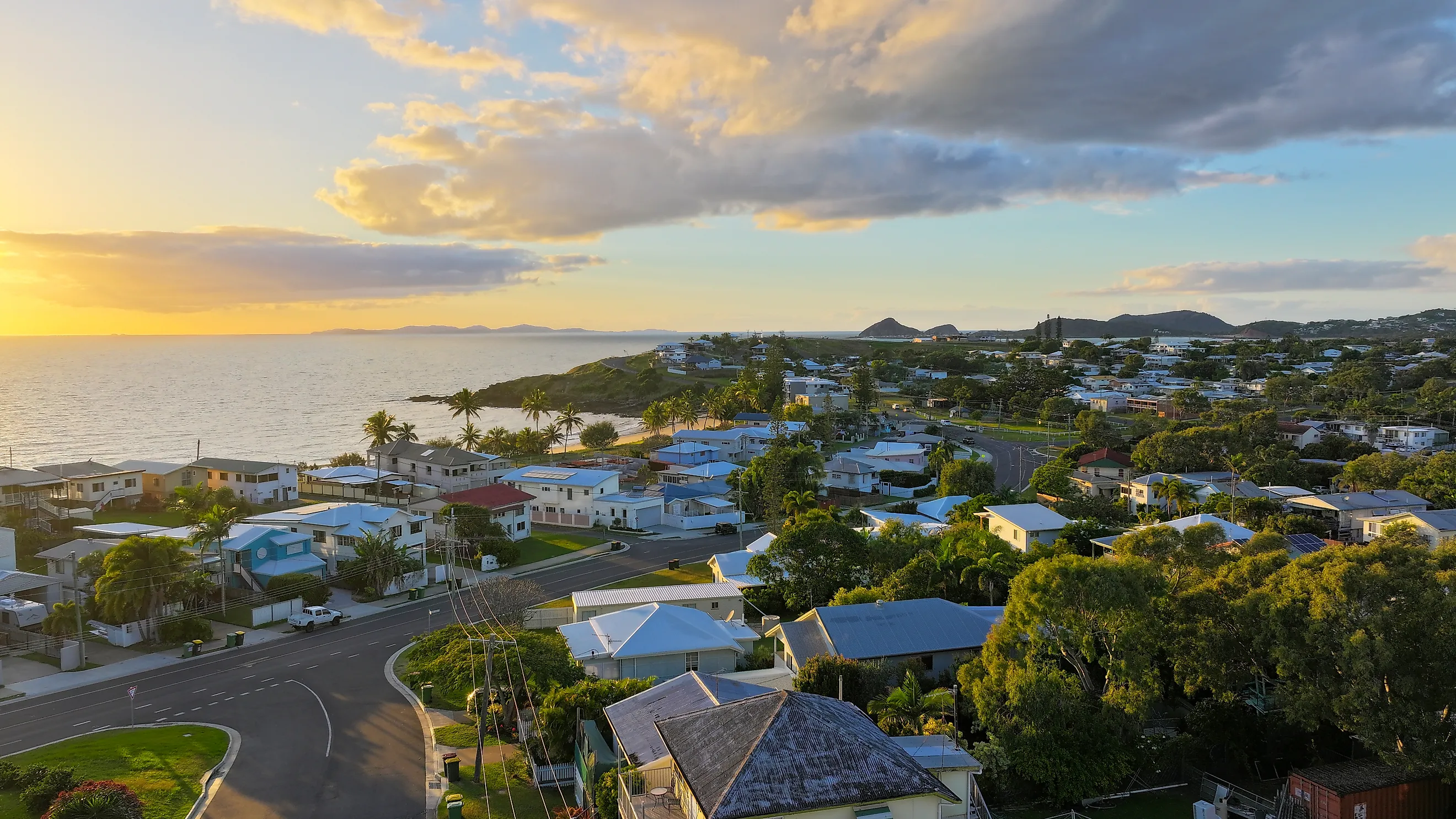
Yeppoon, the principal town of Livingstone Shire, sits on the Capricorn Coast roughly 40 kilometers northeast of Rockhampton and recorded a locality population of 7,037 in the 2021 census, with the wider Yeppoon statistical area supporting more than 20,000 residents once surrounding suburbs are included. The 65-and-over cohort is notably over-represented across the Capricorn Coast, and Yeppoon itself has drawn a steady flow of interstate retirees in recent years. Crime rates track closer to the regional Queensland average than to the lows of the Sunshine Coast hinterland, though the town benefits from a settled local community and a geography well removed from Rockhampton's urban pressures. Capricorn Coast Hospital on Hoskyn Drive manages emergency presentations and general inpatient care, with more complex cases transferred south to Rockhampton Base Hospital. Median house prices in Yeppoon are now about $800,000.

The Yeppoon Lagoon, a free oceanfront swimming facility near the main beach, offers older residents a calm, patrolled alternative to the open surf, and Capricorn Coast National Park brings headland and forest tracks within easy reach, with the formed walking tracks at Bluff Point and Double Head suiting moderate walkers. Fisherman's Beach draws walkers to quieter shoreline strolls further along, and the Keppel Bay Marina launches day trips out to the Keppel Bay Islands, including Great Keppel Island. For those interested in the town's history, the Capricorn Coast Historical Society keeps a small museum inside the old Yeppoon Railway Station on James Street. What ultimately makes Yeppoon work for senior living is the combination of an in-town hospital, an aging local population that has shaped the pace of daily life, and a coastal layout that puts most amenities within a short, low-traffic drive of one another.
Stanthorpe

Stanthorpe, the main town of the Granite Belt in southern Queensland's Darling Downs, has a population of roughly 5,286 and sits around 800 meters above sea level, giving it the coolest climate of any town covered here. The combination of a small population and a rural setting keeps crime rates among the lower figures in regional Queensland, and the town's compact layout puts most daily services within a short walk of the central business district. Stanthorpe Hospital manages emergency, inpatient, and aged care within the town itself, with referrals to Toowoomba Hospital, roughly 90 minutes north, for more complex needs. Median house prices in Stanthorpe are now about $590,000.

Girraween National Park, a short drive south, protects a landscape of granite domes, balancing rocks, and spring wildflowers, with several short tracks suitable for older walkers. The surrounding Granite Belt is Queensland's principal wine region, with 40+ cellar doors scattered between Stanthorpe and the New South Wales border, and the Apple and Grape Harvest Festival, held biennially, pulls the town's orchards, vineyards, and main street venues into a single long weekend that older residents can navigate on foot. On quieter days, the Stanthorpe Heritage Museum preserves local history across a collection of restored buildings on the edge of town, and the Stanthorpe Regional Art Gallery exhibits works from local and visiting artists. The Granite Belt Support Services group rounds out the senior infrastructure with transport, meals, and social programs from its base in town, addressing practical risks such as missed appointments, social isolation, and food insecurity that often accompany aging in rural communities.
A Safe Place to Settle
These seven towns share the conditions that make Queensland's smaller communities work for retirement: manageable crime rates, hospitals or major medical centers reachable without an hour-long drive, and town centers compact enough that errands rarely require a car. The climate offers the practical advantage of mild winters, which reduce the cold-weather risks that complicate older life in Victoria and Tasmania, though summer brings humidity and the occasional cyclone threat along the central and northern coasts. For retirees willing to plan around the wet season and choose carefully between hinterland calm and coastal accessibility, these towns deliver a daily quality of life that holds its own against any retirement destination on Australia's east coast.