6 Most Hospitable Towns In Queensland
Some of Queensland’s most hospitable places are found in its smaller towns. The state’s geography includes the Great Barrier Reef, the Great Dividing Range, tropical savannas, arid inland plains, major river systems such as the Fitzroy and Burdekin, and coastal wetlands. Queensland’s history includes tens of thousands of years of Aboriginal occupation, followed by European settlement supported by mining, agriculture, and transport routes. These influences remain visible in towns across the state, where daily life still reflects local traditions and routines. Together, these places offer a clear picture of how community life continues to shape Queensland beyond its cities.
Cooktown

This sense of welcome can be traced back to the first recorded meeting between the Guugu Yimithirr people and Captain Cook’s crew at what is now known as Reconciliation Rocks. Many visits begin at the Cooktown Museum, located in a former convent overlooking the river. The museum presents exhibitions on early exploration, maritime history, and the everyday lives of people who lived in the area during its early years. From there, visitors often drive to Grassy Hill Lookout to view the surrounding coastline and understand the strategic importance of the location.
The day often continues at the Cooktown Botanic Gardens, a 62-hectare site known for its open layout and for being home to the Cooktown orchid, the floral emblem of Queensland. From there, visitors move toward the Esplanade, where they can walk past the Fisherman’s Wharf, the Gunpowder Magazine built in 1874, and the Chinese Monument, all of which reflect the town’s trading history and multicultural roots.
Yungaburra

Yungaburra developed as a timber town on the Atherton Tablelands. Many visitors begin at the Allumbah Heritage Walk, a marked trail linking 17 historical sites related to early settlement, railway development, and the timber industry. The walk includes restored buildings, former mill sites, and interpretive signage explaining the town’s growth.
A short drive away stands the Curtain Fig Tree, a massive strangler fig whose aerial roots descend more than 15 metres to the forest floor. Closer to town, the Peterson Creek Wildlife and Botanical Walking Track follows a shaded waterway where platypus, turtles, and birdlife are commonly seen. On Saturdays, the Yungaburra Markets operate at the Bruce Jones Market Grounds, with local produce, baked goods, and handmade items, while the fourth Saturday of each month features artisan stalls and demonstrations.
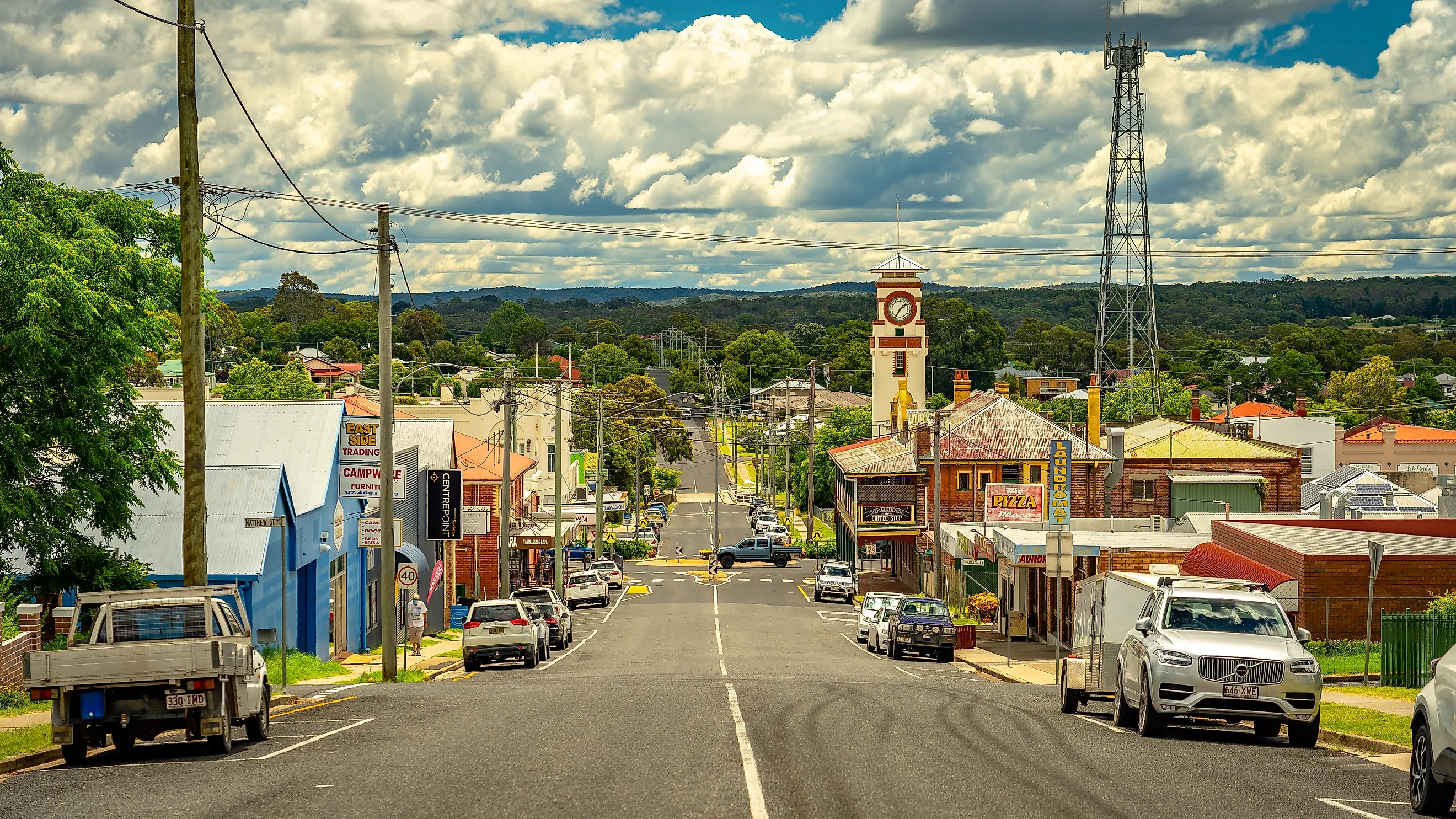
Stanthorpe

Timing matters in Stanthorpe. Summer brings fruit-heavy orchards and busy harvests, while winter is marked by frost and cold mornings. Many visitors begin at Girraween National Park, where granite outcrops, narrow crevices, and seasonal wildflowers define the landscape. The park’s walking tracks highlight the region’s distinctive geology and high-altitude environment.
Another key stop is the Truffle Discovery Centre, which explains how black truffles are cultivated in the area’s cool climate. Nearby, the Ridgemill Estate Winery and Cellar Door offers tastings of locally produced wines grown in high-altitude vineyards. The Stanthorpe Heritage Museum provides additional context through exhibits focused on early settlement, agriculture, and the development of the Granite Belt.
Herberton

Herberton’s identity is closely tied to its late nineteenth-century mining past. A central feature is the Herberton Historic Village, an open-air complex that recreates daily life during the mining era through preserved buildings such as a schoolhouse, blacksmith shop, hospital, and general store. Many structures contain original tools, furnishings, and signage that reflect everyday life at the time. Beyond the village, Herberton Range National Park offers walking tracks through open woodland and former logging areas. The nearby Herberton Mining Museum displays ore samples, machinery, and historical information related to tin extraction in the region.
Maryborough

Maryborough is one of Queensland’s oldest towns and is best known as the birthplace of author P. L. Travers. The Mary Poppins Statue and Story Walk traces key moments from her early life through illustrated panels placed throughout the town. Nearby, the Mary Ann Steam Train, one of the oldest operational steam trains in the country, reflects the town’s early importance as a railway hub.
A must-do is the Fraser Coast Wildlife Sanctuary. It allows visitors to walk among native animals in a natural setting while learning about rehabilitation efforts. Another notable site is the Cistern Chapel, a former underground water reservoir repurposed as an exhibition space, known for its stone interior and acoustics.
Chillagoe

Chillagoe is best known for its limestone landscape and former mining operations. The Chillagoe-Mungana Caves National Park contains extensive cave systems formed over millions of years, with guided tours leading through chambers shaped by water and mineral deposits. The park also features the Balancing Rock, a large natural formation that has become a local landmark.
The town’s small population supports a close-knit local scene that naturally links its cultural spaces together. Gallery 29 serves as both a café and community hub, where local artists display work and residents gather throughout the day. Each year, these everyday gathering places come together during the Chillagoe Festival, when music, food stalls, and community events fill the streets and reflect the strong social ties that define life in this remote town.
Genuine Hospitality
The impact of early interactions between Indigenous peoples and European explorers can still be seen in the design and layout of Cooktown. The laid-back atmosphere of Yungaburra comes from its well-preserved wooden buildings, walking paths, and long-standing community spaces. In Stanthorpe, the influence of climate and agriculture is visible through its orchards, vineyards, and cold-weather farming traditions. In Herberton, the area’s mining past remains evident in its streetscapes and preserved industrial structures. Maryborough reflects a strong connection between river trade, rail history, and cultural life through its museums and public spaces. In Chillagoe, the surrounding caves and remote setting continue to shape daily life and define the town’s character.