7 Offbeat Towns to Visit in Maryland
Maryland's most offbeat towns trade on odd, specific histories. St. Michaels supposedly fooled the British with lanterns in the trees in 1813. A 1683 court order still keeps Oxford's ferry crossing the Tred Avon. Chestertown re-enacts its own colonial tea protest every spring with rowing races on the river. Solomons pairs Calvert Cliffs fossils with sculptures on loan from the Smithsonian. Each town ahead earns its place on one odd fact like these.
St. Michaels

Aerial view of St. Michaels, Maryland.
St. Michaels earned its reputation in one night in August 1813. Townspeople heard a British raid was coming. They hung lanterns in the treetops and doused every other light. The cannon fire overshot the rooftops. The story is more legend than record. A roadside sign on Route 33 still calls it the town that fooled the British. The Cannonball House marks the one home that took a hit.
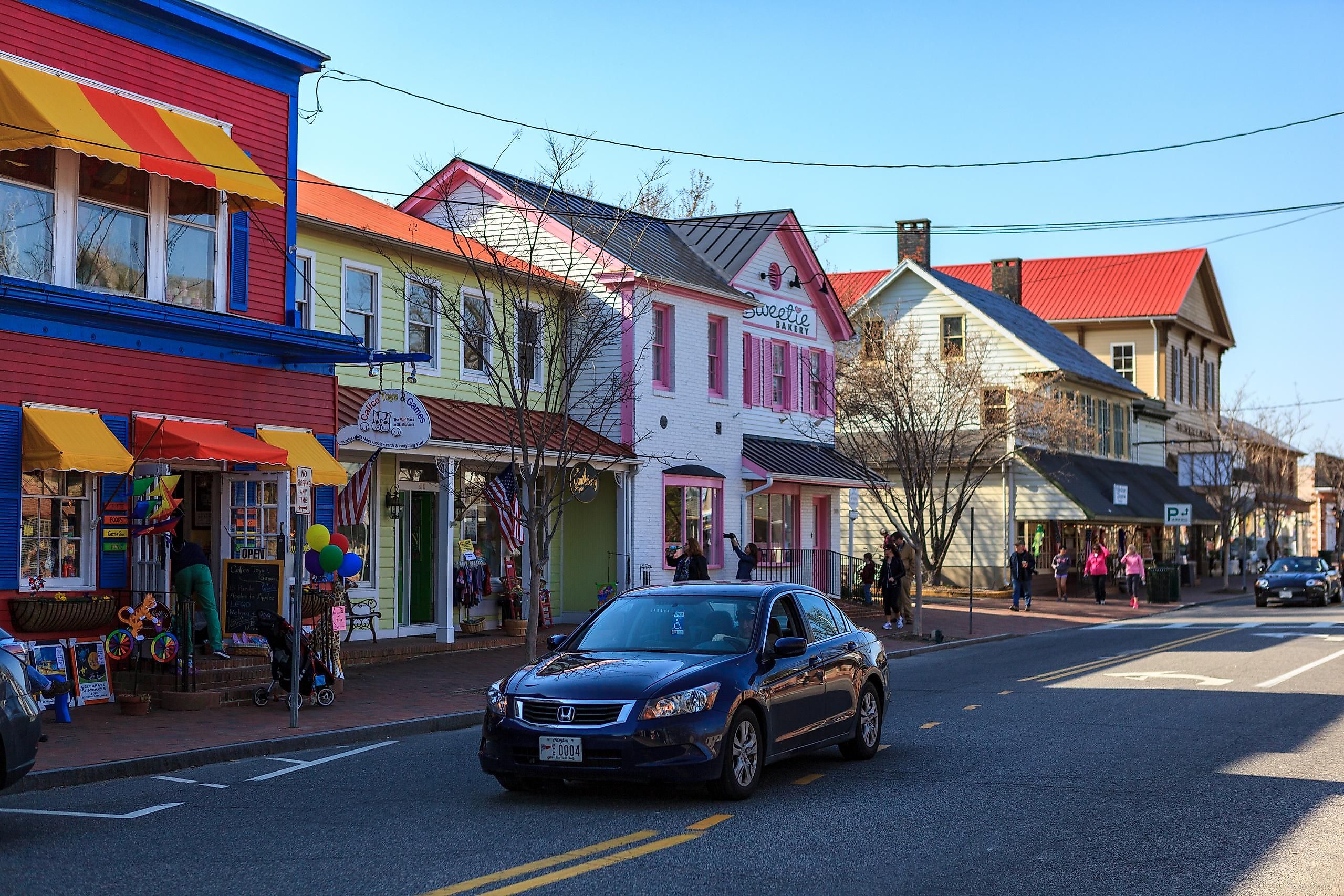
The St. Michaels waterfront leans hard into its maritime past. The Chesapeake Bay Maritime Museum covers 16 waterfront acres. It keeps a working boatyard and the 1879 Hooper Strait Lighthouse, floated up from Tangier Sound and rebuilt here. Visitors climb the light and tour exhibits on Chesapeake Bay oystering and crabbing. St. Michaels Winery pours Maryland wines inside an 1858 sawmill two blocks inland. A spring wine festival fills Muskrat Park. The Classic Motor Museum on Carpenter Street hosts a free car show each early summer.
Berlin

Berlin spent the 1990s as a film set. Hollywood shot Runaway Bride and Tuck Everlasting along Main Street. The restored Victorian storefronts still play the part. Budget Travel named Berlin America's Coolest Small Town in 2014. The downtown has held that energy.
The Berlin Arts and Entertainment District packs more than 60 shops, galleries, and studios into a few blocks. Live music plays most weekends. The Atlantic Hotel opened in 1895. It still operates with its original 16-room footprint and a street-front porch. The Berlin Fiddlers Convention fills the streets with bluegrass and old-time players each September. Ocean City and Assateague Island National Seashore are both about eight miles east. The town makes a quiet base for either.
Chestertown

Chestertown staged its own tea rebellion in 1774. The town re-enacts it every May. The Chestertown Tea Party Festival fills the waterfront with costumed marchers and rowing races on the Chester River. The protest mirrored the more famous Boston Tea Party of 1773.
The colonial downtown survives mostly intact. The riverfront promenade passes 18th-century brick homes, still lived in. The Chestertown Farmers Market sets up at Park Row every Saturday, year-round. Washington College opened in 1782 at the top of downtown. George Washington agreed to lend his name.
Solomons

Solomons stands where the Patuxent River meets the Chesapeake Bay. The waterfront holds one of the better museums in the state. The Calvert Marine Museum keeps Calvert Cliffs fossils and exhibits on the Patuxent estuary. The 1883 Drum Point Lighthouse stands restored on the grounds. Tours recreate the keeper's daily life.
The museum's boatyard still demonstrates traditional Bay boat-building. The Annmarie Sculpture Garden and Arts Center spreads works across 30 wooded acres a short drive away. Some pieces arrive on loan from the Smithsonian Institution and the National Gallery of Art. Few towns this far down the Patuxent pack fossils, a lighthouse, and national-museum sculpture into one afternoon.
Thurmont

Thurmont is the closest town to a place the public cannot enter. Camp David, the presidential retreat, lies inside Catoctin Mountain Park just outside town. Forest screens it, and it stays off-limits. The National Park Service manages the rest of the park. That part is open and laced with hiking trails.
The Blue Ridge Mountains reach their easternmost ridge here in the Catoctins. Thurmont is the gateway to Cunningham Falls State Park. The 78-foot Cunningham Falls is the tallest cascading waterfall in Maryland. An easy one-mile trail leads to the base, with accessible viewing platforms. The 43-acre Hunting Creek Lake opens for swimming and fishing in summer. The Catoctin Colorfest draws more than 250 juried artisans each October, one of the larger craft shows on the East Coast.
Oxford

Boats in the harbor of Oxford, Maryland
A county court ordered Oxford's ferry into service in 1683. A version of it still crosses the Tred Avon River today. The Oxford-Bellevue Ferry is widely considered the oldest privately operated ferry in the United States. Regular service has been unbroken only since 1836. The crossing takes under ten minutes. It carries foot passengers, cyclists, and a few cars at a time through the season.
Oxford dates to 1683, when a colonial trade act made it a port town. That puts it among the oldest towns in Maryland. The Robert Morris Inn occupies a building from 1710 at the foot of Morris Street. It has long served as one of the country's older taverns. The Oxford Museum on the same street traces the town's history as a colonial port, a shipbuilding center, and the quiet waterfront it is now.
Havre de Grace

Havre de Grace calls itself the Decoy Capital of the World. It has the museum to back the claim. The Havre de Grace Decoy Museum on Giles Street holds a deep collection of hand-carved waterfowl decoys from the Chesapeake region. The upper Bay turned that working craft into folk art. The town took its name from Le Havre in France. It stands where the Susquehanna River empties into the Chesapeake Bay.
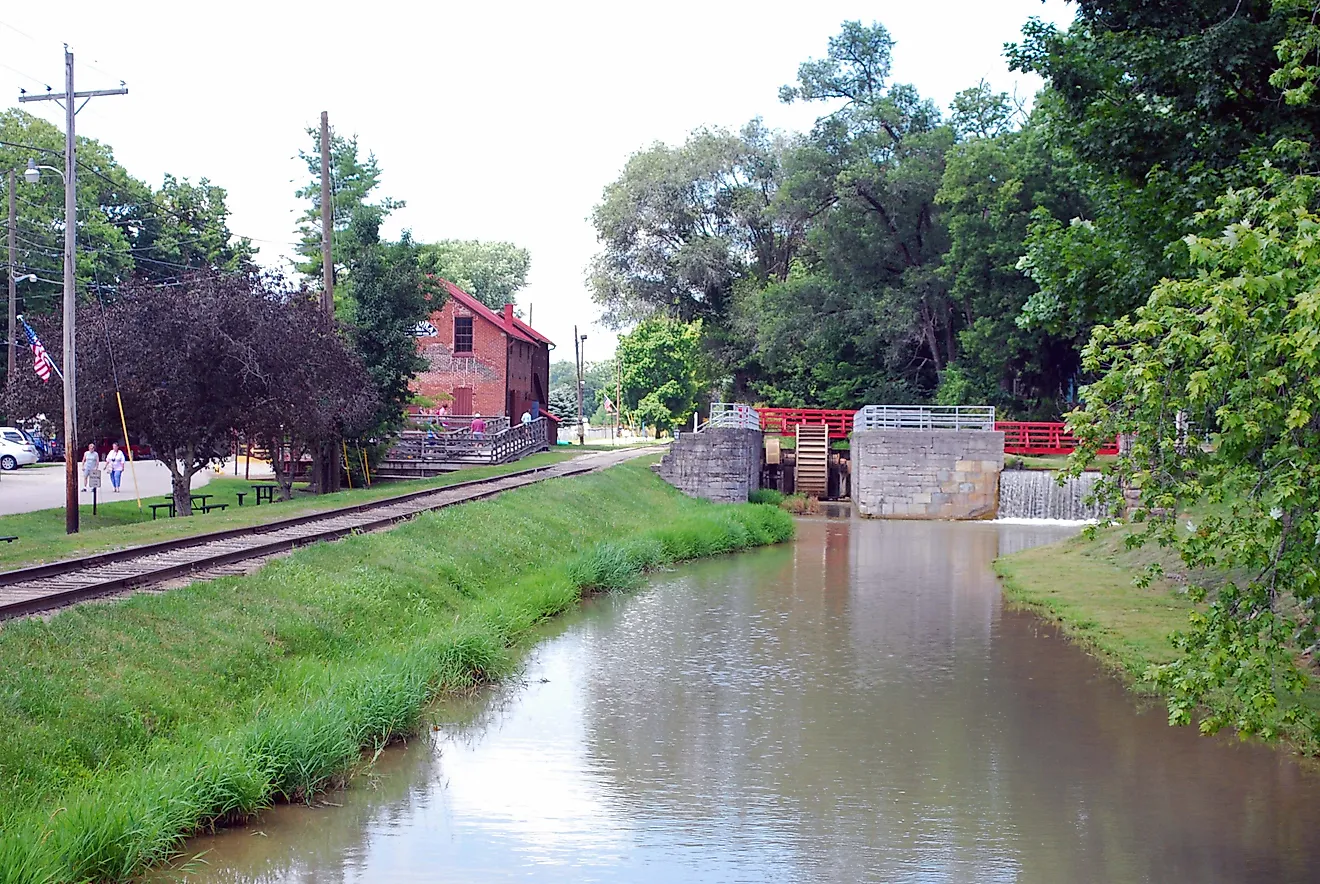
The Concord Point Lighthouse went up in 1827. It is the oldest lighthouse in continuous service in Maryland and the state's second-oldest tower. It stayed lit for 148 years before its 1975 decommissioning. The 36-foot granite tower opens for weekend climbs between April and October. A keeper's house museum stands across the street, restored to its 1884 look. The half-mile Promenade follows the river past the marina to Hutchins Memorial Park. The Lock House Museum at the south end tells the story of the old Susquehanna and Tidewater Canal.
One Odd Detail at a Time
What makes these Maryland towns offbeat is never the view. Havre de Grace carves waterfowl decoys by hand and lights a tower that outlasted every other in the state. Thurmont guards the edge of the Catoctins, beside a presidential retreat no civilian can enter. Berlin still wears the Victorian storefronts that doubled for two Hollywood films. None of these places leans on scenery alone. They earn their odd reputations honestly, and none of them feels like a museum behind glass.