7 Offbeat Pacific Coast Towns To Visit
Between Oregon's dunes and the Northern California redwoods, the Pacific Coast gets gloriously weird. The towns out here think big, starting with a 49-foot talking Paul Bunyan. They carve sharks with chainsaws and sculpt jellyfish out of beach plastic. Seven of them go all in on the offbeat. The redwoods are good sports about it.
Coos Bay, Oregon

Coos Bay built itself on timber and shipping. It still flexes as the biggest port between San Francisco and Seattle. The downtown Boardwalk is a stubby plank pier with a fish market and the old tugboat Koos No. 2 parked out front. A few blocks over, a 12-foot jellyfish named Belle stands guard by the Prefontaine mural. Local artists built her out of plastic plucked off Oregon beaches. The 1925 Egyptian Theatre still screens movies under iron cobra lights and a pair of 8-foot pharaohs, plus Oregon's last original Wurlitzer pipe organ.

The Cape Arago Highway bolts west out of town toward the open Pacific Ocean. Three state parks land within minutes of downtown. Sunset Bay hides a swimmable cove behind sandstone walls. Shore Acres drops manicured gardens onto a cliff where winter swells blow sky-high. Cape Arago caps it off above a rookery of barking sea lions.
Reedsport, Oregon

Reedsport turns chainsaws into a spectator sport. Every Father's Day weekend, the Oregon Divisional Chainsaw Carving Championship packs Rainbow Plaza with three dozen carvers ripping logs into bears and eagles. The winners end up planted around downtown for the rest of the year. A 30-foot cedar totem pole that Chief Lelooska carved in 1962 stands guard outside the Umpqua Discovery Center.

The real showstopper is the sand. The town backs onto the Oregon Dunes National Recreation Area, the biggest run of coastal sand dunes in North America at about 31,500 acres. Frank Herbert wandered these dunes in the 1950s and walked away with the idea for "Dune." Today the slopes belong to hikers and off-highway-vehicle riders, no giant sandworms involved.
Gold Beach, Oregon

Gold Beach wakes up at Kissing Rock Coffee, which roasts its own beans a short walk from the boulder it took its name from. The rock doubles as the town make-out spot, a fact the coffee shop politely ignores. Behind it, South Beach opens into a long empty stretch of sand.

Gold Beach owes everything to two bodies of water. The Rogue River barrels into the Pacific right at the edge of town. Jet boats blast upriver into the wilderness. Anglers crowd the river mouth chasing salmon.
Crescent City, California

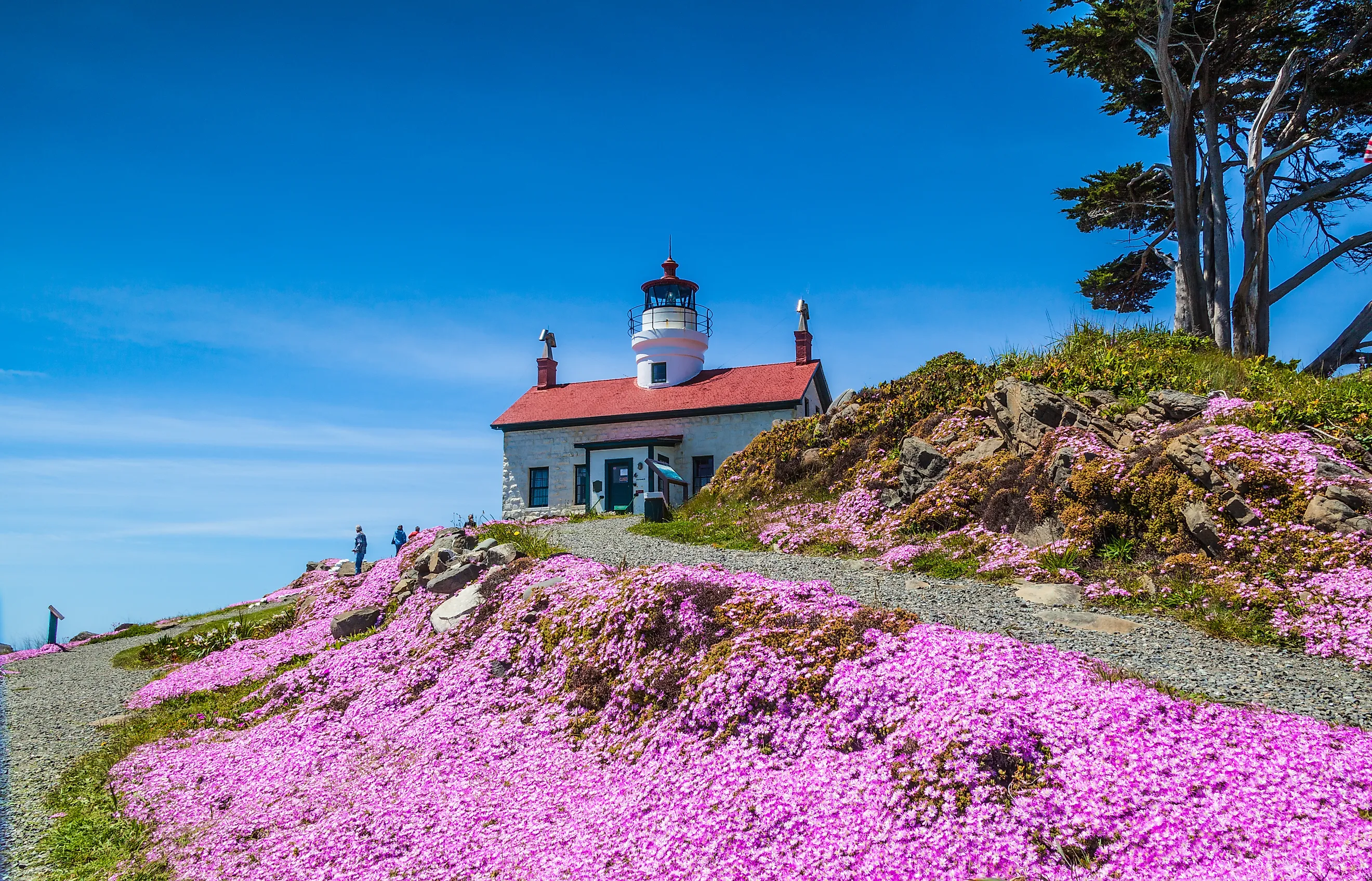
Crescent City is the first proper town on California's slice of the coast. A long pier juts into the harbor with a foghorn moaning at the far end. At low tide, a causeway opens to Battery Point Lighthouse, a working 1856 light with a pocket museum of coastal life. SeaQuake Brewing pours its own beer across from Beachfront Park.

Families pile into Ocean World, a harborside aquarium open since the 1960s with shark-petting and a sea lion show. Crescent Beach stretches wide and empty just south of downtown. Three redwood-and-dune parks ring the town within minutes. Tolowa Dunes, Jedediah Smith Redwoods, and Del Norte Coast Redwoods all start close to the harbor.
Klamath, California

Klamath has the smallest footprint here and the deepest roots. The Yurok Tribe operates the Yurok Country Visitor Center downtown, stocked with exhibits on California's largest Native nation and dugout-canoe trips on the river it takes its name from. The town stands where that river empties into the Pacific. Several units of Redwood National and State Parks kick off a few minutes away.

On the north edge of town, a 49-foot Paul Bunyan and his blue ox Babe guard the gate to Trees of Mystery. The roadside park opened in 1946. A canopy trail hops across eight suspension bridges strung 50 to 100 feet up in the redwoods, the tallest trees on Earth. A gondola hauls riders from the forest floor to a ridge with an ocean view.
Shelter Cove, California

Reaching Shelter Cove takes a brake-grinding crawl over the King Range into the Lost Coast. The payoff is a town jammed between steep green mountains and the open Pacific. Its nine-hole golf course shares a bluff with an airstrip, so propeller planes buzz the fairway between putts. Gyppo Ale Mill bills itself as California's most remote brewery.

Mario's Marina Bar holds down the patio above the harbor. Surf Point Coffee House wrangles the morning crowd. Black Sands Beach lives up to its name along the shore below. When the sea lions crank up the volume, the Cape Mendocino Lighthouse makes a fine walk. Volunteers hauled the 1868 tower here from its old headland in 1998.
Santa Cruz, California

Santa Cruz is the biggest town here and the one with the most attitude. A winter swell ripped about 150 feet off the Municipal Wharf in December 2024. Crews rebuilt it fast. The full half-mile pier, the longest wooden one on the West Coast, reopened in 2026. Sea lions still bark from the pilings underneath.

The Santa Cruz Beach Boardwalk loads the sand with roller coasters and carnival games. Its Giant Dipper has rattled riders around since 1924. Pacific Avenue downtown handles the bookshops, record stores, and cafes. The town claims the mainland's surfing roots. A surfing museum inside the Steamer Lane lighthouse backs that up.
The Towns Made Their Own Fun
The Pacific Coast's oddest landmarks were never built for show. Most of these towns started in timber and fishing. Coos Bay shipped lumber. Crescent City worked the harbor. When the easy money thinned out, each town leaned on what it already had. Klamath planted a giant Paul Bunyan at the edge of its redwoods. Shelter Cove reassembled an 1868 lighthouse on a bluff. Santa Cruz patched its century-old wharf after a storm tore the end off. The strange stuff came from the people who stuck around.