7 of the Most Charming Towns on the Pacific Coast
The Pacific Coast does small towns well. Some cling to basalt headlands. Others sit on quiet harbors where the ferry is the main event. A few run on sea stacks, salt air, and one great main street. Here are seven that stand out.
Astoria, Oregon

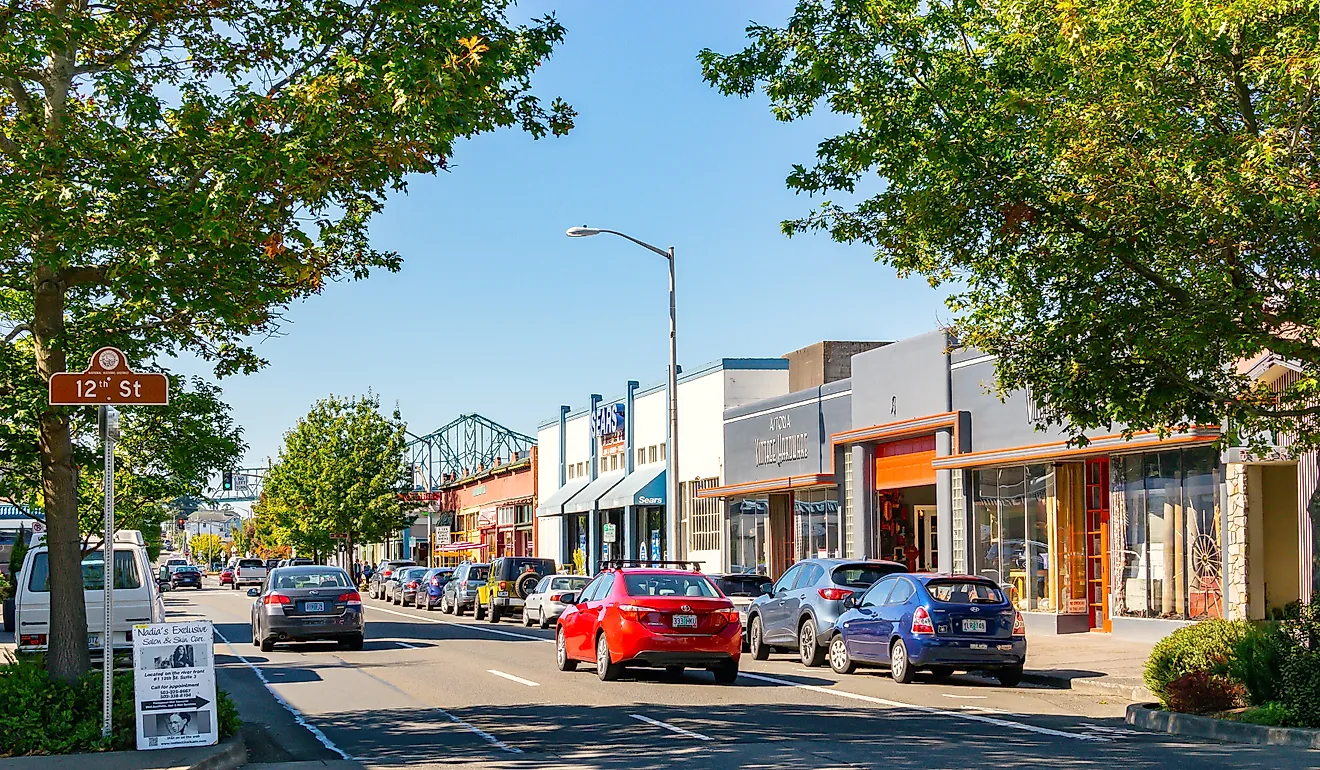
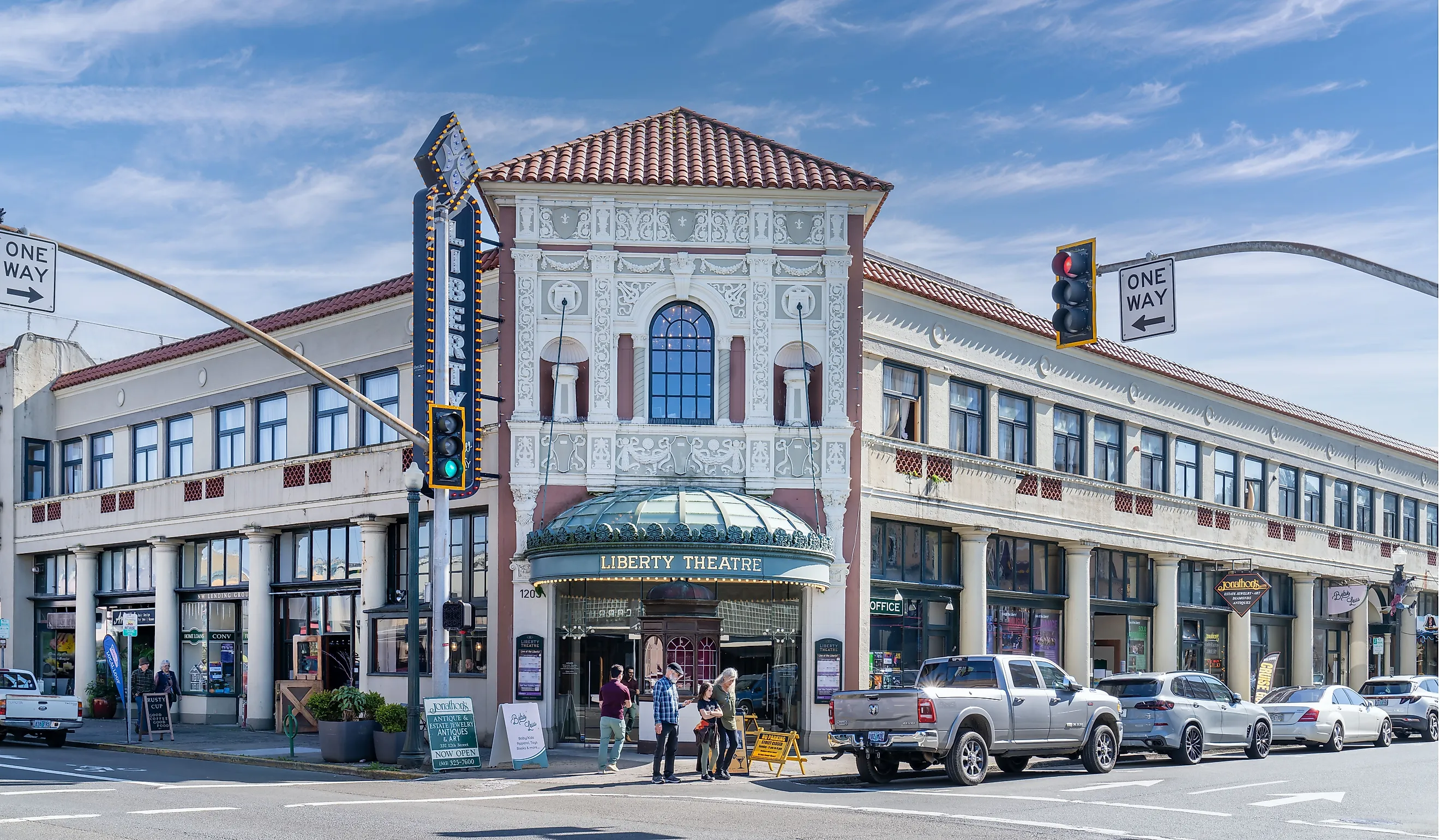
Astoria has been here since 1811, the oldest city in Oregon and the first American settlement west of the Rockies. It stacks up the hills above the mouth of the Columbia River, where the water meets the Pacific. Climb the 164 steps inside the 1926 Astoria Column and the whole river mouth opens up below you. Down at street level, the Flavel House shows off the town's old shipping money in Queen Anne turrets and trim, and the Oregon Film Museum sits in the former county jail that showed up in The Goonies. The Astoria-Megler Bridge, the longest continuous truss bridge in North America, runs more than four miles across the river into Washington. The Garden of Surging Waves honors the Chinese immigrants who helped build the town, and on summer Sundays the Astoria Sunday Market fills the streets with makers and farm stalls while the riverfront trolley clangs past.
Friday Harbor, Washington

You reach Friday Harbor by boat or floatplane, never by bridge. The ferry out of Anacortes drops you into a working harbor town of about 2,600 on San Juan Island, the commercial heart of the San Juan Islands. Drive twenty minutes to Lime Kiln Point State Park and you may catch orcas surfacing just off the rocks; its 42 acres make up some of the best land-based whale watching anywhere. The Whale Museum downtown sorts out who is who among the resident pods, and Crystal Seas runs guided kayak tours along the shoreline. Out in the countryside, Krystal Acres raises alpacas and Westcott Bay shucks the oysters it grows in the bay. End the day at Downriggers, where the deck looks straight across the marina.
Cannon Beach, Oregon

Haystack Rock settles the question of why anyone comes to Cannon Beach. The 235-foot sea stack stands right offshore, close enough to walk out to at low tide, when the pools fill with sea stars and the ledges with nesting puffins. Look north and you can pick out Tillamook Rock Lighthouse a mile out on its own island; first lit in 1881 and nicknamed Terrible Tilly, it took such a beating from storms that it was shut down in 1957 and left to the birds. The town behind the beach holds fewer than 1,500 people and is built for walking. The Coaster Theatre has staged plays since the 1970s, Icefire Glassworks blows glass while you watch, and Bruce's Candy Kitchen has pulled saltwater taffy since 1963. The Cannon Beach History Center even keeps the town's namesake, a cannon that washed ashore from a wrecked Navy schooner.
Carmel-by-the-Sea, California

Carmel-by-the-Sea has no street addresses, no streetlights, and no home mail delivery. Residents collect their mail downtown and give directions by landmark, and the cottages along the lanes are low and irregular, many built to look like something out of a children's book. Mission San Carlos Borromeo, founded in 1770, anchors the south edge of Carmel-by-the-Sea; its stone basilica went up in 1797 and still holds services. Just down the coast, Point Lobos State Natural Reserve guards a headland of cypress and rock above Monterey Bay, while Carmel Beach itself is wide, white, and free. When the town wants to eat well it books Chez Noir; when it wants a glass of pinot it stops at the Galante tasting room on Dolores Street. Clint Eastwood ran the place as mayor in the late 1980s, which tells you how seriously Carmel takes being exactly itself.
Hermosa Beach, California

Hermosa Beach is the loudest town on this list, and it likes it that way. Nearly 20,000 people pack the sand of this South Bay beach city just south of Los Angeles, where the Strand bike path runs past volleyball nets and beach volleyball is taken very seriously. The pier is the center of everything, lined with bars and taco counters and runners heading down to the water. The Comedy and Magic Club has been the South Bay's stage since 1978, and Jay Leno still drops in most Sunday nights to test new material. Hermosa Cyclery rents the cruisers everyone pedals along the Strand, Stars Antique Market keeps vintage finds a block off the sand, and La Playita has been serving Mexican plates to the brunch crowd for years. This is less a quiet escape than a beach party that never quite ends.
Seaside, Oregon

Seaside is where the Lewis and Clark expedition finally ran out of continent. A bronze statue of the captains marks the Turnaround, the spot where Broadway meets the sea, and a few blocks south the Salt Works shows where their men boiled seawater down to salt in 1806. The Prom, a mile and a half of concrete boardwalk, has carried walkers along the dunes since the early 1900s. In a town of about 7,100, Broadway behind the beach runs to pure carnival, with an arcade, bumper cars, and a candy-pull window or two. The Seaside Aquarium, open since 1937, hands you fish to toss to a tank of barking harbor seals. For an evening out, the Times Theatre and Public House pours beer inside a restored downtown cinema.
Bainbridge Island, Washington

A 35-minute ferry from downtown Seattle lands you on Bainbridge Island, close enough to watch the city skyline shrink behind you and forested enough to feel a world away. About 24,800 people live across the island, most within reach of the walkable Winslow waterfront. The Japanese American Exclusion Memorial marks a hard chapter: in March 1942, the first Japanese Americans removed under wartime orders were taken from this island, and a long cedar wall now carries their names. Up on Halls Hill, a stone-mosaic labyrinth finished in 2014 traces the medieval pattern from Chartres Cathedral, paired with a prayer wheel that rings a bell and a lookout over Puget Sound. Fort Ward Park runs along the southwest shore, where old coastal gun batteries still guard the approach to the sound. Two wineries, Bainbridge Vineyards and Fletcher Bay, pour what the island grows, and Heyday Farm cooks multi-course dinners on a working farmstead.
Seven Towns, One Coastline
What ties these seven together is not size but a strong sense of place. A sea stack here, a ferry whistle there, a mission bell, a boardwalk, an island labyrinth: each town leans on something it alone has. None of them blurs into the next. Spend a day in any one and it will feel like nowhere else on the coast.