7 of the Friendliest Towns To Retire In Portugal
There is no shortage of places in Portugal where retirement is more than just a quiet, empty routine. In many of the small towns in this country, daily life can revolve around the same plazas, the same cafes and restaurants, and community events that have been used for generations. This results in a unique kind of social environment in comparison to the larger municipalities, where local traditions maintain a close tie to the place people reside. Stepping away from these urban centers can often uncover hidden pockets of beauty, architecture, and history in neighborhoods with residents that greet each other with a smile each morning. These communities preserve a more connected, slow-paced way of living that makes settling down within it feel remarkably like coming home.
Tavira, Algarve

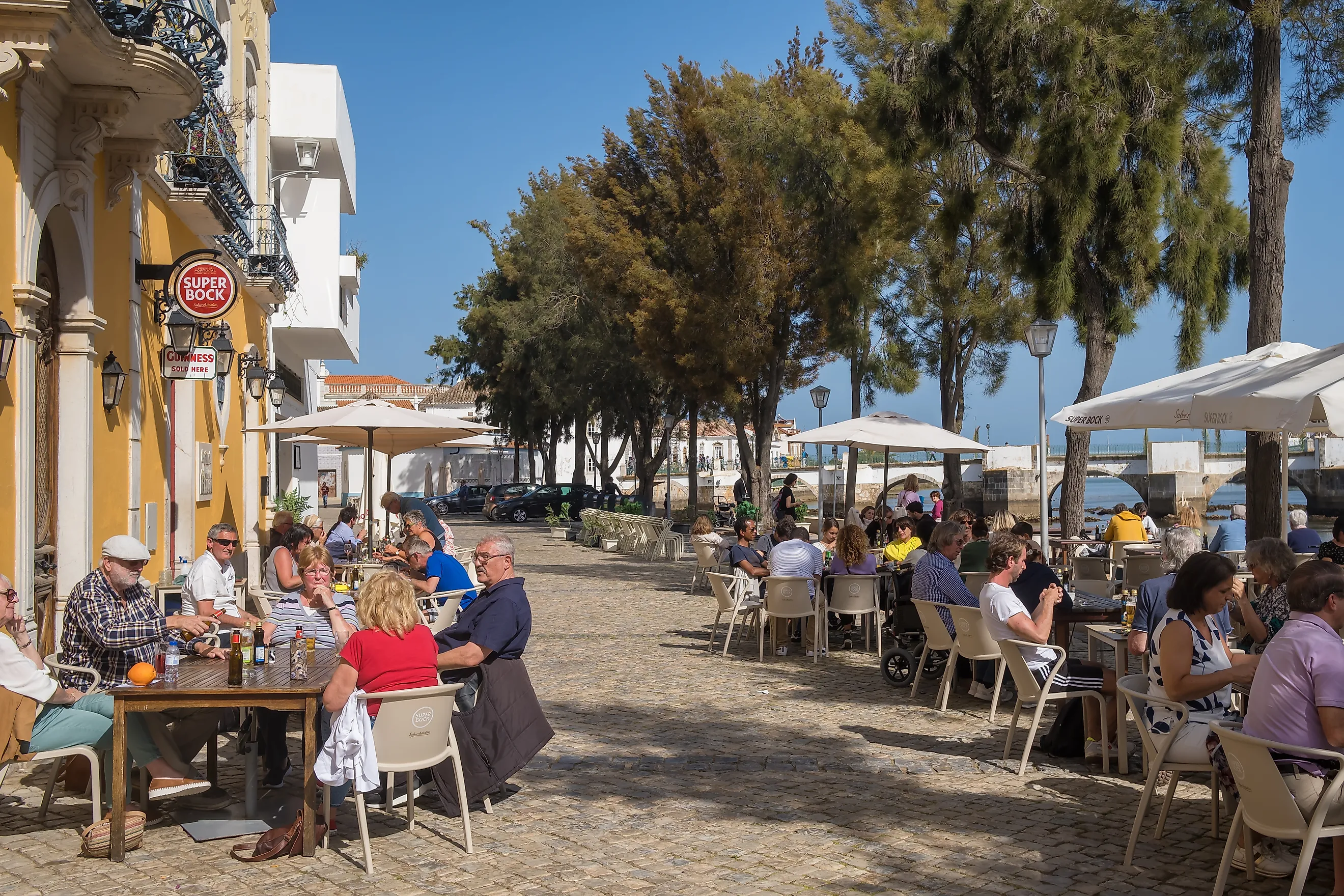
The River Gilão is directly woven into essentially every part of Tavira's historic center. With bridges connecting the two sides split by this river, each one has a distinct personality while still sharing so much of their sociocultural norms and history. The Jardim do Coreto acts as a gathering place near the waterfront, and what was once the Mercado da Ribeira has been transformed into a space for entertainment and leisure. The aforementioned bridge is Roman-styled and remains a central landmark in the area alongside others like the Praça da República, all working together to create an easily navigable and compact part of the locale in which inhabitants can easily move between shops, cultural attractions, and public spaces with relative ease.
The municipality has an estimated population of around 26,000 with a strong representation of elders and older adults, along with several activities that cater specifically to that demographic. The Lado a Lado program for example operates as a community center with an aim of combating social isolation for seniors. In this program they can participate in games, cultural outings, shared meals, exercise groups, and more, encouraging active engagement in local community life. Beyond that for more general enjoyment there are commonly recurring events like Tavira Annual Mediterranean Diet Fair that provide more opportunities for residents to gather and connect in ways that can include food, workshops, music, exhibitions, or even traditional dancing. From the thoughtfully designed spaces to the vibrant social programs, all these aspects work together to breed a close-knit, welcoming atmosphere for newcomers and longtime residents alike.
Óbidos, Central Portugal

The medieval walls of this city revolve around narrow, whitewashed lanes that are lined with small businesses, historic venues, churches, and residences, offering compact setting where daily life can remain concentrated within the town's center. Given its population of around 12,000 inhabitants, Óbidos has managed to cultivate a distinctive literary identity after earning designation by the United Nations Educational, Scientific, and Cultural Organization (UNESCO) as the Creative City of Literature in 2015. This literary flair has permeated the social fabric and there are many events that represent this, including the International Literary Festival of Óbidos which draws writers, artists, and of course readers to the event for workshops and performances. As for older residents, the town continuously operates the Programa Melhor Idade, a network of over 10 community centers established specifically to address loneliness and promote active, graceful aging. The medieval fortification walls and flower draped alleyways only add to the wonder-filled ambiance, and in combination with the community programs and literary culture Óbidos presents an atmosphere that feels more like a lived-in storybook than merely a quiet municipality.
Silves, Algarve

The red sandstone ramparts of Silves Castle tower over the landscape, yet the town's historical significance extends far beyond the extravagant fortress gates. Nearby the Silves Cathedral, Municipal Archaeological Museum, and Church of Misericórdia all add more layers of Roman and Islamic history to the city center, preserving artifacts and architecture from civilizations that helped in shaping the Silves that more than 37,000 enjoy today.
History becomes even more visible during the summertime, when the town hosts the Silves Medieval Fair at the heart of town. For nine days the streets surrounding the castle and cathedral take on an increasingly feudal atmosphere and carry out historical reenactments while hosting artisan markets, processions, regional food, music, and more to recall the period of time when Silves served as the Islamic capital of Algarve. These traditions that still draw together the town each year offer a rare chance to experience history in ways that include more than just an ancient landmark.
Bragança, Norte

Bragança's medieval citadel contains a rich heritage and an extensive past, setting above the modern city and enclosed by walls preserved through centuries. Centered on a castle that now contains a military museum, this historic center is compacted with multiple historic buildings like the Domus Municipalis and the Church of Santa Maria, along with other local museums and sites. The official accessible itinerary of Portugal connects these places into one suggested route that leads through the city.
The town has maintained a modest population of around 34,000, and although the history is impressive its modern reputation more so caters to people who have left the 9-5 lifestyle behind. This aspect of Bragança is especially noticeable through Universidade Sénior de Bragança, where retirement does not equate abandoning social connections and routine typically associated with full-time employment, but instead introduce classes in various subjects from philosophy and language to music and technology while also offering outings and performances to provide opportunities for the wider community to interact with attendants. For those who may be accustomed to having to be somewhere every weekday morning, programs and events like this help with the transition into retirement in a way that is considerably less abrupt. That balance is part of what gives this city its character, particularly as an attractive destination for older adults.
Castelo de Vide, Alentejo

With just over 3,200 residents this municipality operates on a scale that is markedly different than Portugal's larger destinations. The town climbs towards a medieval castle, with narrow streets that wind through one of the country's most accurately-preserved historic Jewish quarters with the São Mamede mountains as the backdrop to the city's architectural aesthetic. This small scale also means that the community and any individual's everyday life maintain close affiliation. Services like Santa Casa da Misericórdia de Castelo de Vide's Centro de Dia provide local elderly residents with meals, transportation, various treatments, recreation, and other forms of support with a purpose that extends above simply providing care, rather aiming to maintain relationships between elders and the wider community while encouraging interpersonal and intergenerational connections. The same sense of participation also appears throughout Semana Santa, when the streets of Castelo de Vide become the setting for a religious procession joined by customs reflective of the municipality's Jewish roots. Here, residents and visitors can enjoy a slower pace without feeling completely isolated from the people around them. Size makes the territory feel intimate, while the regular traditions and events provide vibrancy and communal joy.
Lagos, Algarve

Long before this town became associated with the beaches of Algarves, the waterfront was a central aspect of Lagos' identity. This city has always had an essential role in Portugal's economy, through both the maritime expansion of the 15th and 16th centuries and the thriving local boating and tourism that defines much of the town today. The historic core still harbors many reminders of this past including the Mercado dos Escravos, a building associated with the first slave market established in the town in 1444, as well as the Castle of the Governor with walls that reflect the territory's former defensive essentiality.
Approximately 33,500 residents live in the area today, and beyond its old fortifications, the town opens up toward one of the most recognizable stretches of coastline in Algarve. Ponta da Piedade is particularly known for its limestone cliffs, sea caves, and arches, while beaches like Praia Dona Ana provide a quieter, more serene oasis. Life inside this town also extends far beyond just sightseeing, with the Lagos Cultural Center and the Municipal Library Júlio Dantas often hosting educational and cultural activities throughout the year. The combination of all these things along with the reputation of local hospitality gives Lagos a broader appeal for retirees with historic sites, a walkable city center, public cultural spaces, and coastal recreation all available for enjoyment and concentrated in the same community.
Ponte de Lima, Norte

Ponte de Lima's setting alongside the Lima River gives this area a unique character in comparison to many of the other historic communities scattered throughout Portugal. While the medieval bridge, compact old center, and other heritage buildings provide in-depth glimpses into the city's past, much of the town's current appeal comes not just from the history, but from the spaces built around them.
Greenery is central to the locale's charm with parks like Parque do Arnado offering aesthetically pleasing third-spaces for locals to gather, riverside paths for pleasant scenery, and the International Garden Festival filling different parts of the municipality with temporary flower arrangements made by designers from all corners of the world every single year. The city also maintains ecovias (dedicated green routes or eco-trails for non-motorized travel) and walking routes through the surrounding landscape, making outdoor activity an exceedingly natural part of being in the locality. The outdoor setting is matched by a lively social calendar for the more than 41,000 residents, with food fairs, concerts, equestrian events, and art exhibitions, spread throughout the year. Things like the Feiras Novas, which transform the town each fall with dancing, music, and folklore, attract thousands of people and give recurring opportunities for locals and visitors to take part of one Ponte de Lima's defining traditions. For older adults in the area, this combination is extremely conducive to a lifestyle that can be as active or sedentary as they prefer. Whether the perfect day looks like a peaceful stroll beside the river, an afternoon exploring the gardens, or dancing in the crowds during a town festival, this city has so much more to offer than what initially meets the eye.
Final Thoughts
These towns all make social life an integrated part of the physical surroundings. In their own unique ways, each municipality has something special to offer that cannot be easily replicated or dismissed. Although there is not a singular metric to measure "friendliness" in a neighborhood, what can be measured is how much effort a town puts into preserving and creating opportunities for its inhabitants to stay involved with the greater community and with each other.