7 Most Breathtaking Towns In Virginia
Ask most Virginians to picture the state's mountains and they will describe the soft green Blue Ridge, not the far southwest corner near the Tennessee line. Up around Mount Rogers, the land climbs past 5,000 feet into open, wind-scoured balds where wild ponies still run loose. It looks less like the rest of Virginia than like something a thousand miles farther north. Damascus sits at the foot of that high country, and the six other towns here are scattered across the state, each with scenery that would be the main attraction anywhere else.
Luray

Luray sits at the foot of the Blue Ridge, but its headline attraction is underground. Luray Caverns is the largest caverns in the eastern United States. A mile of paved walkway winds past towering stone columns, flowstone draperies, and the Great Stalacpipe Organ, often called the world's largest musical instrument. You can walk the main loop on your own or book a guided Discovery Tour that goes deeper into the cave's history. Back above ground, the Hawksbill Greenway is a two-mile paved path along Hawksbill Creek, easy enough for a stroll with kids or a picnic by the water. Shenandoah National Park sits about 15 minutes east, where more than 500 miles of trails climb to waterfalls and open ridgelines across some 200,000 acres.
Staunton

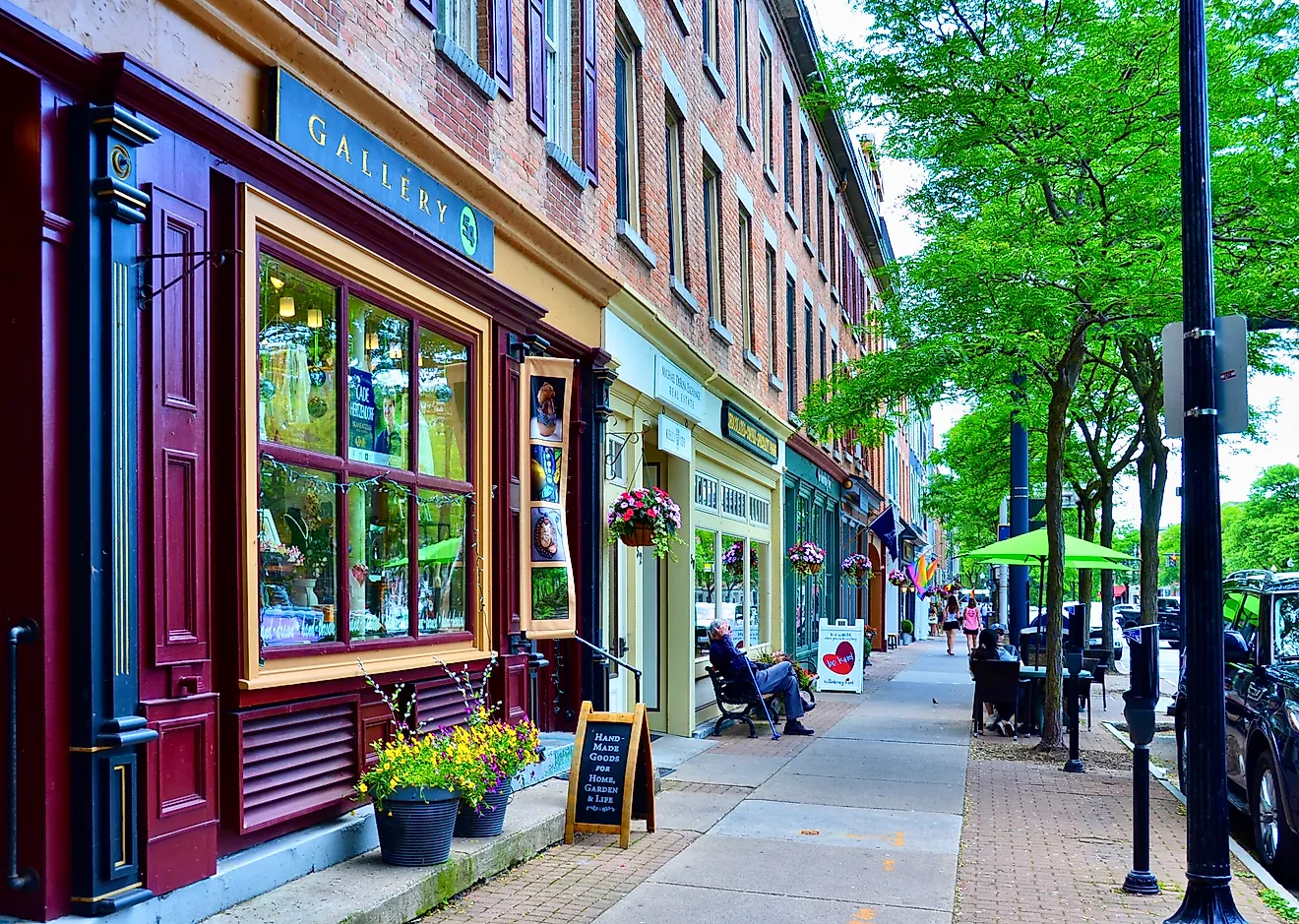
Staunton became a rail hub in the Shenandoah Valley after the railroad arrived in 1854, and its compact downtown is surrounded by six historic districts. On weekends in the warmer months, the city closes Beverley Street to cars, a row of Victorian storefronts that Architectural Digest named one of America's most beautiful main streets.

Its best-known stop is the Blackfriars Playhouse, the only full re-creation of Shakespeare's indoor theater, where actors and audience share the same light. A couple of miles away, the Frontier Culture Museum is an open-air site with working farms and costumed interpreters who act out early American rural life. For a slower afternoon, Gypsy Hill Park has shaded walking paths, a duck pond, and a small train that loops the grounds.
Lexington

Lexington is a compact, walkable nineteenth-century downtown with House Mountain on the western skyline and two historic college campuses at its edges. Washington and Lee dates to 1749; the Virginia Military Institute, founded in 1839, was the nation's first state-supported military college. Its museum holds more than 15,000 artifacts, including a Revolutionary War musket and Medals of Honor awarded to alumni.

The best scenery is a few miles northwest of town at Goshen Pass, where the Maury River drops three and a half miles through a gorge of cliffs, rapids, and swimming holes that USA Today ranked among the best waterside drives in the country. The Chessie Trail is the flatter option, an old rail line that runs seven miles along the river to Buena Vista. West of town, Route 39 follows the Appalachian Waters byway toward Warm Springs and the mountains beyond.
Floyd

Every Friday night, the crowd at the Floyd Country Store pushes back the chairs and dances flatfoot to live bluegrass and old-time string bands. The Jamboree began in the 1980s with a handful of fiddlers, and these days hundreds of dancers turn out each week; Floyd is a key stop on The Crooked Road, Virginia's heritage music trail. The land around town is the other half of the appeal. A marked trail climbs Buffalo Mountain to a treeless, wind-scoured summit at 3,971 feet. It is one of Virginia's most unusual natural areas, with fifteen rare plant occurrences and nine distinct natural communities on its slopes. For something faster, Buffalo Mountain Ziplines has the longest zip line in the state, more than 150 feet above the forest floor.
Damascus

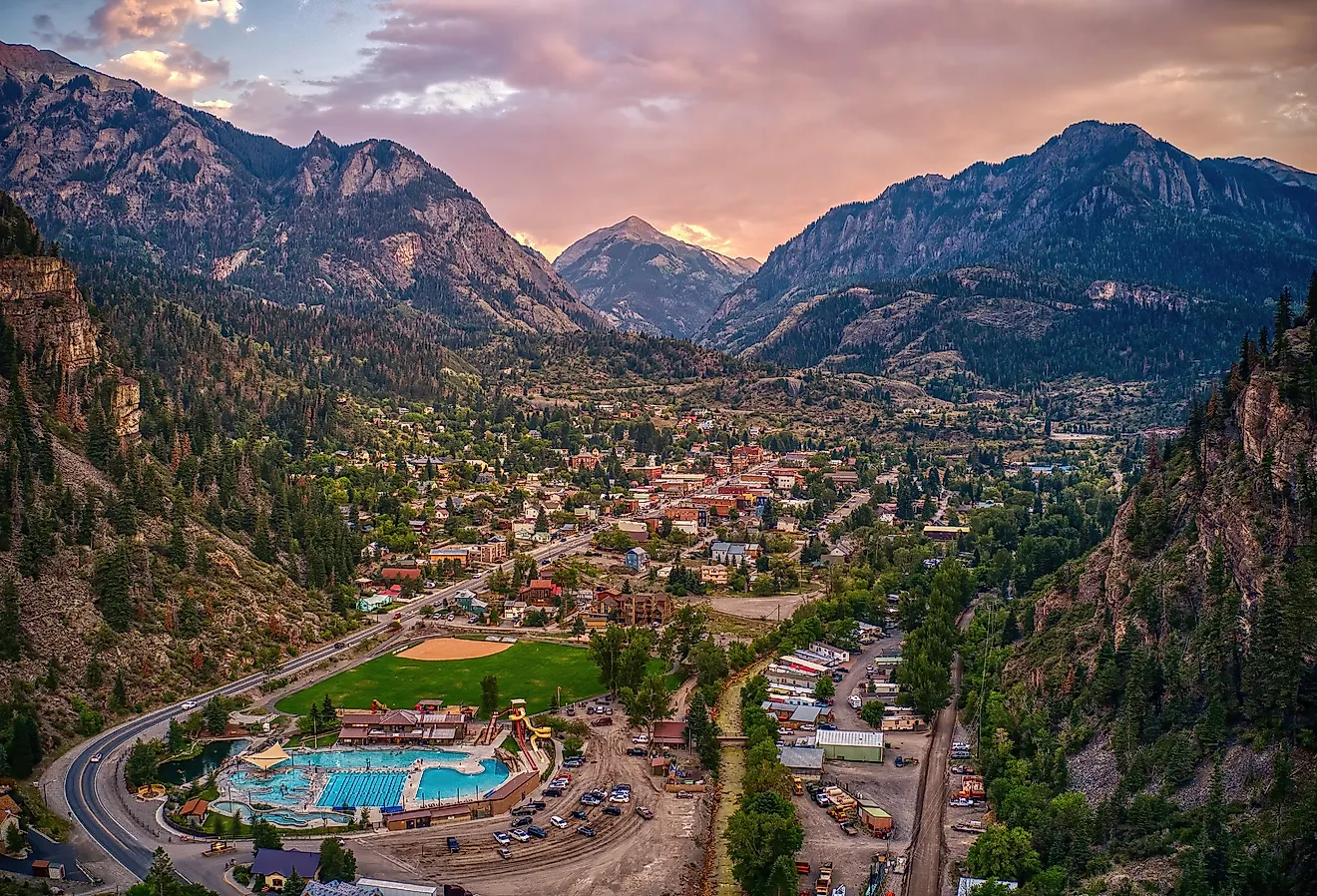
Damascus goes by Trail Town USA, and the name is earned: the Appalachian Trail and the Virginia Creeper Trail both pass straight through the middle of town, along with several other long-distance routes. The Creeper Trail's upper half, above Damascus toward Whitetop, is closed while crews rebuild the trestles that Hurricane Helene destroyed in 2024, and a full reopening is set for spring 2027. The flatter seventeen-mile stretch down to Abingdon stays open for walking and biking. On the edge of town lies Mount Rogers National Recreation Area, 200,000 acres of ridgelines, high balds, and spruce-fir forest. The recreation area has more than 500 miles of trails, four wilderness areas, and the road up Whitetop Mountain, the state's second-highest peak and the highest you can drive to. Three trout streams come together in Damascus to form the South Fork of the Holston, with swimming holes along the way. The Damascus Diner, decorated with hiking memorabilia, is a favorite breakfast stop for locals and thru-hikers alike.
Cape Charles

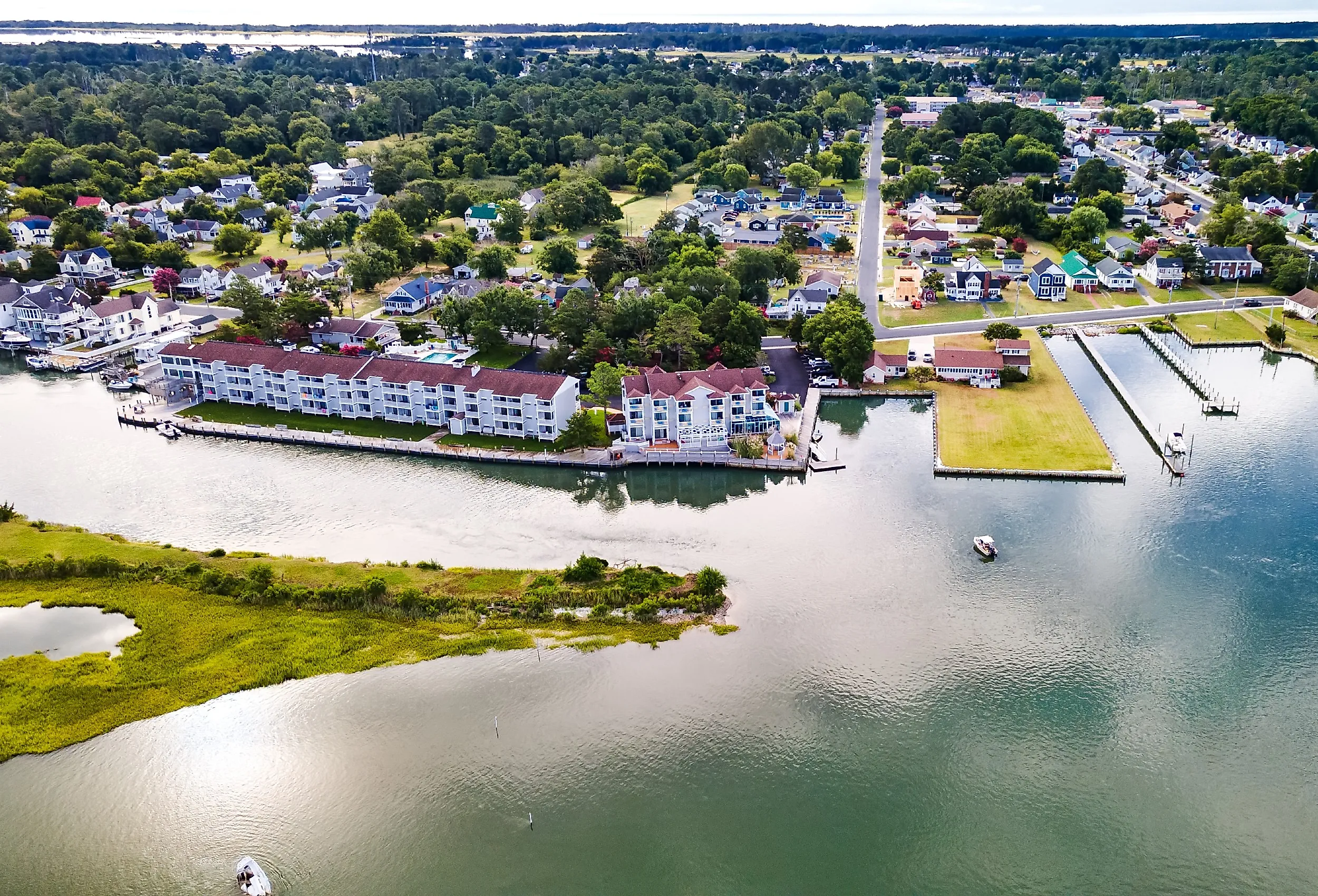
Cape Charles was laid out in 1886 as a railroad and ferry terminus, and its historic district is a compact grid of Victorian and Colonial Revival houses a short walk from the water. The free town beach is a block from the shops, and because it faces due west, it is one of the few places on the East Coast where you watch the sun set straight over the water.

Mason Avenue, the main street, has galleries, a brewery, and waterfront seafood a few blocks from the harbor. From there you can book a sunset cruise or a fishing charter. Five miles south, Kiptopeke State Park covers 562 acres of bay beach and pine woods, with a fishing pier and a row of nine concrete ships that were sunk offshore in 1948 as a breakwater. A boardwalk at the Cape Charles Natural Area Preserve leads through the loblolly pines to an overlook on the Bay.
Chincoteague

Wild ponies are the reason most people first come to Chincoteague. The best place to look for them is the Chincoteague National Wildlife Refuge, 14,000 acres of marsh, dune, and maritime forest on the Virginia end of Assateague Island. Fifteen miles of flat trails run past the ponies' saltmarsh, an undeveloped mile-long beach, and the red-and-white Assateague Lighthouse.

More than 300 bird species pass through, along with the Delmarva fox squirrel and the piping plover. Captain Henry Snyder takes small groups out to the Assateague herd on his Salt Water Pony Tours boats, where dolphins and ospreys are common company. In late July, the saltwater cowboys drive the ponies across the channel from Assateague in the annual Pony Swim, which crowds have come to watch for close to a century. Bill's Prime Seafood and Steaks, on Main Street, has been an island fixture since 1960.
Timing a Trip
Timing matters more than distance with these towns. The mountain picks (Floyd, Damascus, and Lexington) are at their best in the warmer months, roughly late spring through October, when the trails are dry and the festival calendars fill up. In winter, some of the higher roads close and the crowds thin. On the coast, Cape Charles and Chincoteague are warm and busy in summer, while the shoulder months are quieter and better for birding. Luray and Staunton hold up year-round, since their headline attractions (the caverns and the playhouse) are both indoors. Whichever you choose, plan to stay overnight, because each of these places is worth more than a day trip.