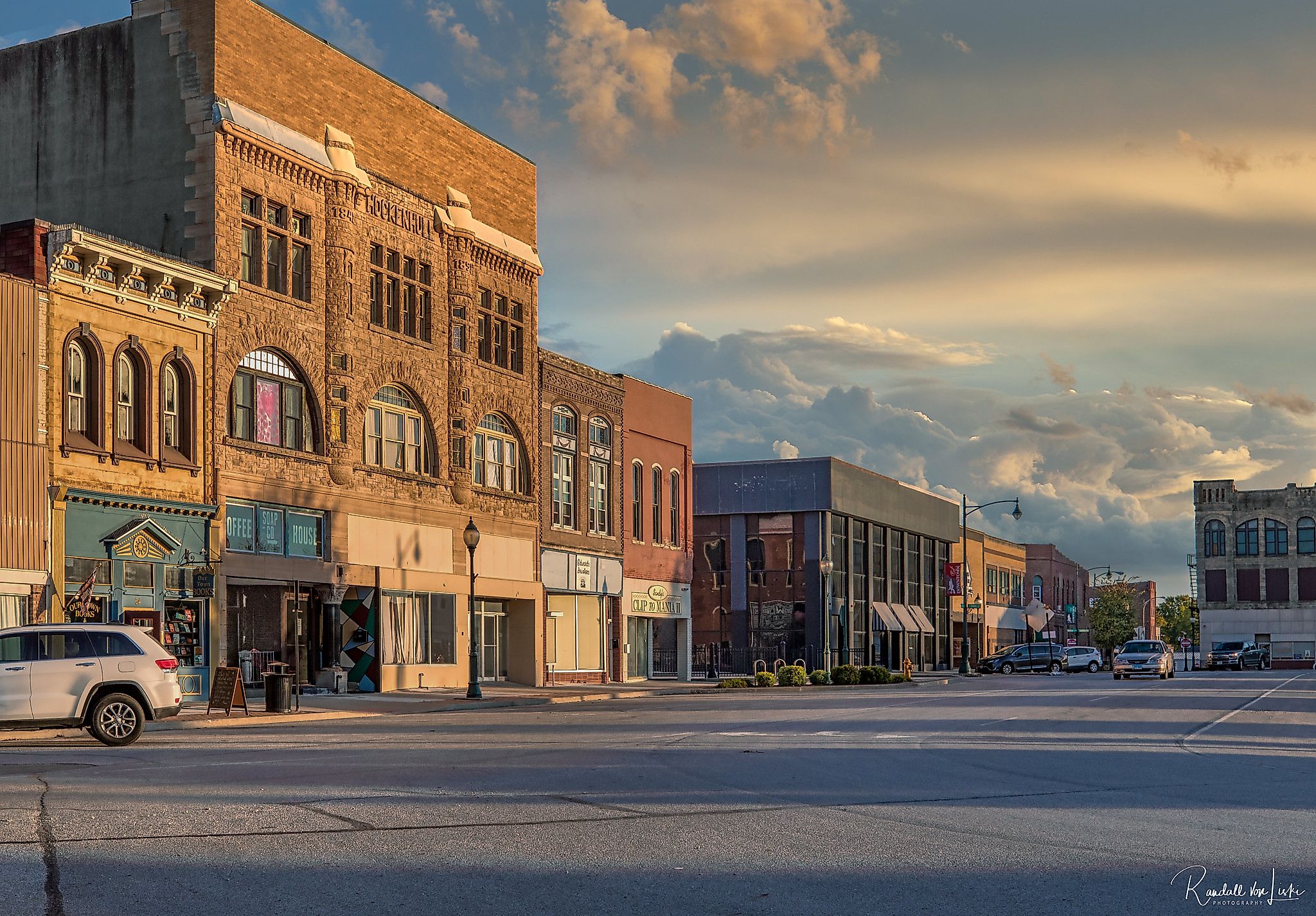
7 Main Streets Where Illinois Comes Alive
Illinois towns build their main streets around one landmark and dare you to look away. Galena stacks its shops up a real hill. Oregon points its square toward a giant statue on the bluff. Carthage rings a limestone courthouse worth the drive alone. The county offices sit steps from the coffee counters and the antique dealers. That closeness gives these downtowns their pull and their personality. Each one proves a small street can carry a big afternoon.
Galena

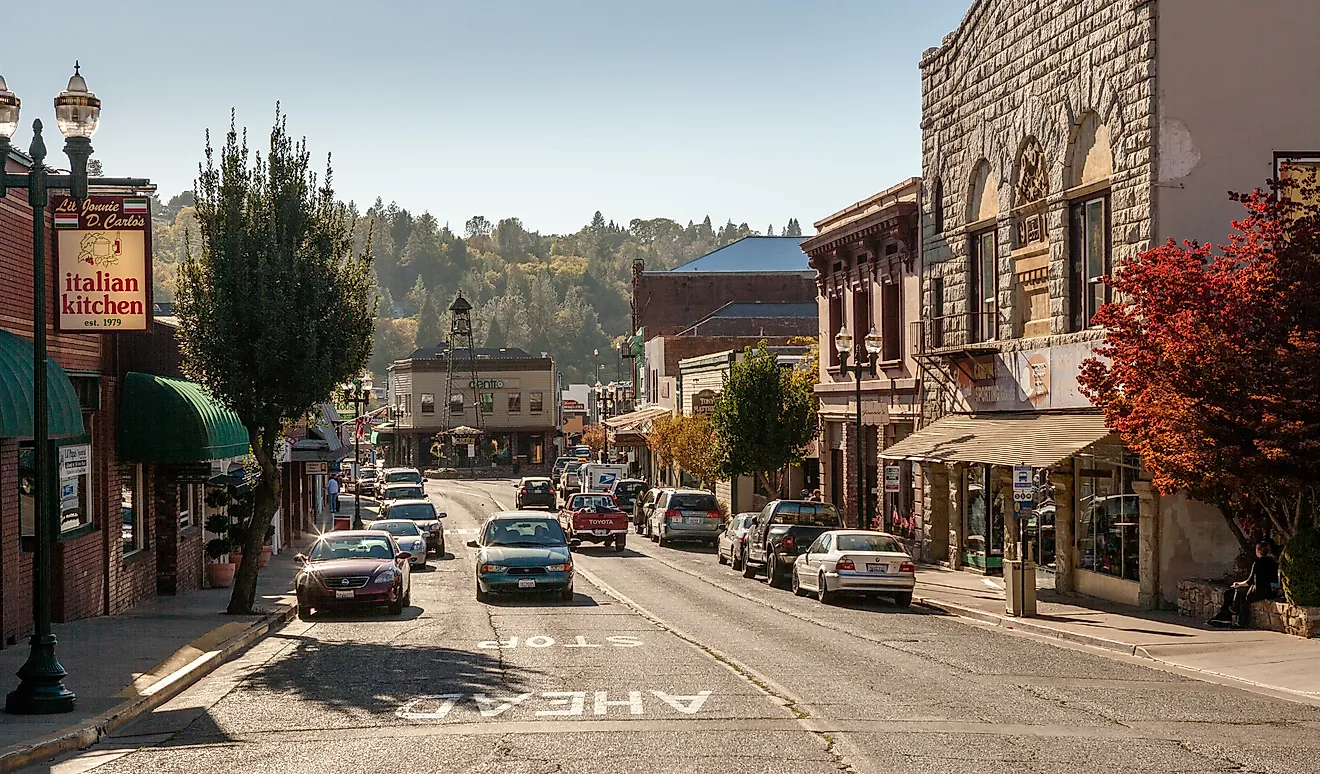
Galena sits in the Driftless Area, the one corner of Illinois the last glaciers skipped, so its main street climbs a real hill instead of running flat. That slope is lined with brick storefronts that have held their ground for roughly 150 years, a downtown so intact it carries National Historic Register status block after block. The town made its fortune on lead in the 1840s and 1850s, when it rivaled Chicago as a commercial port on the upper Mississippi, and the mining money is what built the architecture people come to see. Ulysses S. Grant clerked at his father's leather store here in 1860, left to win the Civil War, and came home in 1865 to a house his grateful neighbors handed him. You can tour that house, the Grant Home State Historic Site, then walk down to the shops and the Galena History Museum, where the whole rise-and-fall story sits in one building. The Galena Trolley Tours fill in the rest on a narrated loop through the old commercial core.
Jacksonville

Jacksonville was laid out in 1825 around a five-acre public square, and the plan still runs the town. Surveyors ran State Street and Main Street straight through the center of that square, then built the blocks outward from it, so Main Street literally points to the heart of downtown. Central Park fills the square today, ringed by the 19th-century storefronts of a National Register historic district, many of them now holding independently owned shops and restaurants. The 1868 Morgan County Courthouse stands a block off the square in confident Second Empire stone, the third courthouse the county built after two earlier ones burned. Jacksonville is a town of firsts: Illinois College opened here in 1829 as one of the oldest colleges in the state, and the campus keeps a steady stream of students moving through downtown. The David Strawn Art Gallery has shown work in a Victorian mansion since 1915, and every summer the locally built Big Eli Ferris Wheel turns in Community Park, a hometown invention that first ran in 1900.
Oregon

Oregon organizes itself around the Ogle County Courthouse, an 1891 Romanesque Revival building that anchors the square and gives the downtown its solid, civic feel. The Rock River curves just past the commercial core, close enough that you can trade the courthouse blocks for a quiet paddle in a few minutes. On the bluff north of town stands the reason a lot of people make the drive: Lorado Taft's 50-foot concrete statue, "The Eternal Indian," better known as the Black Hawk statue, looking out over the river valley since the early 1910s. Founded in 1833, Oregon grew as a trading center and kept its historic square intact, and a working arts scene still runs through the galleries and studios downtown. Come out for the Oregon Rockin' River Fest in June and the streets and the riverbank fill with music and food for a day. The pull of the place is that contrast: a grounded courthouse town with the water and the sculpture waiting a short walk away.
Mount Carroll

Mount Carroll has one of the most cohesive downtowns in the state, a couple hundred brick and stone buildings that mostly predate 1900, all clustered around the Carroll County Courthouse. The town started as a mill settlement around 1841 and won the county seat two years later, then leaned hard into education when Shimer College opened in 1853. Shimer left for good in 1979, but the campus on the south edge of town found a fitting second life: it is now the Campbell Center for Historic Preservation Studies, where people learn to restore exactly the kind of buildings the rest of the town is made of. Downtown you can browse Fika Boutique on West Market Street for handmade jewelry and gifts, and a few miles out sits the Timber Lake Playhouse, the oldest summer stock theater company in Illinois, still running a season every year. For a town of well under 2,000 people, that is a lot of life pointed at a single square.
Princeton

Princeton runs two business districts, one that grew up around the courthouse square and a second that sprang up a mile north when the railroad tracks arrived in the 1850s, and both still line Main Street with 19th-century storefronts. The building people steer toward is the Apollo Theater, which has anchored downtown since the 1880s and still shows first-run films inside its old walls. Just off Main, the town's deeper story waits at the Owen Lovejoy House on East Peru Street, home to the abolitionist congressman and Lincoln ally whose 1838 house was a documented stop on the Underground Railroad, complete with a concealed compartment where freedom seekers hid. It is now a National Historic Landmark open for tours. North of town, the 1863 Red Covered Bridge over Big Bureau Creek is one of the last of its kind in Illinois, currently closed to traffic and awaiting repairs after a truck strike, but still a favorite spot for a photograph. The Bureau County History Center rounds out the picture with the railroad and farming past that built the place.
Effingham

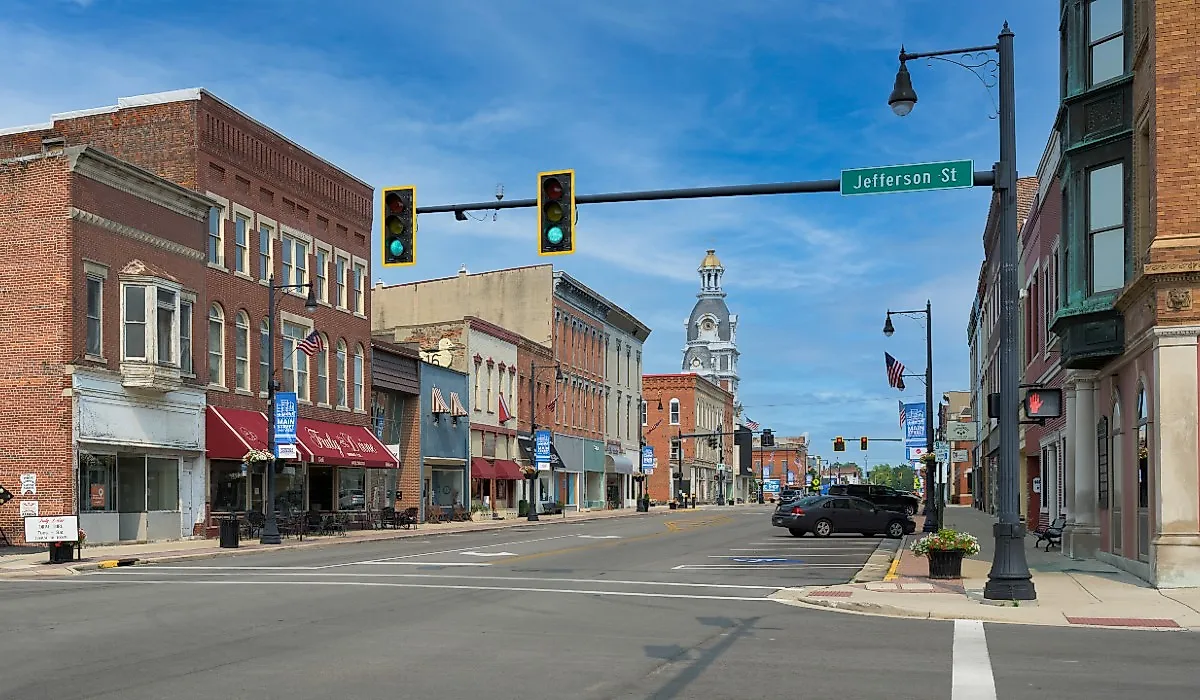
Effingham grew up as a crossroads, first for the railroads and later for Interstates 57 and 70, and while the modern town spreads well beyond it, Jefferson Avenue still holds the historic downtown together. The anchor is the old Effingham County Courthouse, an 1871 landmark that now serves as the county's cultural center and museum, keeping local history on display where the county's legal business once happened. Around it, the street has grown a genuinely fun character. Gopher's Grill, which opened in 2018 on West Jefferson, pairs half-pound burgers with a floor of golf and hunting simulators and second-story arcade games, the kind of place that answers the old complaint that there is nothing to do in town. Rent a bike downtown and you can spend an afternoon tracking down the murals and sculptures scattered through the district. It is a working transit hub that never gave up its center.
Carthage

Carthage builds its square around the 1908 Hancock County Courthouse, a three-story limestone Beaux-Arts building that residents will tell you is one of the handsomest in the state, ringed by commercial blocks that mostly went up in the late 1800s. A short walk away stands the town's most-visited site, the Carthage Jail, built of local red limestone in 1839 and known as the place where Joseph Smith, founder of the Latter-day Saint movement, was killed by a mob in June 1844. It draws visitors from across the country to a quiet county-seat town of about 2,500. When the touring is done, the Wood Inn on Main Street serves tavern classics near the square, and a few miles out on Carthage Lake, Lake Hill Winery pours wines made largely from Hancock County grapes on a deck over the water. History in the morning, a glass at sunset, all within a short drive of one square.
What Holds These Main Streets Together
The thing these seven towns share is smaller and more human than a theme park's worth of attractions. Each one grew up around a single fixed point and never scattered. Galena has its hill of storefronts, Oregon and Mount Carroll and Carthage have their courthouse squares, Princeton has the theater that has run since the 1880s, Effingham has the courthouse it turned into a museum, and Jacksonville has a public square its founders drew before the streets. Walk any of these downtowns and the pattern shows itself: the coffee, the county records, the antiques, and the festivals all sit within a few blocks of that one center, because that is where the town decided to gather. It is a modest kind of planning, and it is exactly what makes these downtowns feel like real places instead of stops.