10 Best Small Towns To Visit In Illinois
In Casey, a town of about 2,200 people, a rocking chair five stories tall sits at the end of Main Street, one of a dozen Guinness World Records crammed into a few walkable blocks. It is the loudest example of an Illinois habit: small towns that go all in on one improbable thing. Galena rumples up into hills the glaciers skipped and lines them with 150-year-old brick storefronts. Nauvoo keeps an 1840s temple, rebuilt from the ground up, on a bluff over the Mississippi. Woodstock turns into Punxsutawney every February because a Bill Murray movie filmed there and the town never let go. These ten are the ones worth steering toward.
Galena

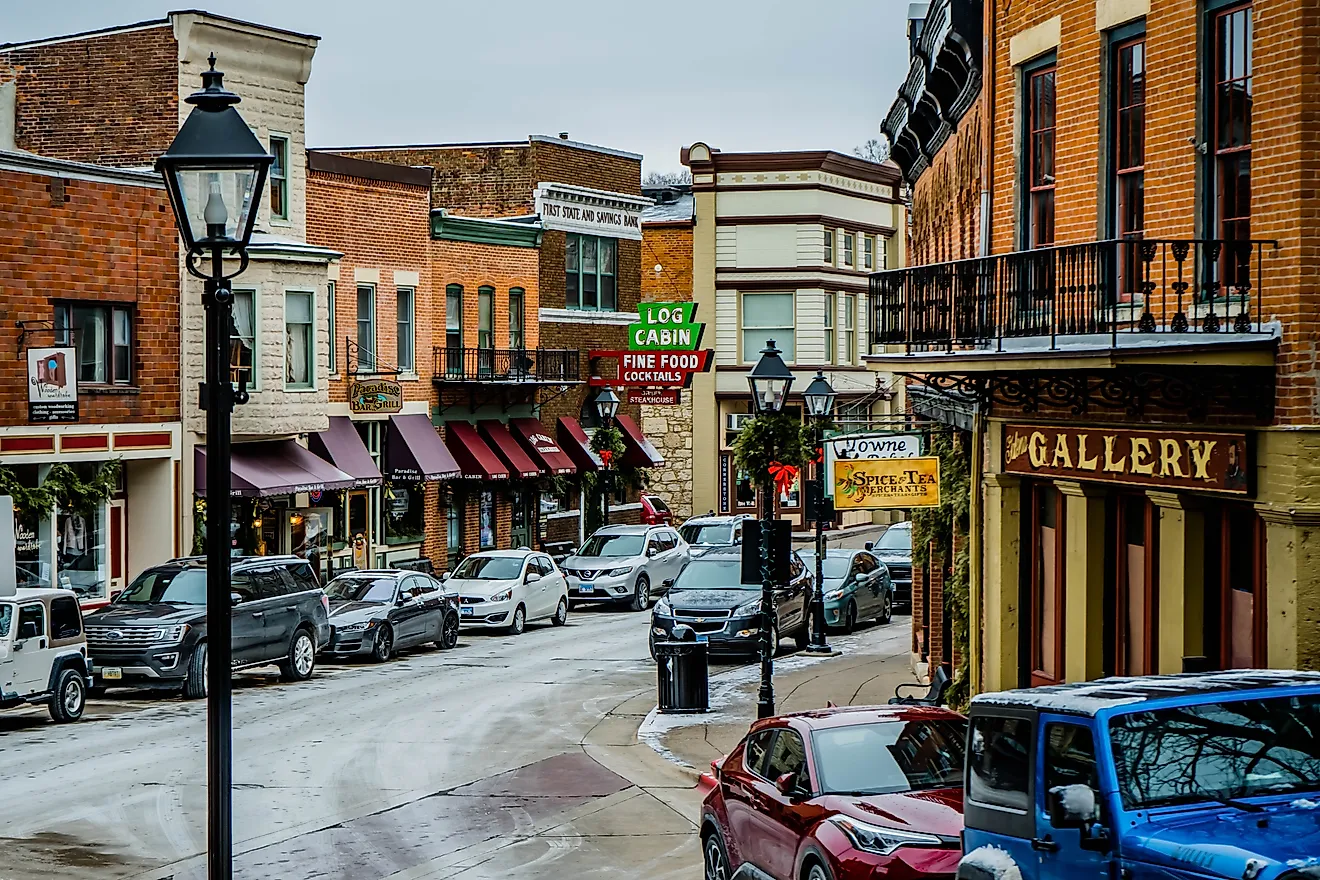
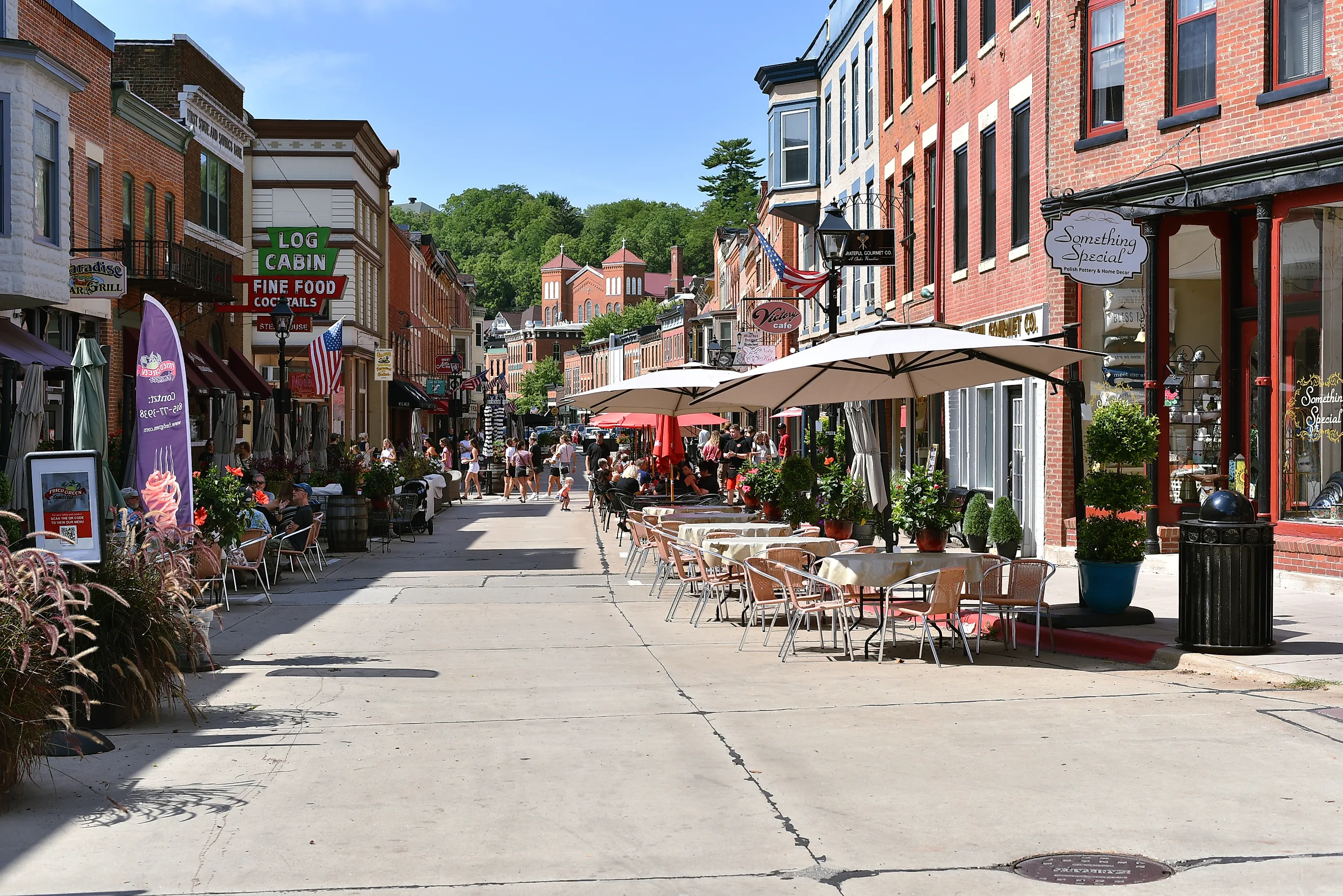
Galena has hills, which in Illinois is practically a magic trick. It sits in the Driftless Area, the one pocket of the state the last glaciers missed, so while the rest of Illinois got steamrolled flat, Galena kept its slopes. The downtown, on the National Register of Historic Places, stacks brick storefronts that have held their ground for roughly 150 years.
The town's most famous resident showed up in 1860 to clerk at the family leather store, then left to win the Civil War. Grateful neighbors handed Ulysses S. Grant a house when he came back, and it is now the Grant Home State Historic Site, open for tours. Otto's Place handles breakfast out of an 1899 building across the river, because even the diners here have provenance.
Woodstock

Woodstock is the town that played Punxsutawney in "Groundhog Day," and it has never once tried to move on. The film shot here in 1992, and ever since, the town throws a Groundhog Day festival every winter with free showings and a walking tour that hits every spot Bill Murray's Phil suffered through on his endless loop.
The square is where Phil keeps stepping in the same puddle, now marked by a sidewalk plaque so you can step in it too. The Victorian that played the Cherry Street Inn takes real guests today as the Cherry Tree Inn. Woodstock is also the McHenry County seat and the hometown of "Dick Tracy" creator Chester Gould, which is a lot of pop-culture firepower for one county seat.
Makanda

Makanda fits its entire social life onto a single short boardwalk, and somehow pulls a steady crowd doing it. The village sits in Jackson County about ten miles south of Carbondale, and its planks are lined with art studios, galleries, and hand-painted signs, an art colony shrunk down to one walkable strip.
The reason the boardwalk punches above its weight is just southeast: Giant City State Park, where the namesake "streets" are massive sandstone blocks stacked like the ruins of a city built for giants, the walls rising tall enough to walk between. Pair the boardwalk with the bluffs and you have an easy, strange half-day.
Elmhurst

Elmhurst leans more small city than small town, with around 46,000 residents, but it earns its spot. Elmhurst University has anchored the place since 1871, its campus spilling into a walkable downtown of shops and restaurants. The school dropped "College" for "University" in 2020, but the old elms that gave the town its name still shade the streets.
This western suburb of Chicago keeps its history free and close at hand. The Elmhurst History Museum at 120 East Park Avenue rotates exhibits on local life at no charge, the kind of low-key civic asset a bigger city would bury in admission fees.
Princeton

Princeton's headline is the Owen Lovejoy Homestead on East Peru Street, the home of the abolitionist congressman and Abraham Lincoln ally, and a documented stop on the Underground Railroad, open for tours. It is a town of about 7,500 that quietly held a front-row seat to the fight over slavery.
Princeton also claims two covered bridges, which is two more than most towns can say. The 1863 Red Covered Bridge north of town is the historic one, currently closed for repairs after a truck picked a fight with it and lost. The newer Captain Swift Bridge to the west opened in 2006, so the town has its bases covered across three centuries.
Nauvoo

Nauvoo's rebuilt temple stands on a bluff over the Mississippi River, and the story behind it is wilder than the postcard suggests. The town was the headquarters of the Church of Jesus Christ of Latter-day Saints from 1839 to 1846, and its name comes from a Hebrew word for "beautiful place." The historic district still covers much of the old town.
The current temple is a 2002 reconstruction of the 1840s original, which makes it a rare building that got to come back from the dead. Below the bluff, Baxter's Vineyards pours as the oldest winery in Illinois, and costumed guides lead free tours of the restored 1840s village, so you can drink old-vine history and walk through it in the same afternoon.
Casey

Casey is a town of about 2,200 people sitting on a stack of Guinness World Records, which makes no sense until you hear the story. The headliner is the World's Largest Rocking Chair on East Main Street, certified in 2015, standing 56 feet 1 inch tall and weighing 46,200 pounds, and yes, it genuinely rocks. A few blocks away wait the World's Largest Wind Chime and a parade of other oversized everyday objects.
The whole collection sprang from one man's stubborn imagination. Local businessman Jim Bolin built the giants out of recycled pipe and telephone poles, racking up roughly a dozen world records and turning a tiny town into a pilgrimage. Bolin died in early 2026, and his company has pledged to carry the work forward. Forty-acre Fairview Park gives you somewhere to sit, in a normal-sized chair, after all the photos.
Rockton

Rockton runs through several architectural centuries in about ten blocks of Main Street, lining the Rock River in the far north of the state with a population near 7,900. The much-photographed Church By the Side of the Road is the landmark everyone aims a camera at.
The Talcott Free Library has been lending books since the 1870s, and the building alone justifies the stop. West of the village, the Macktown Living History Education Center sits on Stephen Mack's 1830s settlement site, and just over the line in Roscoe, Historic Auto Attractions keeps one of the country's largest collections of presidential limousines, which is a deeply odd thing to find in northern Illinois and exactly why it belongs here.
Galesburg

Galesburg is Carl Sandburg's hometown, and the poet's name is stamped all over it. He was born here in 1878, his birthplace cottage is now the Carl Sandburg State Historic Site, and his ashes rest under a boulder called Remembrance Rock on the grounds, which is about as on-brand a final resting place as a poet could ask for.
The town also did serious historical work, serving as a stop on the Underground Railroad and hosting the fifth Lincoln-Douglas debate at Knox College in 1858. Around 30,000 people live here now, with the Galesburg Railroad Museum, the shops of Seminary Street, and Lake Storey Park rounding out a visit.
Ottawa

Ottawa hosted the very first Lincoln-Douglas debate on August 21, 1858, and it has not let anyone forget where history clocked in. Washington Square downtown marks the spot with a monument and historical plaques, sitting where the Fox River meets the Illinois. Facing the square is the Reddick Mansion, a 22-room Italianate pile finished that same year of 1858 and open for tours.
The bigger draw waits a short drive west at Starved Rock State Park, the most-visited state park in Illinois, where the Illinois River carved canyons and waterfalls that look like they wandered in from a much taller state. About 18,600 people call Ottawa home.
Where Illinois Keeps Its Best Stuff
The best Illinois towns each bet everything on one strange strength and won. Casey turned scrap pipe into a skyline of giant objects. Woodstock built a whole winter festival on two minutes of film. Makanda squeezed an art colony onto a boardwalk. Galena kept the only hills in a flat state, and Nauvoo brought a temple back from the dead. Spend an afternoon in any one of them, and the rest of Illinois, corn and all, suddenly looks a lot more interesting through the windshield.