7 Fairy-Tale Small Towns In Oklahoma
Oklahoma's fairy-tale towns aren't built around castles. They are built around places where the past never really disappeared. In Medicine Park, cabins and hotels are still built from rounded cobblestones gathered from nearby creek beds more than a century ago. In Sulphur, mineral springs protected by the Chickasaw and Choctaw Nations continue to flow through the state's oldest national park.
Broken Bow's Civilian Conservation Corps cabins and trails blend into the forests they helped shape nearly a century ago. Across the state, former capitals, tribal headquarters, and century-old downtowns are active centers of community life.
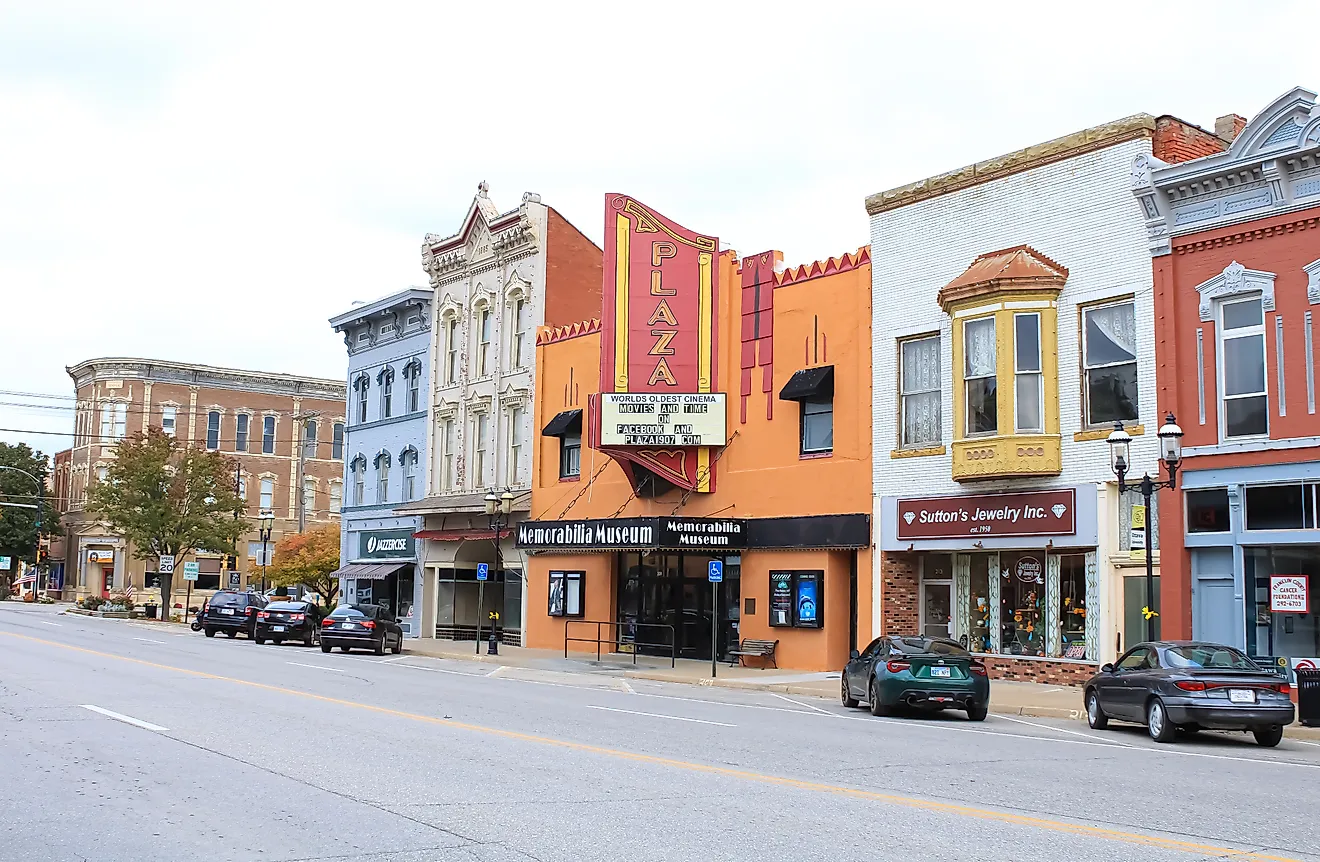
Guthrie

The town went from open prairie to a city of over 10,000 people in a single day during the Land Run of April 1889, and it served as the capital of Oklahoma Territory starting that year. When Oklahoma became a state in 1907, Guthrie was its first state capital, a role it held until the government moved to Oklahoma City in 1910.
Its downtown grew into the Guthrie Historic District, the largest contiguous historic district in Oklahoma, with more than 2,000 late 19th- and early 20th-century commercial buildings. Designated a National Historic Landmark in 1999, it showcases Late Victorian, Italianate, Romanesque Revival, Beaux-Arts, and Classical Revival architecture.
Walking its streets means passing landmarks like the 1893 Victor Building, one of territorial Guthrie's finest commercial buildings, now restored to its original Victorian-era appearance. Performances are held at the restored Pollard Theatre and there are antique shops and galleries along Harrison Avenue.
Watonga

Roman Nose State Park in Watonga, Oklahoma.
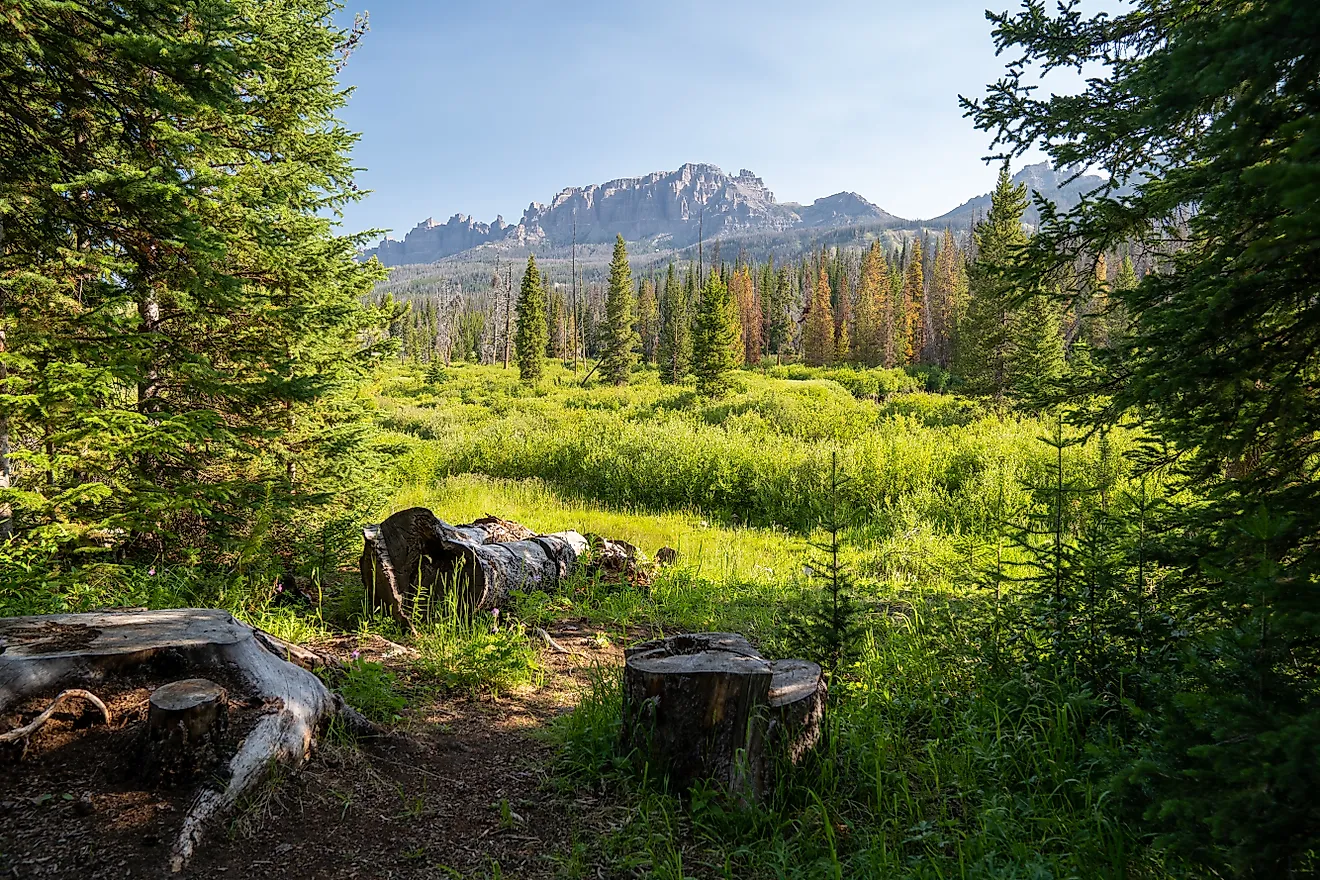
Watonga developed after the 1892 land opening, with the canyon north of town later becoming Roman Nose State Park. The park gives the area much of its fairy-tale setting through gypsum bluffs, wooded paths, and stone structures tucked into the landscape.
In 1935, Watonga residents purchased the canyon so the state could establish one of Oklahoma’s original seven state parks. Civilian Conservation Corps Company 2819 later built stone picnic shelters, trails, stairways, and an amphitheater from local materials before the park opened in 1937.
Those stone paths wind past the park’s lakes, pale cliffs, and a lodge overlooking the mesas.
Medicine Park

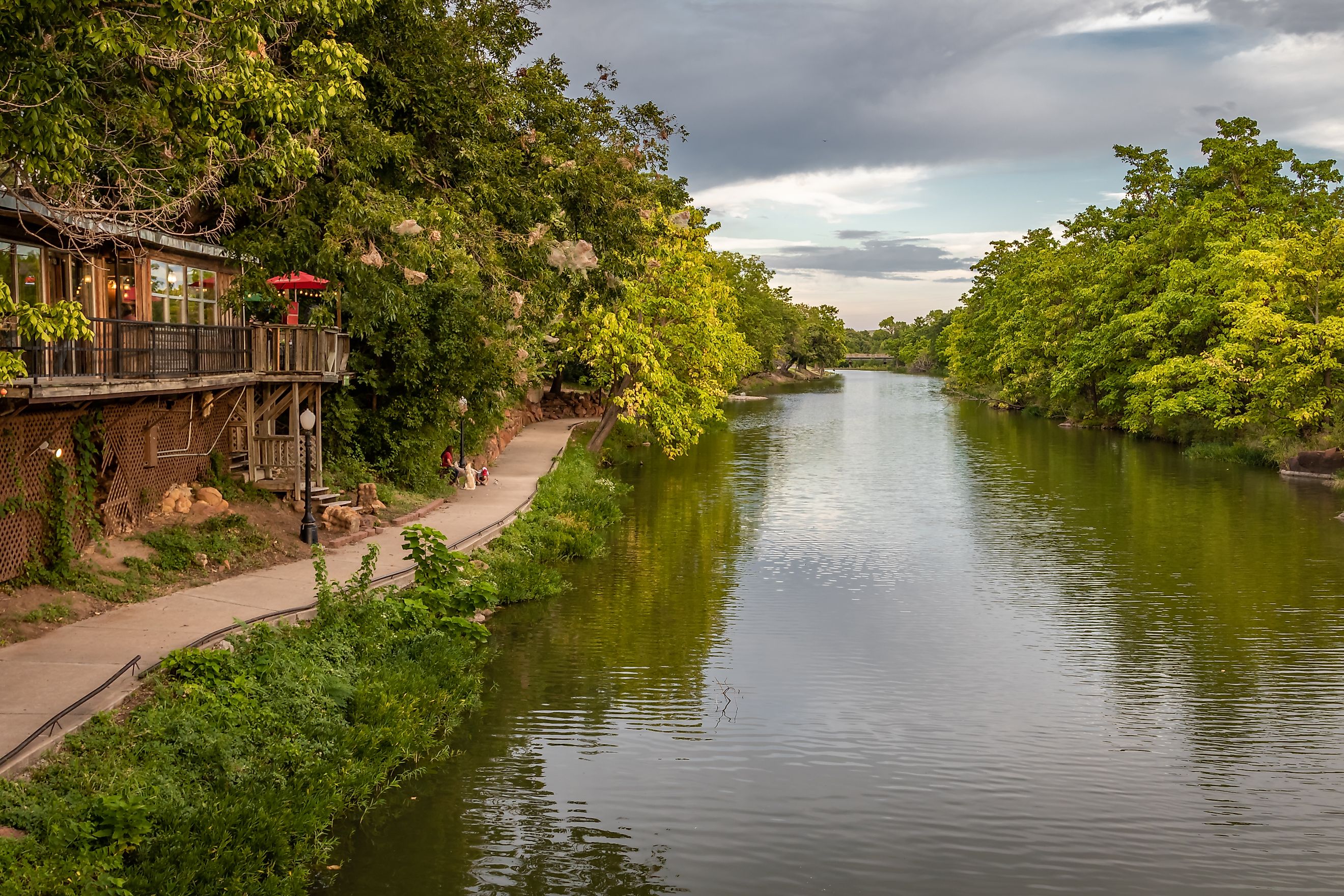
Medicine Creek in Medicine Park, Oklahoma.
Medicine Park was founded in 1908 by future US senator, John William Elmer Thomas. He purchased land at the foot of the Wichita Mountains to build a resort around the medicinal qualities long associated with Medicine Creek by Plains tribes. Builders hand-set rounded red granite cobblestones gathered from nearby creek beds into cabins, hotels, and public buildings, creating a look unique to Oklahoma.
After Thomas was elected to the Senate in 1926, he sold his private resort development to a corporation. The town later declined through much of the 20th century before reaching a population low of 285 in 1990. A revival beginning in the 1990s restored many of the original cobblestone structures rather than replacing them.
The Old Plantation Restaurant remains in the cobblestone building that began as an open-air pavilion in 1910 before becoming one of Medicine Park’s best-known hotels. Nearby, Bath Lake rests among the rounded stone buildings and wooded slopes, with the Wichita Mountains rising past the edge of town.
Sulphur

Waterfall in Chickasaw National Recreation Area, Sulphur, Oklahoma.
Sulphur grew around mineral and freshwater springs long regarded as sacred healing waters. By the late 1800s, people were arriving by train and buggy, and hotels and bathhouses spread across what was then called Sulphur Springs. Fearing the springs would be lost to private resort developers, the Chickasaw and Choctaw Nations ceded 640 acres, including more than 30 springs, to the federal government in 1902 to protect them.
The land became Sulphur Springs Reservation and was renamed Platt National Park in 1906. Stone bridges, winding trails, and spring-fed waterways later gave the landscape much of its distinctive appearance after Civilian Conservation Corps crews worked there during the 1930s.
Nearby, Little Niagara Falls flows beneath wooded banks, and the 1909 Lincoln Bridge crosses Travertine Creek. In Sulphur, The Artesian Hotel stands on the site of an earlier springside hotel, continuing the town’s long connection to the waters beneath it.
Broken Bow

Fall foliage along a lake in Broken Bow, Oklahoma.
Built on timber, Broken Bow evolved into a unique outdoor destination because of the forests, rivers, and lakes surrounding nearby Beavers Bend State Park. Civilian Conservation Corps crews built the park's earliest cabins, roads, and trails in the 1930s and early 1940s, using native stone and timber to create structures that blend into the forest.
Decades later, Broken Bow Dam transformed the Mountain Fork River into Oklahoma's only year-round trout fishery through its cold-water releases. Several original CCC-built cabins are still available for overnight stays, and the David Boren Hiking Trail winds through more than a dozen miles of pine forests, rocky ridges, and Mountain Fork River crossings.
Tahlequah

Set in the Ozark foothills near the Illinois River Valley, Tahlequah grew as the political and cultural center of the Cherokee Nation, a role it continues to hold.
The Cherokee National Capitol, completed in 1869 after the Civil War, now houses the Cherokee National History Museum and stands at the center of a historic downtown filled with brick storefronts, museums, local shops, and restaurants. The Cherokee National Prison Museum and the Cherokee National Supreme Court Museum are housed in the oldest surviving government building in Oklahoma.
Beyond downtown, the Illinois River, nearby lakes, and wooded Ozark foothills give Tahlequah a landscape tied to old tales and childhood adventure. That connection becomes more literal each spring during the Red Fern Festival, which honors “Where the Red Fern Grows” and its story of loyalty, loss, and life in the Oklahoma hills.
Pawhuska

The old business district on Main Street in Pawhuska, Oklahoma.
Pawhuska, named for Chief Paw-Hiu-Skah (White Hair), grew around the Osage Agency before flourishing during the early 20th-century oil boom. Much of the brick architecture lining Kihekah Avenue, including Constantine Theater, dates from this prosperous era. The Osage Nation Museum, opened in 1938, is the oldest tribally owned museum in the United States and preserves Osage history, language, and traditions. In recent years, Ree Drummond's Pioneer Woman businesses have brought renewed attention to Pawhuska's historic downtown, helping revitalize many of its century-old storefronts.
Just outside of town, the Joseph H. Williams Tallgrass Prairie Preserve protects nearly 40,000 acres of one of the world's largest remaining tallgrass prairies, where 2,500 free-ranging bison roam a landscape that has changed little since the days of the Osage buffalo hunts.
Oklahoma’s Storybook Past
Together, these towns tell a different story about Oklahoma. Each feels like the setting of its own fairy tale. Some are built from hand-laid cobblestones. Others grew around healing springs or among forests and prairies that have endured for generations. In each one, something that might have vanished survived because people never stopped valuing it. They show that the state's most storybook places aren't imaginary. They are communities where the past still feels close.