Where Alligators And Bull Sharks Overlap
One is a freshwater reptile, the other a saltwater shark, so the two should never, ever cross paths. Except they absolutely do, in the warm coastal waters of the American Southeast, because the bull shark flatly refuses to play by the rules. Here is where alligators and bull sharks overlap, and what can happen when they actually meet.
The Shark That Swims Up Rivers

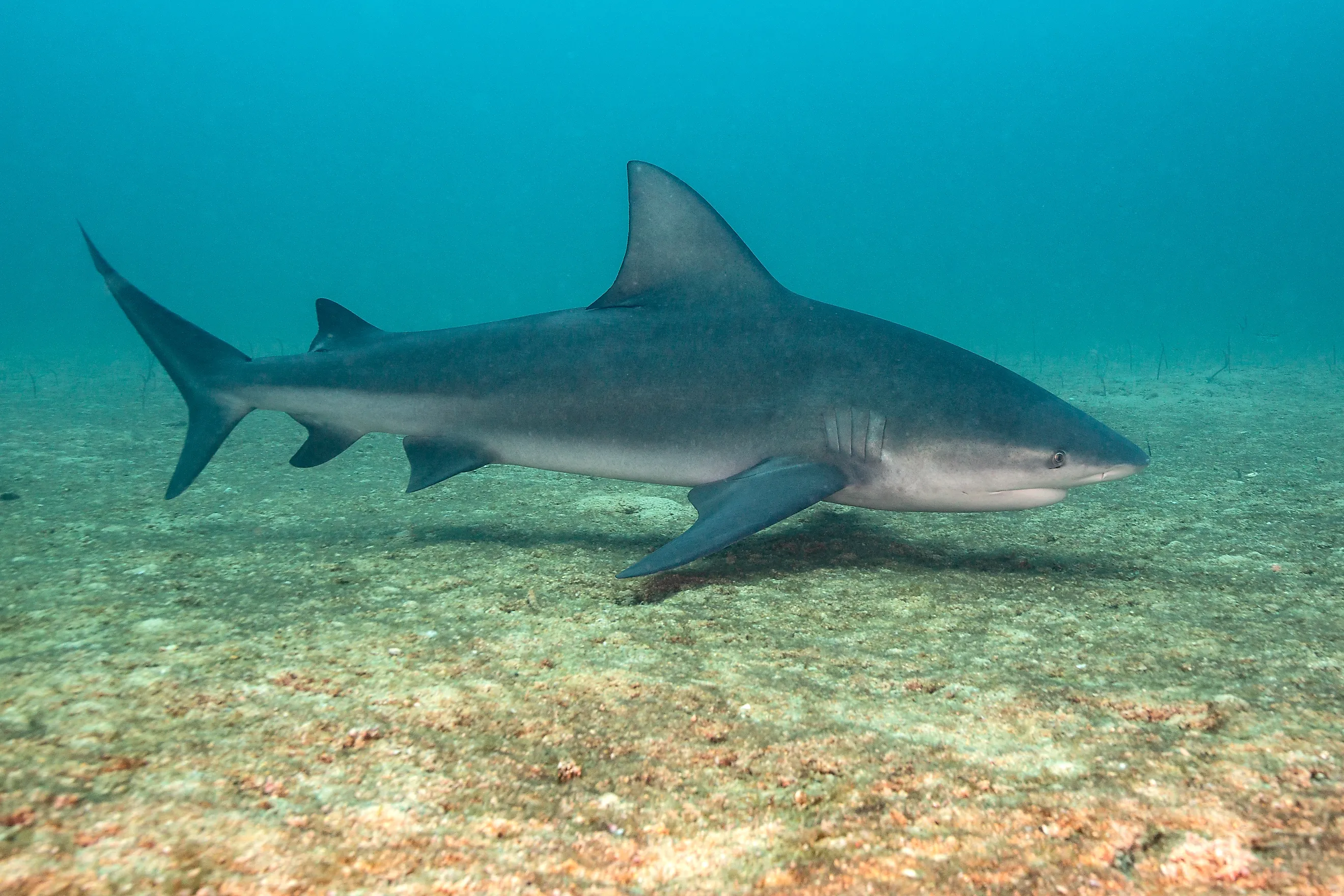
The bull shark is the one shark on the planet that routinely swims into fresh water. It pulls this off with a clever salt-balancing trick called osmoregulation, which lets it move between the ocean and freshwater rivers without its body chemistry falling apart. And move it does: bull sharks have been recorded more than a thousand miles up the Mississippi River, as far north as Alton, Illinois, and they regularly haunt brackish spots like Louisiana's Lake Pontchartrain. That one rule-breaking ability is the entire reason any overlap with alligators is even possible.
The Gator That Commutes to the Coast
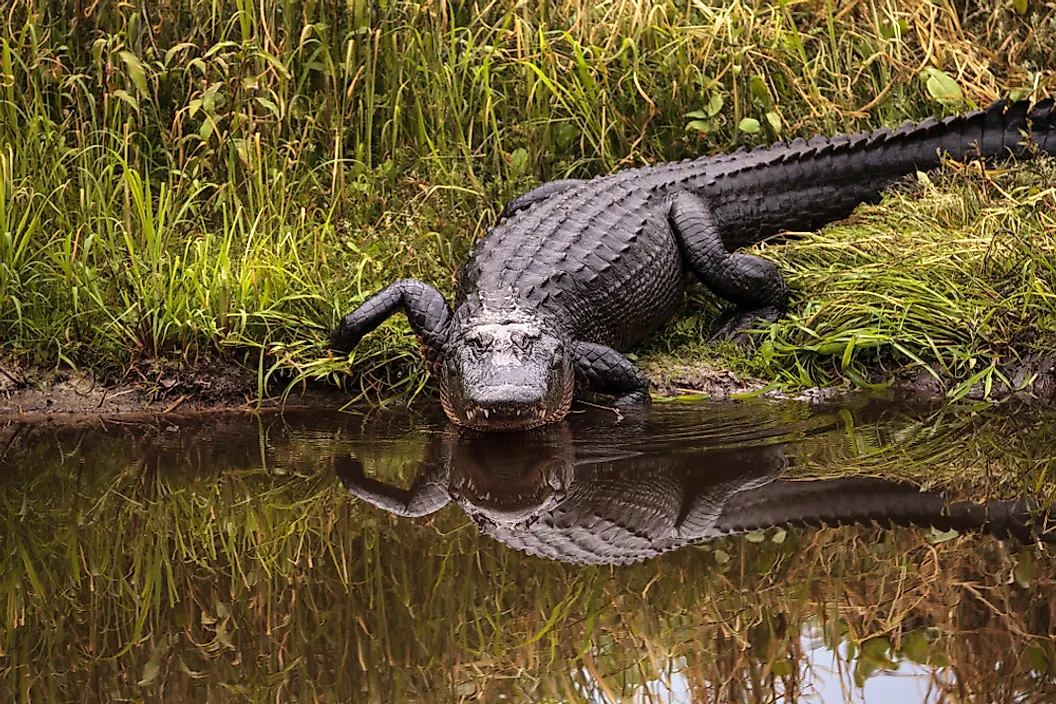
The American alligator comes at the problem from the opposite direction. It is fundamentally a freshwater animal and, unlike a crocodile, lacks the salt glands needed to survive in the open sea for long. But gators are perfectly happy to commute downstream into brackish estuaries, river mouths, and coastal marshes, especially down in South Florida, topping themselves up with fresh water whenever they can. So as the shark pushes upstream, the alligator drifts down toward the coast, and the two ranges begin closing in on one another.
Where They Meet

The overlap happens in the brackish middle: the estuaries, lower rivers, canals, and mangrove-lined bays of the Southeast US, along both the Gulf and Atlantic coasts. South Florida is the textbook example, where young bull sharks grow up in the very same Everglades estuaries that alligators patrol. Louisiana's Lake Pontchartrain, a large brackish lagoon connected to the Gulf, is another classic meeting ground. Wherever warm salt water fades gradually into fresh, reptile territory and shark territory quietly blur together.
Who Eats Whom
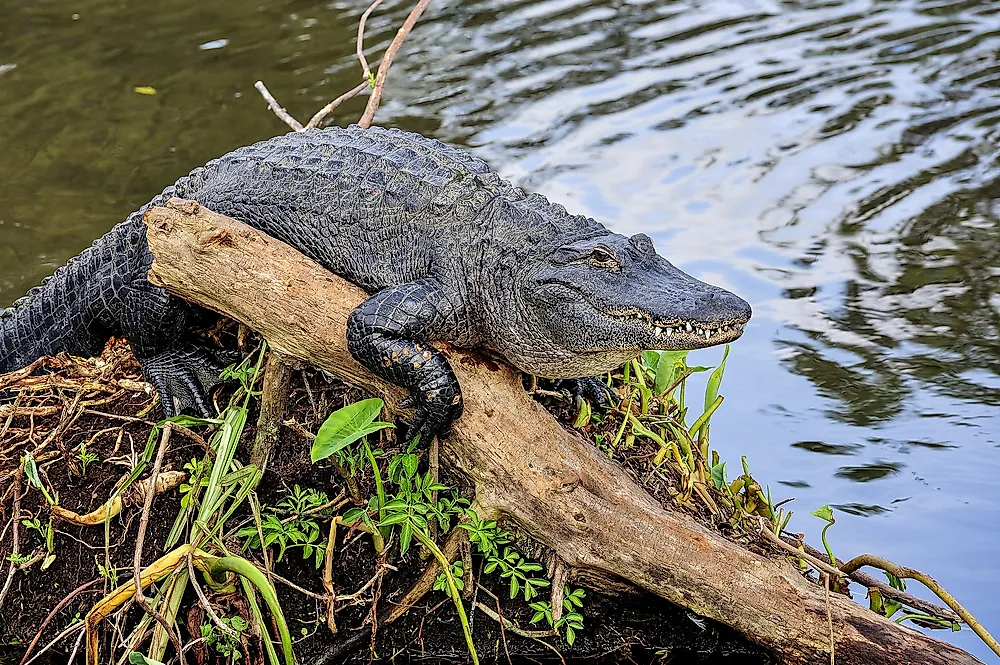
When the two do cross paths, it can genuinely go either way, and it mostly comes down to size. A landmark study by biologists James Nifong and Russell Lowers, who pumped the stomachs of more than 500 wild alligators, found that gators regularly eat small sharks and stingrays, including in the estuaries where juvenile bull sharks live. Flip the size difference, though, and a large bull shark is more than capable of making a meal of a small alligator. In overlap country, the bigger animal usually wins, whichever species it happens to be.
The Hotspots

Florida is the undisputed epicenter of all this, with alligators and bull sharks turning up in the same rivers, canals, and coastal estuaries up and down the peninsula, and Louisiana's Lake Pontchartrain runs a close second. It sounds like a tall tale told to scare swimmers, but it is simply true: in parts of the American South, a shark and an alligator can be cruising the exact same stretch of water at the exact same time. The ocean's most river-happy shark and the swamp's top reptile, quietly sharing an address.