7 Best Towns In Scotland For Retirees
Choosing a place to retire in Scotland is about more than finding pretty scenery. It is about settling into a town that feels livable, grounded, and welcoming to people starting a new chapter. Whether you’re moving from elsewhere in the UK or crossing the Atlantic from North America, these seven towns suit retirees who want a slower pace while still enjoying everyday convenience and meaningful experiences. Each offers affordable housing, reliable services, walkable centers, and a strong sense of community, along with access to coastlines, culture, or history that enriches daily life rather than simply decorating it. Read on if you’d like to learn more about the best towns in bonnie Scotland to settle in comfortably, stay active, and enjoy a rhythm of life that feels both calm and connected.
Ayr

Ayr is one of Scotland’s most appealing coastal towns for those who want sea air, long walks, and an easygoing pace of life. The town’s wide, sandy beach is its biggest draw, offering level promenades that are ideal for morning strolls or watching the sunset over the Firth of Clyde.
History is deeply woven into the area, particularly in nearby Alloway, where you can explore the Robert Burns Birthplace Museum, along with the Brig o’ Doon, a high single arched bridge dating back to the 1400s, and the surrounding gardens.
Golf is also a major part of life in the County of Ayrshire, often referred to as Scotland’s “Golf Coast.” In Ayr itself, Belleisle Park is home to two public 18-hole courses, making it easy to enjoy regular rounds close to home, while world-famous links such as Royal Troon and Turnberry are only a short drive away.
Beyond leisure, Ayr is very fitting for day-to-day living. The town center is compact and walkable, and the rail line provides direct, stress‑free access to Glasgow for theatre trips, shopping, or catching a flight. Ayr is also an excellent base for exploring the wider coast. Nearby seaside towns like Troon, Irvine, Ardrossan, and Largs are easy day trips by train or car, and ferries from Troon or Ardrossan provide access to the Isle of Arran, often described as “Scotland in miniature” for its mountains, villages, and wildlife-rich landscapes.
Dunfermline

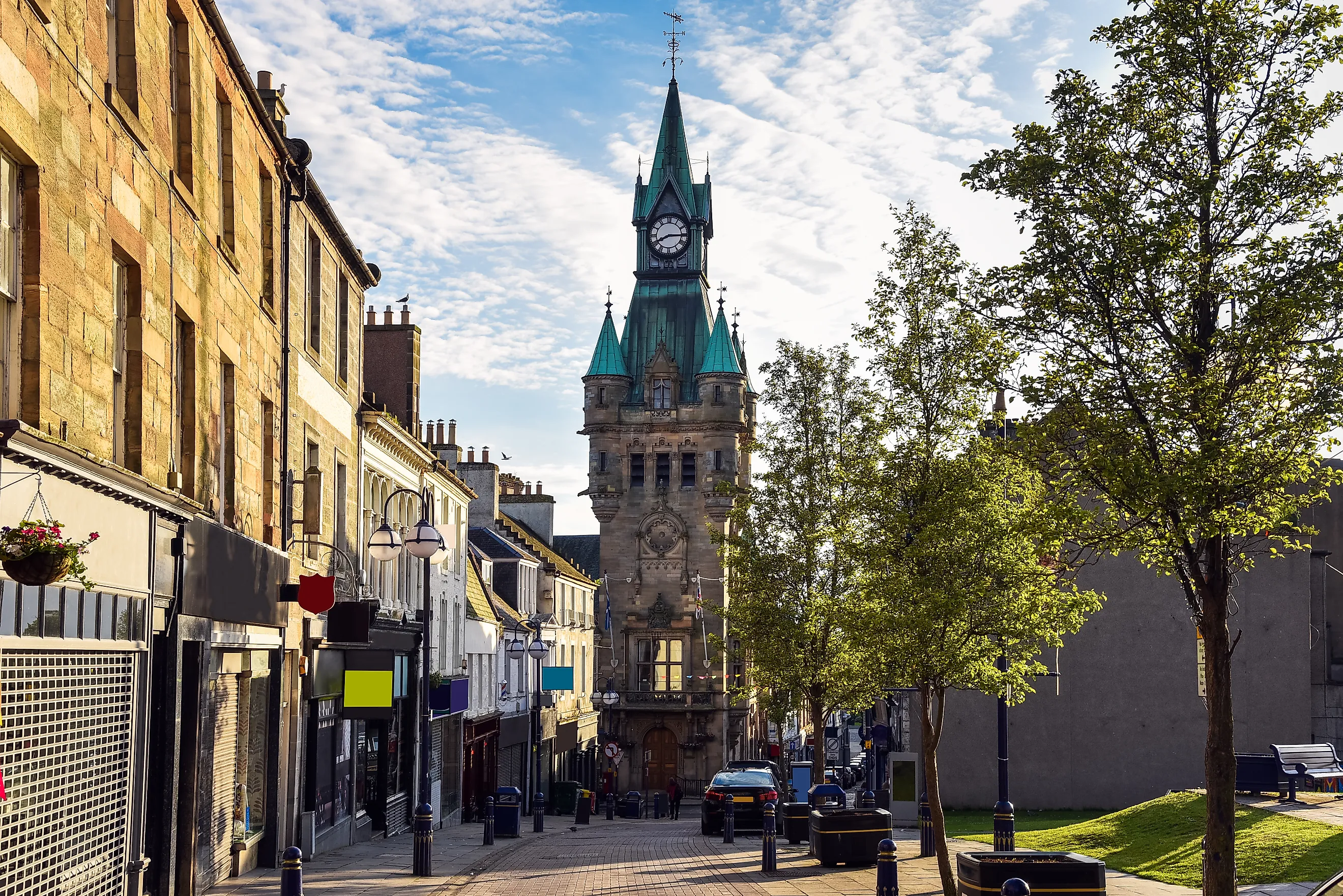
Once Scotland’s ancient capital, Dunfermline offers a strong sense of history paired with everyday livability. The town’s centerpiece is Dunfermline Abbey, where several Scottish kings and queens, including Robert the Bruce, are laid to rest, giving the town a depth of heritage that’s easy to explore on foot. Just steps away, Pittencrieff Park, known locally as “The Glen”, provides wooded walking paths, landscaped gardens, and peaceful views that feel surprisingly secluded for a town setting. Cultural highlights include the Andrew Carnegie Birthplace Museum, celebrating the philanthropist’s roots in Dunfermline.
For retirees, Dunfermline’s appeal lies in its location and value. Sitting just north of the Firth of Forth, the town offers easy access to Edinburgh in around 30 minutes by train, making it possible to enjoy the capital’s cultural offerings, hospitals, and international airport without the higher housing costs or daily congestion. Dunfermline is generally more affordable than many parts of Edinburgh and coastal Fife, with two-bedroom flats being the most affordable option.
Elgin

Elgin is a small town in northeastern Scotland, located about halfway between Inverness and Aberdeen, that offers retirees a slower pace and easy access to both countryside and coast. At its core, the ruins of Elgin Cathedral, once known as the “Lantern of the North,” remain a striking landmark for history lovers. Nearby, Elgin Museum, Scotland’s oldest independent museum, displays local archaeology, fossils, and social history in a charming High Street setting. For outdoor activity, Cooper Park provides walking paths and open lawns, while Lady Hill, crowned by the 80‑foot Duke of Gordon’s Monument, rewards visitors with panoramic views over Elgin, the surrounding farmland, and the distant coastline.
Situated in the heart of Moray whisky country, Elgin is close to distilleries such as Glen Moray and Gordon & MacPhail, which both offer tours and tastings. With its mix of historic sites, parks, and nearby whisky trails, the town provides a peaceful base to enjoy local amenities, explore the outdoors, and visit the scenic Moray coastline just a short drive away.
Inverness

While many know Inverness as the gateway to the Highlands, the town itself is often overlooked as a peaceful base for those looking for a new place to spend their retirement years. Nestled on the banks of the River Ness, Inverness offers walks along the river, quiet parks, and charming local spots like the Victorian Market, a historic covered arcade of independent boutiques, galleries, and cafés where you can sip a Highland-roasted coffee at Milk Bar or browse locally made crafts.
The region is a treasure trove of historical landmarks. Explore the commanding Inverness Castle, the centuries-old Old High Church, or the Inverness Museum and Art Gallery, all within easy reach of the town center. Some visitors even make a pilgrimage to the nearby Clava Cairns, a well‑preserved standing stone site near Culloden that many Outlander fans jokingly dub their own “Craigh na Dun,” even though the actual stones from the show were stage props placed in Perthshire.
For gentle outdoor time close to town, Whin Park offers open lawns, a scenic boating pond with ducks, a miniature railway in the summer months, and space to sit and enjoy views of the river.
Oban

Oban is a working harbor town where daily life revolves around the water, from fishing boats unloading their catch to ferries heading out to the Hebrides. Known as Scotland’s seafood capital, Oban is especially famous for its scallops and langoustines, with local haddock and mackerel also playing a starring role on menus. Cafés and seafood restaurants line the harbor, while landmarks like McCaig’s Tower, a dramatic colonnaded structure overlooking the bay, add a strong sense of place. The Oban Distillery, one of Scotland’s oldest, offers insight into the town’s long-standing whisky tradition.
The nearby islands are one of Oban’s greatest assets. From the town’s ferry terminal, it’s easy to reach several of the Inner Hebrides, including Mull, known for scenic drives, wildlife watching, and colourful harbor towns, as well as the small island of Iona, famous for its historic abbey and peaceful atmosphere. Kerrera, just offshore, offers coastal walking paths and a quieter, more intimate glimpse of island life.
With a population of around 8,000, Oban retains a close-knit, small-town character. Like a scene from a film, you could wander down the harbor, pick up scallops from a local fishmonger, sip a pint at a waterfront pub while the ferries glide by, and stroll along the wide, paved promenade, pausing to peek into artisan shops and breathe in the crisp sea air. Rail services reach Glasgow in about three hours, allowing for occasional city trips while keeping the town’s relaxed west-coast rhythm intact.
Perth

Located on the banks of the River Tay, the longest river in Scotland, Perth sits in a prime spot between Edinburgh and Glasgow, about an hour from each by car and even less time by train, making city trips very convenient.
Along the River Tay, residents can enjoy walks on The North and South Inch, two riverside meadows that have been central to Perth’s community for centuries. The North Inch is famed for the Battle of the Clans in 1396, a legendary staged combat between rival clans, and has long hosted cricket, golf, and other recreational activities. The South Inch has served as a public gathering place since at least the 15th century, hosting fairs, events, including the annual European Pipe Band Championships, which attracts over 120 pipe bands from all over the world to compete every August, and riverside strolls for generations.
Just a short drive from the town centre, Scone Palace, the crowning place of Scottish kings, offers grand architecture, beautiful gardens, and historic interiors to explore, along with seasonal events and walking paths that bring Scotland’s royal past vividly to life.
Perth marks a gentle transition between Scotland’s Lowlands and Highlands, with the edge of Highland Perthshire starting just beyond the town. Within an hour’s drive, you can reach lochs, forests, and hill walks that showcase the iconic Highland landscapes, all while still living in a well-serviced, vibrant town.
St. Andrews

Perched on Fife’s east coast, St. Andrews is a place where medieval character, open shoreline, and a lively cultural scene collide. Here, stone lanes lead past university buildings and bustling cafés into wide coastal views, infusing the town with an energy that brings its historic streets to life.
The ruins of St. Andrews Cathedral highlight the town’s former importance as the religious heart of medieval Scotland, once the largest church in the country and a destination for pilgrims. Nearby, St. Andrews Castle reflects the town’s strategic importance, serving for centuries as the residence of powerful archbishops and a focal point during the Scottish Reformation.
Just beyond the core, West Sands Beach stretches in a long sweep of sand and dunes along the North Sea, while the St. Andrews Botanic Garden offers sheltered paths and seasonal color for quieter afternoons. St. Andrews is synonymous with golf, but even if you don’t know a putter from a driver, the Old Course and surrounding links create a broad, green buffer between the town and the sea, giving the center an open feel and easy access to walking routes.
Cultural life flows naturally, from performances at the Byre Theatre to exhibits at the Wardlaw Museum, all supported by a steady calendar of events. As a university town, St. Andrews is busier than some of the quieter communities on this list, but that activity is part of its appeal. For retirees who enjoy always having something to do, this town is engaging without being overwhelming.
These Scottish towns offer more than scenic backdrops; they provide spaces where daily life feels purposeful and comfortable. As a retiree, you can enjoy quiet mornings wandering historic streets, afternoons in gardens or along rivers, and evenings attending local performances or exploring small museums. There’s room to cultivate hobbies, discover new interests, or simply savor ordinary routines in surroundings that are welcoming and lived-in. With coastlines, cultural venues, and green spaces always within reach, these towns allow you to stay engaged, enjoy variety, and feel rooted in a place that suits both energy and pace.