The 8 Can't-Miss Towns In Tasmania
Tasmania’s can’t-miss towns span volcanic headlands, rainforest river walks, and windswept island lookouts. In Stanley, the chairlift to the Nut, the penguin platform at Godfreys Beach, and Highfield Historic Site create a dramatic first impression. Richmond preserves another chapter through the 1823 stone arch bridge, the old gaol, and streets lined with convict-era buildings. Strahan adds Gordon River cruises, Sarah Island, and the West Coast Wilderness Railway, each tied to the island’s layered past. Across the full list, mountain bike trails, penny-farthing championships, maritime collections, and Bruny viewpoints bring in art, outdoor adventure, and local character from coast to hinterland in memorable, sharply distinct ways.
Stanley

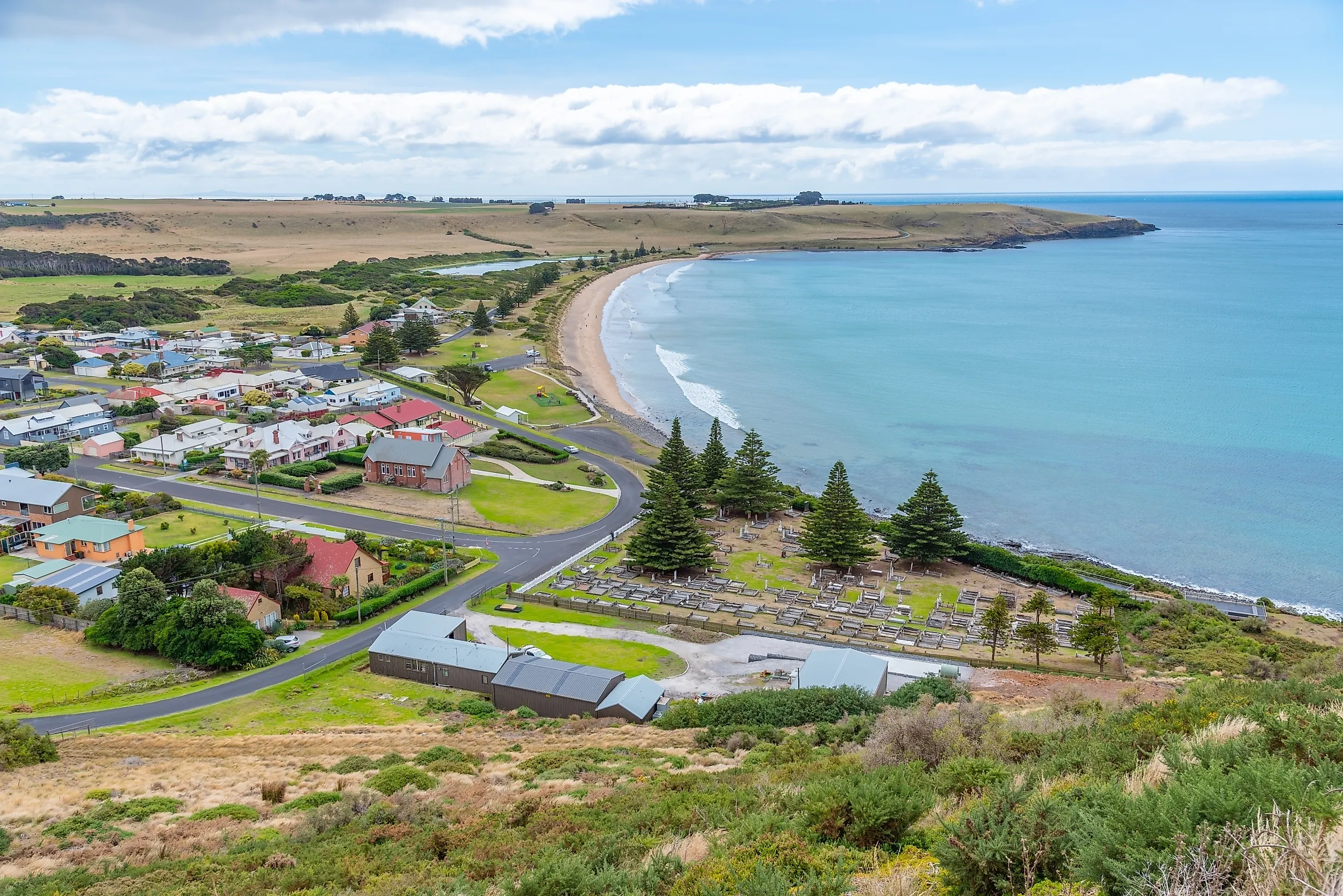
Nestled in northwestern Tasmania, Stanley is a distinctive coastal town defined by the flat ancient volcano that sits right beside it. The Nut is a flat-topped volcanic plug that stands about 470 feet tall. It's a steep hike going up The Nut, but you can also reach it via a chairlift for a beautiful view of the surrounding countryside.

There are several notable sites below the Nut, including the Tatlows Beach Loop Walk, which passes through the Tatlows Beach Conservation Reserve and offers opportunities to photograph rare birds. Speaking of birds, if you visit the viewing platform at Godfreys Beach, you can see little penguins come swimming ashore. Beyond these natural places, Stanley has historic sites to visit, such as Highfield Historic Site, the site of the first European occupation in North-West Tasmania. The property was built by convicts working the land, and today includes a homestead, gardens, and several outbuildings.
Devonport

Devonport is a major cargo port in Tasmania, yet it still maintains a quieter vibe with a population of just over 26,000. In Devonport, maritime landscapes and local museums sit alongside the former home of some of Tasmania’s most significant political figures. One of the most iconic landmarks here is the Mersey Bluff Lighthouse, a red-and-white-striped lighthouse on the coast. Further on is the Bluff Beach right at the mouth of the Mersey River. On rainy days, the Bass Strait Maritime Museum provides an indoor option, including a boating simulation that places visitors at the helm. Speaking of museums, Devonport was the home of Joseph Lyons, the only Australian Prime Minister from Tasmania, and his wife Enid Lyons, one of the first women elected to the Australian parliament. You can learn about these figures at Home Hill, the 1916 residence where they lived with their 12 children.
Evandale

While many Tasmanian towns are known for their natural landmarks, Evandale is most noteworthy for its architecture and art. John Glover, the 18th to 19th-century painter often called the father of Australian landscape painting, later settled in northern Tasmania and left a lasting mark on the region’s artistic identity. Every March, the town awards the John Glover Art Prize for the best contemporary landscape painting of Tasmania and displays their works at the Falls Park Pavilion. Another fun event is the National Penny Farthing Championship, where cyclists compete in a February race on high-wheelers, a common sight in the late 1800s. No matter when you visit Evandale, you can always drop by the Georgian era Clarendon Estate, an 1838 country home with a walled garden and changing exhibitions of historic fashion from the 1830s to 1960. Within the estate is the Australian Fly Fishing Museum, with exhibits on various fishing equipment and artwork.
Strahan

Strahan sits on Tasmania’s western coast and is one of the most visited towns on the island, largely for its Gordon River Cruise. This tour stops at Sarah Island, a remote convict settlement established in 1822 for repeat offenders from mainland colonies. Strahan offers more pleasant tours with the West Coast Wilderness Railway, a heritage steam-and-diesel railway that runs from Strahan to Queenstown and offers a rainforest walk stop. For those who prefer to go at their own pace, they can take a short walk out to Hogarth Falls, a pretty waterfall located in People's Park, or see a sawmill demonstration at Morrison's Huon Pine Sawmill. Strahan stages The Ship That Never Was at its amphitheatre, the longest-running play in Australia, which recounts a dramatic convict escape from Sarah Island.
Richmond

Located just outside the Hobart metro area, Richmond contains several of the oldest structures in Tasmania and Australia still in use today. The settlement was proclaimed a township in 1824, and much of its early infrastructure was built by convict labour. One such place is the 1823 Richmond Bridge, the oldest surviving large stone arch bridge in Australia, which stretches across the Coal River.

Another old structure is the St. John the Evangelist Roman Catholic Church, opened on 31 December 1837; the oldest continuously-used Catholic church in Australia. By traversing the streets of Richmond, you can see where the inmates slept and lived at the Richmond Gaol or see one of the many cute art galleries, such as the Peppercorn Gallery, which sells candles, paintings, and more.
Derby

Resting on the hills by the Ringarooma River, Derby was a former tin-mining town that has today been transformed into a mountain biker's paradise. The Blue Derby Mountain Bike Trails offer a range of adventures for novice and experienced cyclists along old mining routes, including one through the narrow Derby Tunnel. Non-cyclists can also take on outdoor adventures such as visiting Little Blue Lake, an aqua-colored lake that gets its color from its rich mineral deposits, or canoeing at the Briseis Hole. At the water’s edge, the Floating Sauna Lake Derby offers a lakeside wellness experience. Lastly, you can learn about Derby's mining history at the 1897 Schoolhouse Museum, which features desks, photographs, and items from World War I and World War II.
Corinna

Located deep in the Tasmanian rainforest, Corinna is a remote riverside settlement suited to travelers seeking a more rugged stay. Setting out from the village, you can take several beautiful forest walks, including the Huon Pine Boardwalk, which hugs the Pieman River through the dark forest, or the Whyte River Track, known for its clean reflective water. For a more rigorous hike, you can hike up to the summit of Mount Donaldson via the Mt Donaldson Track. The best place to start your outdoor adventure in Corinna is at the Corinna Wilderness Village, a hotel that provides everything you need, including canoe rentals for the Lover's Falls and the Savage River Paddle. On this tour, you'll get a chance to see the remains of the S.S. Croydon, which sank in 1919.
Adventure Bay

Adventure Bay sits on the eastern shore of South Bruny, one of the island’s most established settlements. When you first arrive there, you can relax at the beautiful Adventure Bay Beach. In addition to the sandy shoreline, you might spot a southern right whale. You can also take a hike through the rainforest at Mavista Nature Trail or take a short drive further north to the Truganini Lookout at the Neck. Bruny Island is actually two islands joined together by a thin sand isthmus called the Neck, which you can view at this lookout. Within Adventure Bay, you can learn about the adventurous souls who ventured out into the uncharted waters of the Pacific Ocean, like Captain James Cook, at The Bligh Museum of Pacific Exploration.
History and Wilderness Across Tasmania
The convicts who came to Tasmania long ago were welcomed by many places, from beautiful beaches to dark, forbidding islands and deep rainforests. Today, visitors can experience that layered history and landscape in towns such as Corinna, with its rainforest trails, Derby, known for mountain biking, and Richmond, home to its historic church, bridge, and gaol. Whether the focus is on penal history, coastal scenery, or rainforest tracks, these towns reflect the breadth of Tasmania’s character.