8 Most Scenic Drives in Oregon
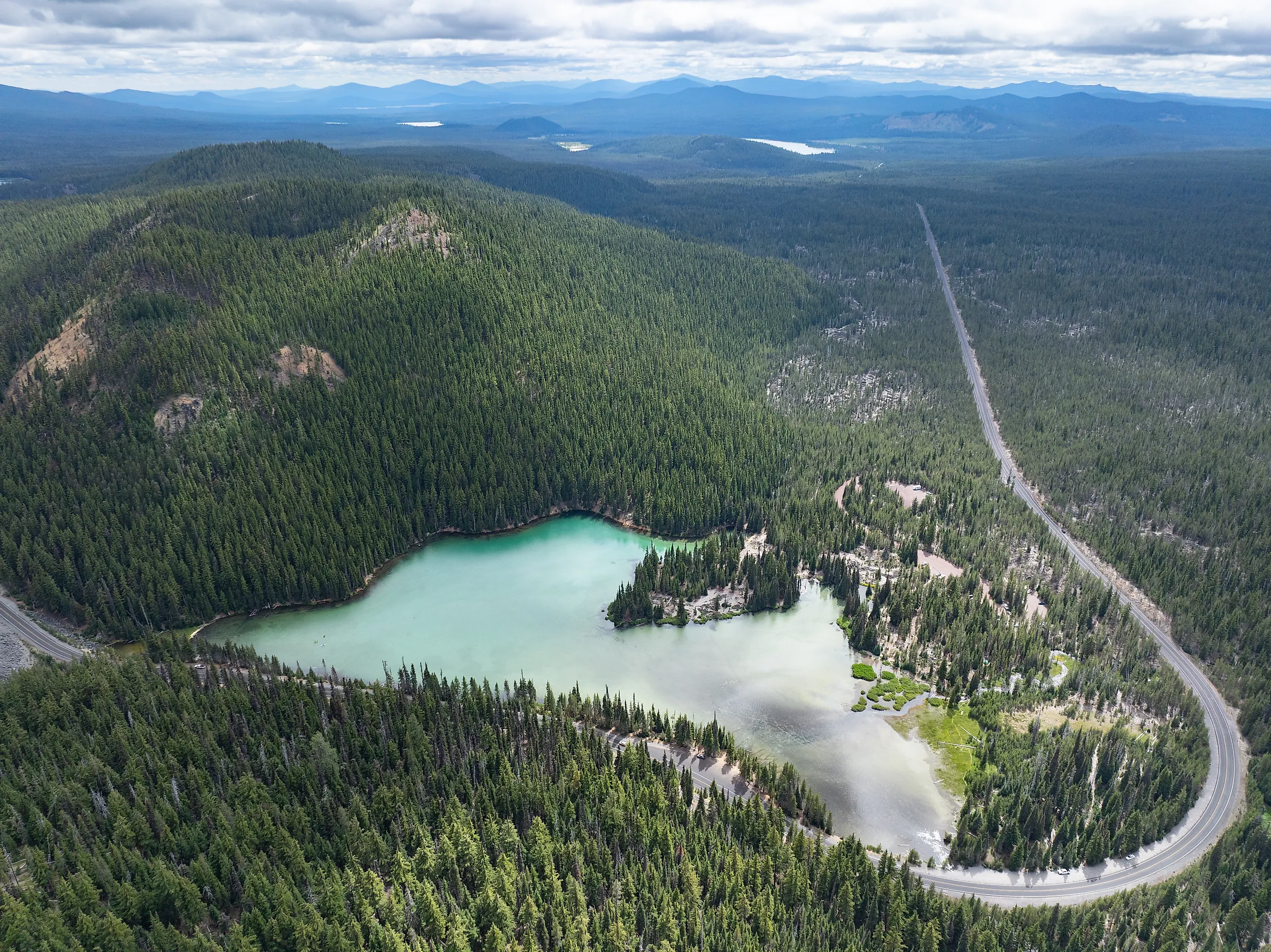
Oregon is made for road trips, especially when you take the long way on a designated scenic byway. Some drives bring you near the sparkling waters of Suttle Lake. Others climb toward Marys Peak, the highest point in Oregon’s Coast Range. You can also catch the rugged coast near Waldport, open desert vistas across the Harney Basin, and mining-country stops like Riddle and Glendale. The following eight trips deliver big views from behind the wheel and from the side of the road.
McKenzie Pass-Santiam Pass Scenic Byway

The McKenzie Pass-Santiam Pass Scenic Byway is an 82-mile loop that takes between two and five hours to complete. From snowy volcanic peaks to high-mountain lava fields, the drive highlights the starkly contrasting landscapes in Oregon’s highest mountains. The best time to drive along this route is from July to October, as McKenzie Pass is closed from November to July due to snow.
Start the loop in Sisters, a city that takes visitors back to the Wild West, and continue west on US-20 / OR-126, passing the 6,436-foot Black Butte, an extinct stratovolcano. This section of the byway also offers road-trippers a view of Mt. Washington and skirts the glimmering Suttle Lake. The road climbs towards the 4,817-foot summit of Santiam Pass and Lost Lake, named for a mysterious phenomenon in which it fills up with water every spring and disappears in the fall through a hole into a lava tube.

As the byway descends along the McKenzie River Highway, the route showcases the mighty McKenzie River as it forms waterfalls and runs through lava flows. The source of the river is Clear Lake, easily accessible by crossing a footbridge and a convenient pit stop for a photo op and a bit of a stretch. The lake, living up to its name, gives a clear view of a 3,000-year-old submerged forest. Eventually, the byway heads east onto OR-242, the McKenzie Highway. Nine miles down the road leads to the trailhead for Proxy Falls, a waterfall spilling over a blanket of moss and one of the most popular in the state. After the falls, the road becomes steep as it switchbacks up 1,200 feet in just 4 miles through an area called the Deadhorse Grade. Although the road is slightly challenging, more spectacular views of the surrounding mountains and lava fields make it worthwhile before the road begins its descent back to Sisters.
Marys Peak to Pacific Scenic Byway

The Marys Peak to Pacific Scenic Byway is a 72-mile route that takes three to five hours to complete and is accessible year-round. The byway winds from the highest point in the Coast Range to the wide, sandy beaches of the Central Coast. It starts on OR-34 in Tangent near Corvallis, home to Oregon State University. Ten miles past the town of Philomath, the byway heads up the Marys Peak Access Road past gorgeous waterfalls and stonework lookouts towards the 4,097-foot summit. With the Pacific Ocean to the west and beautiful flowers in the summer and spring seasons, Marys Peak is perfectly picturesque.

After returning to OR-34, the route follows the Alsea River towards the Alsea Falls Recreational Site, where visitors can enjoy the river and its falls while picnicking or visiting one of the site’s many campgrounds. Once you cross the historic Hayden Covered Bridge, the river narrows and curls before eventually widening into Alsea Bay. The byway ends in Waldport at the junction with US-101. Here, visitors can drive along Mill Street directly to a port where they can rent kayaks and small boats to explore the bay, or continue along the Pacific Coast Scenic Byway for more stunning roadside beauty.
Cascade Lakes Scenic Byway

Rightly referred to as one of the most iconic byways in the US, the Cascade Lakes Scenic Byway gives visitors a glimpse at snowy peaks and shimmering lakes for 66 miles. The route takes around 3 hours to complete and is best visited between June and October, as the road beyond Mt. Bachelor closes in winter.
The drive starts in Bend, the largest city east of the Cascades and one of the most popular towns in central Oregon. The byway begins on Bend’s west side, following signs to Mt. Bachelor and the Cascade Lakes along OR-372, then climbs towards Deschutes National Forest and the Deschutes River, which offers fishing, kayaking, and canoeing. A few miles west on the byway, travelers can see a lava flow that altered the river’s path from the road before the horizon suddenly disappears behind the dormant stratovolcano, Mt. Bachelor, which rises above 9,000 feet.

The road descends from Mt. Bachelor towards Dutchman Flat, giving road-trippers a close look at Broken Top Mountain. Here's where the byway gets its name, as the area is surrounded by lakes formed by volcanoes and glaciers. The route skirts a meadow at the end of Sparks Lake, a picturesque waterway covering around 250 acres, its shores mainly made of jagged lava, then passes numerous other lakes, including Devils Lake, Elk Lake, Little Lava Lake, and Twin Lakes, before ending at OR-58 near Crescent Lake and Odell Lake, two recreational sites with complete resort facilities.
High Desert Discovery Scenic Byway

Best visited in late spring through fall, the High Desert Discovery Scenic Byway is a 127-mile drive through Oregon’s wild west. It passes through desert and mountain, taking travelers back to a simpler time. Starting in Burns, the route heads south on OR-205 through the Harney Basin into the Malheur National Wildlife Refuge, which includes Malheur, Mud, and Harney Lakes. The Refuge is a 187,757-acre oasis amid dry grasslands and is the perfect spot for bird-watching and discovering a variety of animals.

The route continues south towards the small community of Frenchglen, which offers access to the Donner und Blitzen River, an excellent fishing spot, and a number of long-standing buildings with a storied history. From Frenchglen, the Steens Mountains can be seen towering in the distance, standing at an elevation of between 4,200 to 9,738 feet at the summit. The byway continues on OR-205, entering the Catlow Valley basin, where you'll pass some of the largest cattle ranches in Harney County. Keep an eye out for beautiful bighorn sheep and majestic wild horse herds in the Steens Mountain Wilderness. The byway concludes in Fields, and the full trip takes anywhere between five and seven hours.
Over the Rivers & Through the Woods Scenic Byway

The Over the Rivers & Through the Woods Scenic Byway is a 66-mile drive that can be enjoyed year-round. The drive takes travelers through several ecosystems, truly showing off Oregon’s diversity. The journey starts on OR-228/I-5 and soon reaches Oregon’s third-oldest town, Brownsville, a town rich in history and a perfect first stop for this two-to-four-hour drive. The road then heads to Crawfordsville, home to the 105-foot Crawfordsville Covered Bridge that spans across the Caloopia River. There are several fishing spots along US-20, such as Foster Reservoir for trout and Green Peter Reservoir for kokanee salmon.

The route then heads into the Cascades, and the byway winds uphill, following the Historic Santiam Wagon Road and entering the Willamette National Forest, a 100-mile stretch of land with different ecosystems and habitats, dedicated to preserving wildlife. From volcanic peaks to cascading waterfalls, and from snowy ridgelines to sparkling rivers, all can be found in the 1,675,407 acres that make up this incredible forest. This breathtaking road trip ends at the junction of OR-126, OR-22, and US-20.
Cow Creek Tour Route

The Cow Creek Tour Route is one of Oregon’s most historic byways, passing by remnants of mines and old railroads that were essential for travel and transporting goods. This 45-mile drive starts at I-5’s exit 103, 21 miles south of Roseburg. Make sure to fuel up before continuing, as this is the only service station along the route. Follow Riddle Bypass Road towards Riddle, home to the last nickel mine and smelter that operated in the conterminous United States. Before leaving Riddle, head to local hardware stores like Larry & Carol's True Value Hardware and grab a gold pan to give gold-panning a try further down the road.
The byway turns from vast farms and ranches to forests as it parallels Cow Creek, a tributary of the South Umpqua River, and the original Oregon and California Railroad. Tunnel Number One is one of the railroad tunnels that is still standing. Past the tunnel, visit the Recreational Gold Panning Area and do as miners did 150 years ago. Even if the stream is out of gold, the cool black sand minerals collected and the beautiful scenery surrounding the creek make for the best of treasures. The tour ends in Glendale, where roadtrippers can rejoin I-5 at exit 80.
Journey Through Time Scenic Byway

Another major historic byway is the Journey Through Time Scenic Byway, a 286-mile drive that can be taken at any time during the year, and takes 8-10 hours to complete. The journey starts along the south side of the Columbia River in the small town of Biggs and moves south towards Wasco, home to the Columbia Southern Railway depot, which dates back to 1898 and is still standing today. Moving along, travelers will reach the living ghost town of Shaniko, a former hub for wool processing and shipping in the 1880s. Shaniko, in and of itself, is a journey through time, and pausing the drive to explore its streets is definitely worth it.

The byway continues on OR-218 from Antelope to the Clarno Unit of the John Day Fossil Beds National Monument. The monument is split into three units, all on the byway, and it holds fossils of animals and plants dating back millions of years. One of the units is the breathtaking Painted Hills, located along OR-207 and US-26, for those with the time and energy to extend their route.
Named after a mammoth bone found in the area, the byway takes drivers to the town of Fossil, then twists along the John Day River, the longest free-flowing river in Oregon, towards Service Creek, Kimberly, and Dayville, before following US-26 through the city of John Day and continuing through Prairie City with the beautiful Strawberry Mountain as a backdrop. The road descends gradually to Baker City, where this incredible adventure comes to an end.
Myrtle Creek-Canyonville Tour Route

Myrtle Creek-Canyonville Tour Route is the perfect escape from the busy interstate, traveling between lush forests, glittering streams, and quiet farms. The best time to visit this 68-mile drive is during the spring and fall, and it's important to note that the route is steep and narrow in sections, and not recommended for motorhomes and trailers.
The byway begins in Canyonville at exit 98 off I-5, running along the South Umpqua River and across the Milo Academy Covered Bridge, then continues to Tiller, home to the Tiller Ranger Station, which is listed on the National Register of Historic Places. Six miles east of Tiller, the byway turns left on Forest Road 2810, passing through stands of old-growth Douglas fir, Oregon’s state tree. BLM Road takes you westward to Red Top Pond, a beautiful pond known for its fishing and picnicking opportunities. From Red Top Pond, drivers follow South Myrtle Creek along County Route 18, South Myrtle Road. The road is surrounded by hills, where cattle and wild turkey can be seen grazing, and it is especially beautiful when decorated with wildflowers on either side of the road in spring and colorful leaves in the fall. The tour ends in Myrtle Creek.
Get Ready for the Adventure of a Lifetime
Oregon’s beauty leaves a lasting impression, from its rugged mountain ranges to its open fields. Exploring one of the state’s many scenic byways provides an escape from busy city life and a chance to slow down and enjoy the forests, rivers, and breathtaking landscapes that make Oregon special. Offering both adventure and relaxation, a road trip through Oregon’s stunning scenery is the perfect way to experience the natural wonders of this remarkable state.