9 Tiny Off-Grid Towns In Arizona
Arizona’s most off-grid towns are reached by Historic Route 66, set against the Black Mountains, and linked by quiet desert backroads that lead far beyond the state’s busier corridors. In old mining settlements like Oatman and Tombstone, weathered main streets, historic hotels, and preserved frontier landmarks still define the town center. In communities like Safford and Willcox, ranchland, vineyards, and open agricultural valleys shape daily life far more than modern expansion. Here, “off-grid” means limited commercial development and local identities that are still rooted in mining, ranching, farming, or railroad history. The 9 towns below were chosen for that combination of isolation, small scale, and a character that has remained unusually intact.
Oatman

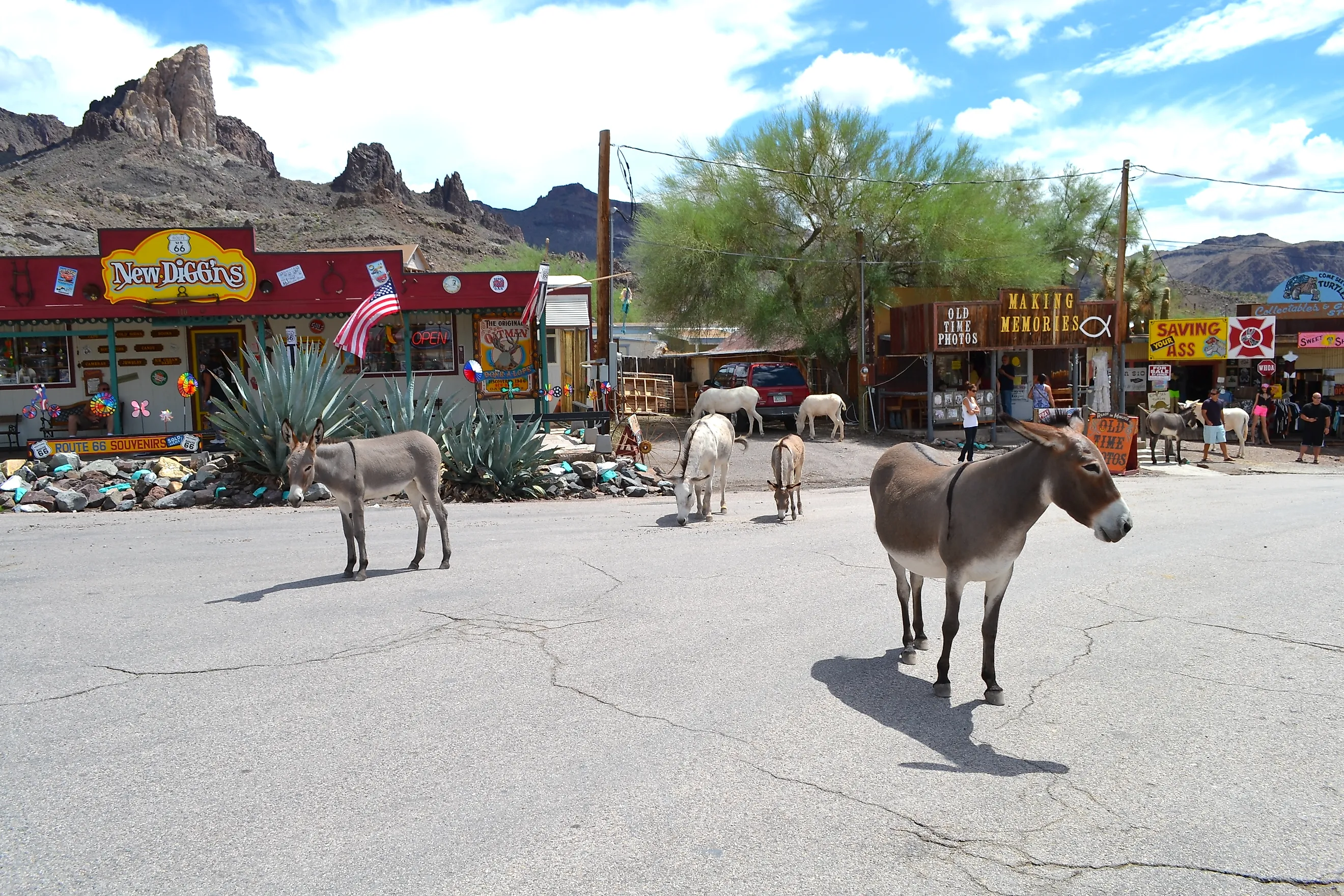
Hidden in the rocky highlands of the desert, Oatman is one of the tiniest towns in Arizona, with a population of about 100. Travelers to Oatman must take the Arizona Sidewinder, a narrow, steep, winding road that stretches for 8 miles. The town sits along a stretch of Historic Route 66, a popular route during its golden days.

Once a prospering mining town, it is now a quiet, sparsely populated area known for its tiny donkeys that roam freely, never shying away from approaching visitors. One of the few landmarks still standing is the Oatman Hotel, long rumored to be haunted, with its interiors completely covered in real dollar bills left by visitors over the span of decades.
Tombstone

Home of the famed Wyatt Earp, Tombstone remains a small, rural outpost with landmarks that linger in the dust. Once a booming town filled with silver mining and gunfighting, it retains much of its 19th-century character. In the heart of town stands the Victorian-era Tombstone Courthouse, once an active county facility and now a museum where you can view authentic, sometimes interpretive exhibits that bring the town’s Old West history to life.

Visitors can explore the downtown with a trolley car tour, and stop off to pan for gold, a nod to the town's mining roots. Tombstone’s very own professional gunfight reenactment recalls the famous showdown, highlighting the historical actions at the O.K. Corral. Wyatt Earp's Oriental Saloon & Theater is a nod to the past, where swinging doors and the original-style gambling hall capture its heyday.
Cave Creek

Tucked into the rugged foothills of the Sonoran Desert, Cave Creek feels like an old colony with western soul. With more saguaros than stoplights, this quiet town has walking trails that stretch for miles. Downtown channels the gold rush era with weathered wood boardwalks and preserved storefronts. The pride of Cave Creek is Frontier Town, filled with gift shops, unique restaurants, and authentic Saloons.

History enthusiasts will appreciate the archaeological exhibits, Southwestern art, and local historical pieces from the American frontier at the Cave Creek Museum. Open desert terrain and trails in Cave Creek Regional Park offer wide sunset views for horseback riding and hiking. Continuing a long-standing local tradition, the original Buffalo Chip Saloon hosts weekly bull riding events.
Payson

Nicknamed the “Heart of Arizona” for its geographical location, Payson feels worlds away from the rush of busier cities. Traveling to Payson can be challenging, with winding roads that climb from the desert into the surrounding mountains. The town is situated above the rugged Rim Country, surrounded by the vast wilderness of the Tonto National Forest, the 9th-largest national forest in the United States.

Given Payson's remote location, life unfolds in a casual setting, and outdoor escapes, such as hiking and fishing, become part of everyday living. Downtown, you'll find old antique shops like the Mainstreet Mercantile, built in its original 1900s rustic wood, evoking a time from the earlier frontier era. Every August, the town celebrates its heritage with the Payson annual rodeo. Recognized as the World’s Oldest Continuous Rodeo, this is not just an event; it's a tradition that keeps its Western roots alive, with the rodeo allegedly running every year since 1884.
Mayer

Set along a quiet stretch of highway, Mayer maintains a small-town pace shaped by its mining-era history. Strong community ties and annual events reflect a town that has grown slowly over time.
Often called the gateway to Prescott National Forest, the town provides access to horseback riding trails, hiking paths, and wide-open backcountry. Locals and folks from across Yavapai County celebrate the village spirit during Mayer Daze, a beloved fall festival of parades, barbecues, and costume dances. Located just down the road is Arcosanti, an experimental desert town founded by the visionary architect Paolo Soleri, exploring sustainable living and the concept of arcology in an intimate and secluded town setting.
Safford

Situated in the high desert of Arizona, surrounded by agricultural fields, is the isolated town of Safford. Reaching the area means traveling long stretches of a secluded, open highway with nothing but blue skies above. Life in Safford is shaped by generations of ranching families with agricultural roots, heavily influenced by Mexican settlers, who use cattle and horse ranching to boost the local economy.
The Historic Graham County walking and driving tour highlights preserved landmarks and the town’s pioneer history. Beyond the main street are the rocky and winding hiking trails of Roper Lake State Park with views of Mount Graham. For true rest and relaxation, locals appreciate the secluded pools at Kachina Mineral Springs and Spa.
Willcox

Located deep in the southeast desert and far from major highways, Willcox is a small agricultural community. While modest in size, it produces almost 75% of Arizona’s wine grapes, cultivating a tight-knit culture around family-owned wineries. The locals appreciate the slow pace of life and take pride in the annual Willcox Wine Festival, a weekend event of live music, regional wines, and good food.

Along with its wine, the rugged backdrop of the Sonoran Desert attracts campers, along with avid cyclists who yearn for the open country trails. A display of real cowboy heritage can be found at the Willcox Cowboy Hall of Fame and the nearby Rex Allen Museum, which is dedicated to the acclaimed singer and actor born in Willcox. Just outside town, the Chiricahua National Monument features unusual rock formations formed by ancient volcanic activity.
Clarkdale

Established as a master-planned community back in 1912 to house employees of the nearby rugged copper smelter, Clarkdale provided sustainable living conditions for families among a harsh and isolated landscape. Far from any city, it now offers a small-town atmosphere, with original homes lovingly restored, and glimpses of its historic past are still visible in the business district.

The historic Clarkdale depot is the departure point for train rides through Verde Canyon. Saint Cecilia’s Mission Catholic Church remains one of the town’s most recognized landmarks. In the historic district, Smelter Town Brewery functions as a steady local gathering spot.
Wickenburg

Surrounded by rugged mountains and set away from the hum of freeways in the quiet Sonoran Desert, is the outpost town of Wickenburg. The community is known for its authentic ranching roots and mining past from the Wild West. With a modest population and strong neighborly ties, Wickenburg maintains a close-knit community shaped by its ranching past.
A walk through the restored downtown shows how much of Wickenburg’s frontier-era character remains. Landmarks such as the former Vernetta Hotel and the red-brick Garcia School still anchor the district. The Sigler Western Museum focuses on the town’s early settlers and ranching history.
A Slower Pace Across Arizona’s Small Towns
From high desert backroads to streets largely untouched by modern development, Arizona’s smallest towns reflect a slower, more isolated way of life. In these remote communities, wooden boardwalks still creak below your feet and rugged landscapes stretch on for miles without interruption. For those looking to unplug, these towns reflect a slower pace shaped by distance, history, and desert landscapes.