5 Snake Hotspots In The Southern United States
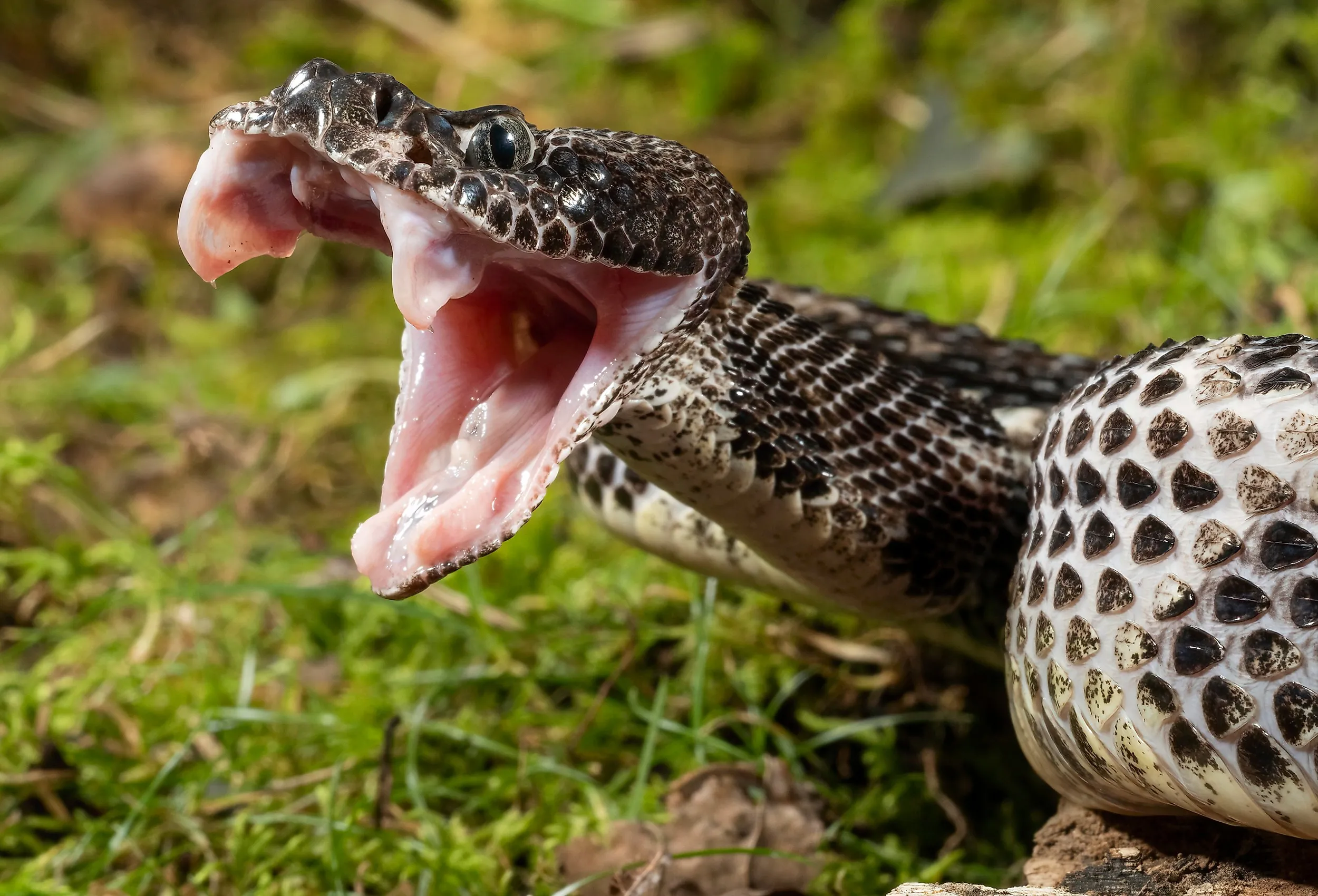
The majority of snakes in the United States are found in the southern states. This is largely due to this region's temperate to subtropical climates, abundant vegetation and water, and park systems that keep vast swathes of natural habitat pristine. From the border of Mexico in Texas to the shores of the Gulf Coast and the swamps/forests further inland, the South hosts a huge range of landscapes as diverse as the reptiles that live within them.
Whether it be a venomous rattlesnake in Big Bend National Park or an invasive python in Everglades National Park in Florida, before you visit these hot spots, learn more about these critters' normal behaviors and active seasons, so you can stay safe on your travels.
Big Bend National Park, Texas

Sitting on what many may consider the border between two very distinct regions of the United States, the Southwest and the Deep South (one being exemplified by arid deserts, the latter by humidity and swamps), Big Bend National Park in Texas is a unique place that draws hundreds of thousands of sightseeing tourists each year. Among its diverse flora and fauna, there are 31 documented snake species, one of the highest totals in all of the country.
It's 801,100+ acres span the Chihuahuan Desert's lowlands on the Mexican border, the Rio Grande corridor, and the Chisos Mountains, producing remarkably sharp habitat gradients within short distances. Local elevations shift from roughly 1,700 feet to over 7,830 feet, allowing a set of completely different species to occupy distinct thermal niches.

Venomous snakes include western diamondback rattlesnakes, black-tailed rattlesnakes, rock rattlesnakes, Mojave rattlesnakes, and Texas coral snakes. Nonvenomous species such as coachwhips, patch-nosed snakes, and several kingsnakes are also widespread, with activity from all kinds being known to peak after monsoon storms when prey are forced to move from burrows to higher ground. To get a look for yourself, road-cruising along park highways at dusk, a favorite hangout spot for these cold-blooded predators, also often reveals multiple snake species in a single evening due to heat retention in desert pavement.
Everglades National Park, Florida

Everglades National Park supports one of the highest concentrations of native snake species in the southern United States. It contains 1.5 million acres of Florida's best preserved marsh, mangrove, and hardwood forest habitat, sustaining both venomous and nonvenomous snakes year-round just outside of the busy Miami-Dade area. Commonly encountered species include eastern diamondback rattlesnakes, pygmy rattlesnakes, indigo snakes, cottonmouths, coral snakes, and a wide range of water snakes and racers.
The park’s consistently sub-tropical climate allows continuous activity, often peaking during the wet season from May through October. During these times, local snakes concentrate along levees, canal banks, and elevated trails that are not only frequented by people as well, but also see lots of prey in the form of birds, amphibians, fish, and rodents.

The Everglades also host a well-documented population of invasive Burmese pythons, which has changed predator-prey dynamics across the ecosystem for the worse. Thankfully, several conservation programs have been aimed in recent decades to remove these pests, but their high reproductive rate has still made it a tricky, ongoing issue.
Okefenokee Swamp, Georgia and Florida
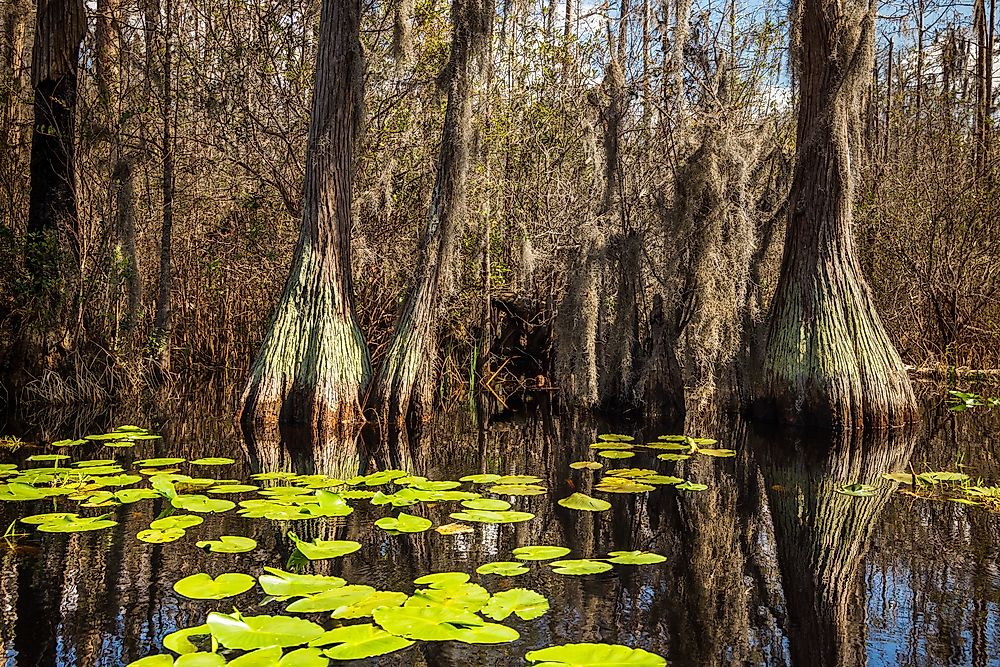
The Okefenokee Swamp covers an area of roughly 438,000 acres in Georgia and Florida, mainly consisting of peat wetlands, blackwater channels, and scenic cypress forests, creating prime habitat for a mix of semi-aquatic and terrestrial snakes. Notably, the swamp supports dense populations of cottonmouths and banded water snakes, both frequently observed along popular canoe trails and floating peat islands. On the other hand, eastern diamondback rattlesnakes occupy drier pine islands and perimeter uplands more so, while eastern coral snakes occur in sandier, well-drained sections.

Seasonal flooding concentrates prey such as frogs, fish, and small mammals along shallow margins, commonly drawing snakes to boardwalks and boat routes that also see lots of human visitors. There is little downtime here as well, as warm temperatures extend activity from early spring through late into the fall, with most snakes especially out and about and visible during the humid summer months. Moreover, controlled burns in surrounding pine flatwoods also maintain open understory conditions favored in particular by rattlesnakes.
Congaree National Park, South Carolina

Congaree National Park watches over the largest intact expanse of old-growth hardwood bottomland forest in the southeastern United States. Its lush floodplain ecosystem, shaped by the Congaree and Wateree rivers, creates the saturated soils, oxbow lakes, and sloughs that typically support high amounts of water-based snakes.
Cottonmouths are common along elevated boardwalk edges and cypress-tupelo margins, while eastern rat snakes and banded water snakes move through the canopy gaps and shallow backwaters. Land-loving timber rattlesnakes have a home here, too, occupying slightly higher, better-drained terraces within the park, and often using fallen logs and foliage debris for cover. Eastern coral snakes also, as usual for the species, occur in sandy patches of woodland, with black rat snakes similarly having been spotted in hillier forestlands nearby.

Like with most interior wetland areas, seasonal flooding/drying in Congaree either disperses or concentrates smaller, water-dwelling prey animals, drawing predators of all kinds. Whether alligators, snakes, or snapping turtles, you could witness these hungry reptiles in a variety of different zones, from receding pools to flooded inland plains. With that, definitely try to check in with the current water level status to know what to expect before hiking and/or paddling around the park.
Great Dismal Swamp National Wildlife Refuge, Virginia and North Carolina

The Great Dismal Swamp National Wildlife Refuge encompasses nearly 113,000 acres of pocosin wetlands and forested peatlands. This water-saturated landscape boasts countless plants and animals adapted to acidic, low-oxygen environments. When it comes to snakes, cottonmouths are frequently encountered along the region's web of canals, rivers, and drainage ditches, while brown water snakes and banded water snakes patrol shallower bodies of water for fish and amphibians. Interior ridges and logging roads further provide living space for more land-based species like eastern rat snakes, rough green snakes, and the occasional timber rattlesnake.

Limited development within the refuge allows stable populations to persist across this largely uninterrupted wetland system just a short drive outside Norfolk, Virginia, making it a top snake habitat in the south and a popular destination for city folk looking to briefly escape to a truly wild locale.
Be Aware While Exploring These Snake-Infested Landscapes in the South
The South is a definite hotspot for more than just snakes, as the country's entire population of American alligators is essentially confined within this specific region, too, as well as a plethora of other critters that rely on year-round hot, humid climates. This favorable weather also attracts masses of vacationers every year, many of whom account for a huge number of run-ins with resident snakes and other reptiles. With that, knowing where and when these potentially dangerous predators tend to hang out could be a lifesaver for you during your next adventure in the area.