12 Best Towns In South Carolina To Retire Comfortably
South Carolina has a longer list of workable retirement towns than most people give it credit for. The state’s mix of climates and price points means a retiree drawn to Lowcountry wetlands in Walterboro and one who wants Blue Ridge foothills near Seneca are both shopping the same state. Housing costs vary widely from lower-cost markets like Cheraw to pricier lake-area communities such as Seneca. Healthcare access varies by town but holds up better than the population sizes might suggest. The twelve towns below run from the Upcountry through to the Lowcountry and no single one is right for everyone. Taken together they make the case that retiring well in South Carolina doesn’t require picking the obvious destination.
Georgetown

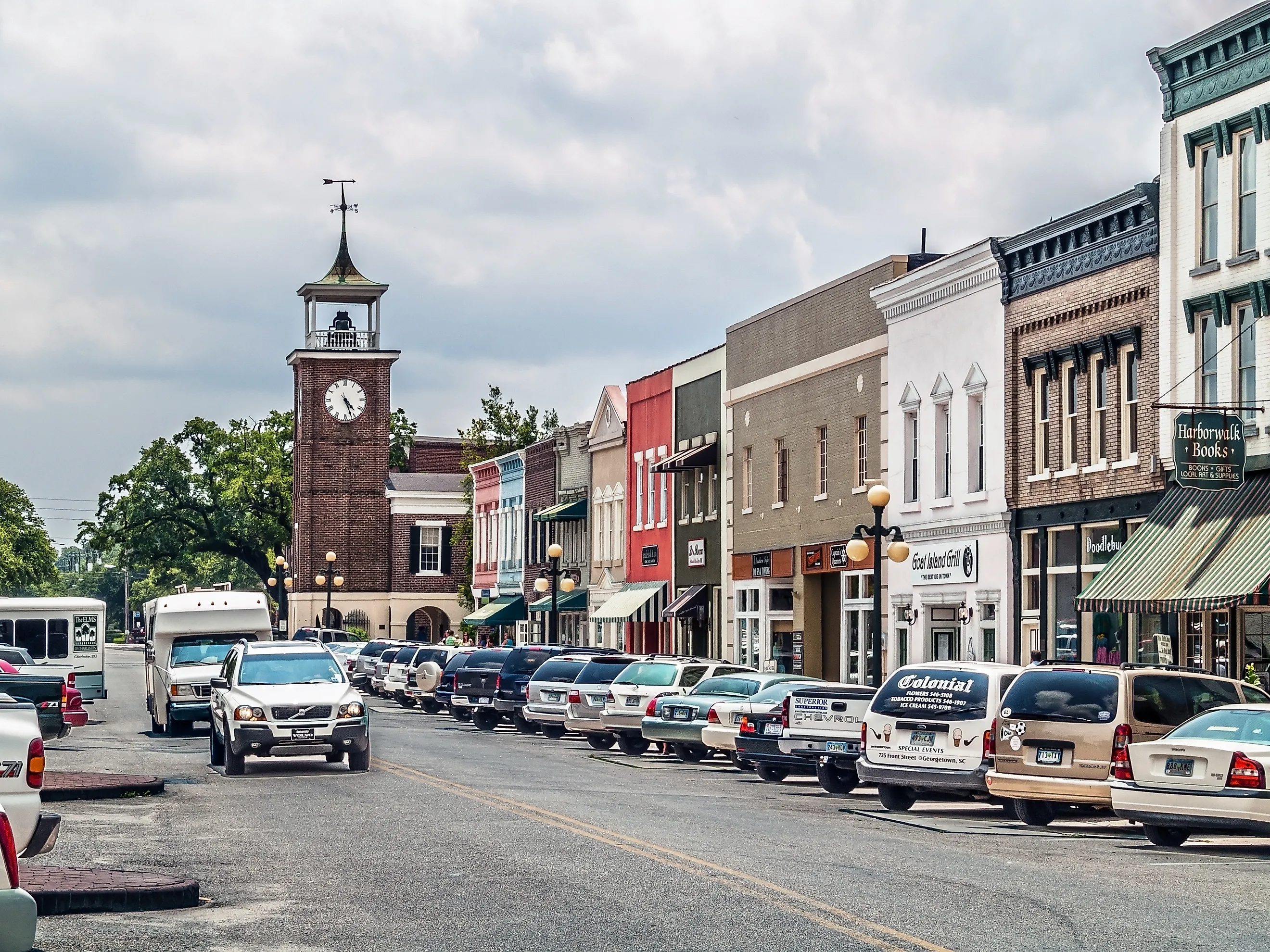
Set on the Sampit River near where four rivers feed Winyah Bay, Georgetown gives retirees a working waterfront, local hospital access, and several history sites substantial enough to fill a long weekend with visiting family. The Georgetown Harborwalk follows the Sampit River past working boats, Big Tuna Raw Bar, and the River Room, the kind of stretch where an evening walk tends to turn into dinner without much planning. History is spread across a few different stops: the Rice Museum, in the Old Market Building, explains the Lowcountry rice economy and its dependence on enslaved labor with more depth than most local history museums manage, while Kaminski House Museum offers guided tours of an 18th-century waterfront home furnished with antiques and layered with local context. Across the bay, Hobcaw Barony opens protected land for guided ecology and history tours that tend to leave an impression. Tidelands Georgetown Memorial Hospital is in town, and spring 2026 market data put the median home price at roughly $340,000.
Camden
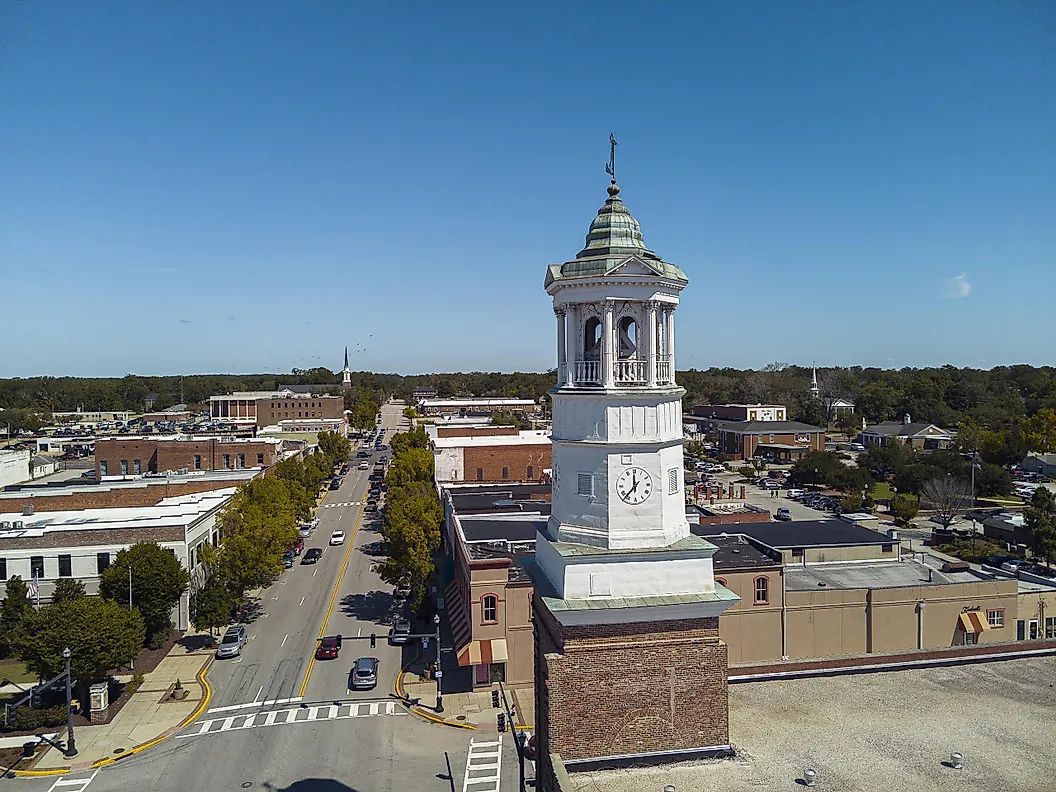
Camden works well for retirees who want preserved landmarks, horse-country scenery, and in-town healthcare, all in a smaller setting. Historic Camden Revolutionary War Site is usually where newcomers start, with restored buildings, walking routes, and battlefield interpretation that hold up on repeat visits. From there, Goodale State Park shifts the mood entirely, with a cypress-lined lake suited to paddling, fishing, and short strolls. The Camden Archives and Museum, housed in a 1915 Carnegie Library building, keeps area records and rotating displays for anyone wanting to dig deeper into local history. On Broad Street, Books on Broad and Coffee has become a dependable spot for coffee, a good read, and easy conversation. MUSC Health Kershaw Medical Center is in town, and recent real estate data put a typical house value at roughly $320,000.
Seneca

Seneca gives retirees Lake Keowee recreation, Oconee County heritage, and a compact downtown, all sitting near Clemson and the edge of the Blue Ridge foothills. The lake is the main outdoor draw, with boating, fishing, and paddling as reliable warm-weather options, and South Cove County Park adds water access, campsites, picnic areas, and walking paths for a slightly quieter outing. Downtown, Ram Cat Alley offers a different kind of daily routine, with places like Vangeli’s Bistro and Ram Cat Cellars anchoring the strip, and the city’s Jazz on the Alley concert series gives summer evenings a reliable reason to head out. The Lunney Museum, a preserved 1909 Arts and Crafts residence, holds Oconee County artifacts for those curious about local history. In spring 2026, houses were running around $360,000 at the median, and Prisma Health Oconee Memorial Hospital provides nearby emergency and specialty care.
Newberry

Newberry has a manageable retirement profile, with relatively moderate real estate costs, a historic performing arts venue, and several outdoor stops close to the center of town. The Newberry Opera House is the cultural centerpiece, presenting concerts, comedy, and touring performances inside an 1880s building that still draws respectable crowds. Lynch’s Woods Park has shaded routes for walking, biking, and horseback riding, and Wells Japanese Garden, listed on the National Register of Historic Places, offers stone lanterns, water features, and short paths in a compact early-1900s landscape that rewards a slow afternoon. For a more specific hobby, Carter & Holmes Orchids has operated as a long-running nursery for orchid growers and gardeners. Recent listing data placed the median home price near $245,000, and Newberry Health Hospital gives residents local access to emergency and inpatient care.
Aiken

Retirees in Aiken can find wooded paths, equestrian heritage, medical access, and a walkable older core without relying on a major metro. The central district gives day-to-day life a social anchor, and familiar stops like The Willcox, New Moon Cafe, Malia’s, and Aiken Brewing Company tend to become part of the weekly routine fairly quickly. When the weather cooperates, Hitchcock Woods offers more than 2,000 acres of marked routes for walking, birding, and horseback riding, and Hopelands Gardens rounds things out with shaded paths, azaleas, live oaks, and the Rye Patch estate. The Aiken Thoroughbred Racing Hall of Fame and Museum, also inside Hopelands Gardens, traces the city’s deep ties to horse racing. Aiken Regional Medical Centers handles serious care locally, and in spring 2026, homes were selling at about $315,000 at the midpoint.
Greenwood

For buyers weighing affordability against healthcare access and outdoor recreation, Greenwood makes a practical case for itself. Spring 2026 numbers showed homes changing hands around $250,000 at the midpoint, one of the lower entry points among comparable towns in the state, and Self Regional Healthcare provides major care without a long drive. Lake Greenwood State Park, just outside the city near Ninety Six, adds fishing, boating access, campsites, and shoreline paths for when a change of scenery is in order. Cultural stops fill in the rest: the Benjamin E. Mays Historic Site preserves the civil rights leader’s childhood home with interpretive exhibits, and the Museum and Railroad Historical Center displays vintage rail cars alongside area artifacts. Uptown Greenwood holds its own too, with The Mill House, Howard’s on Main, Main & Maxwell, and the annual South Carolina Festival of Flowers keeping the district lively through the seasons.
Hartsville

Hartsville is a lower-cost retirement option with a regional hospital, a college garden, and several easy places to take visiting family. Kalmia Gardens of Coker University serves as one of the town’s most useful everyday escapes, with boardwalks, Black Creek views, native plants, and blooms that change through the seasons. When grandchildren visit, Neptune Island Waterpark makes a convenient warm-weather stop, while downtown spots like The Rooster and Crema Coffee Bar handle the quieter days with coffee, a meal, and somewhere comfortable to sit. The Hartsville Museum occupies the old post office and covers local industry, Sonoco history, and community heritage in a building that itself is worth a look. Carolina Pines Regional Medical Center is nearby, and spring 2026 reports showed a median home price of about $210,000.
Cheraw

For retirees drawn to smaller towns, Cheraw offers a compelling combination: low housing costs, nearby medical services, state park recreation, and a genuine connection to jazz history that sets it apart from comparable towns its size. Recent estimates put the median home price around $165,000, and McLeod Health Cheraw handles local medical needs. Cheraw State Park adds paddling, wooded trails, golf, and longleaf-pine habitat for time outside. In town, Old St. David’s Church and Cemetery preserves a notable piece of Revolutionary War history, while tributes to Cheraw-born Dizzy Gillespie include a statue on Town Green and a small home-site park honoring the jazz legend. On scheduled market days, the Cheraw Farmers Market brings produce, baked goods, and seasonal vendors into the mix.
Abbeville

Abbeville is an Upcountry retirement option built around a historic square, a small hospital, and several well-preserved landmarks that give the town more depth than its size might suggest. The Belmont Inn, a 1903 railroad hotel on the square, works as both a landmark and a practical overnight option when relatives come to visit. The Abbeville Opera House, opened in 1908, still hosts live theater and concerts, the kind of venue that justifies a Friday night out without driving far. History runs deep here too: the Burt-Stark Mansion preserves the room where Jefferson Davis held one of the Confederacy’s final councils in 1865. For outdoor time, Calhoun Falls State Park is a short drive away and has Lake Russell fishing, trails, campsites, and picnic areas. Abbeville Area Medical Center serves the community, and spring 2026 real estate figures showed houses near $210,000 at the median.
Gaffney

Gaffney offers affordability, local medical access, Revolutionary War history, and a few stops distinctive enough to make visiting family genuinely easy to entertain. The Peachoid water tower is the town’s best-known landmark: hard to miss, easy to explain, and reliable as a quick outing. Not far away, Cowpens National Battlefield preserves a pivotal moment from the Revolution with trails, exhibits, and ranger-led programs that hold up well for repeat visits. Lake Whelchel adds fishing and shoreline walking closer to town, and the Cherokee County Museum covers community history and regional culture in Gaffney’s historic Central School building. For a more casual evening, Peach City Brewery gives the downtown a specific gathering place. Cherokee Medical Center operates through Spartanburg Regional Healthcare System, and recent market data placed the median home price at roughly $245,000.
Clinton

Clinton gives retirees a budget-conscious base with a college presence, nearby hospital care, and several destinations that make daily life feel grounded rather than sparse. Presbyterian College’s Neville Hall is the main collegiate landmark, and the campus adds lectures, athletic events, and concerts to the calendar throughout the year, the kind of programming a small town benefits from having nearby. For history and outdoor time in the same stop, Musgrove Mill State Historic Site combines Revolutionary War interpretation with wooded trails along the Enoree River. Lake Greenwood State Park is within driving distance when a full day on the water sounds right. For something simpler, Whiteford’s Drive-In remains a dependable local stop for burgers, fries, and soft-serve. Prisma Health Laurens County Hospital is in Clinton, and spring 2026 housing reports put the median home price near $205,000.
Walterboro

Walterboro is a Lowcountry retirement option with blackwater wetlands, state arts connections, and local hospital access, a combination that takes some towns much larger to pull off. The Walterboro Wildlife Sanctuary gives residents boardwalks and trails through cypress and tupelo wetlands, and it’s the kind of place that rewards a slow morning walk more than a quick visit. The South Carolina Artisans Center showcases juried work from makers across the state, including sweetgrass baskets, pottery, textiles, and woodwork, and draws enough visitors to keep the downtown feeling active. The Tuskegee Airmen Memorial at Lowcountry Regional Airport honors the World War II airmen who trained at the former Walterboro Army Airfield. The Colleton Museum & Farmers Market combines local history exhibits with produce vendors and scheduled events in the same building. Recent housing reports placed the median home price at about $240,000, and Colleton Medical Center handles emergency care and other essential services.
Finding Your Fit
Retirement isn’t one-size-fits-all, and neither is South Carolina, which is exactly the point. Whether the priority is a lower-cost home in Cheraw, lakeside mornings in Seneca, a jazz-history detour in a town most people skip, or a Lowcountry boardwalk that makes Tuesday feel unhurried, the state offers enough variety to match different versions of what a well-lived retirement actually looks like. The right town isn’t the most affordable or the most scenic; it’s the one whose rhythms feel like yours.