5 Snake Hotspots In The Northern United States
The northern United States supports a surprising population of snakes across its forests, wetlands, rivers, and rocky ridges, all of which also experience four distinct seasons every year. Timber rattlesnakes reach some of their northern limits in parts of the Northeast and Upper Midwest, including states like New York, Wisconsin, and Minnesota, while northern water snakes thrive in almost every lake, stream, and marsh. Eastern hognose snakes, garter snakes, and smooth greensnakes occupying a sizable territory, sticking to sandy shorelines, bogs, and grasslands, there are a handful of destinations where an encounter with one of these sltithery predators are more likley.
Today, we will take a deeper look at 5 such places spread across several states, reaching from the Midwest to New England, covering local species, behavioral patterns, and the best times to go if you hope to see (or avoid) snakes.
Crow Wing State Park, Minnesota

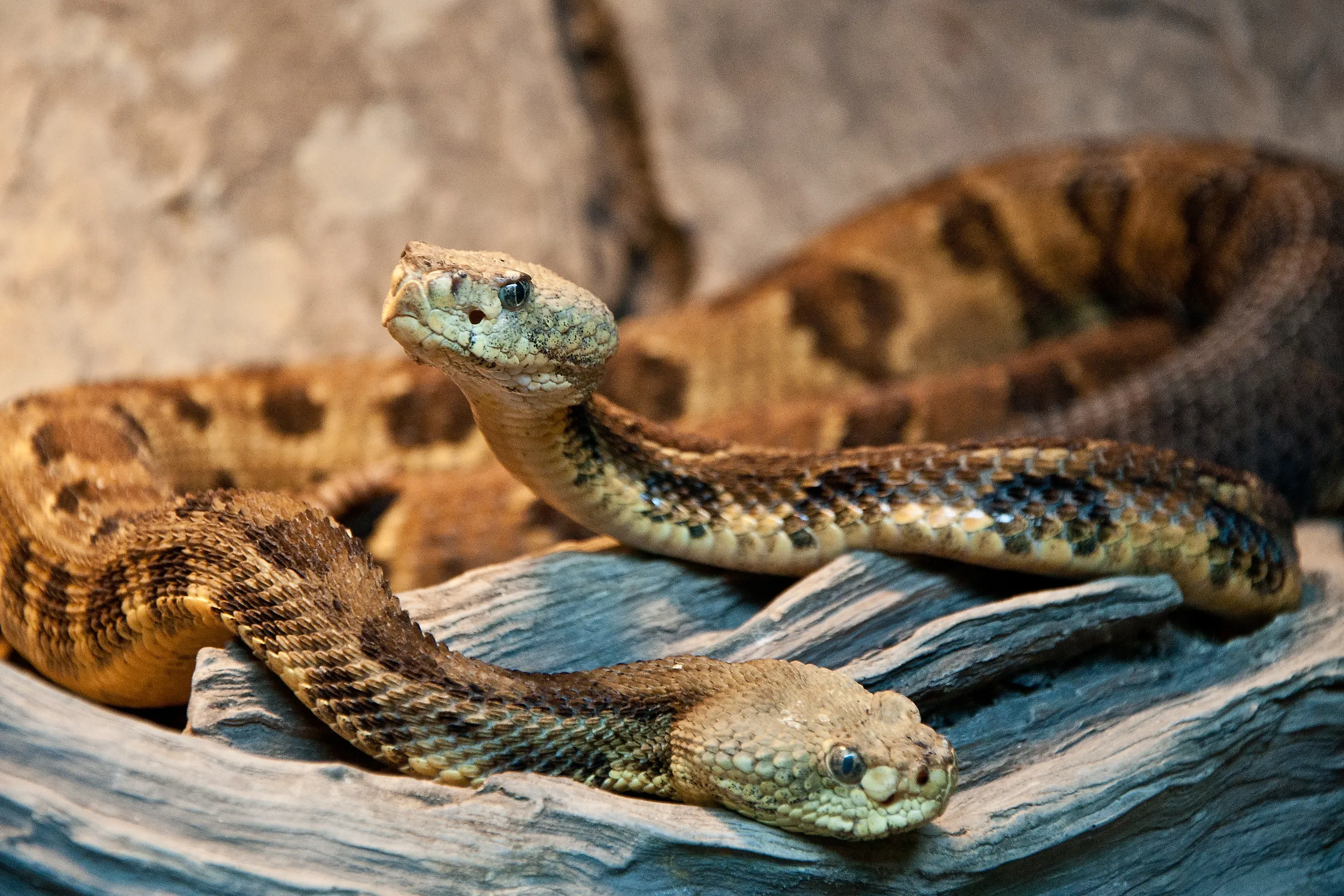
Crow Wing State Park sits at the junction of forest, river, and wetland habitats, making it a notable northern hotspot for a variety of reptiles. Timber rattlesnakes are well known to occupy the rocky bluff areas along the Mississippi River, their dens often located in limestone crevices. Moreover, northern water snakes are common in the park’s backwaters, streams, and oxbow lakes, actively hunting amphibians and other aquatic prey.
On the other hand, eastern garter snakes and northern brown snakes occupy meadows and more heavily wooded zones further inland. Smooth greensnakes are rarer but still present in the moist grasslands near the park’s trails, too.
Seasonal movement patterns are influenced by prey availability, moisture levels, and temperature, and the park’s diverse microhabitats support stable populations despite northern climatic extremes, with hot summers and frigid winters. In fact, the long bouts of seasonal hibernation in the winter usually occur in communal dens, sometimes shared across multiple species.
Black River State Forest, Wisconsin

The Black River State Forest in west-central Wisconsin spans roughly 68,000 acres of forest and river valleys, supporting a diverse snake community. Eastern hognose snakes here favor sandy soils for burrowing, egg-laying, and hunting amphibians, particularly in open forest edges and meadows, while northern water snakes are widespread along the Black River, tributaries, and surrounding wetlands, preying on amphibians, fish, and invertebrates. Timber rattlesnakes tend to stick to the rocky blufflands and stone outcrops, using cracks for denning and thermoregulation, although sightings are rare due to their secretive nature.
As usual, eastern garter snakes are also frequently seen patrolling grassy corridors and floodplain edges, whereas northern brown snakes and milk snakes occupy leaf litter and under-log microhabitats.
Like in pretty much all of the north, seasonal activity peaks from late spring through September, with snakes emerging to bask, forage, and mate until around mid-fall, when local species retreat to communal dens to survive the upcoming winter.
Allegheny National Forest, Pennsylvania

The lively woodlands of the Allegheny National Forest, Pennsylvania, cover approximately 513,000 acres of mixed hardwoods, pine stands, and valleys, providing critical habitat for a plethora of hardy snake species. In terms of venomous ones, the usual timber rattlesnake inhabits the forest’s higher-up limestone ridges, talus slopes, and cliff faces, using these craggy spaces for denning and relying on sun-exposed rocks for warming their bodies. Lower down, eastern milk snakes and northern brown snakes occupy forest floors, hunting small mammals, amphibians, and insects under treefall and around rocks.
As far as aquatic species go, resident northern water snakes are concentrated along waterbodies, in this case, the Allegheny River, its tributaries, and surrounding wetlands, often preying on fish and sometimes other snakes, even!
Autumn in this part of the northeastern United States is quite the sight, with an incredible array of colorful gold, red, and orange foliage popping up for a brief time. This is also when Allegheny's snakes go into hibernation until next spring's thaw.
Hudson Highlands State Park, New York

This popular state park, resting just about 60 miles north of the busy streets of New York City, boasts a scenic landscape full of steep forested slopes, mountains, and riparian spaces, providing highly varied habitats for several different snakes.
For example, eastern hognose snakes are common in sandier patches, using bluff-edge terrain to burrow and hunt. Smooth greensnakes persist more often in low-lying wetlands, rarely venturing far from favored hiding spots in dense sedge and grass cover. Similarly, northern water snakes stick to lower areas, dominating the calm backwaters of the Hudson River and using submerged debris to ambush prey.
Timber rattlesnakes, on the contrary, are somewhat sparse (though more numerous than in other northeastern states), concentrated in higher-elevation zones with larger tracts of open, exposed rock faces. Eastern copperheads, another venomous species, have also been reported, even with a few high-profile bite incidents in recent years.
Yearly patterns vary: hognose and greensnakes are most active in early spring, while rattlesnakes emerge later to mate and forage. But regardless of where you go and when you arrive, this park’s fractured topography has created a number of distinct microhabitats, limiting direct competition among resident snake species and sustaining surprisingly diverse localized populations.
Porcupine Mountains Wilderness State Park, Michigan

The Porcupine Mountains Wilderness State Park in Michigan's Upper Peninsula encompasses a vast swath of old-growth forests, bogs, and rugged escarpments along Lake Superior, providing living space for snakes adapted to cooler climates. Northern water snakes, perhaps the most numerous species here, like to exploit the area's slow-moving streams and lake inlets, ambushing fish and frogs in the summer months.
Blue racer snakes are also fairly active in open grasslands and riverside meadows, while greensnakes inhabit sphagnum bog margins and low-lying wetlands, too, remaining largely hidden among moss and sedges. Timber rattlesnakes are extirpated from Michigan, though eastern massasaugas occur in parts of the state.
Despite Upper Michigan's remarkably harsh winters, the Porcupine Mountains form an incredible assemblage of flora and fauna for wildlife lovers of all kinds to witness in a deeply pristine environment, whether you are out spotting birds, picking berries, hunting big game, or trying to find the region's sometimes elusive yet thriving communities of snakes.
See If You Can See a Snake or Two at These Northern Hotspots
Each of the hardy species mentioned above occupies specific microhabitats that are generally only found in the northern half of the country, timing activity to seasonal conditions and prey availability throughout certain windows of the year. Protected landscapes and low human impact allow these snake-rich habitats to persist, mainly in state and national parks, maintaining vital ecological roles and revealing the sometimes surprising complexity of the north's herpetofauna.