13 Prettiest Towns In Illinois
Illinois's small towns hold a surprising amount of 19th-century American history in their downtowns. Ottawa hosted the first Lincoln-Douglas debate in 1858, and the bronze of the two men still faces off in Washington Square. Princeton's Lovejoy Homestead, a confirmed Underground Railroad station, belonged to an abolitionist whose brother was killed by a pro-slavery mob in Alton in 1837. Galena, where Ulysses S. Grant was working at his family's leather shop when the Civil War began, has kept roughly 85 percent of its buildings on the National Register. Nauvoo, on a Mississippi bend, was briefly one of the largest settlements in the state in the 1840s under the Latter-day Saints, and the reconstructed temple now anchors the town again. Arcola further east claims the title of Broom Corn Capital of the World and is the birthplace of Raggedy Ann. These 13 small towns are each worth a weekend.
Nauvoo

Nauvoo sits on a bend in the Mississippi River in Hancock County and holds one of the more unusual chapters in American religious history. The Latter-day Saints built the town up starting in 1839 after being driven from Missouri, and by 1844 it was one of the largest settlements in Illinois. The original Nauvoo Temple was burned in 1848; a reconstructed temple opened on the original site in 2002 and is now a primary landmark. The Joseph Smith Historic Site, run by the Community of Christ, preserves Smith's Homestead, the Mansion House, and his grave.
The Trail of Hope follows the path along Parley Street that exiled Saints took down to the river during the 1846 exodus west, marked today by plaques with excerpts from their journals. Back from the river, Nauvoo State Park adds a small lake and wooded trails, and two local wineries, Baxter's (the oldest in Illinois, operating since 1857) and Press House, both run tastings in the village.
Princeton

Princeton sits on the Bureau County prairie about 50 miles west of Peru and holds one of the best-preserved Amtrak stations on the California Zephyr line. Downtown Princeton's Main Street still runs as a functioning commercial district, anchored by the 1858 Bureau County Courthouse and the Apollo Theatre, an 1883 brick opera house that now runs as a community cinema.
The Owen Lovejoy Homestead on the north edge of town is a National Historic Landmark and a confirmed station on the Underground Railroad. Reverend Lovejoy, whose brother Elijah was killed by a pro-slavery mob in Alton in 1837, sheltered freedom-seekers in his house through the 1840s and 1850s. Hornbaker Gardens, a private nursery five miles east, is one of the largest retail daylily and ornamental-grass nurseries in the Midwest. The Bureau County Historical Society Museum downtown covers regional history in the former Matson Public Library.
Arcola

Arcola sits at the northern edge of Illinois Amish Country along Route 133 and holds the self-claimed title of Broom Corn Capital of the World, a nod to the 19th-century broom industry that gave the town its economic footing. The annual Broom Corn Festival every September still draws tens of thousands over its weekend run for parades, craft stalls, and the broom-throwing contest.
Arcola is also the birthplace of Johnny Gruelle, the illustrator who created Raggedy Ann and Andy in 1915, and the small Raggedy Ann & Andy Museum in town keeps the doll's history in public view. The Illinois Amish Heritage Center a few miles west runs tours of an original Amish log home and a one-room schoolhouse. For Amish-inspired cooking, Yoder's Kitchen handles the buffet crowd, while Hen House and Dutch Oven Essenhaus fill out the local dining options.
Long Grove

Long Grove, in Lake County roughly 35 miles northwest of Chicago, was settled by German immigrants in the 1840s and retains one of the most intact 19th-century village centers in the Chicago metro area. The 1906 Long Grove Covered Bridge is the town's signature landmark, damaged repeatedly by over-height trucks and most recently restored in 2020 with reinforced steel.
The village's identity leans into its festivals. The Long Grove Strawberry Festival in June and the Apple Fest in September both close down Old McHenry Road and fill the historic district. Buffalo Creek Forest Preserve, a short drive north, offers a three-mile loop through restored prairie and oak savanna. Long Grove Confectionery has been making chocolate-dipped strawberries and apples in town since 1975, and Buffalo Creek Brewing handles the beer side with a biergarten behind Robert Parker Coffin Road.
St. Charles

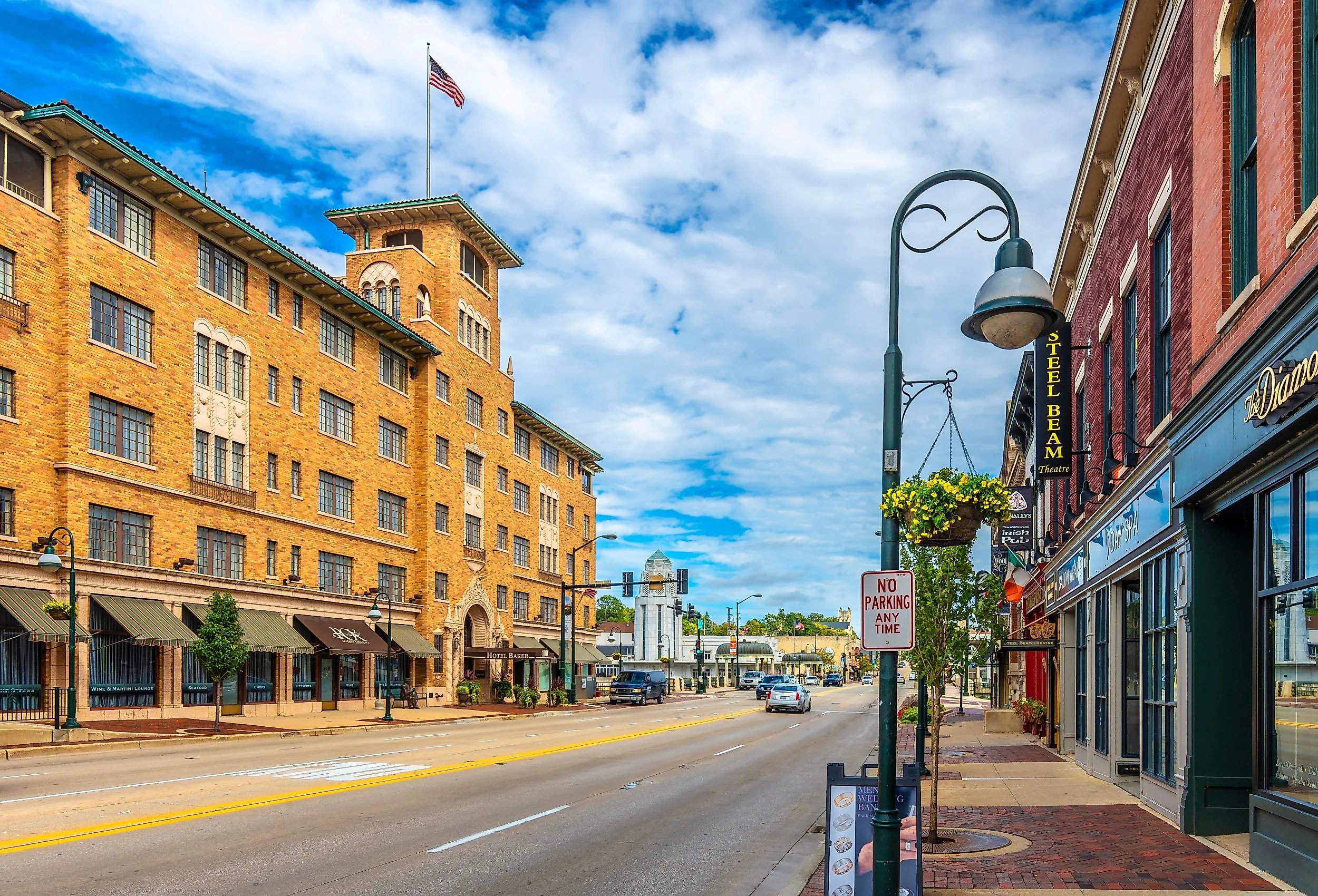
St. Charles sits on the Fox River in Kane County about 35 miles west of downtown Chicago. Its downtown is built directly around the river, with the 1928 Hotel Baker, a historic luxury hotel built by milling magnate Edward Baker, is the most recognizable landmark. The Beith House Museum, operated by the St. Charles Heritage Center, covers local history in an 1857 Italianate home.
The Arcada Theatre, opened in 1926 as a vaudeville and movie palace, still runs as an active concert venue with a national booking schedule. The Kane County Flea Market, held on the first weekend of each month at the county fairgrounds, is one of the longest-running monthly flea markets in the Midwest. Pottawatomie Park runs along the north side of the river and launches the paddlewheel Saint Charles Belle II for seasonal river cruises.
Ottawa

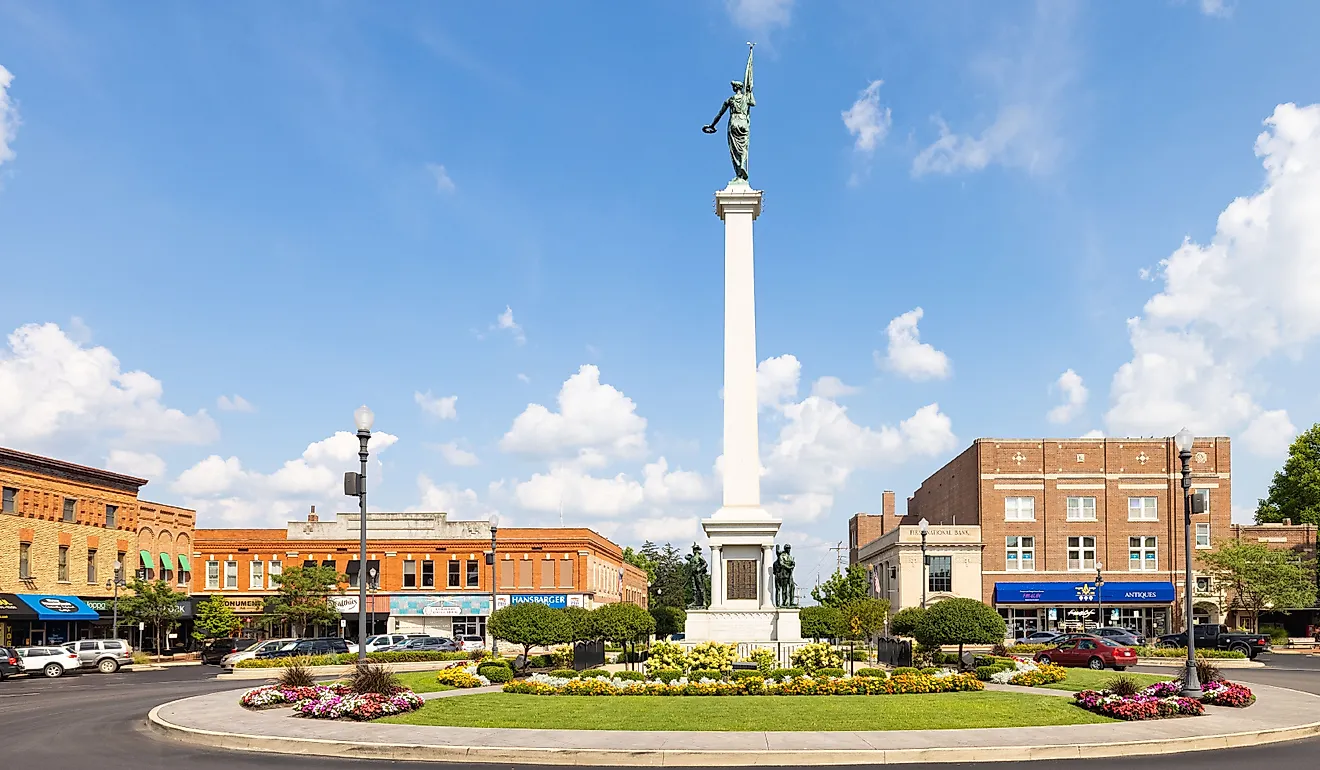
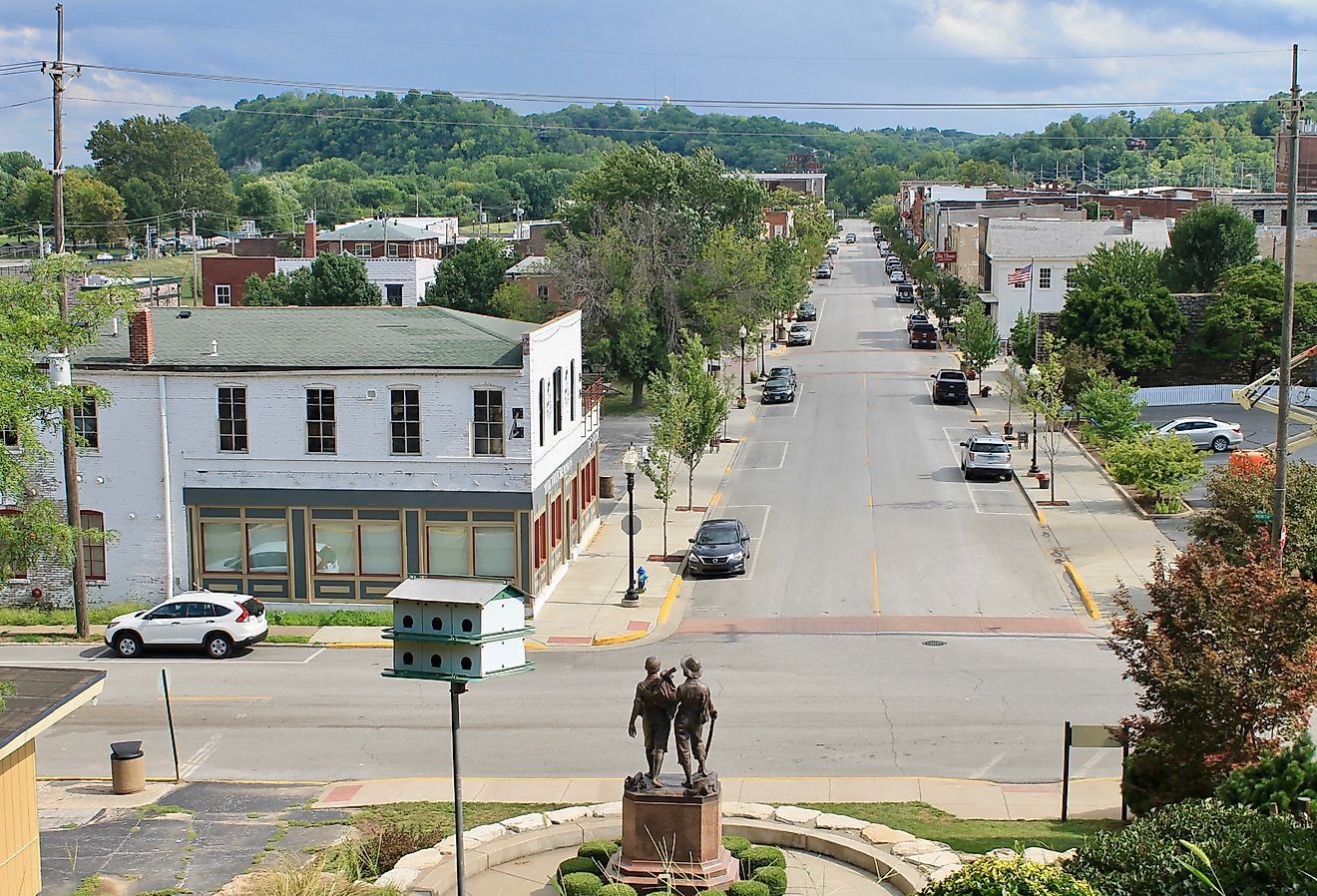
Ottawa sits at the confluence of the Illinois and Fox Rivers in LaSalle County and is best known as the site of the first Lincoln-Douglas debate, held in Washington Square on August 21, 1858. The square still anchors downtown, with a bronze sculpture of the two men facing off at its center. The Reddick Mansion, an 1858 Italianate home across from the square, served as Ottawa's public library for most of the 20th century and is open for tours.
Ottawa is the closest town to Starved Rock State Park, whose canyons and seasonal waterfalls draw more than two million visitors a year. Matthiessen State Park, a short drive south, offers a quieter alternative with its own canyon network. The Ottawa Scouting Museum covers Boy Scout history in one of the largest collections of its kind in the country.
Greenville

Greenville is the seat of Bond County, roughly 50 miles east of St. Louis along I-70. The town was founded in 1815 and is home to Greenville University, originally founded in 1855 as Almira College, was re-established under its current name in 1892 when it transitioned from a women’s college to a coeducational institution. The American Farm Heritage Museum on the south edge of town preserves more than 200 pieces of farm equipment and hosts the annual Threshing & Steam Show each July.
Patriot's Park, centered on the Old City Lake dam built in 1933, runs along the west side of town with walking paths and shelters. The Bond County Fair each August is one of the oldest county fairs in southern Illinois. For golf, Twin Oaks Golf Course and the private Greenville Country Club split most of the local play. Greenville Municipal Airport's vintage aircraft collection is a niche draw, with a focus on mid-20th-century civilian planes.
Galena

Galena, in Jo Daviess County at the state's extreme northwest corner, holds roughly 85 percent of its buildings on the National Register of Historic Places, the highest concentration of any town in the country. The town grew rich on lead mining in the 1820s and 1830s (Galena is Latin for lead ore) and declined when the Mississippi channel silted and the railroads bypassed the port.
Ulysses S. Grant was living in Galena and working at his family's leather shop when the Civil War began. The Grant Home, a 19th-century Italianate brick house given to him by local Republicans after the war, is preserved as a state historic site. The DeSoto House Hotel, opened in 1855 and still operating, hosted both Grant and Lincoln. Chestnut Mountain Resort, just east of town, runs as a small ski area in winter and a mountain-bike park in summer, with views out over the Mississippi.
Rockton

Rockton sits in Winnebago County where the Rock River crosses the Wisconsin line, about 15 miles north of Rockford. Settled in 1836 and incorporated in 1847, the village has kept much of its 19th-century commercial strip along Main Street intact, anchored by locally owned spots like Dairyhaus, Sam's Pizza, and Sugar Britches. Rock Cut State Park, a short drive southeast, covers 3,092 acres around Pierce Lake and Olson Lake and runs one of the busier swim beaches in northern Illinois.
The Rockton River Market, held Tuesday evenings in summer along the riverfront, combines produce stands with live music. The annual Old Settlers Days festival each September runs a parade, a car show, and a carnival through the heart of the village. The Rock River itself carries kayak and canoe traffic all summer, with Macktown Forest Preserve on the east bank providing a launch point.
Sycamore

Sycamore is the seat of DeKalb County and holds one of the most photographed courthouse squares in the state. The 1904 DeKalb County Courthouse, a limestone Beaux-Arts building with a clock tower, anchors the State Street historic district, which was added to the National Register in 1978.
The Ellwood House Museum in nearby DeKalb preserves the mansion of Isaac Ellwood, one of the three principals behind the commercial development of barbed wire in the 1870s. The Sycamore Pumpkin Festival, running the last weekend of October since 1962, is one of the oldest pumpkin-themed festivals in the country and regularly draws more than 100,000 visitors over its four-day run. The festival's centerpiece is the pumpkin-decorating contest on the courthouse lawn.
Mount Carroll

Mount Carroll sits in the driftless area of far northwest Illinois, in terrain closer in character to southwestern Wisconsin than the flat corn belt to the south. The town is small (population around 1,600), but its entire downtown is on the National Register of Historic Places, and the 1858 Hostetter Opera House and 1895 Carroll County Courthouse define the main block.
The Timber Lake Playhouse, a summer-stock theater founded in 1961 on the shore of Timber Lake, runs a full season of musicals and plays and has been a training ground for Chicago actors for more than six decades. Ayers Sand Prairie Nature Preserve, about 10 miles west, protects one of Illinois' few remaining sand prairies, with species like prickly pear cactus that are unusual for the state. The annual Mayfest on the courthouse square each May draws regional artisans and musicians.
Woodstock

Woodstock, the McHenry County seat about 50 miles northwest of Chicago, stood in for fictional Punxsutawney in Harold Ramis's 1993 film Groundhog Day. The plaque marking the spot where Bill Murray's character stepped into the puddle is still embedded in the sidewalk on Cass Street, and the annual Groundhog Days festival each February uses the exact filming locations.
The Woodstock Opera House, opened in 1889 as a combined city hall, opera house, library, and firehouse, has hosted a young Orson Welles (during his Todd School days in the 1930s) and Paul Newman (who apprenticed at its summer theater in 1948). It still runs as an active performance venue. Historic Woodstock Square is anchored by a band-shell gazebo that has held summer concerts since 1891. D.C. Cobb's and Main Street PourHouse handle the dining side, and All Seasons Orchard and Heider's Berry Farm run seasonal pick-your-own operations within a short drive.
Lebanon

Lebanon, a college town in St. Clair County about 25 miles east of St. Louis, is home to McKendree University, founded in 1828 and the oldest university in Illinois. The Mermaid House Hotel, an 1830 Federal-style inn on St. Louis Street, once hosted Charles Dickens on his 1842 American tour; he described the stay in American Notes. The building is now a house museum run by the Lebanon Historical Society.
Horner Park, on the west edge of town, has walking trails, a fishing pond, and playing fields across its 85 acres. For more serious sports facilities, the McKendree Metro Rec Plex offers Olympic-size pools for swimming, diving, and water polo, and an ice arena that has hosted McKendree's Division I men's and women's hockey programs.
Bonus: Quincy

Quincy sits on a limestone bluff above the Mississippi at the western edge of Illinois. In the mid-19th century it was one of the largest cities in the state, and the scale of its surviving Greek Revival, Italianate, and Queen Anne architecture reflects that peak. The John Wood Mansion, home to Illinois' 12th governor and a founder of Quincy, is an 1835 Greek Revival house museum on State Street.
Villa Kathrine, a Moorish-style villa built in 1900 on a bluff overlooking the river by eccentric Quincy resident George Metz, is the town's most photographed building and now serves as the Quincy Visitor Center. The All Wars Museum at the Illinois Veterans Home covers conflicts from the Revolution forward. Quincy Brewing Company and State Street Bar & Grill are the most reliable spots for dinner in the historic downtown district.
Thirteen Illinois Towns
Across the state, these thirteen towns cover the landscapes Illinois actually has: the driftless bluffs at Galena and Mount Carroll, the Amish farms around Arcola, the Mississippi towns at Nauvoo and Quincy, the river-confluence towns at Ottawa and St. Charles, and the Chicago-adjacent villages at Long Grove and Woodstock. Each has something specific worth the drive, from an 1857 winery in Nauvoo to an 1889 opera house in Woodstock that still holds a summer season. Pick one and go.