11 Little-Known Towns In Pennsylvania
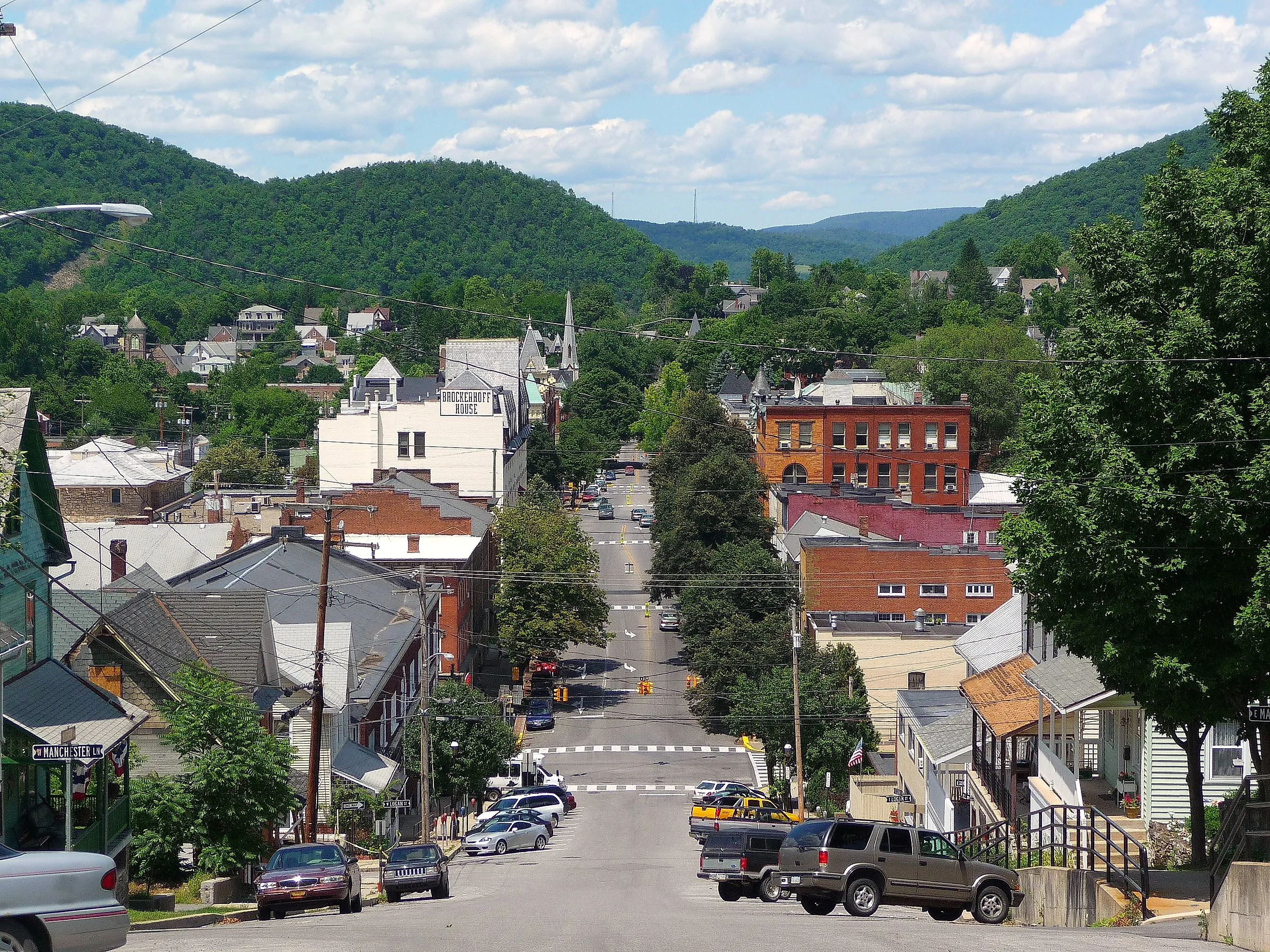
Pennsylvania's smaller towns carry layers of American industrial, military, and cultural history that rarely make the travel guides. Gettysburg pulls the biggest crowds for its Civil War battlefield, but the rest of the state's interior holds communities whose histories run just as deep, from iron-town Bellefonte to railroad-division Renovo to Civil War-era Ambler. Festivals like the Wellsboro Dickens of a Christmas and the Renovo Flaming Foliage Festival still anchor these towns socially, and their surrounding landscapes, from the Laurel Highlands' whitewater to the Pine Creek Gorge, give visitors something to do beyond the main street. These eleven towns deserve more attention than they get.
Ridgway

Ridgway, the seat of Elk County in north-central Pennsylvania, grew through the 19th century as a lumber-industry hub during the state's timber boom. The Ridgway Historic District, added to the National Register of Historic Places in 2003, contains a dense mix of Victorian-era homes and 19th- and early-20th-century commercial buildings, including the Elk County Courthouse and the Carnegie-funded Ridgway Public Library. The town sits inside the Pennsylvania Wilds, a 12-county region of state forests, state parks, and game lands covering more than two million acres, giving Ridgway direct access to some of the largest stretches of undeveloped forest left in the state.
Ohiopyle

Ohiopyle has a year-round population under a hundred, but its location inside 20,500-acre Ohiopyle State Park makes it one of the busiest outdoor destinations in the Laurel Highlands. The Youghiogheny River flows through the town, with Ohiopyle Falls on the main stem and Cucumber Falls a short walk away on a tributary. The Lower Yough is one of the best-known whitewater runs in the eastern United States, drawing rafters through the summer season. The 70-mile Laurel Highlands Hiking Trail has its southern terminus in town. Frank Lloyd Wright's Fallingwater, his 1935 cantilevered house over Bear Run, sits just six miles away, with Wright's later Kentuck Knob another short drive beyond.
Ambler

Ambler, in Montgomery County northwest of Philadelphia, is named for Mary Johnson Ambler, who organized local aid after the 1856 Great Train Wreck on the North Pennsylvania Railroad, a head-on collision between two trains that killed more than 60 people and was the worst rail accident in American history to that date. The borough's borders formed around the rail line and the small community that grew up around the local Ambler family's homestead. The 1928 Ambler Theater, a restored Art Deco movie house, still runs as a nonprofit arthouse cinema. The Stoogeum, a four-floor museum dedicated to the Three Stooges, holds the largest collection of Stooges memorabilia anywhere. The Ambler Arts and Music Festival runs each September.
Wellsboro

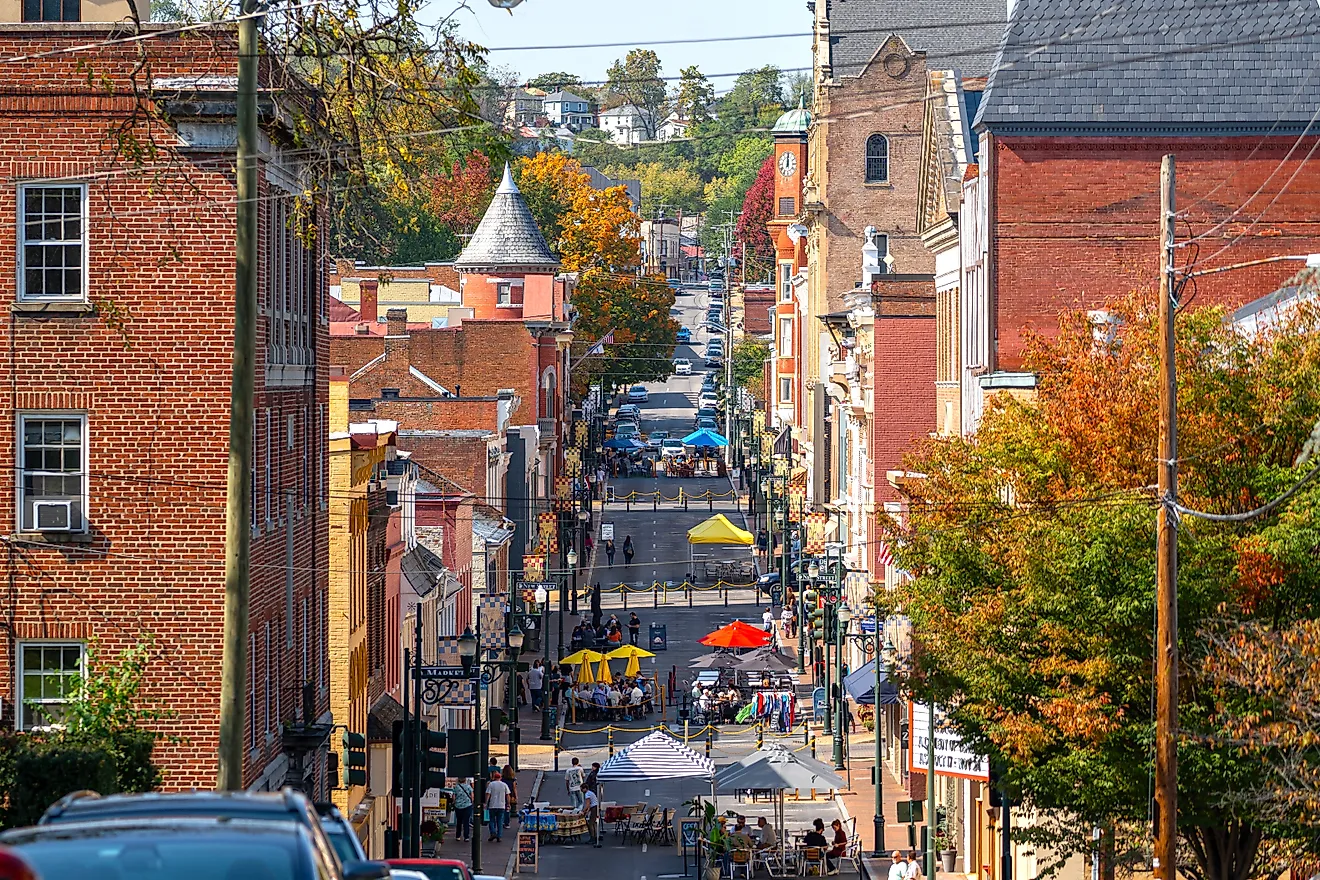
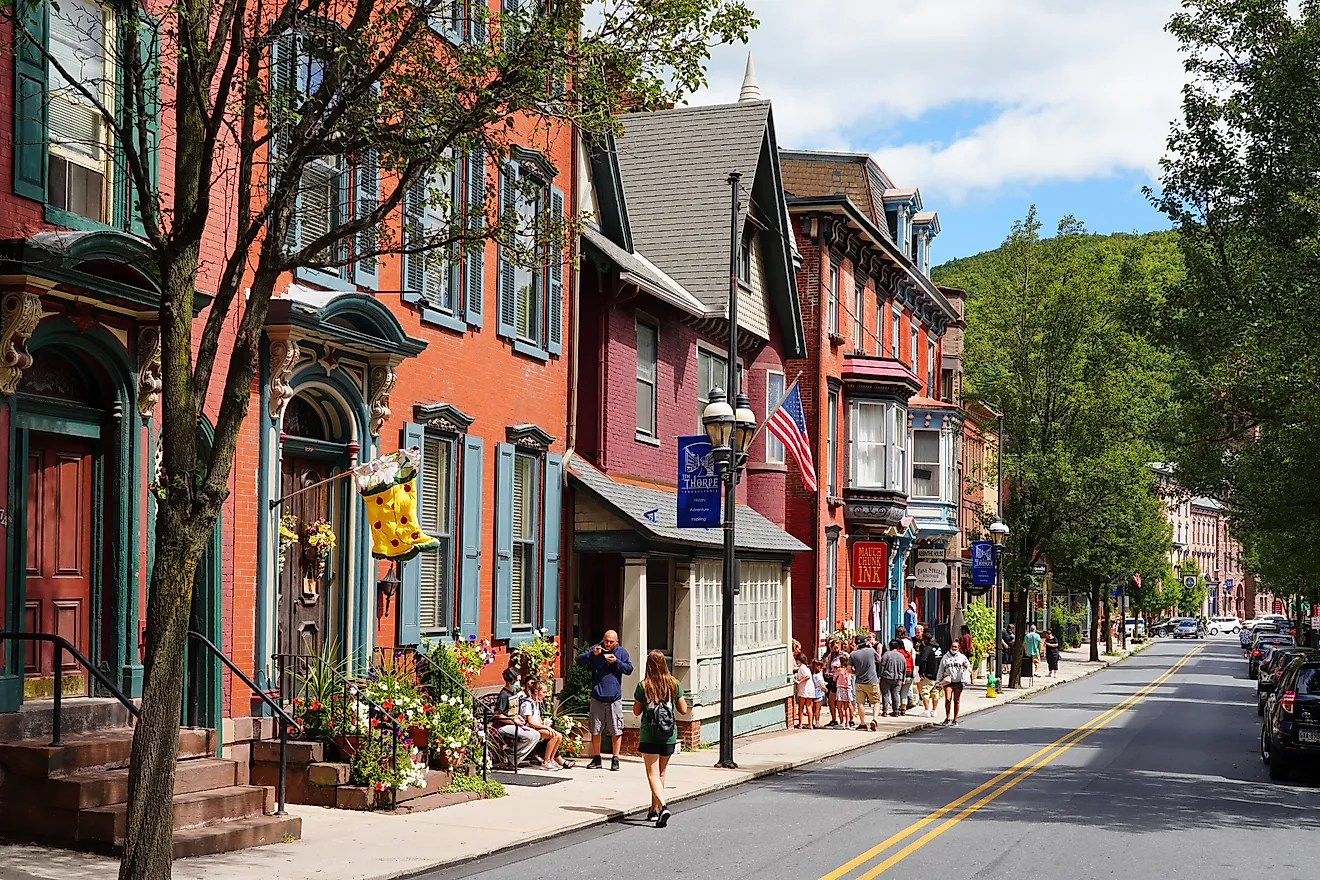
Wellsboro, founded in 1806 and named for early settler Mary Wells, is most recognized for the gas-lit streetlamps that still run down Main Street and the preserved 19th- and early-20th-century commercial architecture behind them. The Penn Wells Hotel, whose current 1926 building replaced an earlier inn on the same site, anchors Main Street alongside the 1835 Tioga County Courthouse. Wellsboro serves as the primary gateway to Pine Creek Gorge, often called the Grand Canyon of Pennsylvania: an approximately 47-mile canyon up to 1,450 feet deep with rim overlooks at Leonard Harrison and Colton Point State Parks and the Pine Creek Rail Trail running through the bottom. The town's Dickens of a Christmas festival each December fills the gas-lit streets with costumed performers and carolers.
Renovo

Renovo is one of Pennsylvania's most isolated small towns, a former Pennsylvania Railroad division point that once housed a 32-track yard and a major repair facility. The rail work has mostly gone, but the town's setting hasn't, with Clinton County's Bucktail State Park Natural Area and Sproul State Forest (about 305,000 acres, the largest state forest in Pennsylvania) surrounding it on nearly every side. The Flaming Foliage Festival each October draws visitors for the surrounding fall color. Hyner View State Park, a short drive east, offers one of the best-known overlooks of the Susquehanna's West Branch. The area falls within the Cherry Springs dark-sky region and sees regular use by amateur astronomers.
Bellefonte

Bellefonte's name (French for "beautiful fountain") refers to the Big Spring that still flows through the center of town. Established in 1795 and incorporated as a borough in 1806, Bellefonte became a major center for iron production in the 19th century and was the home or birthplace of seven Pennsylvania governors, more than any other town in the state. The preserved Victorian architecture reflects the iron-era wealth, with styles ranging from Italianate through Queen Anne.
The Bellefonte Art Museum, housed in the 1814 Linn House across from the courthouse, and the Centre County Library and Historical Museum anchor the cultural core. The Bellefonte Historical Railroad runs seasonal heritage excursions on the former Bellefonte Central Railroad line.
Stroudsburg

Stroudsburg, founded by Colonel Jacob Stroud in 1799 and incorporated in 1815, sits at the southern edge of the Pocono Mountains. The 1795 Stroud Mansion, Stroud's former home, now houses the Monroe County Historical Association museum. The downtown district carries a dense run of 18th- and 19th-century buildings occupied by shops, cafés, and galleries. The Delaware Water Gap, where the Delaware River cuts roughly 1,300 feet through the Kittatinny Ridge about five miles east of town, gives the area hiking, kayaking, and scenic-drive access. Bushkill Falls, a privately owned series of eight waterfalls connected by raised walkways, sits about 20 miles north; the main falls drops about 100 feet.
Gettysburg

Gettysburg is the site of the three-day Civil War battle fought July 1-3, 1863, the bloodiest engagement of the war with approximately 51,000 casualties across both armies, and widely regarded as its turning point. Gettysburg National Military Park preserves the battlefield with ranger programs, auto tours, and the restored Gettysburg Cyclorama, a 377-foot-long, 42-foot-high circular painting of Pickett's Charge completed by French artist Paul Philippoteaux in 1883.
The downtown preserves 19th-century brick and frame buildings around Lincoln Square. The Shriver House Museum covers civilian life during the battle in the home of George Washington Shriver. The David Wills House on Lincoln Square, where Lincoln finished writing the Gettysburg Address the night before delivering it on November 19, 1863, is a National Park Service site. The Gettysburg Museum of History holds Civil War and American history artifacts across multiple rooms.
Lewisburg

Lewisburg, on the West Branch of the Susquehanna River, is the home of Bucknell University, founded in 1846 as the University at Lewisburg. Bucknell's roughly 450-acre campus includes landmark buildings such as Rooke Chapel and the Bertrand Library. The downtown Market Street Historic District is listed on the National Register, with restored 19th-century brick commercial buildings now occupied by shops, cafés, and independent restaurants. The 1941 Campus Theatre, a restored Art Deco single-screen cinema on Market Street, still runs as a nonprofit arthouse. The Lewisburg Farmers Market, held Wednesdays, operates year-round.
Bedford

Bedford began as a frontier British military outpost during the French and Indian War (1754-1763). Fort Bedford, built in 1758 under British colonial authority, served as a staging point for the 1758 Forbes Expedition against Fort Duquesne. The Fort Bedford Museum, housed in a reconstruction of the original fort's blockhouse, preserves artifacts from the period. Old Bedford Village, a living-history museum a short drive north, recreates an 18th- and 19th-century rural Pennsylvania settlement with more than 40 historic and reconstructed buildings. Downtown Bedford holds antique shops, inns, and restaurants in structures dating to the early 1800s. The National Museum of the American Coverlet, housed in a former school building, is the only museum in the country dedicated to American woven coverlets.
Tionesta

Tionesta, the seat of Forest County, sits on the Allegheny River at the southern edge of the Allegheny National Forest. The town grew as a 19th-century lumber center. The Sherman Memorial Lighthouse, a 75-foot inland lighthouse completed in 2003 as a private family memorial and later opened to the public, is the town's most photographed structure. The Tionesta Market Village, a row of small shops housed in colorfully painted buildings along the river, operates seasonally from spring through fall. Tionesta Lake, an Army Corps of Engineers flood-control reservoir, offers boating, swimming, and fishing just outside the borough, while the surrounding Allegheny National Forest covers more than 500,000 acres of hardwood forest.
Eleven Pennsylvania Towns Worth The Detour
Together these eleven towns trace most of what Pennsylvania's smaller communities have held onto: Ridgway's lumber heritage, Ohiopyle's whitewater, Ambler's Victorian rail-suburb identity, Wellsboro's Pine Creek Gorge, Renovo's isolated railroad past, Bellefonte's iron-era governors, Stroudsburg's Delaware Water Gap gateway, Gettysburg's battlefield, Lewisburg's Bucknell campus, Bedford's frontier fort, and Tionesta's Allegheny forest setting. Each one earns its spot through specific history and geography, and each one rewards the drive.