12 Most Welcoming Towns In Oregon's Countryside
Three snowcapped volcanoes watch over a Wild West main street in Sisters, and the people beneath them still wave you into the coffee line. That easy welcome is the thread running through Oregon's countryside. It shows up at a September grape stomp in Carlton and a rooster-crowing contest in Rogue River. It turns up when a whole town in Silverton parades its pets down the street. These 12 towns each hold onto that neighborly instinct in their own way. They are places where a festival or a creamery counter doubles as the town square.
Sisters

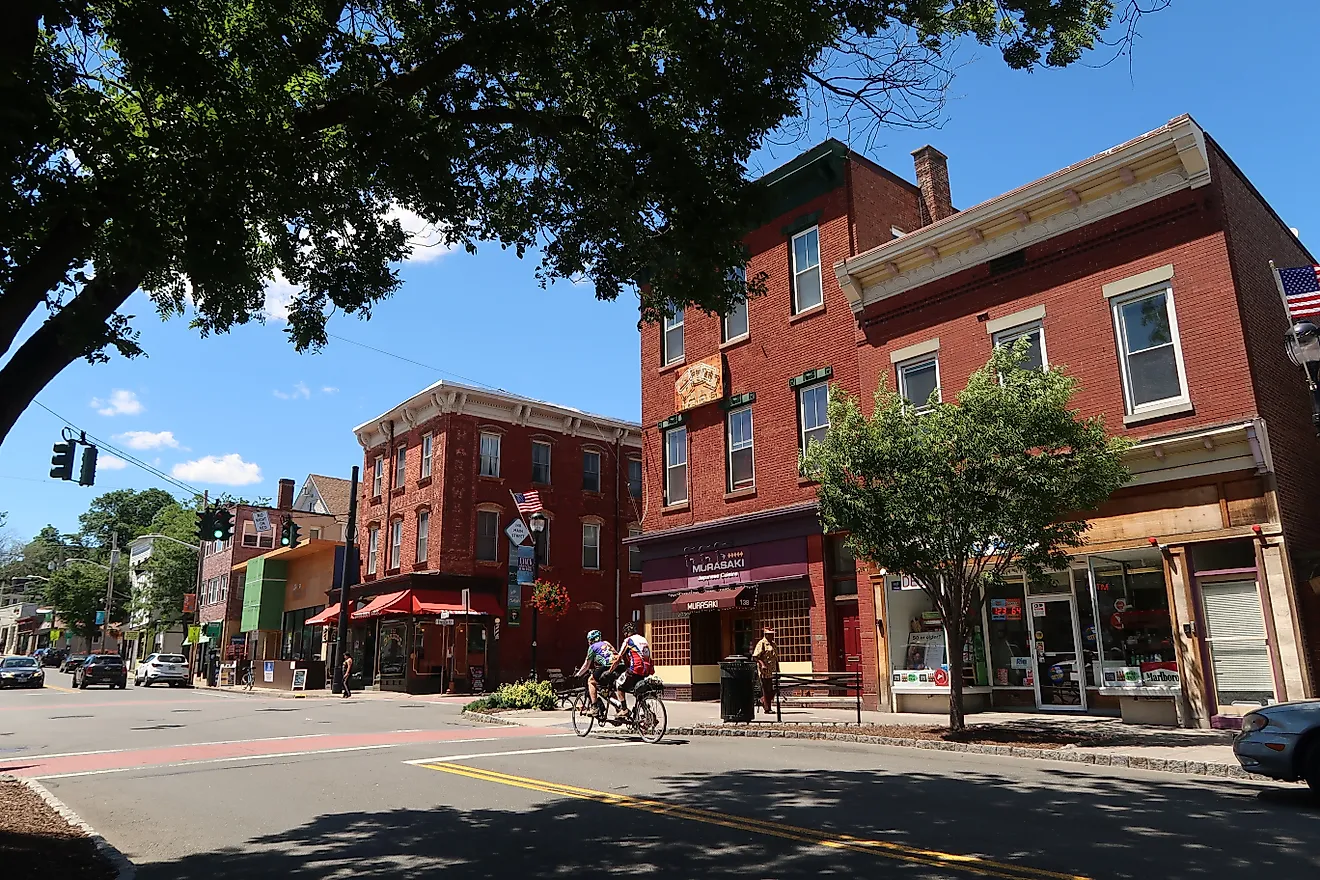
The Fourth Friday Artwalk is the clearest window into how Sisters works. Once a month, galleries and shops along the 1880s-style storefronts stay open late, artists talk through their work, and neighbors turn a shopping street into a standing reunion. The town takes its name from the three volcanic peaks that rise just south of it, and its walkable core of boutiques, galleries, and cafes runs on that same close-knit energy in every season.
Summer is when the whole town opens its doors to visitors. The Sisters Rodeo, the Sisters Outdoor Quilt Show, the Glory Daze Car Show, and the Sisters Folk Festival each pull crowds from across the country, and the weekly farmers market keeps the pace going between them. Locals fold newcomers into all of it without much ceremony.
West of town, the Cascades give way to the Three Sisters Wilderness and its 280,000-plus acres of forest, trails, lakes, and swimming holes. Come winter, the nearby Hoodoo Ski Area opens 800 acres of terrain along with Nordic skiing and tubing. The trailheads stay busy year-round, and so does the conversation at the coffee counter afterward.
Carlton

Every September, Carlton closes its main street for the Carlton Crush Harvest Festival, where residents and out-of-towners crush grapes by foot and toast the valley's Pinot Noir together. It is the kind of event that only works in a town this tight, and it says a lot about the place. Carlton sits in the Willamette Valley wine country, surrounded by tasting rooms, farm-to-table kitchens, and pick-your-own berry rows.
What makes Carlton feel like a hometown is that it is almost entirely its own. You will not find a chain hotel or a chain supermarket inside the city limits. Instead, the town runs on family-owned bed-and-breakfasts and independent kitchens like the Horse Radish and Abbey Road Farm, where the person pouring your wine often owns the place.
Community events keep the calendar full the rest of the year. Neighbors gather for weekly line dancing at Bronco Kelly's in nearby Newberg, and the tasting rooms function as the town's living room most weekends. Regulars and first-timers end up at the same tables.
Jacksonville

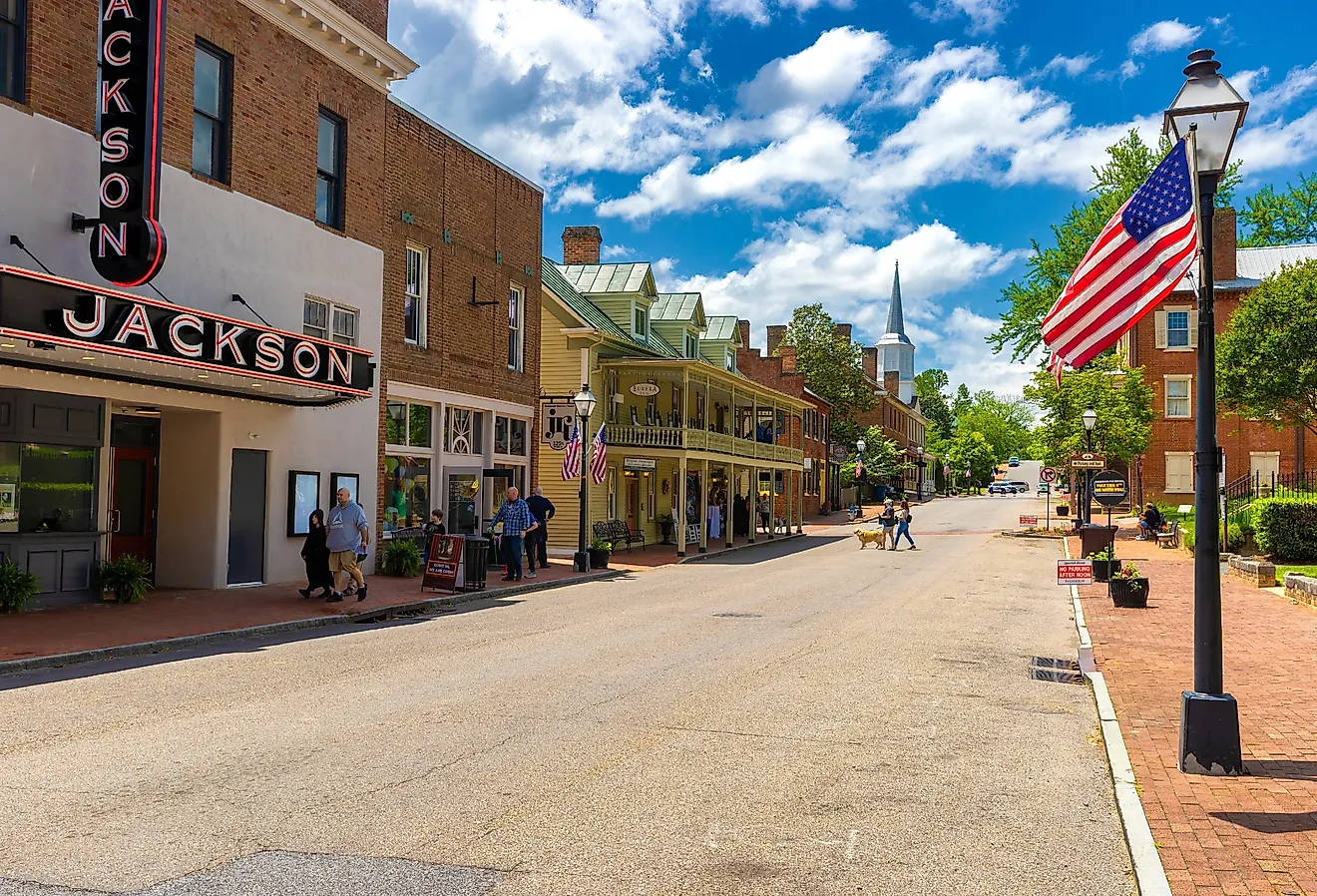
Summer nights in Jacksonville belong to the Britt Festival, when the whole town drifts up to a natural amphitheater on pioneer photographer Peter Britt's old estate to hear music under the stars. The gathering has anchored the town's social season for decades. Jacksonville itself was named a National Historic Landmark district in 1966, and its preserved 19th-century storefronts still line the walkable core downtown.
The town wears its Gold Rush and early Chinese-settlement history openly. The Beekman Bank Museum and the Historic Jacksonville "Walk Through History" tours fill in the background, guided by volunteers who clearly enjoy the retelling. History here is a shared civic project, not a museum piece behind glass.
The welcome carries into the cold months, too. Jacksonville's Victorian Christmas brings parades, lights, tours, and live music to the same streets, while the Jacksonville Woodlands trail network gives residents a wooded backyard just steps from the shops.
Joseph

Polka bands, folk dancers, and a ceremonial keg-tapping fill the streets of Joseph each fall during Alpenfest, a Swiss-Bavarian celebration that leans into the town's nickname of "Oregon's Little Switzerland." Set beneath the Wallowa Mountains, Joseph also hosts the yearly Chief Joseph Days Rodeo, named for the Nez Perce leader the town honors as its namesake.
Main Street is the heart of it. Lined with bronze statues cast at the local Valley Bronze foundry, the road strings together lodging, kitchens, and family-run shops like the refurbished Jennings Hotel and the Old Town Café. Small business is a way of life here, and the owners tend to know their regulars by name.
Just south, Wallowa Lake draws locals to its lodges, cabins, and trailheads all summer. The Wallowa Lake Tramway climbs 3,700 vertical feet to the 8,150-foot summit of Mount Howard, the steepest four-person gondola in North America, opening onto the Eagle Cap Wilderness and its high meadows.
Cannon Beach

The Stormy Weather Arts Festival each November is Cannon Beach at its most characteristic, when galleries, restaurants, and musicians turn a wet coastal weekend into a town-wide open house. The Cannon Beach Arts Association keeps that spirit going all year, with events built around local artists and independent shops. It is the social engine of a town that National Geographic once ranked among its most beautiful places.
The coast here holds deep history. During the Lewis and Clark expedition, Clark and his party, Sacagawea among them, walked down to trade with the Tillamook people for blubber from a beached whale. A large wooden whale sculpture at Whale Park marks the encounter today.
Nature is never far from downtown. Ecola State Park and its Sitka spruce and western hemlock sit a short drive away, laced with hiking trails and wildlife viewpoints. And no trip skips Haystack Rock, the 235-foot basalt sea stack that starred in the 1985 film The Goonies.
Rogue River

A rooster-crowing contest might be the most Rogue River thing imaginable. The town's Rooster Crow Weekend fills the streets with live music, local vendors, and residents cheering on the loudest bird, centered on the Woodville Museum inside the historic Hatch House. The museum's collection spans the area's Indigenous history and its pioneer settlers, and the festival gives the whole town a reason to turn out.
The town sits where the Cascade, Siskiyou, and Coast ranges meet, right against its namesake river. That makes it a natural base for Pacific Northwest water sport. Outfitters like ROW Adventures, Hellgate Excursions, and Morrisons Rogue Wilderness Adventures run whitewater trips and guide anglers through the river's salmon and steelhead seasons.
Just outside town sits one of Oregon's stranger roadside draws. The Oregon Vortex is a "mystery spot" where optical illusions make the property seem to defy gravity, and it has been name-checked in shows like The X-Files and Gravity Falls. It is exactly the kind of oddity a small town keeps around and takes pride in.
Redmond

The Redmond Brewfest and Night Glow packs downtown every summer, pairing Pacific Northwest craft beer with the farmers markets and art shows that already draw the neighborhood out. It is a fitting event for a high-desert town that calls itself "The Hub of Central Oregon." Redmond runs the region's main commercial airport and hosts the Deschutes County Fair, making it the crossroads where much of Central Oregon gathers.
The recreation starts right at the edge of town. You can tour the five interconnected passages of the Redmond Caves, scale the cliffs at Smith Rock State Park, or play the courses at Eagle Crest Resort. A network of paved paths lets residents bike across town without touching a highway.
Downtown fills the gaps with locally owned shops, kitchens, distilleries, and public art. The murals and installations give the walkable core a homegrown feel, and the year-round market keeps neighbors crossing paths.
Silverton

Few town traditions are as disarming as the Silverton Pet Parade, a summer event where kids march their dogs, cats, and assorted animals through downtown while the whole town lines the curb. Add the Homer Davenport Community Festival, which honors the hometown cartoonist with exhibits, crafts, and a parade, and you have a place that celebrates its own with real affection. Silverton wears the nickname "Oregon's Garden City."
That name comes from the Oregon Garden, a 20-plus-acre botanical showcase of Pacific Northwest native plants spread across specialty garden rooms. On its grounds stands the Gordon House, the only building Frank Lloyd Wright ever designed in Oregon, saved from demolition and moved here to open as a museum.
Downtown Silverton doubles as an open-air gallery. A civic art program has turned building walls into large-scale murals, including a series of vivid reproductions of Norman Rockwell's Four Freedoms. Just up the road, Silver Falls State Park and its Trail of Ten Falls give residents one of the state's great waterfall hikes as a backyard.
Astoria

Founded in 1811, Astoria is the oldest city in the state and the first permanent American settlement west of the Rocky Mountains. It sits where the Columbia River meets the Pacific, its Victorian houses climbing the hills above the working waterfront. That mix of deep history and everyday river life gives the town its character.
Perched on Coxcomb Hill, the 125-foot Astoria Column marks the story of the settlers and Indigenous people who shaped the area, and the climb up its spiral stairs is a local rite of passage. The view over the river mouth is the reward.
Astoria also has an outsized film history that residents love to claim. The town's film museum occupies a building used as a working set for The Goonies and Short Circuit, and the Columbia River Maritime Museum and the Heritage Museum trace the town's founding for anyone who wants the full story.
Tillamook

Ice cream and cheddar put Tillamook on the map, and the Tillamook Creamery is where the town shares them. Visitors watch the cheese-making floor, learn how the region's dairies work, and sample the products at the source, all under one very busy roof. The town takes its name from the Indigenous Tillamook people, whose traditional home this coastal farmland has always been.
Beyond the creamery, the outdoors does the hosting. The Tillamook State Forest offers hiking, camping, fishing, and off-road trails, while the Cape Meares State Scenic Viewpoint pairs a historic lighthouse with the strange, many-limbed Octopus Tree. It is dairy country and coast country at once, and locals treat both as their own.
Florence

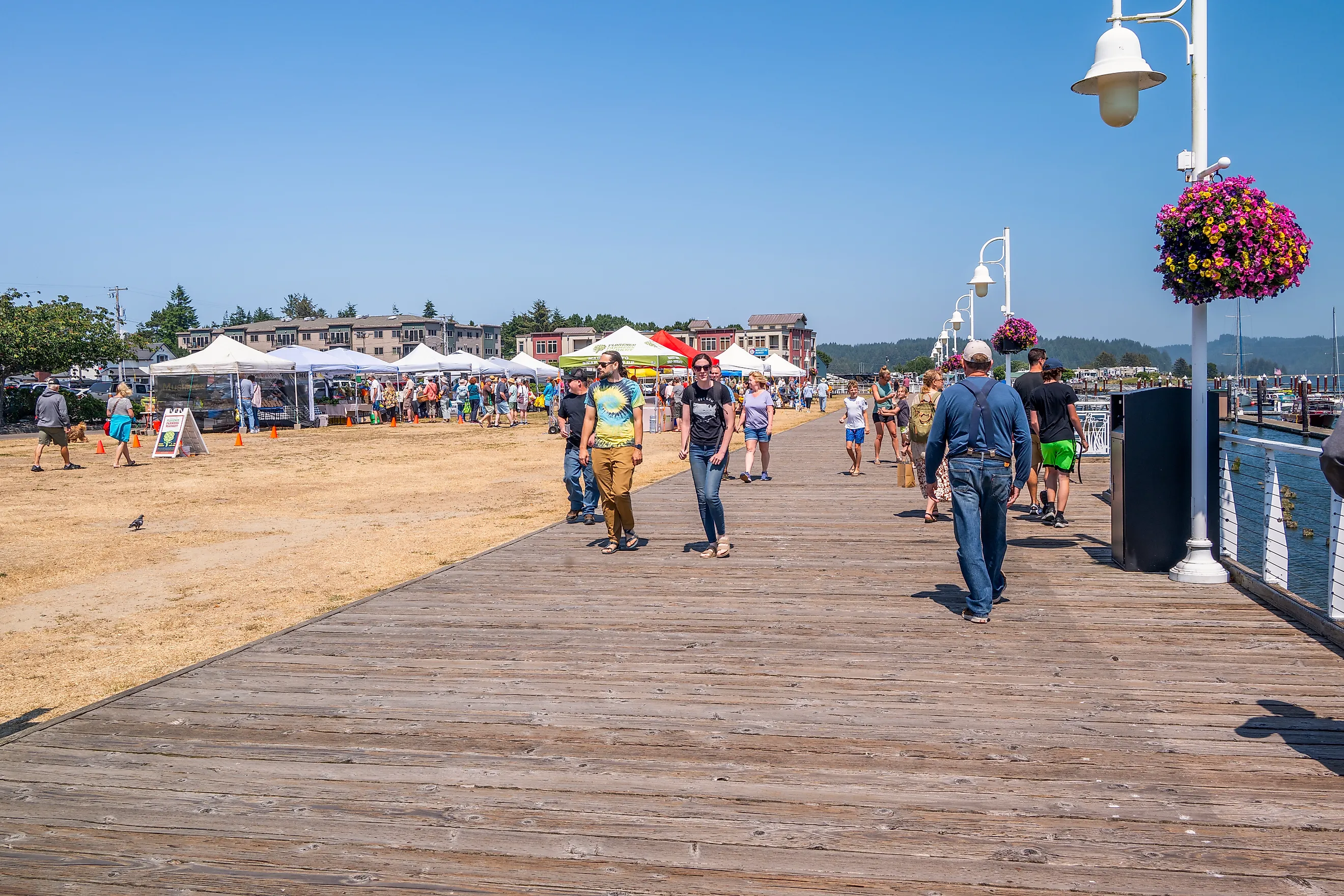
Every May, the streets of Florence fill for the Rhododendron Festival, a floral parade, carnival, and coronation that residents have thrown since 1908, making it one of Oregon's oldest festivals. Generations plan reunions around it, and longtime locals stand at the curb next to first-timers. The whole thing plays out in Historic Old Town, the walkable district of wooden boardwalks, galleries, and seafood counters along the Siuslaw River.
The riverfront is the heart of daily life here. Working docks still serve the local fishing fleet, and the Art Deco Siuslaw River Bridge, built in 1936, frames the harbor at the west end of Old Town. Boat tours and fishing charters run for salmon and crab in the estuary, and the Siuslaw Pioneer Museum keeps the town's logging and Native history close at hand.
Just outside town, the coast opens up. The Oregon Dunes stretch nearly 40 miles south as North America's largest expanse of coastal sand, popular for hiking and sandboarding, while the Sea Lion Caves a few miles north hold the largest sea cave in the country, home to Steller sea lions year-round.
Ashland

For much of the year, Ashland organizes itself around the Oregon Shakespeare Festival, one of the country's oldest and largest professional theater companies. The season brings performances, readings, and talkbacks to multiple stages, and local restaurants and inns build their calendars around the crowds it draws. Theater is the town's shared civic identity, set deep in Southern Oregon's Rogue Valley.
Just off downtown lies Lithia Park, a 93-acre stretch of trails, ponds, gardens, and meadows. Residents stop at the Lithia Fountain to taste the naturally effervescent mineral water the park is named for, a quirk locals hand down to every visitor.
The walkable center rounds out the picture with independent bookstores, galleries, coffee shops, and family kitchens. Events like the Ashland Independent Film Festival and the Saturday Market keep the sidewalks full and give newcomers an easy way in.
Small Towns, One Shared Instinct
What links Sisters to Ashland is less the scenery than the reflex to gather. Each of these towns has built its calendar around an event that only makes sense at small scale, whether that is Carlton crushing grapes by foot or Silverton parading its pets. The welcome is not a marketing line in these places. It is the pet parade, the artwalk, the volunteer tour guide, and the creamery counter, repeated year after year until it becomes the way a town knows itself.