12 Main Streets Where Georgia Comes Alive
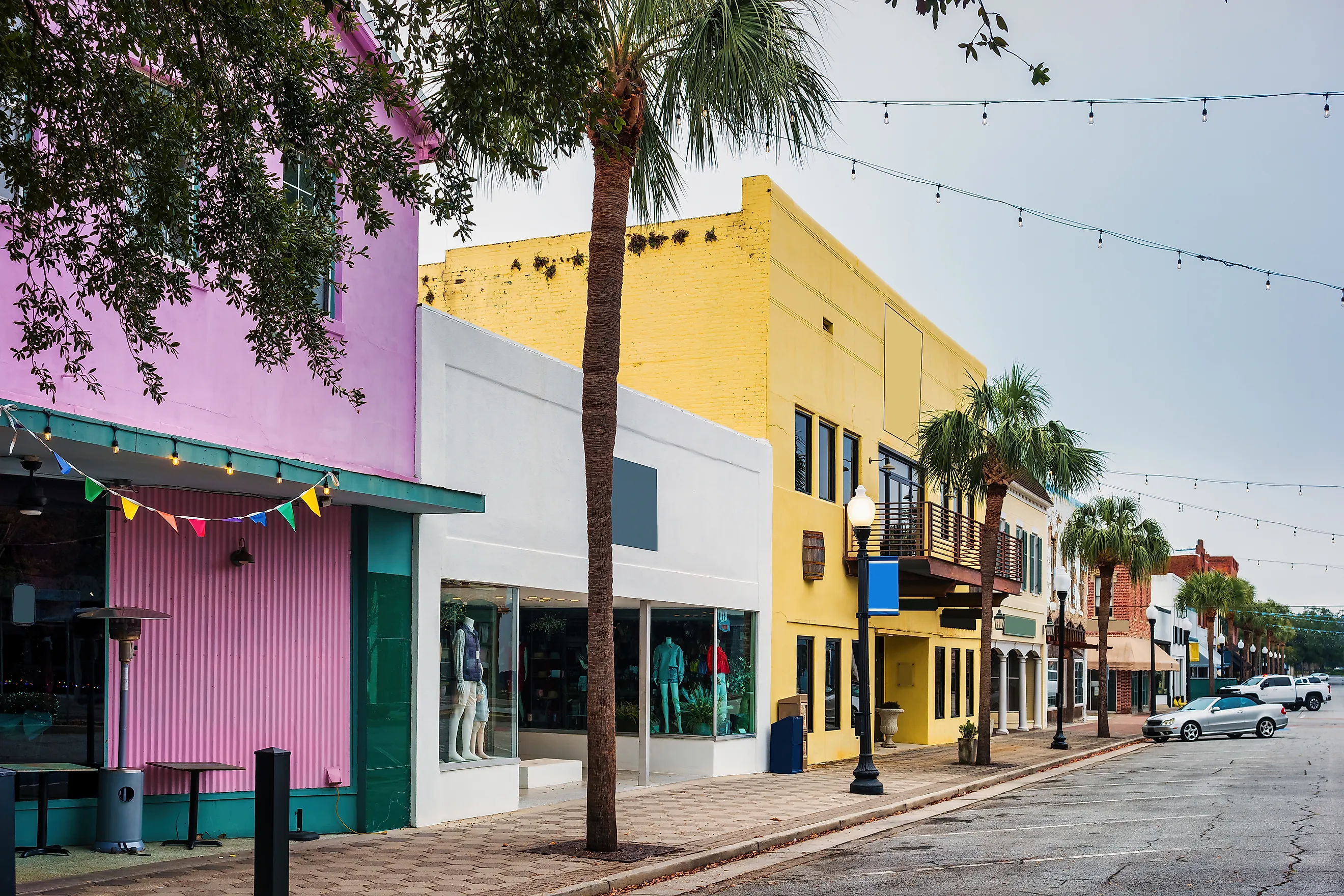
Plenty of American downtowns emptied out when the highway bypass and the shopping mall pulled business to the edge of town, but a good number of Georgia's held on, and a few never slowed down at all. The reason is usually the same: the oldest blocks stayed useful. In Plains, visitors still fill Main Street to see the 1888 depot that Jimmy Carter used as his 1976 campaign headquarters. In Monroe, antique dealers work out of the restored storefronts around the courthouse. In Brunswick, Victorian buildings run down Newcastle Street to a waterfront where shrimp boats still unload. None of these twelve Main Streets turned into a museum piece, and that is what keeps them lively.
Plains

It takes only a few minutes to walk from one end of downtown Plains to the other, but those few blocks hold one of Georgia's most remarkable stories. Railroad tracks still run alongside Main Street, lined with brick storefronts, locally owned shops, and preserved landmarks from the town that shaped President Jimmy Carter long before it became nationally known.
The Plains Train Depot, completed in 1888, stands at the center of the downtown district. What began as a modest railroad station became the headquarters of Carter's 1976 presidential campaign, welcoming reporters and supporters from across the country. Today, exhibits inside the depot trace that unlikely journey with campaign memorabilia, photographs, and artifacts from one of the most memorable elections in modern American history.
Across the street, the Plains Trading Post offers Carter memorabilia and more, giving visitors a chance to take home more than a souvenir. Just beyond it, the Plains High School Visitor Center, part of Jimmy Carter National Historical Park, preserves the classrooms where Carter and Rosalynn once studied. Furnishings, restored classrooms, and interpretive exhibits make it easy to picture daily life in rural Georgia during the 1930s.
Although visitors arrive because of presidential history, they often leave appreciating something else: a downtown that has remained a genuine part of community life rather than becoming a tourist attraction built around one famous resident.
Lavonia

Mornings are unhurried in downtown Lavonia. Shop owners greet regular customers by name, coffee brews behind historic storefronts, and traffic moves at the kind of pace that lets visitors park once and spend a while exploring.
That easygoing pace goes back to the railroad. After Lavonia incorporated in 1880, merchants built cotton warehouses and general stores around the tracks, forming the commercial district that still defines downtown today.
The restored Historic Lavonia Depot remains one of the town's best reminders of those early years. Once filled with passengers and freight shipments, the depot now houses exhibits on the community's history and keeps many of its original architectural details.

A few blocks away stands another landmark with an equally interesting story. Completed in 1911 with funding from philanthropist Andrew Carnegie, the Lavonia Carnegie Library continues serving readers from the same brick building more than a century later. Its classical design differs from the neighboring storefronts, which makes it one of the most recognizable buildings downtown.
Between those landmarks, visitors find antique shops, boutiques, and locally owned cafés worth a stop. Many extend the day with a short drive to Lake Hartwell, where boating, fishing, and lakeside parks round out an afternoon spent exploring downtown.
Cedartown

Not every downtown can claim a Coca-Cola museum, a historic movie theater, and one of the Southeast's best-known cycling trails within a few blocks of each other. Cedartown does exactly that, and visitors have several reasons to stop before they even learn about the town's industrial past.
Iron production, textile mills, and the railroad helped transform Cedartown into an important commercial center during the late 19th and early 20th centuries. Many of the brick buildings constructed during that period continue to house businesses today.
Inside a former Coca-Cola bottling plant, the Cedartown Museum of Coca-Cola Memorabilia celebrates more than a century of advertising, bottling equipment, vintage signs, and memorabilia tied to Georgia's most famous soft drink. It is an unexpected collection that fits naturally within the state's history.
Just around the corner, the West Cinema still shows films beneath its classic marquee. While many small-town theaters have disappeared, this one remains part of everyday life, preserving both its architecture and its original purpose.
The Silver Comet Trail reaches Cedartown, and cyclists and walkers give downtown a different energy. They pause here for lunch or coffee before continuing along one of the nation's longest paved rail trails, and that steady flow keeps Main Street busy throughout the year.
Moultrie

The courthouse is visible long before visitors reach downtown Moultrie. Rising above mature oaks and landscaped streets, its white columns and copper dome have stood above the city since 1902, serving as both a landmark and the centerpiece of one of Georgia's most attractive courthouse squares.
Agriculture helped shape Moultrie's early growth, and the arrival of the railroad turned the community into a regional center for cotton, timber, and livestock. Today, that history survives in carefully preserved commercial buildings around the square.
More than 50 businesses occupy those storefronts. Visitors can wander from one block to the next, past independent boutiques, bookstores, jewelry shops, specialty retailers, and cafés. The Museum of Colquitt County History adds another perspective, using photographs, artifacts, and exhibits to tell the story of the people who built the region.
Downtown is at its best during Thanksgiving week, when residents string the annual Canopy of Lights across the square. Thousands of lights stretch over several downtown blocks, part of a holiday tradition the city has marked since 1933.
Monroe

Monroe has built its reputation around antiques, and it has done so without losing the everyday character that makes the district enjoyable even for those who never buy a thing.
Broad Street leads directly to the Walton County Courthouse, where restored storefronts now house one of Georgia's largest concentrations of antique dealers. Vintage furniture, architectural salvage, artwork, collectibles, and books fill shops geared to browsing as much as buying. Because the stores are spread throughout downtown rather than clustered in one building, every block has something different.
The town makes room for the arts, too. The Monroe-Walton Center for the Arts hosts exhibitions, workshops, and performances throughout the year, while murals and public art fill the walls between historic buildings.
By lunchtime, many visitors grab coffee before returning to another round of antique hunting. Seasonal festivals and farmers' markets fill the streets, and the courthouse square becomes a gathering place rather than just a shopping destination.
Cartersville

There are a few downtowns in Georgia where visitors can spend an entire day moving between nationally recognized museums and independent restaurants. Cartersville manages to fit all of that within a remarkably walkable historic district.
The city's railroad heritage helped establish Cartersville as a transportation hub, while mining and manufacturing fueled decades of growth. Those industries may have changed, but downtown has evolved into one of North Georgia's leading cultural destinations.
The Booth Western Art Museum draws visitors from across the Southeast with the country's largest permanent exhibition space for Western art. Monumental bronze sculptures stand outside, while galleries inside feature paintings, presidential correspondence, Native American artifacts, and exhibits on the history of the American West.
Only a short walk away, the Bartow History Museum occupies the county's former courthouse. Its exhibits trace hundreds of years of regional history, covering Indigenous settlements, the Civil War, mining, railroads, and the industries that shaped modern Bartow County.
Downtown is best explored slowly. Lunch at Appalachian Grill or Table 20, a stop inside one of the locally owned boutiques, and an easy stroll along Main Street round out the visit before many continue a few minutes south to Etowah Indian Mounds State Historic Site. The prehistoric earthen mounds make a fitting finale, a reminder that the area's history reaches well beyond downtown's museum walls.
Dublin

Downtown Dublin feels especially lively around West Jackson Street, where restored brick buildings, outdoor gathering spaces, and locally owned businesses make up a walkable district shaped by the city's long history along the Oconee River. What began as a trading post eventually became an important shipping center for cotton and timber, and many of the commercial buildings from that era still frame the streets today.
One of downtown's most recognizable landmarks is Theatre Dublin. Opened in 1934, the beautifully restored venue continues to host concerts, films, live performances, and community events beneath its glowing vintage marquee. Nearby, Jackson Plaza sits at the center of downtown, where fountains, public art, and shaded seating make it a popular gathering place throughout the year.
A few minutes away stands First African Baptist Church, where a 15-year-old Martin Luther King Jr. delivered his first public speech during an oratorical contest on April 17, 1944. The nearby Martin Luther King Jr. Monument Park honors that milestone with interpretive displays that place Dublin within the broader story of the Civil Rights Movement.
Rather than rushing between landmarks, many visitors follow the city's self-guided walking tour. More than 70 historic buildings, churches, homes, and businesses along the route mark the story of Dublin's evolution, with something new around nearly every corner.
Tifton

Downtown Tifton still reflects the railroad town Henry Harding Tift envisioned in the late 1800s. Freight trains may no longer dominate daily life, but the streets they helped establish remain filled with historic architecture, local businesses, and cultural attractions that celebrate South Georgia's agricultural roots.
The elegant Tift Theatre is hard to miss, with its Art Deco façade and illuminated marquee. Since opening in 1937, it has become one of the city's premier entertainment venues, hosting concerts, theatrical productions, classic films, and community performances.
A few blocks away, the Tifton Museum of Arts and Heritage occupies a beautifully preserved church completed in the early 1900s. Original stained-glass windows and handcrafted woodwork provide an impressive backdrop for rotating art exhibits and displays highlighting the region's cultural heritage.
The Tifton Terminal Railway Museum focuses on railroad history, with restored equipment and archival photographs showing how the rail lines transformed South Georgia's economy. Nearby, Brumby Crossing shows how old warehouses can be reused, with the former cotton and tobacco facility now holding offices, shops, and community spaces while keeping its industrial character.
Hawkinsville

The pace slows noticeably in downtown Hawkinsville, where historic storefronts overlook quiet streets leading toward the Ocmulgee River. Long before highways crossed central Georgia, riverboats carried cotton and supplies through the community, helping establish Hawkinsville as one of the region's busiest commercial centers.
That prosperity is reflected in the beautifully restored Hawkinsville Opera House. Completed in 1907, the building originally served as both an auditorium and city hall before careful restoration returned it to its role as a performing arts venue. Today, concerts, theatrical productions, and community events continue inside the restored hall.
Nearby, the Pulaski County Courthouse stands at the center of downtown, surrounded by restaurants, boutiques, and independently owned businesses in buildings that have served the community for generations. Seasonal festivals bring additional energy to the courthouse square, where residents gather for concerts, holiday celebrations, and local events.
Visitors looking to stretch their legs often head to Mile Branch Park, where walking trails wind alongside the Ocmulgee River. The combination of downtown history and natural scenery makes Hawkinsville an easy destination for a relaxed afternoon.
Brunswick

Unlike many Georgia downtowns built around a courthouse square, Brunswick sits along the water. Victorian-era buildings line Newcastle Street down to the East River, where shrimp boats, cargo vessels, and sailboats fill the city's working waterfront.
The architectural centerpiece is Old City Hall, completed in 1889. Its Richardsonian Romanesque design features a soaring clock tower, carved stone details, rounded arches, and distinctive gargoyles that have made it one of coastal Georgia's most photographed public buildings. Today, the restored landmark hosts community events and exhibitions while remaining an unmistakable symbol of downtown.
Entertainment has long centered around the nearby Historic Ritz Theatre, whose history dates to 1899 when it first operated as an opera house. More than a century later, audiences still gather for concerts, theatrical productions, films, and art exhibitions, ensuring the building remains part of everyday life rather than simply a preserved landmark.
The stroll naturally ends at Mary Ross Waterfront Park, where benches overlook the busy harbor. Watching shrimp boats return alongside massive cargo ships offers a reminder that Brunswick's waterfront is not simply scenic. It remains one of Georgia's most active working ports.
Milledgeville

Few Georgia downtowns carry as much political history as Milledgeville. For more than six decades, it served as the state's capital, and that legacy remains visible in its stately government buildings, broad avenues, and carefully planned public squares.
The magnificent Old Governor's Mansion, completed in 1839, remains one of the South's finest examples of Greek Revival architecture. Guided tours move beyond elegant furnishings to examine the lives of the governors who lived there, the enslaved workers who maintained the property, and the political decisions made within its walls before Georgia's capital relocated to Atlanta.
A short walk away, Georgia's Old Capitol Building occupies the former Statehouse, where legislators once debated issues that shaped the state's future.
Downtown feels equally alive in the present. Students from Georgia College & State University fill coffee shops, bookstores, and restaurants along Hancock Street, blending youthful energy with historic surroundings. Visitors wanting a broader perspective can climb aboard Milly the Trolley, whose guided tours connect many of the city's best-known landmarks while sharing stories that rarely appear on historical markers.
Washington

Washington is best at an unhurried pace. Instead of rushing between attractions, visitors take slow walks beneath mature trees, drop into locally owned shops, and admire architecture that has survived for generations.
Founded in 1780 and named for George Washington, the town centers on a courthouse square surrounded by beautifully preserved commercial buildings. Among them, the Mary Willis Library stands apart. Opened in 1889 as Georgia's first free public library, it features stained-glass windows, arched stonework, and a distinctive tower that still marks the downtown skyline more than a century later.
Just around the corner, the Washington Historical Museum fills a restored Greek Revival home with furniture, clothing, military artifacts, documents, and decorative arts that reveal everyday life in Wilkes County across multiple generations. The exhibits provide context for many of the buildings visitors pass while exploring downtown.
Independent antique stores, cafés, and specialty shops round out the visit, making Washington feel less like an outdoor museum than a town still going about its life. An afternoon here rarely follows a strict itinerary, and that is part of its appeal.
Where the Past Still Earns Its Keep
What sets these downtowns apart is not preservation alone. Dublin's theater still sells tickets, Hawkinsville's opera house still puts on shows, and Milledgeville's students still crowd the coffee shops on Hancock Street. The courthouse squares that once handled cotton and timber now hold farmers' markets and holiday lights, and the depots that met the trains now hold exhibits and visitor centers. Each town kept its oldest blocks in use rather than freezing them behind glass.
That is the through line across all twelve. A morning among Washington's antique stores, an afternoon at the Booth museum in Cartersville, and an evening under the Tift Theatre marquee share the same quality: history that people still live inside. These buildings did not become monuments. They stayed part of the week.