11 Storybook Towns In Western Australia
Some of Western Australia's most memorable small towns are barely a dot on the map, yet many feel lifted from the pages of a storybook. York, the state's oldest inland European settlement, displays heritage plaques along Avon Terrace and houses a secondhand bookshop in its old fire station. New Norcia, founded by two Spanish Benedictine monks in 1846, is Australia's only monastic settlement. At Kalbarri, you can walk out on a skywalk hanging 328 feet above the valley floor, over the gorge the Murchison River carved toward the Indian Ocean. Albany, the first European settlement in the entire state, sent more than 41,000 troops to war from King George Sound and now honors this legacy at the National Anzac Centre. Heritage architecture, coastal drama, and deep forest scenery run through all 11 of these storybook towns across Western Australia.
York

York is Western Australia's oldest inland European settlement. Europeans first built structures here in the early 19th century on land long home to the Ballardong Noongar people. Today, the main street, Avon Terrace, displays heritage plaques on many storefronts sharing the history of the buildings. A prime example is the 1892 Empire Roller Flour Mill, which now houses the Flour Mill Emporium, a sprawling shop packed with antique furniture, vintage jewelry, and quirky artifacts like World War I German helmets. Meanwhile, the Old Gaol and Courthouse and the allegedly haunted Old York Hospital give the area a spooky vibe after sunset.
Within easy walking distance of Avon Terrace, you can explore the York Residency Museum and the York Motor Museum, or browse the shelves at Barclay Books, a secondhand bookshop housed in the town's former first fire station. The entire town is an officially protected historical area, where the streets sit against a countryside backdrop, surrounded by the Avon River and the farmland of the Avon Valley.
New Norcia

Two Spanish Benedictine monks, Rosendo Salvado and Joseph Serra, founded a mission along the Moore River in 1846, and the following year, they laid the first stone of the monastery that would eventually become New Norcia. It was named after Norcia, the Italian birthplace of Saint Benedict, and the town has remained Australia's only monastic settlement ever since. Baroque, Gothic Revival, and Byzantine influences evoke old Spain. The monastery itself still functions as a working community, and on Saturday afternoons it opens for a taste of monastic hospitality and a few stories from the monks themselves.
The old school buildings have found new life hosting educational programs, youth camps, and conferences, while the Old Trading Post now serves as a creative hub for resident artists and the Mandorla Art Galleries. Down the road, visitors can grab a bite to eat at the Salvado Café or explore the Museum and Art Gallery, which protects artifacts, religious masterpieces, and the town's archived records. Outside, the surrounding grounds offer a glimpse into the past, with old remnants of a flour mill, blacksmith's shop, olive workshop, and apiary showcasing the early industries that kept the original mission running. Visitors can take it all in along the self-guided River Walk, a scenic path that follows the Moore River past historic landmarks and the original river crossing.
Toodyay

Long before charming cafes and gift shops moved in, Toodyay was a rugged frontier shaped by outlaws, convicts, and relentless flooding. The municipality's original 1836 site suffered severe flooding in the 1850s, largely due to the nearby Avon River, forcing the entire community to move several miles upstream to what was formerly a convict depot. Visitors today can explore this dramatic past at a three-story 1870 flour mill built by local businessman Daniel Connor, aptly named Connor's Mill.
Just around the corner sits the Newcastle Gaol, constructed through convict labor in 1862 and featuring a cell dedicated to Western Australia's most infamous prison escape artist and bush ranger, Moondyne Joe. His exploits are still remembered by locals and visitors every May during the annual Moondyne Festival, where street actors reenact his famous run-ins with the law. Toodyay's deep roots led the National Trust to formally recognize it as a historic town in 1980.
Northampton

Copper and lead drew the first settlers to Northampton in 1848, and the ruins around town today hint at its more complicated history. Officially declared a townsite in 1864, the settlement continued to grow from the region's lead and copper mining industry and later became an integral railway town. Much of that history remains visible along Hampton Road, where the designated heritage walk passes over 35 historic buildings, including the stone Chiverton House, the former Northampton Family Store, and a striking church, designed by Monsignor John Hawes, known as Our Lady in Ara Coeli. The town's old railway precinct preserves remnants of Western Australia's early government rail network. In spring, native plants such as the everlasting daisies, kangaroo paws, and flowering gums blanket the countryside, turning the historic town into a vibrant entrance to the Mid West's famous wildflower region.
Pemberton

Karri trees define Pemberton in a way few other species define a Western Australian town, and nowhere is that more obvious than at the Gloucester Tree. Towering at roughly 200 feet, it once served as a forestry fire lookout and was named for the Duke of Gloucester, Prince Henry, who visited while the tower was under construction in 1946. Following extensive safety upgrades, it reopened to climbers in 2026 with a new 121-foot lookout platform, and is currently the only one of the region's three climbing trees open to the public.
Road-trippers can easily reach all three along the scenic 53-mile Karri Forest Explorer Drive. The same drive winds through Gloucester National Park and Beedelup National Park, which is home to Beedelup Falls and the aptly named Walk Through Tree, a centuries-old Karri tree with a clean-cut hole through its trunk that has served as a photo-worthy natural landmark. Beyond the giant lookouts, Big Brook Dam attracts anglers, while the nearby Big Brook Arboretum offers a diverse collection of trees imported from all around the world. For hikers, the Bibbulmun Track, a trail stretching over 620 miles between Kalamunda and Albany, cuts right through the center of town while passing local vineyards.
Denmark

Denmark is a small coastal community centered on Wilson Inlet between the Denmark River and the Southern Ocean. Less than 10 miles west of town, William Bay National Park features two of the state's most photographed beaches. At Greens Pool, large granite boulders form a natural breakwater to create calm waters perfect for snorkeling, while the nearby Elephant Rocks feature a dramatic cluster of weathered stones that look eerily similar to a herd of elephants wading into the sea.
Closer to town, Ocean Beach offers a different kind of coastal experience, drawing surfers rather than swimmers. More than 240 bird species have been recorded around Wilson Inlet, while southern right whales pass offshore during their annual migration, and bottlenose dolphins can be spotted in the estuary. Cool-climate vineyards dot the hills surrounding Denmark, and farther out west, the Valley of the Giants lets visitors walk among towering, centuries-old tingle trees on an elevated treetop walk.
Bridgetown

A jarrah bridge stretching more than 400 feet across the Blackwood River announces Bridgetown long before the town comes into view, a fitting welcome for a place named after that very crossing. Founded in the mid-19th century and granted Historic Town status by the National Trust in 2000, Bridgetown sits in a valley once known for its apple orchards. The Bridgetown Police Station Museum, built in 1880 and in continuous use up until 1973, now displays exhibits on early settlers and the district's law enforcement history.
Federation-style buildings such as the Bridgetown Hotel and the Freemasons Hotel, affectionately called "The Freo," still anchor the main street. Because the Blackwood is the longest continually flowing river in the state, kayaking ranks among the more popular ways to see the surrounding hills, and a self-guided heritage walk links more than a dozen sites around town, from the old Masonic Lodge to the Brierley Jigsaw Gallery, before ending at a local cidery.
Dwellingup

A devastating bushfire nearly wiped Dwellingup off the map in 1961. The disaster destroyed most of the town, along with the nearby timber settlements of Holyoake and Nanga Brook, but the resilient community rebuilt what remained and eventually established a new identity among the forests. Today, the small forestry town sits on a scenic ridge overlooking more than 136,000 acres of jarrah, marri, and wandoo forest within Lane Poole Reserve. The scars of the timber industry are still woven into the landscape, most notably through the Hotham Valley Tourist Railway. Its tracks were first laid in 1910, and heritage trains now travel approximately five miles through the forest to Etmilyn, while the seasonal Steam Ranger service runs from May through October aboard a restored steam locomotive. Volunteers maintain the historic rolling stock and railway station, which also houses a collection of railway memorabilia that offers a glimpse into the industry that once shaped the district.
The surrounding forest has become a playground for hikers and outdoor adventurers, with the Bibbulmun Track passing directly through the district on its long journey to Albany. The town is one of only two officially accredited Trail Towns in Western Australia, a designation that reflects how deeply its network of walking and cycling routes has become tied to local life. Nearby, the Forest Discovery Centre brings visitors closer to the towering woodland with a treetop walk, while Lane Poole Reserve opens up another side of the landscape through its rivers, trails, and dense forest.
Kalbarri

Where the Murchison River meets the Indian Ocean, Kalbarri packs an extraordinary amount of scenery into a small town. The landscape changes dramatically from one direction to the next, featuring a rugged river canyon carved through ancient inland sandstone on one side, and towering ocean cliffs plunging straight into the sea on the other. Within Kalbarri National Park, Nature's Window remains the best-known glimpse into the region's geological past. The natural sandstone arch, carved from roughly 400-million-year-old rock, frames the gorge beyond it. Nearby, the Z-Bend and Hawks Head lookouts provide equally dramatic views from varying angles, offering alternatives to the crowds that often gather around the famous arch.
For a view that puts the sheer scale of the gorge into perspective, the Kalbarri Skywalk sends visitors out over the Murchison River on two cantilevered platforms suspended 328 feet above the valley floor. Along the walkway, signs reveal how the gorge was shaped over hundreds of millions of years and share the history and culture of the indigenous Nanda people, the region's traditional owners. Beyond the gorge, the landscape changes from red rock to rugged coastline, and back in town, Finlay's Kalbarri serves fish landed by the local boats at an open-air restaurant with its own microbrewery, a couple of blocks back from the beach.
Albany

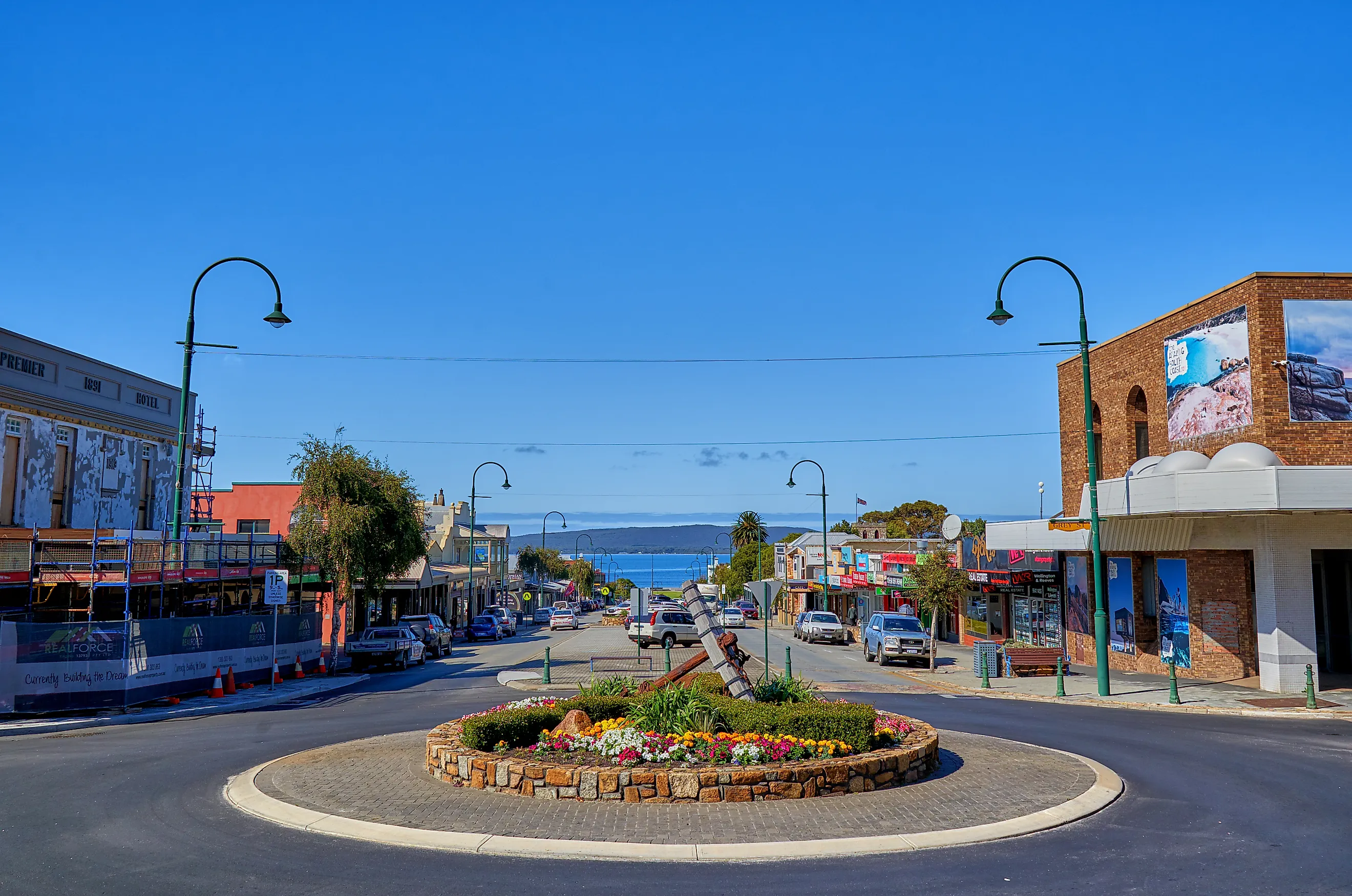
Albany holds the official title of Western Australia's first European settlement (not to be confused with the aforementioned town of York, which is the oldest inland European settlement), and its harbor at King George Sound later became the departure point for more than 41,000 Australian and New Zealand troops bound for the First World War. The National Anzac Centre, which opened in November 2014 within Albany Heritage Park atop Mount Clarence, assigns each visitor the identity of a real soldier or nurse and follows that person's story through the exhibits. Nearby stands Princess Royal Fortress, built in 1893 as one of only two pre-federation fortresses in the country constructed to protect intercontinental trade routes, along with the Desert Mounted Corps Memorial overlooking the harbor.
Albany's history reaches even further back, with Patrick Taylor Cottage dating to around 1832 and claiming to be the oldest surviving dwelling in the state. Down by the waterfront, visitors can step aboard a full-scale replica of the Brig Amity, the vessel that carried Albany's founding settlers. At The Gap, granite cliffs plunge nearly 130 feet toward the Southern Ocean, and a viewing platform extends directly over the churning water below. The surrounding Torndirrup National Park continues the coastal drama, with walking trails that range from a leisurely ten-minute stroll to the full-day return hike out to Bald Head. After the rugged cliffs and windswept trails, Middleton Beach offers a gentler ending, with a broad stretch of sand much closer to the city center.
Augusta

At the far southwestern tip of the Australian mainland, Augusta occupies a quiet corner of the coast. The town's most recognizable landmark, Cape Leeuwin Lighthouse, was constructed over fifteen years, with funding problems repeatedly delaying the project until Western Australia's gold rush finally provided the money needed to finish it. Premier Sir John Forrest, who had championed the lighthouse for years, presided over its opening in 1896. Built from hand-carved limestone quarried at nearby Quarry Bay, the 128-foot tower still stands at the meeting point of the two oceans, accompanied by three of the original lighthouse keepers' cottages. One now houses an interpretive center that tells the stories of the families who once lived at this remote station.
In town, the Augusta Historical Museum opens every afternoon with displays on the district's shipwrecks, its timber industry, and the mass whale stranding of 1986 that drew hundreds of volunteers into the shallows. Those same waters still draw whales in Flinders Bay, at the southern end of town, which becomes a resting and calving ground for humpbacks and southern rights during the winter migration. Its sheltered, granite-framed shallows double as the town swimming beach the rest of the year.
A Slower Way Through Western Australia
If you are looking for a side of Western Australia that the big itineraries skip, point the car at one of these small towns instead. From the Victorian storefronts of York to the granite coast below Albany, these communities were built for work rather than for visitors, and whatever appeal they carry now accumulated slowly. Whether you are drawn to heritage streets, wildflower season, or a gorge that drops away beneath your feet, these are the places where Western Australia feels closest to its own past.