11 Small Towns on Florida's Emerald Coast Were Ranked Among US Favorites
Grayton Beach State Park has been named the best beach in America twice, in 1994 and again in 2020, by the coastal scientist who has ranked them every year since 1991. Niceville answered to the name Boggy until a local newspaper complained about it. Pensacola was America's first European settlement, briefly, until a hurricane ended the experiment two years in. DeFuniak Springs sits on one of only two nearly perfectly round spring-fed lakes on earth. Eleven towns along the Emerald Coast, and the specific thing each is known for.
Pensacola Beach

Start at the western end, on Santa Rosa Island. In 1559 a Spanish expedition under Tristan de Luna y Arellano brought 1,500 people and eleven ships into Pensacola Bay, which makes this the first multi-year European settlement archaeologists have identified in the continental United States. Then a hurricane sank all but three of the ships that September, the colonists held on for two grim years, and in 1561 the survivors gave up and sailed for Mexico. That is why Pensacola says "America's first settlement" and St. Augustine, founded six years later and never abandoned, says "oldest continuously occupied." Both are telling the truth.

The Spanish came back in 1698 and the flags kept changing after that, which is how the mainland city earned the nickname City of Five Flags. Out on the island, the landmark is a 15-foot fiberglass beach ball on a pole, and it is genuinely how people give directions. The Blue Angels fly out of Naval Air Station Pensacola on the mainland, so summer afternoons here come with a soundtrack.
Gulf Breeze

Gulf Breeze occupies a peninsula with water on three sides, which has capped its growth in a way the rest of this coast might envy. The strange part of its history is the trees. In 1828 President John Quincy Adams authorized Naval Live Oaks here, a federal tree farm whose entire purpose was growing live oak timber for Navy warships, since live oak grows in curves that suit a ship's frame.

The Navy never harvested much of it, and the forest is now part of Gulf Islands National Seashore, with trails through the oaks and a traceable section of the 1824 road that once ran the length of the peninsula toward St. Augustine. Shell mounds on the shoreline go back more than a thousand years, left by people who liked the seafood here for the same reasons everyone still does.
Navarre

Navarre spent years billing itself as Florida's best-kept secret, which stopped being accurate the moment enough people heard about it, so the slogan is now Florida's Most Relaxing Place. Marketing aside, the town does sit on the quieter end of Santa Rosa Sound with the national seashore next door.

The Navarre Beach Fishing Pier runs well out into the Gulf and is the longest on the Florida panhandle. Offshore, an artificial reef system draws divers and snorkelers, and the Navarre Beach Sea Turtle Conservation Center handles the education side of a coast where loggerheads nest. Juana's Pagodas and Sailors' Grill have been feeding people on the beach side for decades.
Fort Walton Beach

Fort Walton Beach sits in the middle of the Emerald Coast, and its most interesting feature is easy to walk past: a large prehistoric earthwork right downtown, built by Native peoples who lived on this bay long before anyone was ranking its beaches. There is a museum beside it, and the mound gives its name to an entire archaeological culture of the northwest Florida coast.

Across the bridge on Okaloosa Island the fishing pier and the beach do the heavy lifting, and the oysters are the reason to stay for dinner. Landing Park on the mainland faces west over Choctawhatchee Bay, which makes it the sunset spot locals default to without discussing it.
Niceville

Until November 5, 1910, this town was called Boggy. A local newspaper had complained that the name gave strangers entirely the wrong impression of a bayou with deep, clear water and high dry shores half a mile apart, and suggested Bayou Grand or Live Oak Bayou instead. The postmaster's daughter picked Niceville. It is difficult to argue she was wrong, and it remains one of the more successful rebrands in Florida history.

The town sits where Boggy Bayou opens into Choctawhatchee Bay, next to Eglin Air Force Base, with about 15,800 residents. For 43 years it hosted the Boggy Bayou Mullet Festival, which ran from 1977 to 2019 and pulled crowds over 40,000 for fried mullet, music, and crafts. The fish, to settle a question the organizers fielded constantly, has nothing to do with the haircut. The festival has since passed to private hands under a new name and its future is unsettled, but Turkey Creek Nature Trail and the 357-acre Fred Gannon Rocky Bayou State Park are open regardless.
Destin

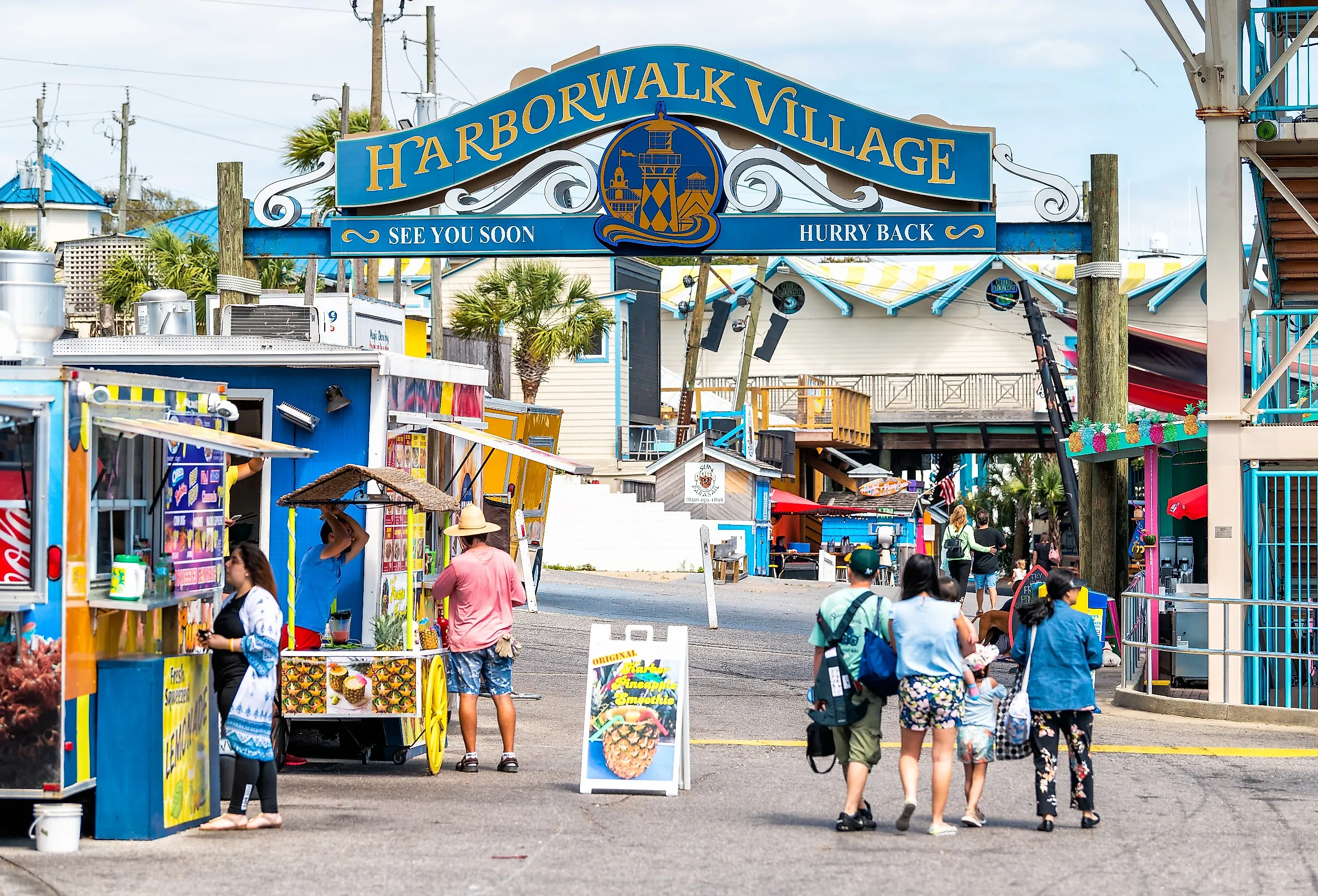
Destin calls itself the World's Luckiest Fishing Village, a claim resting on a deep-water pass that puts the Gulf's fishing grounds unusually close to the docks. The charter fleet here is one of the largest in the state, and the harbor at Harborwalk Village is where the day's catch gets weighed in front of an audience.

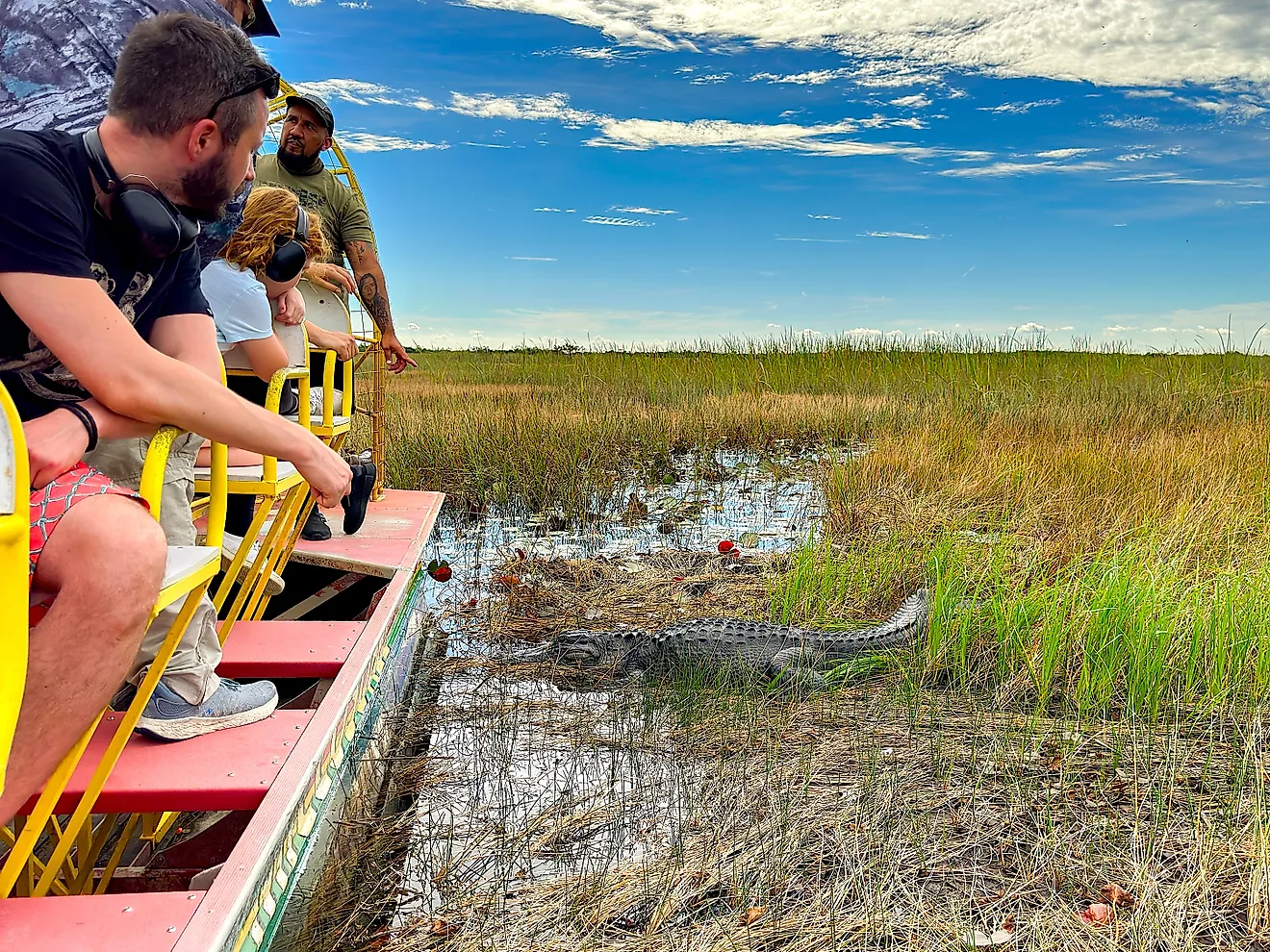
Around 14,000 people live here year-round, a figure the summer population laughs at. The Gulfarium Marine Adventure Park opened in 1955 and is among the oldest continuously operating marine parks in the country. And at Fudpucker's, a restaurant with an on-site alligator attraction called Gator Beach, you can feed an alligator and then order lunch, in whichever order you find least alarming.
Freeport

Freeport is the Emerald Coast without the beach, which is the point. About 6,700 people live at the head of LaGrange Bayou on the north shore of Choctawhatchee Bay, twenty-odd minutes inland from the 30A crowds and priced accordingly. Fishing charters and kayak outfitters work the bayou and the bay, the water is brackish and slow, and the wading birds outnumber the tourists by a comfortable margin. It is the town people on this coast actually move to.
DeFuniak Springs

Go inland about an hour and the coast gives way to something odder. Lake DeFuniak is a spring-fed lake roughly 40 acres across and so nearly circular that it is one of only two like it on earth. Local legend credits a meteor; geologists say sinkhole. A ring of Victorian houses faces the water, and between Thanksgiving and New Year the town strings them with a reported six million lights.
The town grew as a railroad resort in the early 1880s and was named for a Louisville and Nashville Railroad executive who, according to local telling, won the naming rights in a card game. From 1885 to 1922 it hosted the Florida Chautauqua, the winter home of the New York movement, whose Hall of Brotherhood seated 4,000 before a 1975 hurricane finished it. The Walton-DeFuniak Library opened in 1887 and is the oldest continuously operating library in Florida. One more correction worth making: this is where Arbor Day began in Florida, with a planting on the lakeshore on December 17, 1885, not where the holiday itself started. That was Nebraska, thirteen years earlier.
Santa Rosa Beach

Back on the coast, Santa Rosa Beach anchors the western end of Highway 30A and turns up regularly on national best-beach lists, including US News's ranking of Florida beaches, largely because it has stayed quieter than Destin or Panama City Beach while sitting on the same sand.

The unusual feature along this stretch is the coastal dune lakes, freshwater bodies sitting just behind the dune line that occasionally break through to the Gulf and exchange water with it. They exist in only a handful of places worldwide, and you can paddle between them. Point Washington State Forest backs the town with trails, and Blue Mountain Beach nearby sits on what passes for high ground in Florida.
Grayton Beach

This is the one with the trophy. Grayton Beach State Park took the top spot on Dr. Beach's annual national ranking in 1994 and again in 2020, and placed third in 2019, judged on some fifty criteria that include sand softness, water quality, and safety rather than anything a tourism board could buy.

The nearly 2,000-acre park wraps around Western Lake, one of those dune lakes, with towering dunes that survive because development here was held back rather than invited in. The town itself is a small enclave sitting inside the park boundary, deliberately behind the times, and the walk from the parking lot goes through a tunnel of scrub oak before the Gulf appears all at once. Camping is the local move, with sites and cabins inside the park.
Seaside

Seaside is where 30A gets self-aware. The town was founded in 1981 as a deliberate experiment in New Urbanism, laid out so that everything sits within a short walk of a central square, with pastel cottages, picket fences, and a strict architectural code. It worked well enough to be copied across the country.

It also worked well enough to look artificial on camera, which is why The Truman Show filmed here in 1998 and used the town, essentially unaltered, as a set for a fake town. Residents have had to live with that joke ever since. Central Square has the restaurants, bookshop, and airstream food trucks, the amphitheater runs live music through the year, and the beach at the end of the boardwalk is the same sand that won Grayton its awards a few miles west.
What Puts These Towns On National Lists
The rankings hold up better than most travel superlatives. Dr. Beach weighs around fifty criteria and has published his top ten every year since 1991, Grayton Beach has taken the top spot twice, and St. Andrews State Park placed second in 2026. What separates the eleven towns above is not the water, which they all share, but what each one did with the ground behind it. One held onto a Navy tree farm authorized in 1828. One planned itself so carefully it got hired as a movie set. One talked itself out of a bad name and never looked back. Pick whichever of those sounds like your kind of weekend.