8 Bucket List Pennsylvania Small Towns
Pennsylvania stretches from the Delaware River to the shores of Lake Erie, and between its two largest cities lies a network of small towns that have withstood the march of time. Some were built on iron or coal fortunes, others trace back to Moravian settlers or railroad barons. A few have transformed into hubs for outdoor recreation or arts communities. What they share is a scale that rewards slow exploration and a history visible in their architecture, festivals, and their commitment just to being themselves.
Jim Thorpe

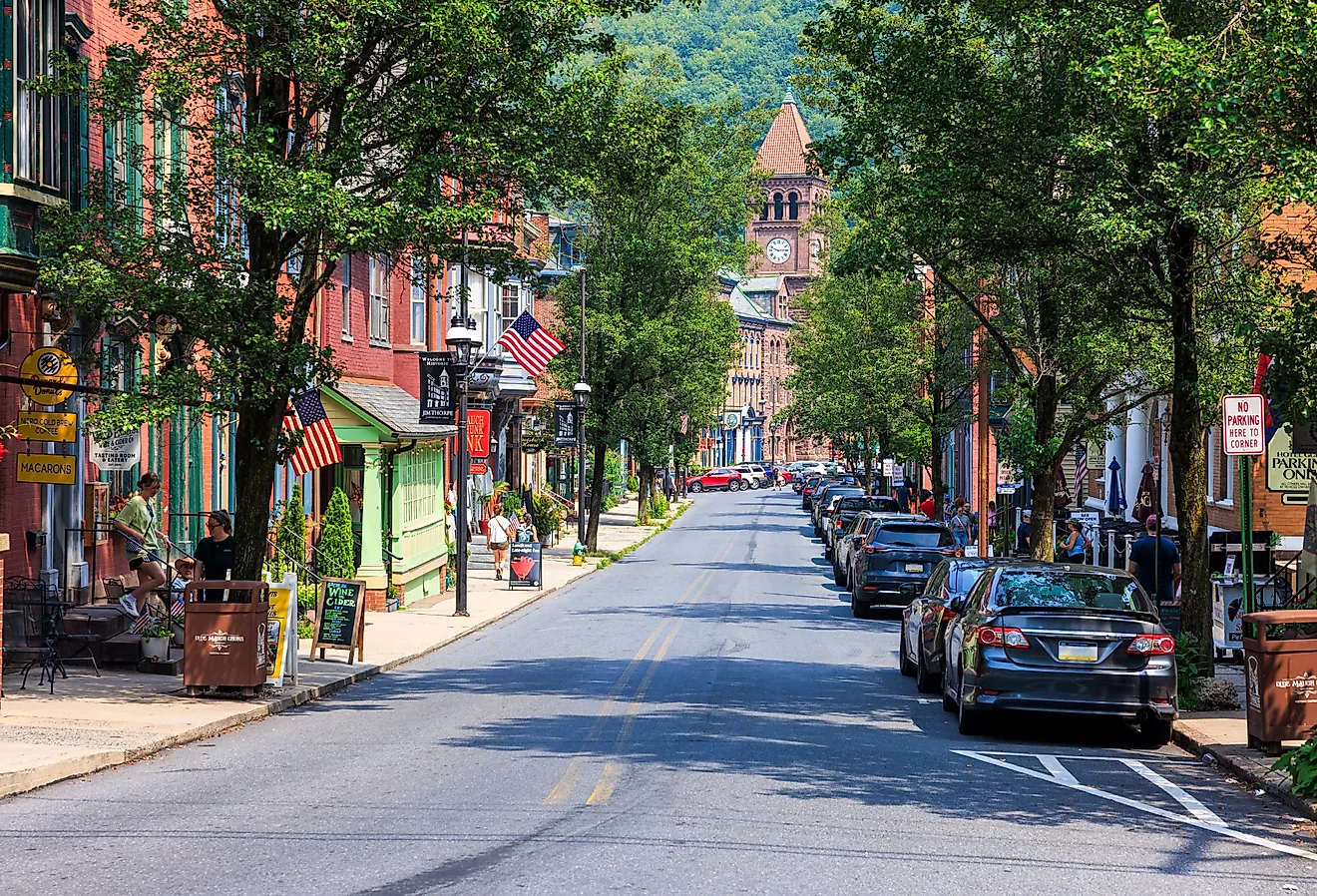
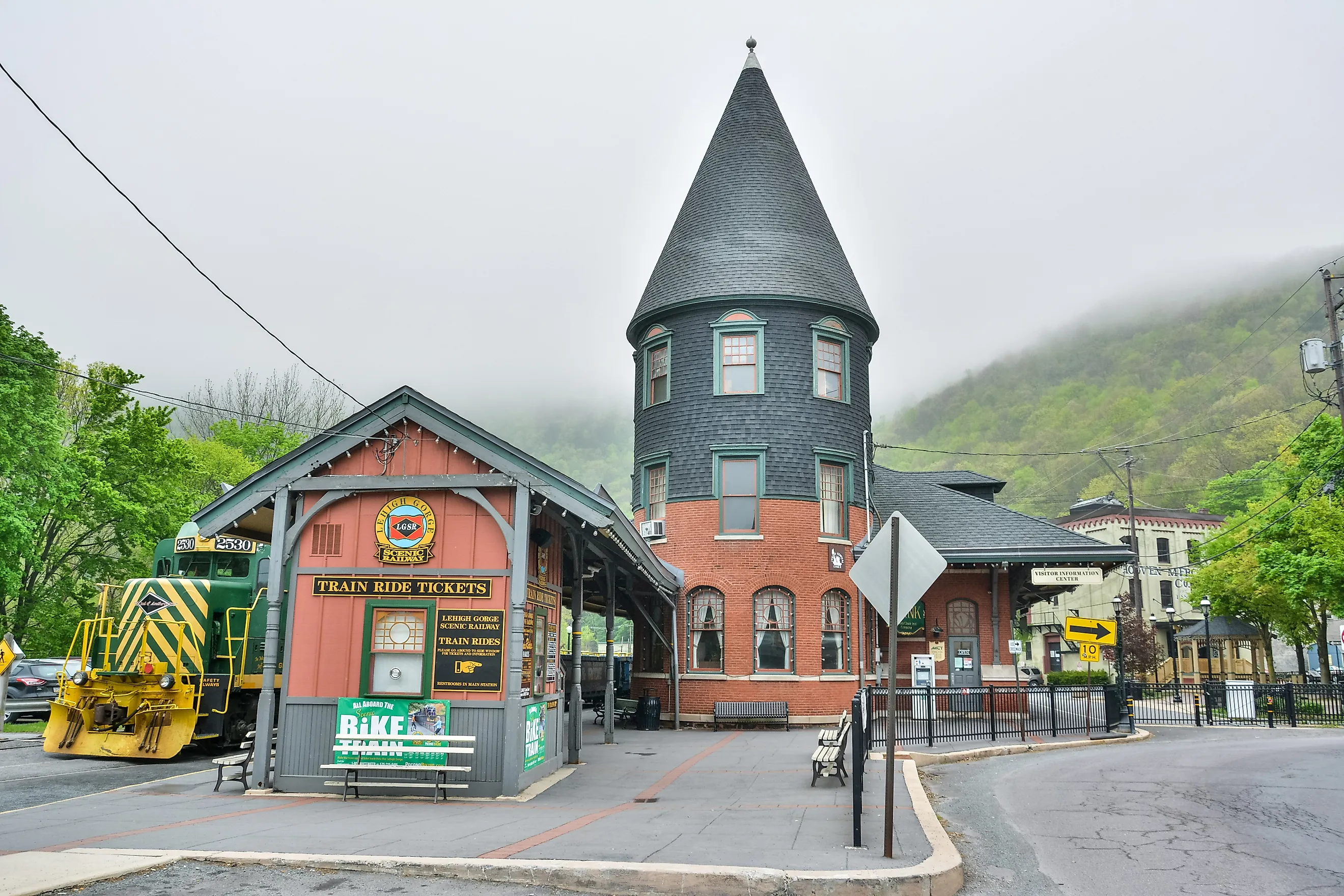
Dubbed “Switzerland of America” for its dramatic mountain setting, Jim Thorpe’s Victorian-era architecture and history make a permanent impression. Visitors can ride the Lehigh Gorge Scenic Railway through the canyon for views of changing fall leaves or the blossoms of spring. The Asa Packer Mansion (built in 1861) preserves original furnishings and Italianate details. People interested in history, architecture, or design will like it a lot. Nearby, the Old Jail Museum displays the infamous “handprint” on Cell 17’s wall, linked to a convicted member of the Molly Maguires and said to remain as his claim of innocence. The Mauch Chunk Opera House, one of the oldest vaudeville-era theaters still in use, hosts concerts in a historic venue. For adventure, outfitters along the river offer whitewater rafting on the Lehigh River near town.
Lititz

Lititz blends small-town warmth with a lively downtown that’s easy to explore on foot. The town is known for its long-running food traditions, including the country’s oldest commercial pretzel bakery (Julius Sturgis) and a local chocolate maker (Wilbur Chocolate) that helped shape its identity. Instead of focusing on brand names, what really stands out is how these shops, cafés, and old brick buildings all sit close together, giving the downtown a cozy, lived-in feel. Lititz Springs Park runs right through the center of town, with a spring-fed pond and shaded paths that draw people outside in every season. Summer brings one of the country’s longest-running Fourth of July celebrations, complete with music, food, and community events that fill the park with families and visitors.
Wellsboro

Wellsboro blends small-town calm with a historic glow, thanks to the gas lamps that line its Main Street and give the downtown a nostalgic feel. Those same lamps become the centerpiece each December during Dickens of a Christmas, when the streets transform into a Victorian-style holiday market. Beyond downtown, Wellsboro serves as a gateway to Pine Creek Gorge, often called the Grand Canyon of Pennsylvania, where visitors can take in sweeping views or hike the Turkey Path Trail down into the gorge. Back in town, the restored Arcadia Theatre offers contemporary movies in a 1920s setting, and the Penn Wells Hotel provides historic lodging listed on the National Register of Historic Places.
Gettysburg

Gettysburg is best known for its Civil War history, but the town offers more than battlefield viewpoints and monuments. The walkable downtown has cafés, shops, and old brick buildings that give the place a lived-in charm, and you can still visit spots like the Dobbin House Tavern (1776), which connects visitors to ordinary colonial life outside the war narrative. During summer and fall, the area hosts living-history weekends and small-scale reenactments, where interpreters demonstrate camp life, artillery drills, and period crafts. The big anniversary reenactment each July draws visitors from all over the country and feels closer to a festival than a solemn lecture.
Beyond that, the borough has farmers markets, galleries, ghost tours, and wineries tucked into the rolling Adams County farmland. While the Gettysburg National Military Park and the famous Cyclorama painting remain central draws, many visitors end up splitting their time between history, downtown browsing, and the scenery around town.
Doylestown

Doylestown has an unusual mix of arts, history, and architecture, much of it shaped by Henry Chapman Mercer. His trio of poured-concrete landmarks (Fonthill Castle, the Mercer Museum, and the Moravian Pottery and Tile Works) gives the town a distinctive personality, from handcrafted tiles to towering collections of pre-industrial tools. The borough also offers other cultural stops. The Michener Art Museum, located in the former county jail, features American art with a strong focus on Pennsylvania Impressionists, and the walkable downtown has bookstores, cafés, and independent shops that keep the area lively. Together, the concrete landmarks, the art museum, and the town center create a place where history, craftsmanship, and contemporary creativity all sit side by side.
Bellefonte

The iron barons of the 19th century built this Centre County seat with their profits and left behind one of the state’s most intact groups of Victorian-era buildings. The town’s name, taken from a French phrase meaning “beautiful fountain,” refers to Big Spring, a natural spring that has produced millions of gallons of water each day for generations. Talleyrand Park follows Spring Creek through downtown, and its red iron suspension bridge and Victorian gazebo draw photographers in every season. The Bellefonte Art Museum stands on Allegheny Street in a walkable area that also includes antique shops and a distillery called Big Spring Spirits, located in a renovated brick building once part of the Pennsylvania Match Company. Several Pennsylvania governors lived in Bellefonte, and a monument in Talleyrand Park notes their connection to the town.
Kennett Square

Kennett Square is known as the Mushroom Capital of the World, since a large share of the nation’s white button, crimini, portobello, and specialty varieties are raised in the growing houses around town. Visitors cannot usually tour those facilities, but the annual Mushroom Festival each September brings the industry into the open with cooking demonstrations, a parade, and mushroom-themed activities that show the crops at their source. Nearby Longwood Gardens offers expansive botanical displays with conservatories, fountains, and outdoor gardens, and the borough’s farmers market highlights local produce and artisan foods. For green space close to downtown, Anson B. Nixon Park provides wooded trails, ponds, and picnic areas.
Milford

Milford sits near the point where Pennsylvania, New York, and New Jersey meet, and the town mixes outdoor scenery with a relaxed, walkable center. Visitors often start with the shops and cafés along Broad Street before heading into the Delaware Water Gap National Recreation Area, where spots like Raymondskill Falls and the riverside trails give easy access to forest views. Grey Towers National Historic Site adds a touch of architecture and garden space without overwhelming the visit, and The Columns Museum offers a small collection of regional history for those who want a quick look indoors. For an overnight stay, the Hotel Fauchère provides a central place to enjoy the town’s restaurants and galleries while keeping everything within a short stroll.
Beyond the Big Cities

Pennsylvania’s small towns hold plenty of history, but they aren’t only for people who love dates and old buildings. They’re places where the past blends with everyday life, where long-running diners, family shops, parks, and local festivals show how each community has shaped itself over time. If you slow down and look closely, you’ll learn not just about the state’s past, but about the way people live here now and the direction these towns are heading. Bring comfortable shoes, a curious mind, and a willingness to let each place reveal its own story.