11 of the Most Quaint Small Towns in the Southern United States
Bardstown, Kentucky, calls itself the Bourbon Capital of the World and has had distilleries since 1776. Beaufort, South Carolina, was occupied by Union forces in November 1861 and survived the Civil War with its antebellum architecture intact. Eureka Springs, Arkansas, has its entire 1,250-acre downtown on the National Register of Historic Places. St. Augustine, Florida, has been continuously occupied since 1565. The eleven Southern towns below each hang their identity on something specific and old. They are small in scale but stubborn about preserving it.
Bardstown, Kentucky

Bardstown was settled in 1780 and is the second-oldest city in Kentucky after Harrodsburg. The town sits 40 miles southeast of Louisville in Nelson County and is the first official stop on the Kentucky Bourbon Trail, with 11 distilleries within a 16-mile radius. The Old Talbott Tavern on Court Square, built in 1779, is one of the oldest stagecoach stops west of the Appalachians and operates today as a restaurant, inn, and bourbon bar (with more than 200 bourbons on the menu). Daniel Boone, Abraham Lincoln, and Jesse James are all documented past guests.
The Basilica of Saint Joseph Proto-Cathedral, completed in 1823, was the first Catholic cathedral west of the Appalachian Mountains and still anchors the downtown. More than 200 of Bardstown's downtown buildings are on the National Register of Historic Places. The Oscar Getz Museum of Whiskey History sits in 1826-built Spalding Hall on the edge of downtown, with a deep collection of pre-Prohibition bourbon artifacts. My Old Kentucky Home State Park, on Federal Hill just east of town, preserves the 1818 plantation house that inspired Stephen Foster's song (Kentucky's official state song since 1928).
Beaufort, South Carolina

Beaufort was established in 1711 on Port Royal Island and is the second-oldest city in South Carolina after Charleston. The downtown Historic District is a National Historic Landmark covering 304 acres of antebellum residential architecture (Federal, Greek Revival, and neoclassical styles in tabby and brick) that survived the Civil War almost entirely intact. Union forces captured Beaufort in November 1861 during the Port Royal expedition and occupied the town for the remainder of the war, which is why the antebellum buildings still stand while comparable architecture in much of the South was burned.
The John Mark Verdier House on Bay Street, a Federal-style townhouse built in 1804, is the most-toured single residence in the historic district. The Penn Center on nearby St. Helena Island, founded in 1862 as one of the first schools in the South for newly freed African Americans, anchors the Gullah Geechee Cultural Heritage Corridor and was designated a National Historic Landmark in 1974. Henry C. Chambers Waterfront Park along the Beaufort River runs the modern public face of the town, with shaded benches on swings looking across the water.
Damascus, Virginia

Damascus sits in the far southwestern corner of Virginia, within 15 miles of both the Tennessee and North Carolina borders, and is one of the few American towns where seven named trails converge in the downtown core. The Appalachian Trail, the Virginia Creeper Trail, the Iron Mountain Trail, the Trans-America Bicycle Trail, the Daniel Boone Heritage Trail, the Crooked Road, and the U.S. Bicycle Route 76 all pass through. Locals call it Trail Town USA without exaggerating.
The Virginia Creeper Trail is the headline. The 34-mile rail-trail runs the former roadbed of the Virginia-Carolina Railway (completed through Damascus in 1900), with the most popular section the 17-mile descent from Whitetop Station down to Damascus, dropping more than 1,700 feet through old-growth hardwood forest and across 47 trestle bridges. Outfitters in town shuttle riders up to Whitetop in the morning. The annual Trail Days festival each May fills the population-800 town with tens of thousands of hikers celebrating the Appalachian Trail thru-hiker class moving north through the region.
Eureka Springs, Arkansas

Eureka Springs was founded in 1879 as a health spa around the dozens of natural springs that pour out of the limestone hillsides of the northwestern Ozarks. The town's entire 1,250-acre downtown is on the National Register of Historic Places (added in 1970, the first historic district in Arkansas) and contains 967 contributing buildings, most of them Victorian-era Queen Anne and Second Empire homes built between 1880 and 1910 on steep, narrow streets cut into the hillside.
The town runs about 2,200 year-round residents. The Crescent Hotel and Spa, completed in 1886 and perched at the top of the highest hill in town, anchors the upper district and is notorious for its haunted-hotel reputation. The 1905 Basin Park Hotel sits on the original Basin Spring downtown, a seven-story structure famously built with every floor at ground level on one side because of the slope. Thorncrown Chapel, a 48-foot wood-and-glass structure designed by E. Fay Jones in 1980 in the woods outside town, was named the fourth-best American building of the 20th century by the American Institute of Architects. The Eureka Springs and North Arkansas Railway runs heritage excursion trains from a 1913 depot.
Fredericksburg, Texas

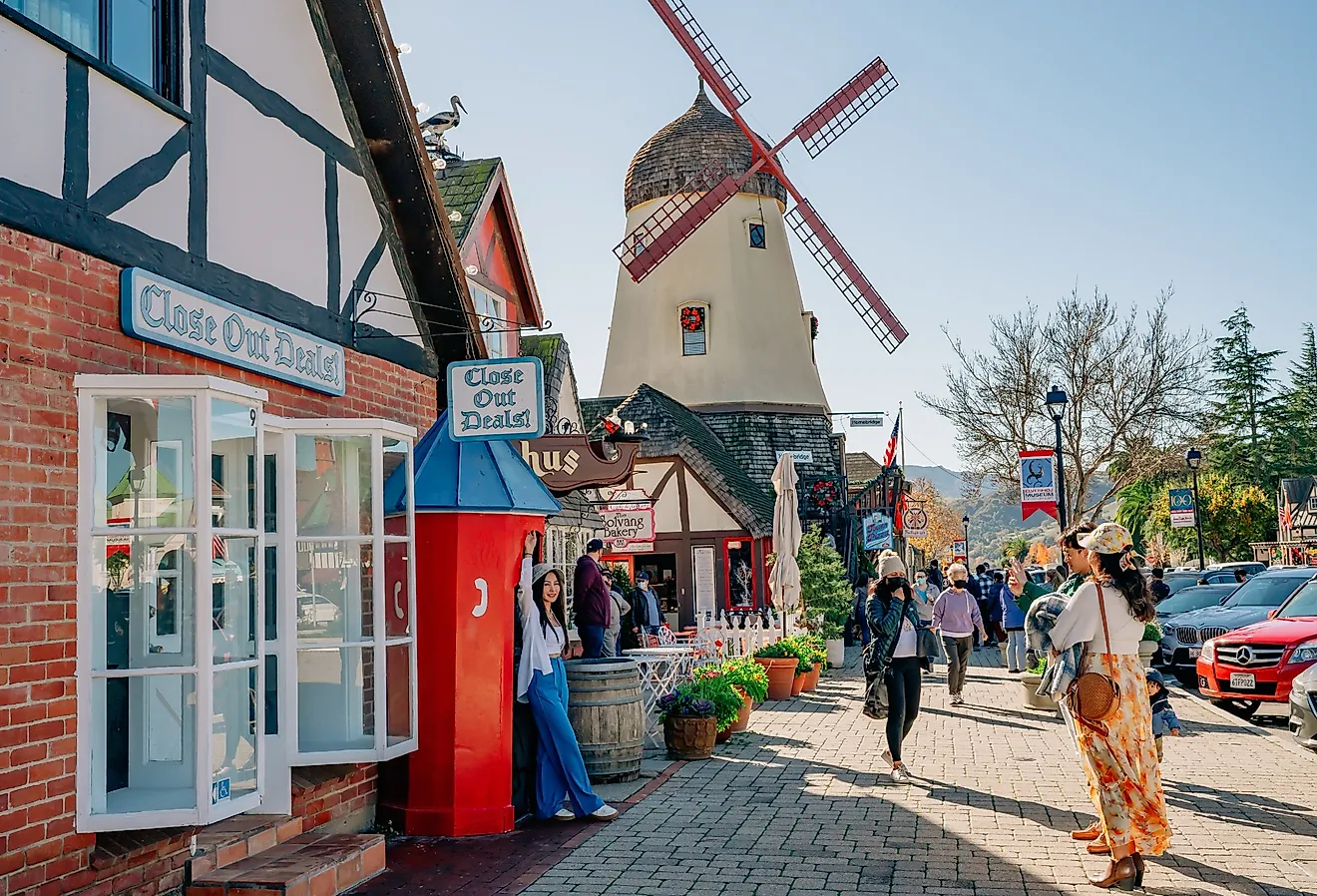
Fredericksburg was founded May 8, 1846, by 120 German immigrants from the Adelsverein colonization society and named for Prince Frederick of Prussia. The town's main thoroughfare, Hauptstrasse (the German for Main Street), still has a city ordinance restricting chain retail. The result is a half-mile of independently owned bakeries, boutiques, biergartens, and Sunday-haus rental cottages that look nothing like a typical Texas highway town.
The Texas Hill Country wine industry built up around Fredericksburg starting in the 1970s, and the area now claims more than 60 wineries within 25 miles of town, second only to Napa in US wine-region visitor counts. The National Museum of the Pacific War is the other anchor: a 6-acre campus built around Admiral Chester Nimitz's birthplace (Nimitz was Commander in Chief of the Pacific Fleet during WWII, and Fredericksburg was his hometown). The 200,000-square-foot museum complex includes the only Japanese Peace Garden in the continental United States.
Gatlinburg, Tennessee

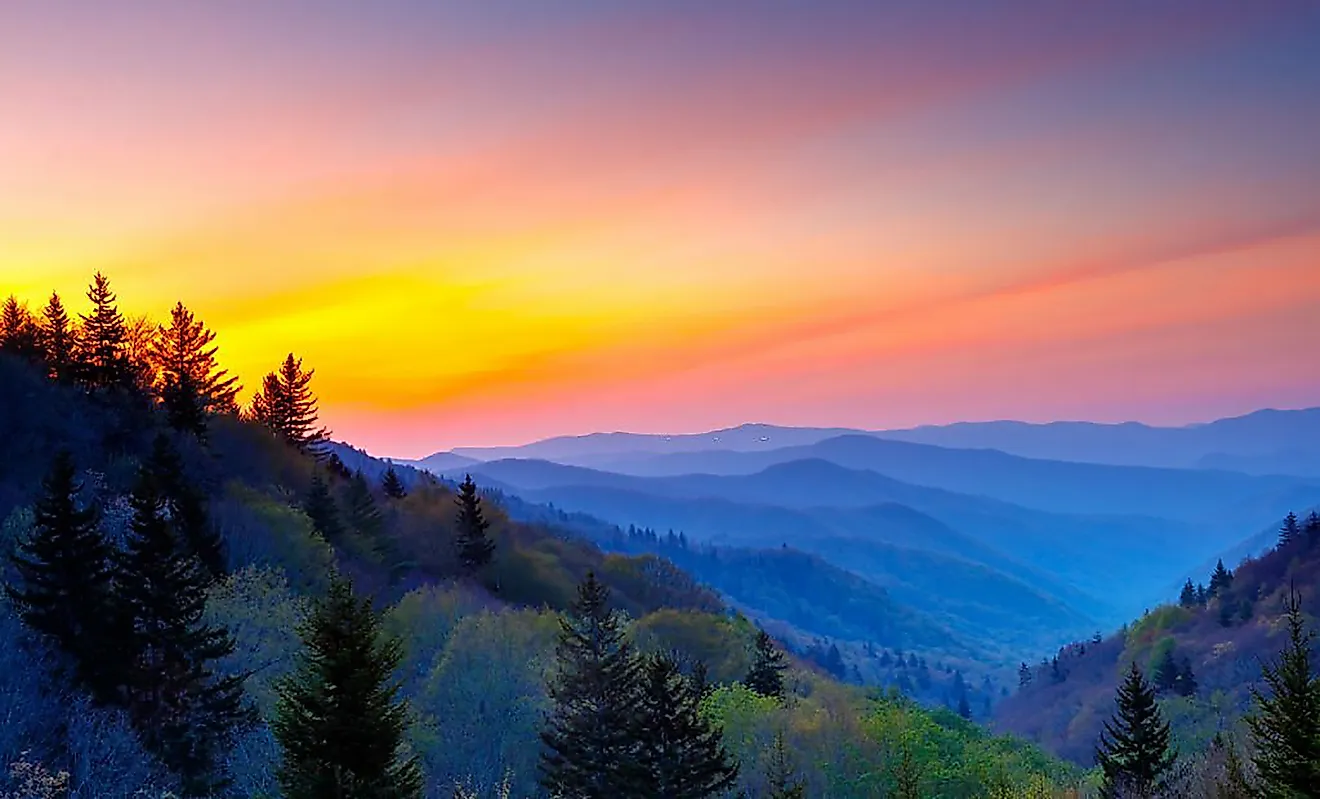
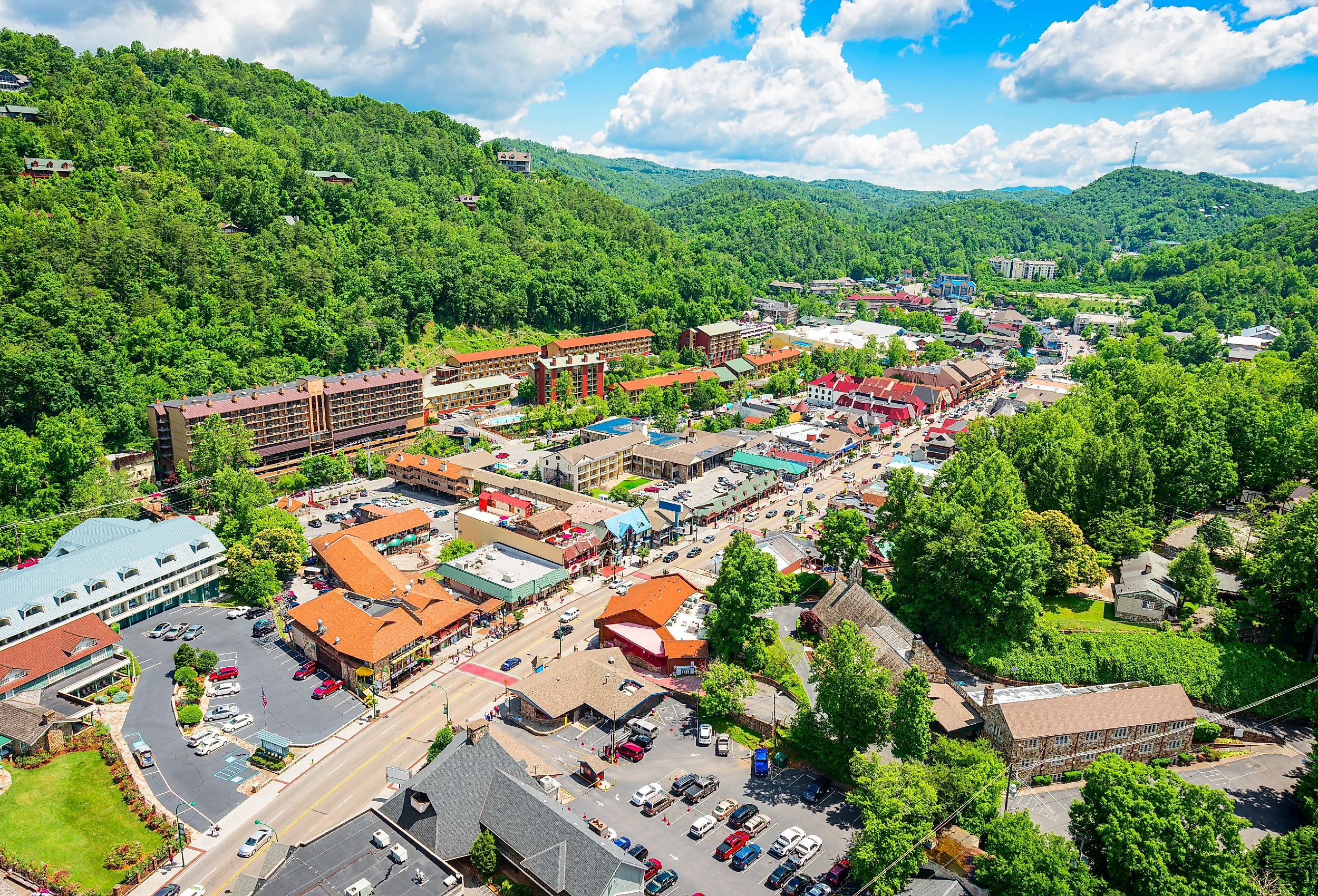
Gatlinburg wraps around the north entrance to Great Smoky Mountains National Park, the most-visited national park in the United States with more than 12 million annual visitors. The town's permanent population is about 3,500, but Gatlinburg's main commercial strip on Parkway moves hundreds of thousands of visitors through each season. The Ober Mountain Aerial Tramway, the only mass-transit aerial tramway in the country, climbs 2.1 miles up to Ober Mountain (formerly Ober Gatlinburg) ski resort.
The Smokies cover 522,427 acres and protect some of the most biologically diverse temperate forest in North America, with over 19,000 documented species. The Roaring Fork Motor Nature Trail, a 5.5-mile one-way loop starting just outside downtown, runs past 19th-century cabins, gristmills, and one of the best stretches of old-growth Eastern hemlock left in the park. Gatlinburg's downtown was largely destroyed by the November 2016 Chimney Tops 2 fire and has since been rebuilt; the Mountain Tough Recovery Team and the Dollywood Foundation coordinated much of the work.
Georgetown, South Carolina

Georgetown sits where the Sampit, Black, Waccamaw, and Great Pee Dee rivers all empty into Winyah Bay, the third-largest watershed on the East Coast after the Chesapeake and Albemarle. The town was formally established in 1734 (third oldest in South Carolina after Charleston and Beaufort) and built its 18th-century wealth on indigo and rice. By 1840 Georgetown County was producing nearly half of all rice grown in the United States.
The Harborwalk, a quarter-mile boardwalk along the Sampit River that fronts downtown, connects the South Carolina Maritime Museum and the Rice Museum at one end with the Kaminski House Museum at the other. The Kaminski House, an 18th-century planters' residence donated to the city in 1972, holds one of the better collections of Southern colonial decorative arts in the state. The Hopsewee Plantation, 10 miles south of town, was the birthplace of Thomas Lynch Jr., one of the four South Carolina signers of the Declaration of Independence.
Madison, Georgia

Madison was founded in 1809 in Morgan County, an hour east of Atlanta on the road to Augusta, and named for President James Madison. The town was a wealthy planter community in the 1830s and 1840s, with antebellum townhomes built downtown to complement the surrounding cotton plantations. When Sherman's March to the Sea passed through in November 1864, much of central Madison was spared (local lore credits Unionist senator Joshua Hill's negotiations with Sherman). The result is one of the largest collections of pre-Civil War residential architecture in Georgia.
The Madison Historic District covers 356 contributing buildings across most of the central town. Heritage Hall, built in 1811 as the home of Confederate physician Dr. Elijah Jones, is the most-toured of the antebellum residences. The Madison-Morgan Cultural Center, in the restored 1895 Romanesque Revival graded-school building, runs as a regional arts center with rotating exhibitions, a performance hall, and a children's gallery. The Morgan County African-American Museum on Academy Street covers Black history in the Georgia Piedmont.
St. Augustine, Florida

St. Augustine was founded September 8, 1565, by Pedro Menéndez de Avilés, making it the oldest continuously occupied European-established settlement in the contiguous United States. The Castillo de San Marcos, the masonry star fort on Matanzas Bay, was begun in 1672 by the Spanish garrison and completed in 1695. It is built of coquina (a sedimentary rock of compacted shells from nearby Anastasia Island) and has the unusual property of absorbing rather than shattering under cannon fire, which is why the fort never fell to siege in its 250 years of military service.
The Lightner Museum, in the former 1888 Alcazar Hotel commissioned by Henry Flagler, holds three floors of Gilded Age art and decorative objects. Flagler College across the street occupies the former 1888 Ponce de Leon Hotel, also Flagler's, with Tiffany stained glass and one of the largest collections of Maitland Armstrong-designed interiors in the country. The Lincolnville Historic District, on the west side of downtown, was the center of St. Augustine's civil rights movement, including Martin Luther King's June 1964 arrests at the Monson Motor Lodge that helped push the Civil Rights Act through Congress.
St. Michaels, Maryland

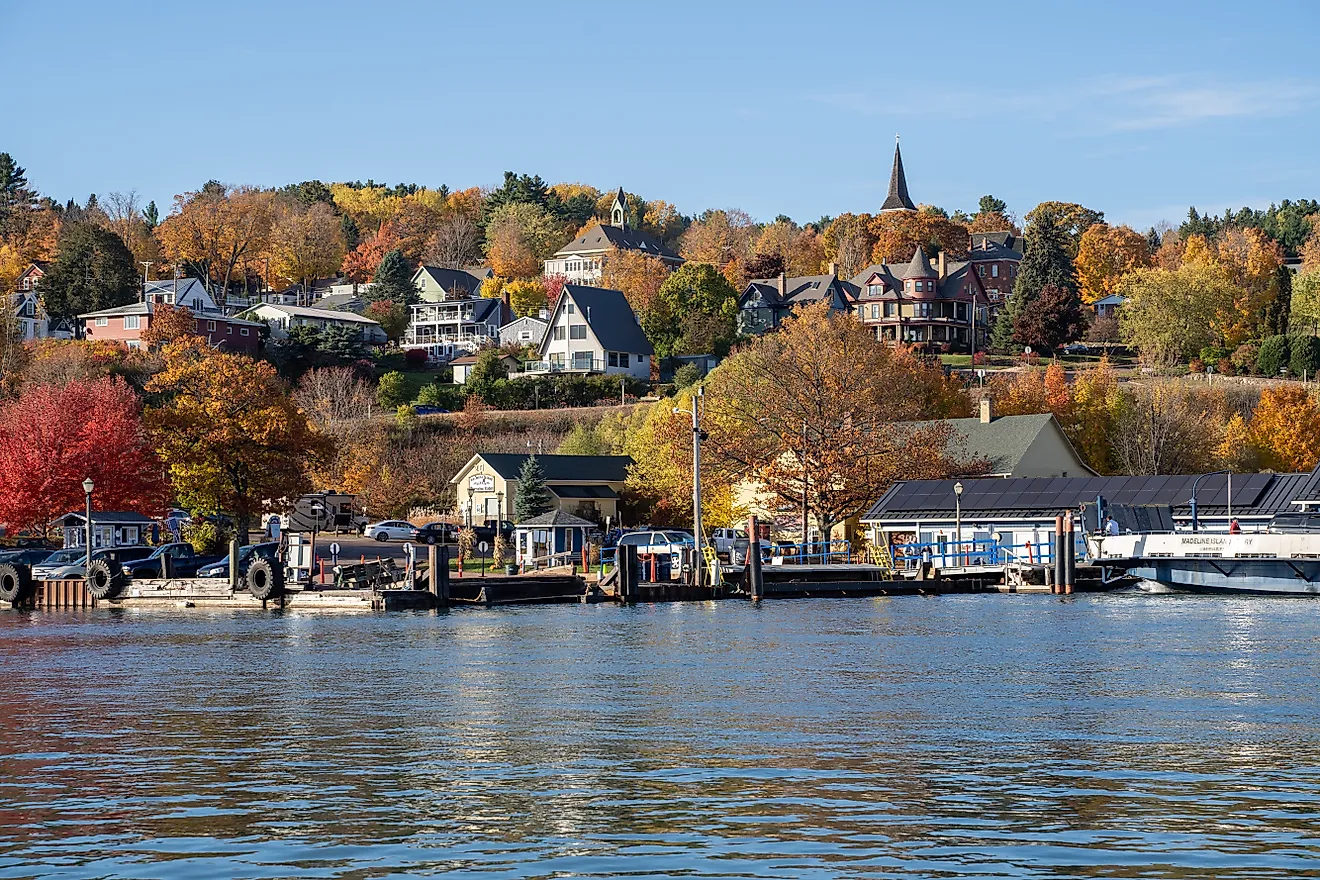
St. Michaels sits on the Miles River on Maryland's Eastern Shore and was founded in 1677 as a tobacco-shipping port. The town's nickname is "the town that fooled the British," referring to an August 10, 1813 British naval bombardment during the War of 1812 in which the townspeople reportedly extinguished all streetlights and hung lanterns in trees beyond the town, causing the British gunners to overshoot. The Cannonball House on Mulberry Street is the one house in town actually hit; the cannonball is still embedded in the chimney.
The Chesapeake Bay Maritime Museum on Mill Street covers 18 acres of Miles River waterfront with the largest collection of Chesapeake Bay watercraft in the world (more than 80 boats including the 1889 Hooper Strait Lighthouse), plus a working boatyard that builds and restores traditional Bay vessels. The Maryland blue crab season runs from April 1 through December 15, and St. Michaels restaurants are among the better places on the Eastern Shore to eat steamed crabs in summer or crab cakes year-round.
Staunton, Virginia

Staunton sits at the head of the Shenandoah Valley and was bypassed by every major American development cycle of the 20th century, which is why its five National Register-listed historic districts cover most of the downtown core in intact 19th-century commercial and residential architecture. The Wharf District, the Beverley Historic District, the Newtown District, the Stuart Addition, and the Gospel Hill District together hold more than 1,000 contributing structures.
The American Shakespeare Center's Blackfriars Playhouse on Market Street, which opened in September 2001, is the world's only re-creation of Shakespeare's indoor Blackfriars Theatre (the original was built in a former monastery in London in 1596 and used by Shakespeare's King's Men for winter performances starting in 1608). Performances at the Staunton Blackfriars use the same "universal lighting" the original did, meaning the houselights stay on throughout. Woodrow Wilson's birthplace, the Presbyterian manse where the 28th President was born December 28, 1856, is now the Woodrow Wilson Presidential Library and Museum on Coalter Street. Wilson lived in Staunton only the first year of his life but returned to celebrate his 76th birthday there shortly before his death.
What Makes The Small South Stick
Each of the eleven Southern towns above hangs its identity on something specific and old. St. Augustine, Beaufort, and Fredericksburg run on European founding stories that predate the United States. Bardstown built its identity on bourbon (started 1776) and Madison on antebellum architecture spared by Sherman. Georgetown and St. Michaels were 17th- and 18th-century maritime ports that traded on the commodities (rice, tobacco) the country built itself on. Damascus, Gatlinburg, and Eureka Springs organize themselves around the geography (rail-trail, national park, mineral springs) that makes them physically distinct. Staunton holds the architectural heritage that other Virginia towns demolished in the 20th century. The common thread is stubbornness about scale.