11 Most Welcoming Towns In Alabama's Countryside
Alabama's countryside keeps its welcome in plain sight. It turns up at a peach stand in Clanton, a Saturday market in Mentone, and a diner in Abbeville where the staff already know your order. These are towns where neighbors wave from porches and a visitor leaves with a list of recommendations. Some sit up in the mountains and some down in the Black Belt. These eleven are the most welcoming towns in Alabama's countryside.
Fort Payne

The country band Alabama got its start in Fort Payne, and bronze statues of the group stand on Gault Avenue downtown, where the town still claims them as its own. The mountains rise behind the storefronts, and the Fort Payne Depot Museum fills an 1891 railroad depot built of locally mined pink sandstone. In September, Boom Days brings live music, food vendors, and historical exhibits to the streets for a weekend. Outside town, Little River Canyon cuts one of the deepest gorges in the eastern half of the country, and DeSoto State Park spreads more than 3,500 acres of forest, caves, and trails. The Big Mill Antique Mall fills an old textile mill with local booths.
Hartselle

In Hartselle, the antique shops line Main and Railroad Streets, and the clerks tend to know their regulars by name. The Historic Hartselle Depot, dating to 1914, holds the local historical society's displays a few steps from the shopping. Reeves' Peach Farm, a family market, sells peaches and strawberries through the summer. Down at Sparkman Park, an 18-hole disc golf course threads between the walking trails and picnic tables, and on a warm evening it fills with families. The welcome here is the kind that comes from a downtown built for running into people.
Clanton

Clanton grew up on Chilton County peaches, and a stop at Peach Park usually turns into a long conversation with whoever is in line for the peach ice cream and cobbler. Down the road, Durbins Farms Market sells homemade jams, fresh sandwiches, and summer strawberries. The town's landmark is hard to miss, a 120-foot water tower painted and shaped like a giant peach right off I-65. Rustique Relics keeps a downtown shop full of Southern folk art and upcycled country furniture. The whole place runs on generations of family farming, and it shows in how easily a stranger gets drawn into the talk.
Mentone

Mentone is the highest incorporated town in the state, set along the rim of Lookout Mountain at over 1,500 feet, and only a few hundred people live there. The Saturday market in the center of town sells canned goods, baked goods, and jam, and it doubles as the week's gathering. The Sallie Howard Memorial Chapel, built in 1937, wraps its altar around a giant boulder left where it sat. The Wildflower Cafe is the place for tomato pie and acoustic music, the kind of room where every patron feels like a regular. DeSoto Falls drops about 100 feet just outside town, and Brow Park looks out over the valley at sunset.
Oneonta

Oneonta is covered-bridge country, in the Appalachian foothills about an hour north of Birmingham. The Horton Mill Covered Bridge is the highest covered bridge above any waterway in the country, standing around 70 feet over the river below, and the 1927 Easley Covered Bridge sits a country drive away. Palisades Park climbs 100 acres atop the mountain, with bluff overlooks, pioneer cabins, and a one-room schoolhouse from 1904. In town, the Green Toad Bookstore is a locally owned shop where browsing for a book usually means trading a few words with the next reader over. Each spring the Covered Bridge Festival fills downtown with food trucks, artisans, and music.
Brewton

Brewton keeps tree-lined avenues that invite neighbors to stop and talk. Each June the town fills for the Alabama Blueberry Festival, with blueberry ice cream, live music, and a free children's area, all near Jennings Park along Burnt Corn Creek. Burnt Corn Creek Park gives kayakers a quiet afternoon on the tree-shaded water. The E.O. Wilson Nature Adventure, named for the naturalist with roots in the area, runs boardwalk trails, archery, and teaching ponds. History keeps an afternoon at the Thomas E. McMillan Museum, which holds local fossils, pioneer tools, and regional artifacts.
Montevallo

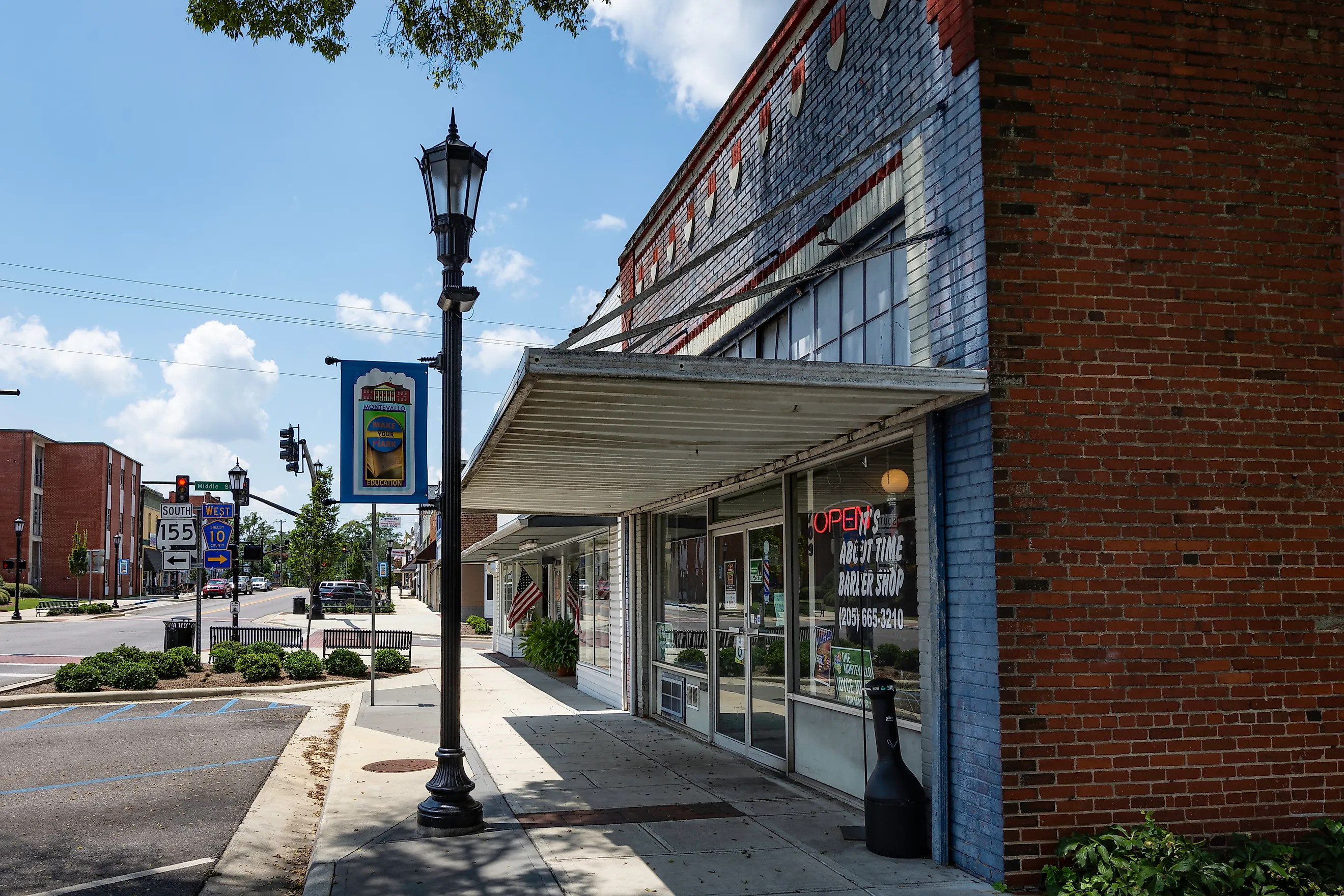
Montevallo runs young and mixed, thanks to the University of Montevallo, the state's public liberal arts college at the center of town. Its best-known corner is Orr Park, where since 1993 the artist Tim Tingle has carved more than fifty faces and creatures into cedar trees an ice storm left damaged, a trail people now call Tinglewood. The American Village spreads 188 acres of colonial buildings where costumed interpreters reenact early American life. The Aldrich Coal Mine Museum holds the artifacts of a mine that worked until the 1940s. The Olmsted Brothers, who shaped Central Park, laid out the university grounds, and it reads in the walks and the old brick halls.
Abbeville

Abbeville gathers at Huggin' Molly's, a 1950s-style diner named for a local ghost story, where the staff treat every patron like a longtime friend over meatloaf and fountain sodas. The Kirkland Avenue Neon Museum lines a block with restored vintage neon signs that glow after dark. The Bethune-Kennedy House, the oldest building in Henry County, holds the town's earliest history. A few minutes out, Lake Eufaula spreads its quiet coves and wooded shoreline, known well enough among anglers to carry the title Bass Fishing Capital of the World. This is a farming town where people still gather to catch up on the week.
Monroeville

Monroeville raised Harper Lee, and the town wears the title Literary Capital of Alabama on a downtown square that still feels like the 1930s. The Old Monroe County Courthouse, built in 1903, was the model for the courtroom in "To Kill a Mockingbird," and it now holds the Monroe County Museum and stages a yearly play of the novel. The Literary Capital Sculpture Trail sets 14 bronze sculptures through downtown, each honoring a writer with roots nearby. A short walk away, a marker stands at the site of Truman Capote's boyhood home, right next to the lot where Harper Lee grew up. The two were childhood friends, and the town has never let that go.
Mooresville

Mooresville is the oldest incorporated town in Alabama, chartered in 1818, and fewer than a hundred people live along its few gravel streets. The whole village sits on the National Register, and the residents tend to wave as you pass. The Post Office here is the oldest still operating in the state, with pre-Civil War wooden call boxes inside. The Stagecoach Tavern, once the oldest public frame building in the state, now serves as the museum and town hall. At 1818 Farms on the edge of town, summer brings a flower-arranging Bloom Stroll and a chance to meet the babydoll sheep, and Wheeler National Wildlife Refuge sits a couple of miles south.
Eutaw

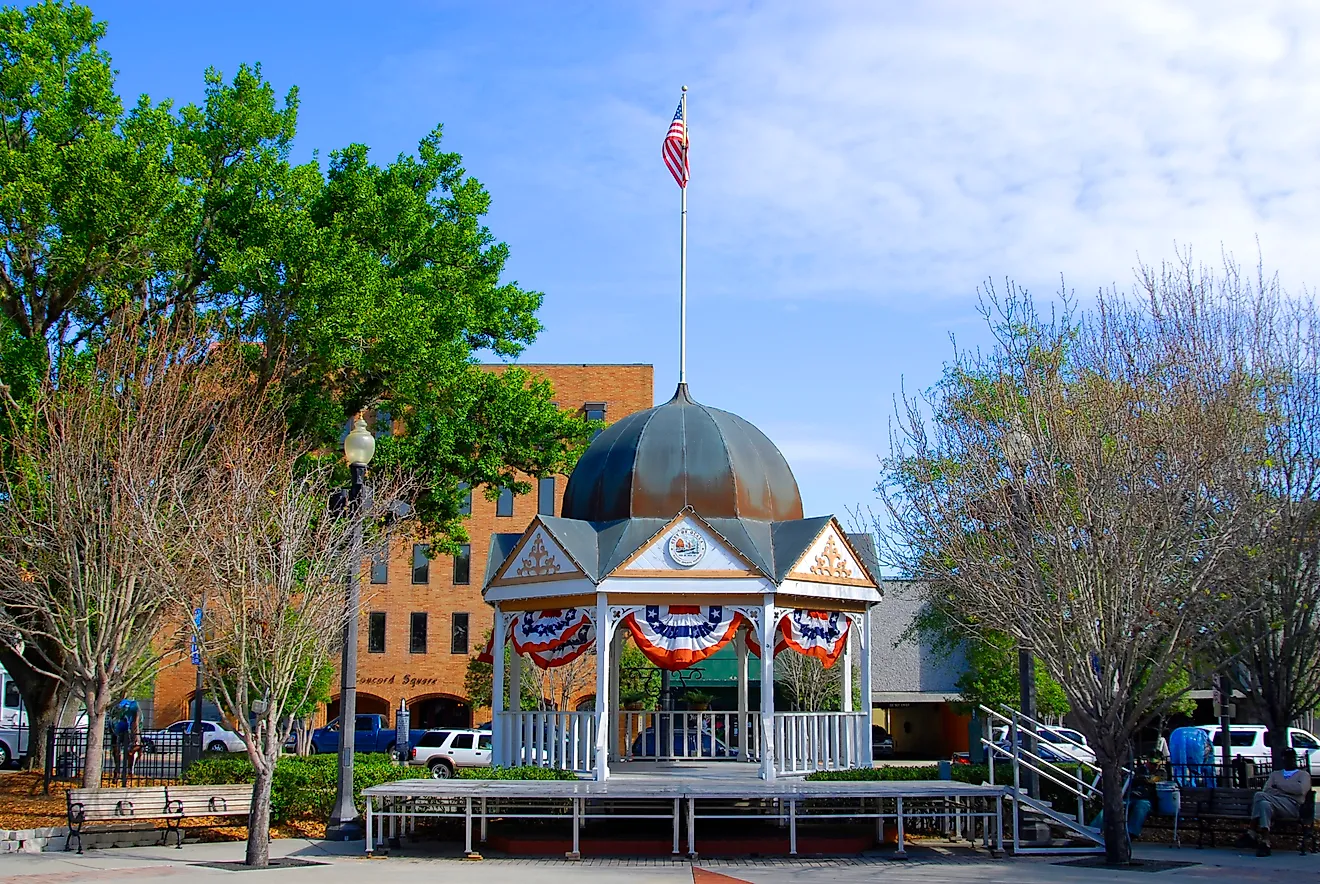
Eutaw sits in the Black Belt, where neighbors learn your name fast and the day moves at a porch-conversation pace. The center of town is the Greene County Courthouse Square, built around the 1869 Reconstruction-era courthouse and ringed by antique shops. The Kirkwood Mansion, an antebellum Greek Revival estate with tall white pillars, anchors the town's older history. Come August, the Black Belt Folk Roots Festival fills the old courthouse square with blues, soul food, and a children's craft tent. It is a town that puts its music and its history out in the open and asks you to pull up a chair.
The Welcome In Alabama's Countryside
What ties these eleven towns together is not scenery but people. Fort Payne and Mentone gather on a mountain, while Eutaw and Abbeville gather on a Black Belt square and a diner counter. Clanton and Brewton hand visitors a peach or a basket of blueberries, and Oneonta and Mooresville hand them a covered bridge and a wave from a gravel street. Montevallo and Monroeville keep their welcome in a college campus and a courthouse that built a town's whole identity. Spend a morning in any of them and you tend to leave knowing somebody's name.