11 Most Relaxing Wisconsin Towns
The most relaxing towns in Wisconsin are the ones built close to the water, where the pace of a day is a slow one. On a Great Lake shore or a Mississippi bluff, the day runs on tides and light and the long afternoon. Mornings open with fog on the harbor and close with eagles settling into the trees. You get long unclaimed hours and a short list of things you actually have to do. That easy trade is what turns a weekend into genuine time off.
Mineral Point

Mineral Point sits in the Driftless Area, about an hour southwest of Madison. Cornish lead miners settled here in the 1820s and 1830s, and the limestone cottages they built still stand along the hillside south of downtown. At Pendarvis, the Wisconsin Historical Society keeps a row of those cottages open for tours that lead through the narrow stone kitchens and the terraced gardens cut into the slope.
A few blocks north, Shake Rag Alley Center for the Arts fills a cluster of old log cabins on a 2.5-acre campus, where instructors run hands-on workshops in pottery, blacksmithing, and a dozen other crafts. Walkers can stretch their legs at Merry Christmas Mine Hill, a 43-acre stretch of restored prairie laced with trails past old mine shafts and badger holes. Downtown, the cooks at Red Rooster Cafe still bake Cornish pasties the old way, with seasoned steak, onions, and potatoes folded into a pastry crust.
Ashland

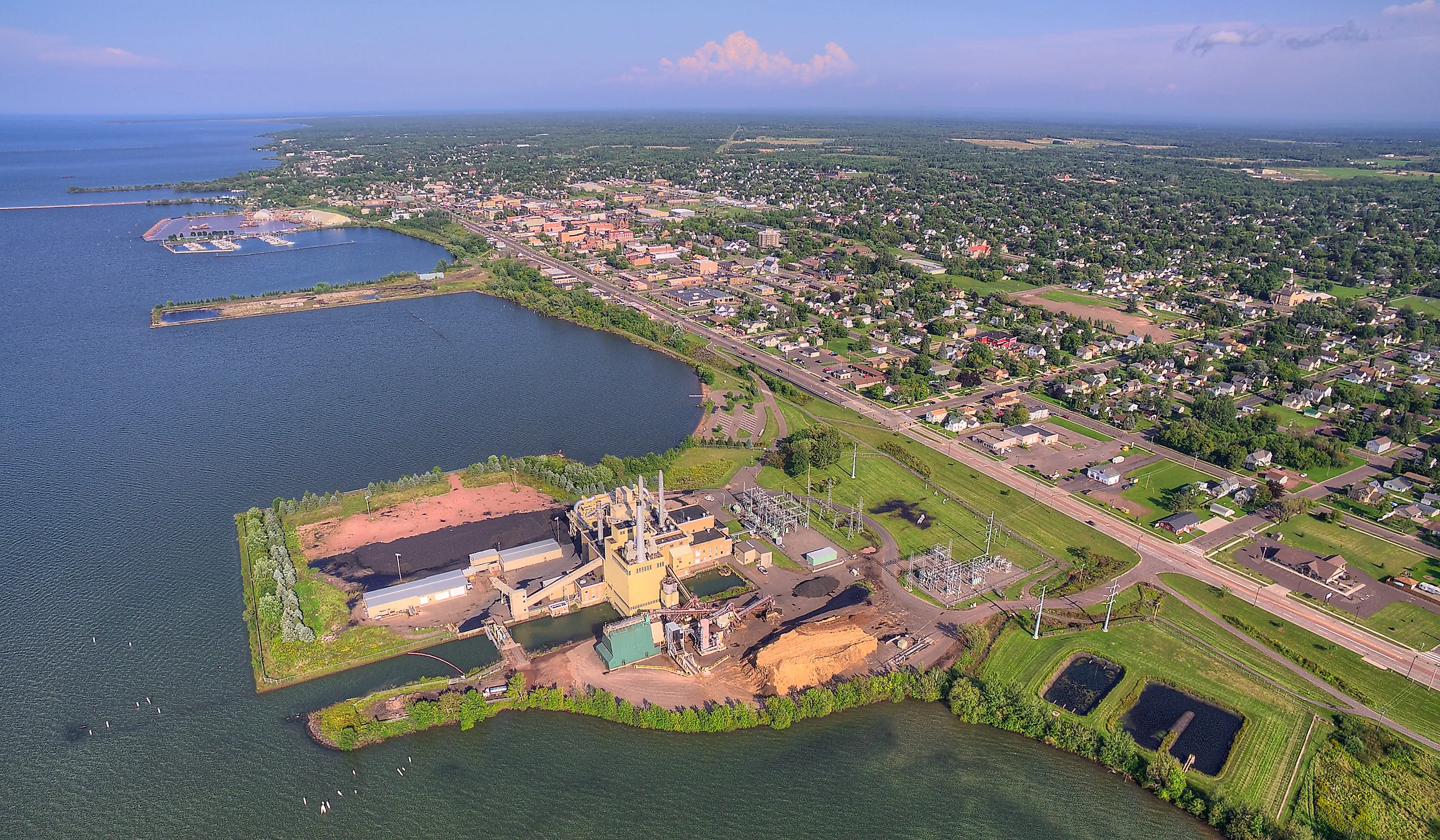
Ashland stands on the southern shore of Chequamegon Bay, a Lake Superior port that once shipped iron ore and lumber out to the Great Lakes. Swimmers use the diving board at Bayview Beach, and anglers work the pier for northern pike and smallmouth bass. The Ashland Waterfront Trail runs 11.5 miles of paved path along the shore for walkers, runners, and cyclists.
More than 20 outdoor murals painted by local artists Kelly Meredith and Sue Martinsen cover walls around downtown, and the self-guided Ashland Mural Walk strings them together into an easy afternoon loop. When the walk ends, the cooks at Deepwater Grille turn out Wisconsin-style fish, slow-roasted prime rib, and Cajun sirloin tips.
Algoma

Algoma faces Lake Michigan with broad beaches and a working harbor. A half-mile boardwalk runs the length of Crescent Beach, where the sand turns up smooth beach glass and the morning fog usually lifts off the water by mid-morning. The red Algoma Pierhead Lighthouse marks the end of the concrete breakwater, and anglers set up lawn chairs along the pier to cast for king salmon and rainbow trout.
Just off the harbor, Von Stiehl Winery is set inside a Civil War-era brick building from 1868. It has been Wisconsin's oldest licensed winery since 1967, and the staff run tours of the 1800s underground cellars that finish with a tasting on the harbor-view terrace. Beer drinkers can walk over to Ahnapee Brewery, where 16 taps pour onto a patio above Lake Michigan.
Shullsburg

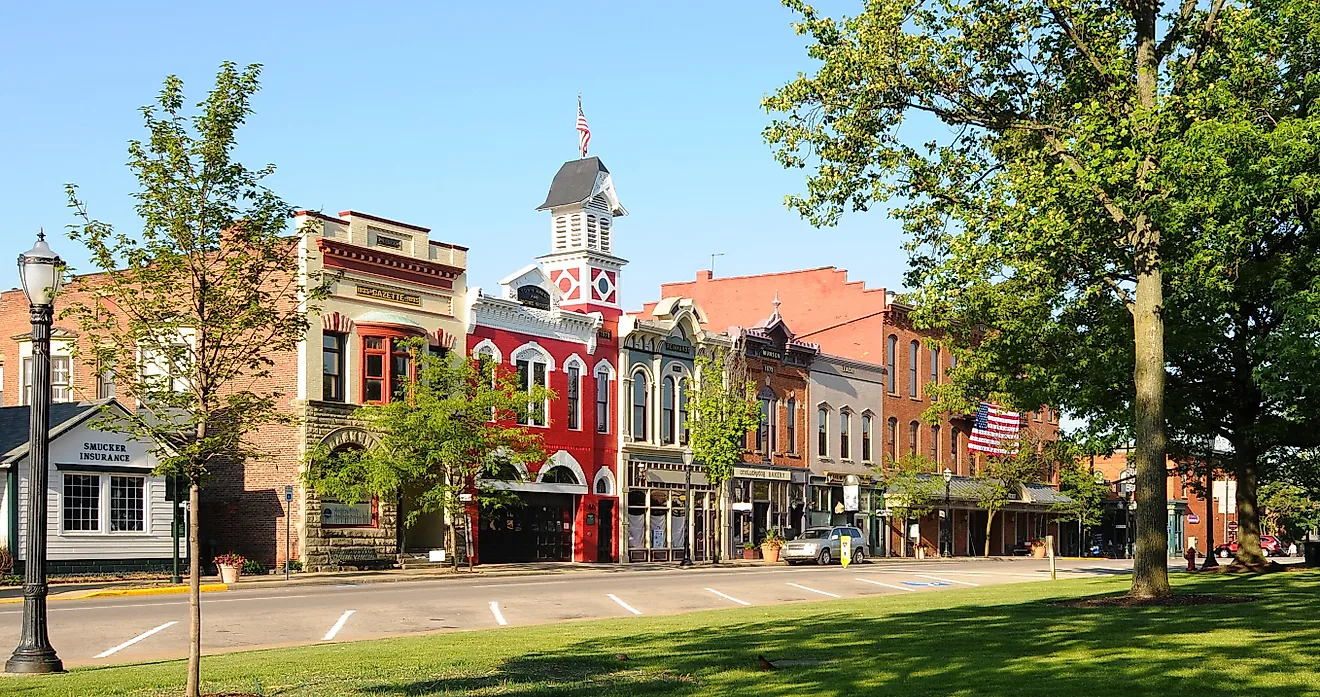
Shullsburg is one of Wisconsin's oldest settlements, founded on lead mining in 1827 in the Driftless hills of Lafayette County. Vintage iron lamp posts line Water Street past red-brick storefronts, 34 of which are listed on the National Register of Historic Places. The counter at Shullsburg Creamery is the place to sample local cheese and fresh curds.
A minute's walk away, Kingsley Crossing spreads its stock of home decor and vintage finds across several themed rooms and keeps an ice cream shop for the end of a browse. Three minutes from there, Badger Park sits under mature oaks with benches, a summer swimming pool, tennis courts, and ball fields.
Alma

Alma runs along a narrow shelf of land between 500-foot limestone bluffs and the Mississippi River, home to about 700 people in Buffalo County. The town took its name from the 1854 Battle of Alma in the Crimean War. County Road E climbs to Buena Vista Park at the top of the bluff, and walkers can reach the same overlook on foot from Second Street. From up there, the view takes in river barges below and bald eagles over the green channel islands.
Back down along Main Street, the deck at Wings Over Alma Nature & Art Center faces the river with spotting scopes trained on the migrating flocks and the eagles that roost in the trees, thickest in winter near Lock and Dam No. 4 just south of town. The Castlerock Museum, a short walk away, holds a collection of arms and armor that runs from Roman times through the Middle Ages. Danzinger Vineyards closes the day with estate-grown wine and a patio that looks west over the river valley at sunset.
Baileys Harbor

Baileys Harbor sits on the eastern, Lake Michigan side of Door County, framed by cedar swamps and open water. The Ridges Sanctuary covers a ridge-and-swale complex where ancient dune lines meet boreal forest, one of the most biologically diverse spots in the Midwest, with more than two dozen native orchid species and rare carnivorous plants.
A short drive north reaches Cana Island, where visitors climb the 97 steps inside the 89-foot lighthouse built in 1869. A free tractor-drawn wagon carries people across the rocky causeway when the water is high. Back downtown, the crew at Door County Brewing Co. pour craft beer and book live music inside a timber-framed taproom, and Anclam Park down the street runs down to a sandy beach for a wade into the lake.
Darlington

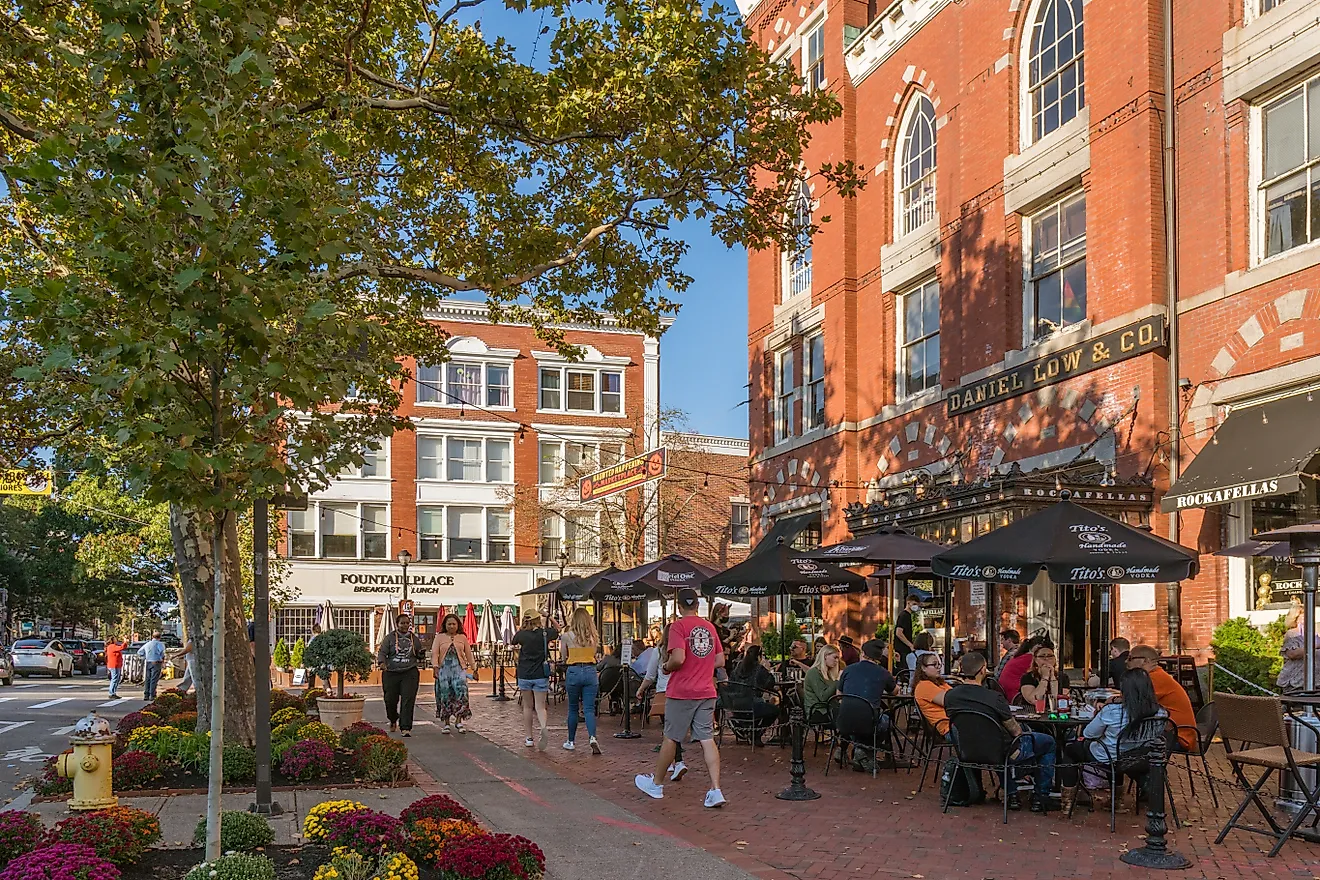
Darlington keeps one of Wisconsin's most complete 19th-century downtowns along a bend of the Pecatonica River. More than 40 red-brick buildings line Main Street, with the 1905 Lafayette County Courthouse anchored at the center. It is the only county courthouse in the United States built entirely with one person's money, a bequest from Matt Murphy of nearby Benton, whose portrait is carved into the pediment above the door. Sunlight falls through a stained-glass skylight in the cupola onto the rotunda below.
On the same drag, the Driver Opera House is a restored two-story Victorian brick building used for live music, plays, and community events. At the edge of town, the Cheese Country Recreation Trail follows an old rail corridor 47 miles between Monroe and Mineral Point, carrying cyclists and walkers past rolling hills and hardwood forest. Riverside Park, next to the water, has a kayak launch and river fishing access.
Viroqua

Viroqua is the organic-farming hub of the Driftless Region, a downtown where the restaurants buy from the growers a few miles out. The cooks at the Driftless Cafe on West Court Street change the menu with the season, leaning on grass-fed meat, local produce, and area cheese. Around the corner, vendors at the Viroqua Public Market fill a restored historic building with regional crafts, antiques, handmade jewelry, and specialty gifts.
A short walk away stands the Historic Temple Theatre, a 552-seat house with a rare Wurlitzer pipe organ that still plays for concerts, stage productions, and movie nights. A few blocks south on Center Avenue, the Vernon County Museum sits in a brick schoolhouse, its rooms given over to the region's farm history, a recreated general store, military memorabilia, and Native American artifacts.
Cassville

Cassville lies between towering limestone bluffs and the Mississippi River in Grant County, home to under 1,000 people. The Cassville Car Ferry, the oldest operating ferry service in Wisconsin, has crossed to Clayton County, Iowa since the 1830s and still runs cars and passengers over the river from spring through fall. It docks at Riverside Park, a quarter-mile of green along the water with a walking path and picnic tables above the river traffic.
Just west of town, Nelson Dewey State Park sits 500 feet above the river on the former estate of Wisconsin's first governor, with overlooks, wooded bluff trails, a family campground, and dark skies for stargazing. Next door, the Stonefield Historic Site recreates a turn-of-the-century village across roughly 30 buildings, and its State Agricultural Museum holds the largest collection of antique farm equipment in the state.
Wonewoc

Wonewoc sits in a quiet Driftless valley in Juneau County, where the Baraboo River winds past sandstone bluffs and pine. The village marks the midpoint of the 22-mile 400 State Trail, an old rail bed named for the Chicago and North Western "400" train that once ran the 400 miles to Minneapolis in about 400 minutes. The trail links five towns across planked trestle bridges and farm fields, used for biking in summer and snowmobiling in winter.
Chaparral Campground lies downstream along the riverbank with riverfront sites, an outdoor pool and water slide, and kayak and paddleboard rentals. Higher up on the forested hillside, the Wonewoc Spiritualist Camp sits on more than 30 wooded acres, where staff run services, mediumship readings, healing sessions, and workshops through the summer season.
Galesville

Galesville has gone by the nickname "Garden of Eden" since 1886, when the Reverend David Van Slyke published a pamphlet arguing that the town's bluffs and four rivers matched the biblical description of Eden. His four rivers were the Trempealeau, the Black, the La Crosse, and the Mississippi. Lake Marinuka lines the town's northern edge, 117 acres where local anglers land bass, trout, and walleye, with public landings for boats and kayaks.
The Old Main Cultural Center is housed in an 1859 stone building that once served as the main hall of Gale College, now on the National Register and used for art exhibits, concerts, and history programs open for tours. The cooks at Garden of Eatin' handle the meals, serving scratch-made breakfast and lunch in a dining room hung with vintage music memorabilia.
Slowing Down Beside The Water
In every town here, the pace of a visit follows the water beside it. On Lake Superior and Lake Michigan, that means working harbors, long beaches, and piers built for casting a line. Along the Mississippi and the Driftless rivers, it means bluff-top overlooks, eagle roosts, and a car ferry that has kept the same schedule for nearly two centuries. None of these places pushes a visitor to hurry, and that is exactly why the ones who slow down get the most out of them.