11 Most Overlooked Texas Towns For 2026
Texas saves some of its best surprises for the towns most travelers pass by. Clarksville guards old-growth timber at Lennox Woods Preserve while Ballinger still lends books from its 1911 Carnegie Library. Near Crockett, Ratcliff Lake cuts a cool blue opening through Davy Crockett National Forest. West Texas turns stranger at Monahans, where wind moves dunes beside Interstate 20. Dalhart’s XIT Museum remembers a ranch that once crossed ten counties. Post traces an ambitious planned community through the Garza County Historical Museum, while Haskell rolls out military vehicles at Fort Sam Museum. Lamesa points travelers toward the Dal Paso Museum while Seminole recounts ranching and oil at the Gaines County Museum. These towns ask travelers to stop long enough to see what the highway has been hiding.
Clarksville

US Highway 82 carries travelers straight through Clarksville, while Northeast Texas destinations such as Jefferson receive far more leisure travel attention. Those who stop will find one of the state's oldest communities and an exceptional forest nearby.
James Clark laid out the town in 1833, and Red River County became one of the original counties created by the Republic of Texas, giving the area a longer documented history than many communities farther west. The limestone Red River County Courthouse, built in 1884 and 1885 to a design by Dallas architect William H. Wilson, sits under a mansard-roofed clock tower on its own square several blocks from the business district, in the middle of a residential neighborhood.
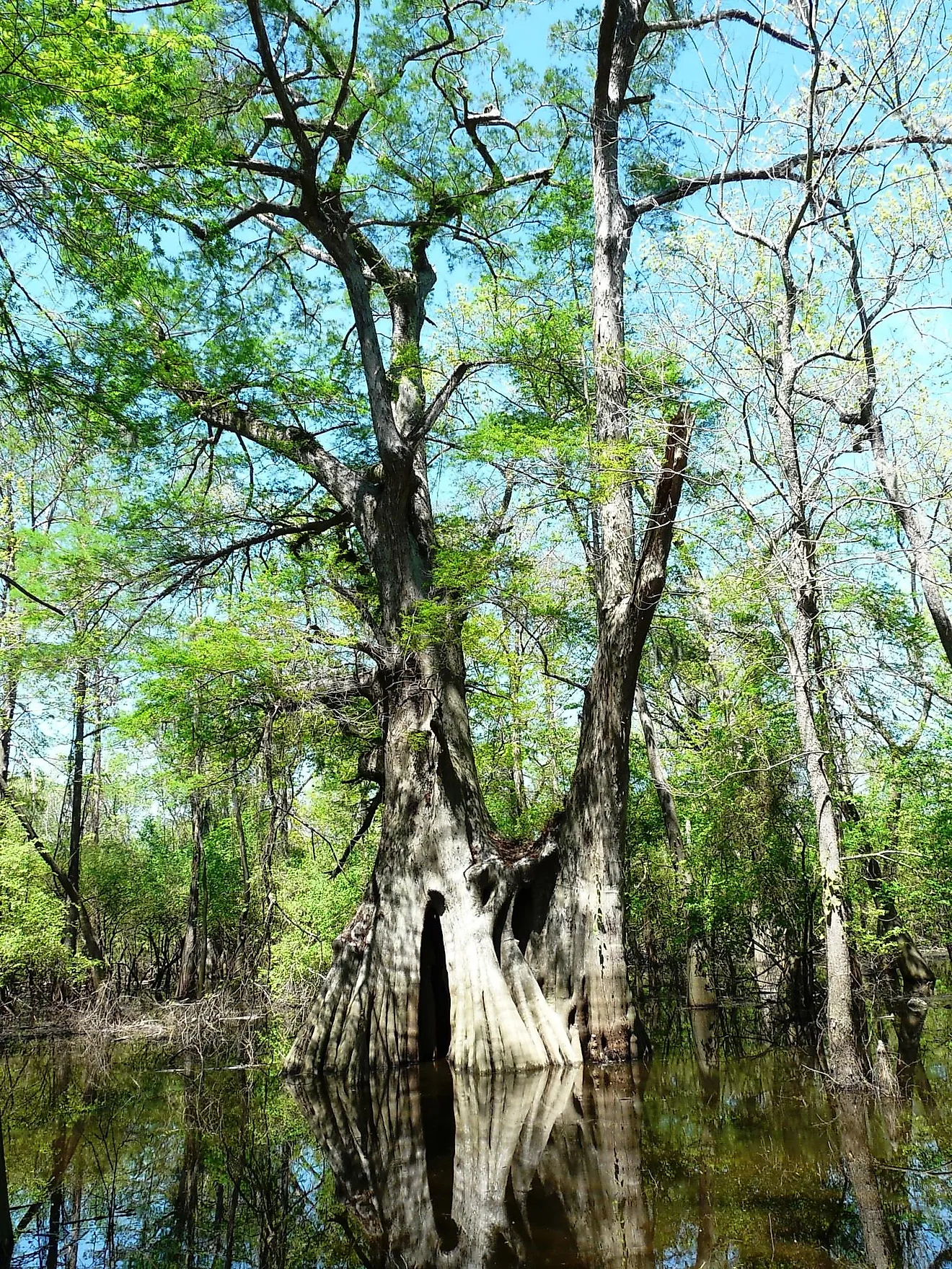
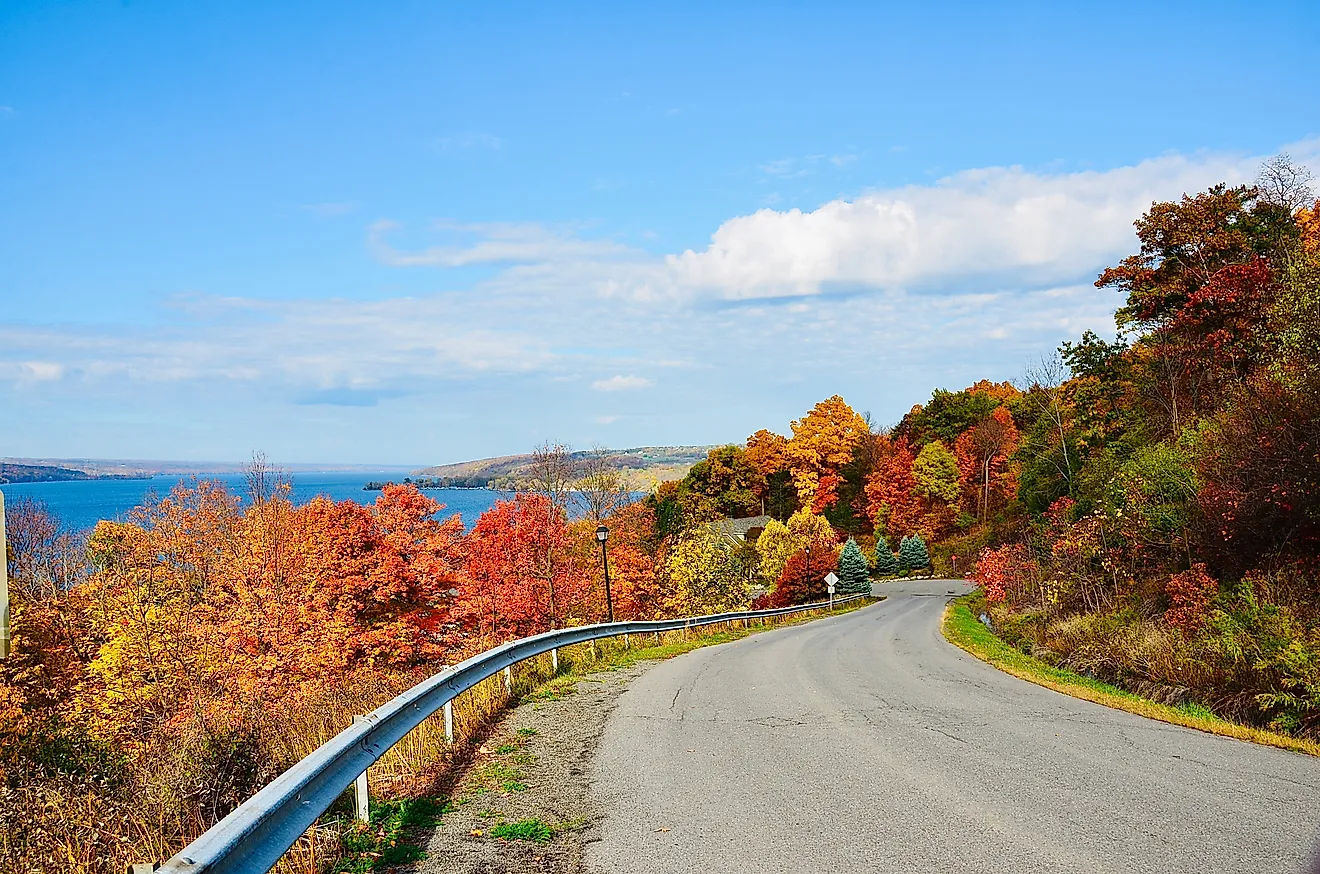
The more compelling detour is Lennox Woods Preserve, about ten miles north of Clarksville along State Highway 37. The 1,335-acre Nature Conservancy preserve protects one of the remaining examples of fully mature virgin timber in Texas. The Texas Forest Service has one post oak that is more than 300 years old, and a loblolly pine at nearly 150.
Tall loblolly pines, shortleaf pines, oaks, and hickories make Lennox Woods look considerably different from the landscapes travelers may expect to find in Texas. The Martha Lennox Memorial Nature Trail runs about a mile and a half through upland forest and down into bottomland hardwoods along Pecan Bayou, the largest undammed watershed in northeast Texas. The preserve is the reason Clarksville deserves more than a drive-through on Highway 82.
Ballinger

Ballinger sits roughly between Abilene and San Angelo, two larger West Texas cities that give travelers an easy reason to keep driving. Stopping reveals the Carnegie Library opened in 1911 after the community secured funding from industrialist Andrew Carnegie. Thirty-two Carnegie-funded library buildings went up in Texas, and Ballinger's is one of only five still operating as a public library. The Classical Revival building on North 8th Street was added to the National Register of Historic Places in 1975.
Nearby, the Runnels County Courthouse was built between 1888 and 1889 and is the heart of a square covering two city blocks, one of the largest courthouse squares in the state. A 1941 remodeling stripped away the original Second Empire roofline and tower and added a two-story wing on each side. On the lawn stands Pompeo Coppini's 1919 bronze of Charles H. Noyes, a young horseman memorializing a local rancher's son killed in a range accident. Ballinger's former Santa Fe depot, also finished in 1911, now holds city offices and the chamber of commerce. For time outside, Ballinger City Lake sits a few minutes from downtown and supports fishing and boating.
Haskell

Haskell lies well outside Texas's major tourist corridors, surrounded by cotton fields, ranchland, and long stretches of highway. One of its museums is far less predictable than the landscape suggests.
Fort Sam Museum displays restored military vehicles and military memorabilia alongside antique automobiles, with artifacts spanning the Civil War through the Korean and Vietnam Wars. The oddest holding is a collection of more than 60 pedal cars. Admission is free, donations are welcome, and the museum keeps its doors open Fridays and Saturdays.
The Haskell County Museum covers the other side of local history from a downtown building on the west side of the square, one that served as Jones-Cox Hardware before becoming the Henderson bookstore. Displays include antiques, an unusually large Coca-Cola collection, and the Swinson scrapbooks, which capture a substantial run of Haskell history. Hours are limited to the end of the week.
The Haskell County Courthouse was built in the early 1890s to a Renaissance Revival design by Jacob Larmour and A.O. Watson. The stone building was reworked in 1906 and again in 1931, when the symmetrical east and west wings went up.
Crockett

Crockett receives less attention than East Texas destinations such as Jefferson, Palestine, and Nacogdoches. Its position beside a vast national forest gives travelers a reason to reconsider it.
Davy Crockett National Forest covers more than 160,000 acres in Houston and Trinity counties. Rather than attempting to see all of it, head for Ratcliff Lake Recreation Area, 15 miles east of Crockett on State Highway 7 between the communities of Ratcliff and Kennard. The 45-acre lake began as a log pond for the Central Coal and Coke Company sawmill, which cut timber here from 1902 until 1920. The Civilian Conservation Corps dammed the pond, built the recreation area in 1936, and planted an estimated three million trees to bring the forest back. There are now trails, fishing, camping, and a swim area.
In town, Davy Crockett Spring commemorates local accounts that the frontiersman stopped in the area while traveling toward San Antonio in 1836. The Houston County Courthouse provides an architectural focal point downtown.
Lamesa

Travelers crossing the South Plains can easily treat Lamesa as another fuel stop between larger West Texas cities. The Dal Paso Museum gives them a concrete reason to stay longer.
The museum occupies the restored Dal-Paso Hotel on South First Street, a two-story brick building from 1926 that took its name from a boast: the best lodging between Dallas and El Paso. Inside are pioneer tools, ranching and farm equipment, household furnishings, and work by local artists.
The Dawson County Courthouse stands several blocks away in the center of town. Visitors can also see older commercial buildings that survive around downtown. Forrest Park makes sense after the museum on a warm afternoon, with mature trees and recreation areas inside the city.
Post

Post is easy to overlook because Lubbock, about 40 miles northwest, dominates travel in this part of Texas. Drivers approaching Post on US Highway 84 may not realize that the community began as an ambitious social experiment.
Cereal manufacturer Charles William Post bought roughly 200,000 acres of ranchland below the Caprock Escarpment in 1906, then had his Double U Company carve it into 160-acre farms, plant shade trees along the streets, and build a school, a bank, a hotel, a department store, and a cotton mill. Alcohol was prohibited. The county was organized in 1907 with Post City as its seat. When drought threatened the colony, Post spent several years firing dynamite from kites and towers along the rim of the Caprock, hoping the blasts would force rain. He called them rain battles, and they did not work.
The Garza County Historical Museum occupies the sanitarium Post built, a hospital advanced for its era, with an X-ray laboratory and a nurses' training program. It closed in 1920, spent a quarter century as an apartment house, and sat empty until the county bought it in 1966. Exhibits now fill 26 rooms.
Nearby, the OS Ranch Museum sits in Post's 1911 office and holds the art collection assembled by rancher and oilman Giles McCrary, which runs well beyond the regional and includes Faberge eggs. Two blocks away on Main Street, the 1916 Garza Theatre is closed and undergoing restoration by a nonprofit that bought it from the city in 2024 after more than a decade of vacancy. Roughly 4,000 bricks inside carry signatures left by past performers.
Hereford

Hereford calls itself the "Beef Capital of the World," yet most travelers know the town, if at all, from passing through the Panhandle's cattle country. Naturally high fluoride in the local water earned it a second nickname decades ago: the Town Without a Toothache.
The Deaf Smith County Historical Museum puts that agricultural landscape into context from a 1927 Catholic school building on Sampson Street. Collections include pioneer tools, household items, farm equipment, and arrowheads, plus a recreated general store and family parlor set around 1900. One display holds scale-model circus scenes built locally to entertain families through the Great Depression.
The museum also maintains the E.B. Black House, built in 1909 and still rented for weddings and community gatherings. Its period furnishings give visitors a more personal look at domestic life in early Hereford. Cattle operations surrounding the town are not simply background scenery. The local chamber counts more than a million cattle on feed within 50 miles of Hereford, and feedlots and agricultural facilities dominate portions of the surrounding countryside.
Dalhart

Dalhart occupies the far northwestern Texas Panhandle, close to both New Mexico and Oklahoma. Its remote position keeps it outside most Texas itineraries, even though the town sits in a landscape central to two major chapters of American history.
The XIT Museum, free to enter and directly across from the Dallam County Courthouse, covers the enormous XIT Ranch. Texas paid for its new state capitol by handing three million Panhandle acres to a Chicago syndicate led by the Farwell brothers, and the resulting spread took in parts of ten counties and was the largest ranch in the world under fence in the 1880s. The ten-county footprint fed a durable myth that the brand stood for "Ten in Texas." It was actually designed to be hard for rustlers to alter. Exhibits also examine railroads, regional wildlife, and the Dust Bowl.
The Dust Bowl story continues outside town at Rita Blanca National Grassland. After the 1930s, the federal government bought up failed cropland here and let it return to grass. The result covers close to 93,000 acres of shortgrass prairie across Dallam County in Texas and Cimarron County in Oklahoma.
For an easier outdoor stop, Rita Blanca Lake sits on Dalhart's southern side. Walking paths, fishing areas, and open views make it accessible without a lengthy drive.
Seminole

Seminole rarely appears on West Texas vacation itineraries, partly because its biggest industries are agriculture and energy rather than tourism. Its cultural history makes the town more interesting than its highway approaches suggest.
The Gaines County Museum documents ranching, settlement, agriculture, and the oil industry, organized around the five groups that shaped the county: Comanches, Anglo pioneers, Hispanic settlers, Black Americans, and the German-speaking Mennonite community. Its collections include saddles, blacksmithing tools, ironwork, and household objects, along with the story of the county's 1935 oil discovery.
Two groups of Mennonites bought land near Seminole in 1977, arriving from Mexico after earlier moves from the Russian Empire to Canada in the 1870s and on to Mexico in 1922. Their farms and businesses have become part of the area's modern identity.
The West Texas Living Heritage Museum, opened in 2023 by Tina Siemens after two decades of collecting, lays out that five-century migration in detail, with exhibits on canning, quilting, and butchering. Mennonite-run businesses around town sell baked goods, cheese, meats, and other locally made foods, which connects a visit directly to a community that has shaped Gaines County for roughly half a century.
Monahans

Interstate 20 puts thousands of travelers within a few miles of Monahans, yet many continue toward Midland, Odessa, or farther west. They miss one of the strangest landscapes beside a major Texas highway.
Monahans Sandhills State Park sits about six miles northeast of town in Ward and Winkler counties, protecting a stretch of wind-shaped dunes that reach 70 feet high. Visitors can rent sand disks at the park headquarters and slide down them rather than simply viewing them from a trail. Camping is available, and an 800-acre area is set aside for horseback riding.
The dunes constantly change as West Texas winds move the sand, so the park has no permanently marked trails across the dune field.
In town, the Million Barrel Museum occupies a concrete oil reservoir that Shell Oil poured in 1928, a cement-lined bowl eight acres across and 35 feet deep. It was filled to capacity exactly once before the gasket seams failed and the crude drained into the ground. A local buyer sealed the cracks three decades later, filled it with water, and opened it as a recreation park in October 1958. It held water for one day. The tank became a museum in 1987, and the grounds now hold the 1909 Holman House, the town's first jail, a railroad section house, a museum covering the World War II bomber base at nearby Pyote, and an amphitheater built into the reservoir wall.
Andrews

Andrews sits north of Odessa in the Permian Basin, an area better known for oil production than leisure travel. That industrial reputation helps explain why the town receives little attention from Texas travelers.
Legacy Park Museum, close to the center of town, is built around relocated structures rather than gallery space. Chief among them is the J.S. Means Ranch House, one of the oldest homes in Andrews County, moved in from a homestead section out in open country and restored with its bunkhouse story intact. A replica chuck wagon sits beside it.
A veterans' memorial gives visitors another specific stop in town. Granite monuments and military displays honor more than 2,000 local service members from multiple conflicts.
Outside the museum setting, pump jacks and energy infrastructure remain visible across the surrounding Permian Basin. Those sights are part of the reason to visit rather than scenery to ignore. Drillers struck oil in Andrews County in 1929, and the discovery reshaped a region previously dominated by ranching.
Taking The Less-Traveled Texas Road
Clarksville sits far from the state's major tourism routes. Haskell and Andrews developed around agriculture and industry rather than visitor attractions. Lamesa and Monahans occupy highways where travelers often continue toward larger cities.
At Monahans, Interstate 20 traffic passes within reach of nearly 4,000 acres of dunes. Ballinger still uses its 1911 Carnegie Library. Dalhart's XIT Museum tells the story of a ranch that once spanned 10 counties, while nearby grasslands preserve land directly tied to the Dust Bowl story. Take the road less-traveled and don't miss the appeal of these small, overlooked communities.