11 Cutest Small Towns In New Jersey To Visit
The Red Mill at Clinton has been photographed so many times it practically has its own zip code. Ocean Grove still has tents. Haddonfield turned up the first nearly complete dinosaur skeleton anyone had ever dug out of the ground. Eleven towns follow, running the width of the state, and each one is genuinely worth the drive on a free Saturday.
Cape May

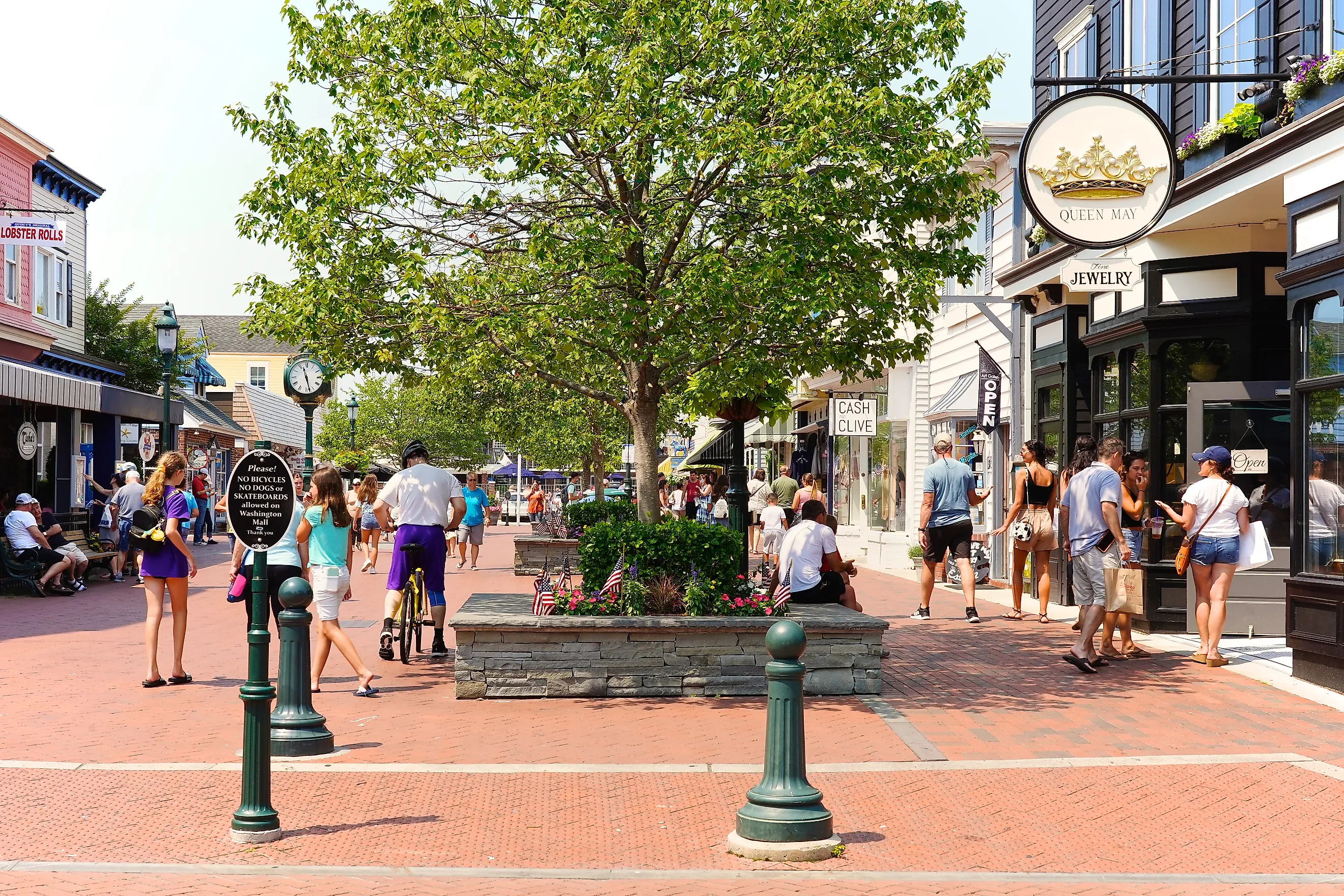
The whole city is a National Historic Landmark, one of a very short list of places in the country to hold that designation entire rather than block by block. What earned it is the Victorian housing stock, roughly 600 buildings of it, most going up in a hurry after the 1878 fire took out about 30 acres of the resort.

Three miles of beach, the Washington Street Mall for walking without a car in the way, and the 1859 lighthouse out at the Point with 199 steps to the top. Come in spring or fall and the birding is the real draw: Cape May sits on a migratory funnel, and the hawk watch platform at the state park counts raptors by the thousand.
Stone Harbor

Seven Mile Island shares its length with Avalon, and Stone Harbor takes the quieter southern end of it. The shopping district runs a handful of walkable blocks along 96th Street and Third Avenue, close enough to the beach that you can carry a coffee to the sand without it going cold.

The genuinely unusual thing here is the Stone Harbor Bird Sanctuary, 21 acres of maritime forest sitting in the middle of a resort town, protected since the 1940s and a registered National Natural Landmark. The Wetlands Institute at the north end runs a salt marsh boardwalk and a terrapin conservation program, which is a better hour than it sounds.
Ocean Grove

Methodist clergy founded Ocean Grove in 1869 as a camp meeting ground, and the strangest and best thing about it is that the camp never entirely packed up. Around 100 canvas tents still stand in concentric rows behind the Great Auditorium, occupied every summer, many by families who have held the same lease for generations. The waiting list runs long.
The Great Auditorium itself seats several thousand under a barrel roof and holds an 1908 pipe organ that is one of the larger instruments in the state. The whole district is on the National Register, and it shows in the gingerbread trim on nearly every porch. Asbury Park is a short walk north across Wesley Lake if you want the opposite of all this.
Spring Lake

Two miles of boardwalk with no commercial development on it at all, which is rarer along this coast than it should be. No arcades, no funnel cake, no wheels. Just the walk, the ocean on one side, and the big shingled houses on the other.
Third Avenue handles the shops and the coffee. Divine Park sits in the middle of town around the spring-fed lake that gives the borough its name, with a footbridge that turns up in roughly every engagement photo taken in Monmouth County. The Spring Lake Theatre Company stages a full season in the community house, and tickets go faster than people expect.
Cranbury

Cranbury's entire downtown is on the National Register, and it is one of the better-preserved 18th and 19th-century streetscapes in central Jersey: Federal, Greek Revival, and Victorian all sitting on the same block. Washington and the Continental Army camped here in June 1778 on the march toward Monmouth, a couple of days before the battle.
The Cranbury Inn has been serving in some form since the mid-1700s, when it operated as a stagecoach stop. Brainerd Lake sits at the edge of the village for a slow loop on foot, and the Cranbury Museum in a 19th-century house keeps the local record. The whole village takes about twenty minutes to walk end to end.
Allentown

A borough of under 2,000 built around a mill pond, with a grist mill dating to the early 1700s that now holds shops and a restaurant instead of grinding anything. The mill and much of Main Street sit inside the borough's historic district on the National Register.
The old burial ground holds stones going back to the Revolution, and the village was on a strategic route during the Monmouth campaign. Just outside town, the Horse Park of New Jersey spreads across more than 175 acres and hosts schooling shows and national-level competition alike, which is a lot of horse for a town this size.
Haddonfield

In 1858, William Parker Foulke dug a marl pit here and pulled out Hadrosaurus foulkii, the first nearly complete dinosaur skeleton recovered anywhere in the world. It changed how people understood dinosaurs, because it was the first real evidence that some of them stood on two legs. There is a bronze of the animal on Lantern Lane and a marker at the dig site.

Kings Highway runs the retail through a historic district of colonial and Victorian buildings, and the borough has been dry since the 19th century, which keeps the sidewalks unusually quiet after dinner. The Indian King Tavern is where the state legislature met in 1777 and formally adopted the word "state" in place of "colony." It is a state historic site and free to enter.
Lambertville

Antiques capital of the state, more or less by consensus, with dealers and galleries filling the old buildings along Bridge and Union streets. The walking bridge over to New Hope means you can do two towns in an afternoon without moving the car.
On this side of the Delaware, the Delaware and Raritan Canal towpath runs flat and shaded straight through town, good for a walk or a ride in either direction. The Lambertville Station restaurant occupies the 1867 railroad depot. Shad Fest takes over the streets each April, which is either a reason to come or a reason to pick a different weekend.
Frenchtown

About 1,400 people, a single main street, and a bridge to Pennsylvania at the end of it. Frenchtown is what Lambertville was before Lambertville got discovered, and the galleries, bookshop, and bakeries along Bridge Street have arrived without the crowds following yet.
The towpath runs through here too, and the stretch north toward Milford is one of the quieter cycling runs in the state. The Frenchtown Inn has been feeding people by the river since the 1800s. This is a town where the whole visit is the walk, and that is the point.
Clinton

The Red Mill on the South Branch of the Raritan is the single most photographed building in the state, and standing in front of it you understand why: four stories of red clapboard, a waterfall, and a stone bridge all lined up in one frame. It went up around 1810 and has ground grain, talc, and graphite over the years. It is now a museum village of a dozen-odd buildings.

Across the water, the Hunterdon Art Museum occupies the old stone mill on the opposite bank, which means the town has two historic mills facing each other over a waterfall. Main Street runs a few blocks of storefronts behind it. Spruce Run and Round Valley are both minutes away when you want water to swim in rather than look at.
Boonton

Boonton's Main Street runs up a genuine hill, which sets it apart from almost every other main street in New Jersey, and the storefronts climbing it hold a run of restaurants and small shops that has quietly gotten good over the past decade.
Behind the town, Grace Lord Park drops into a gorge on the Rockaway River with a waterfall and a footbridge, reachable in a five-minute walk from the shops. The town grew up around a 19th-century ironworks that supplied the Morris Canal trade, and the stonework from that era still shows along the river. It is a short, steep, satisfying afternoon.
Eleven Towns, Eleven Reasons
These do not overlap much, which is the useful part. Cape May and Ocean Grove trade on architecture nobody would be allowed to build now. Stone Harbor and Spring Lake are the quiet beach options, one with a bird sanctuary in the middle of it and one with a boardwalk that sells nothing. Lambertville, Frenchtown, and Clinton line up along the western rivers within an easy drive of each other. Cranbury and Allentown hold the middle. Haddonfield has the dinosaur, and Boonton has the hill. Pick two that are close together and make a day of it.