11 Prettiest Small Towns In New Jersey
New Jersey's most beautiful small towns include mill towns on the Raritan and Delaware rivers and Victorian shore communities. In Cape May, Victorian houses and gardens remain a few blocks from the beach. Haddonfield draws much of its appeal from brick sidewalks, old trees, and a broad avenue lined with historic buildings. These 11 towns ahead are the prettiest in New Jersey.
Cape May

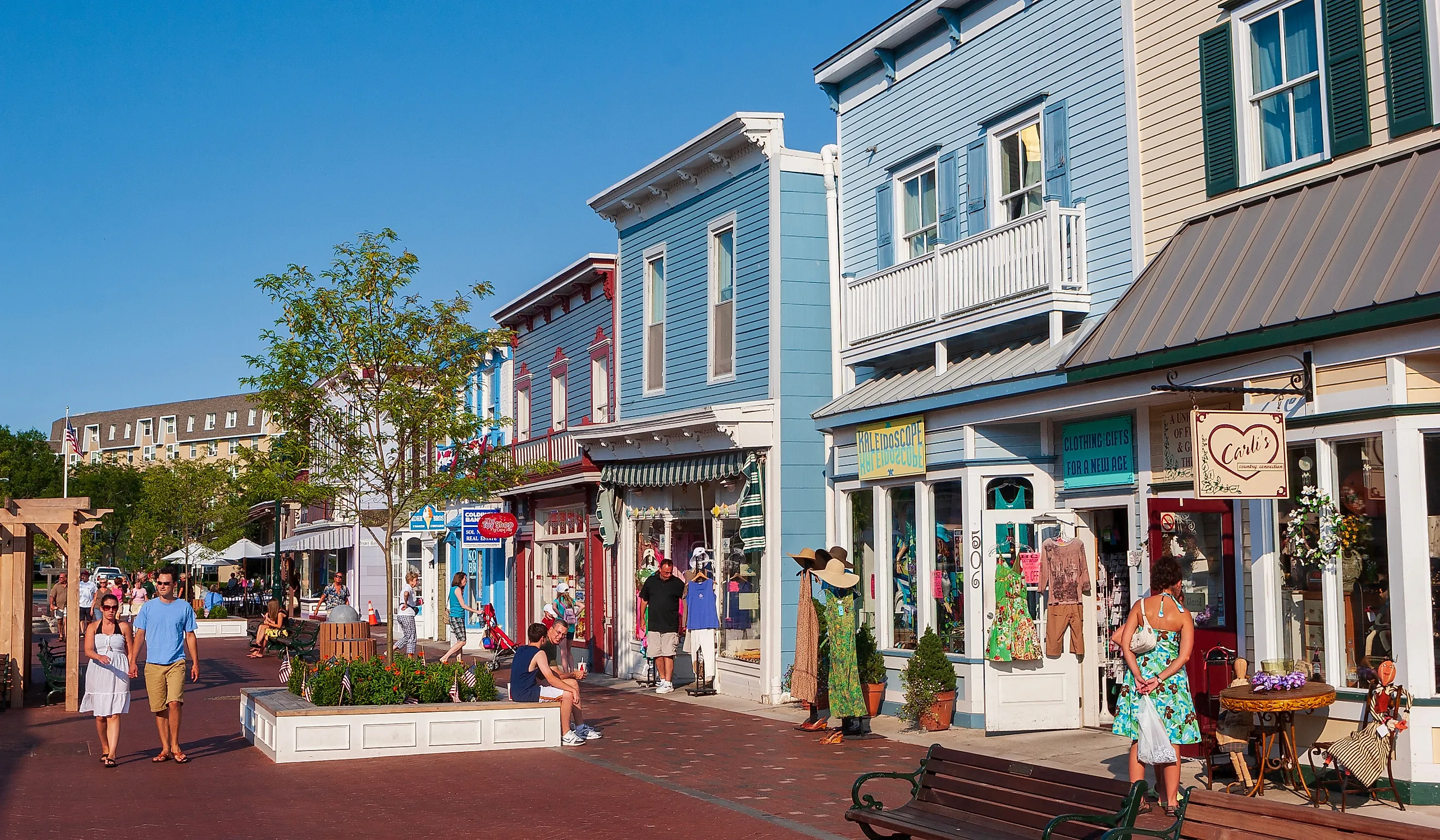
Cape May has one of the most complete historic streetscapes in New Jersey. Painted Victorian houses, deep porches, towers, gables, and decorative trim give the town an unusual level of visual consistency, especially within the National Historic Landmark district. Many of the houses use color to pick out trim and ornamental woodwork, which helps the streets feel layered rather than flat. Columbia Avenue, Ocean Street, and Hughes Street show how much of that older fabric still holds together.

The town also benefits from the fact that its shoreline remains close to the historic core instead of sitting apart from it. Beaches and ocean views are within walking distance of the district, so the older houses do not lose their coastal setting. The Emlen Physick Estate gives Cape May one of its clearest architectural anchors, while Cape May Lighthouse adds another landmark at the edge of the peninsula. Gardens, porches, and Victorian facades remain part of the view across much of town.
Ocean Grove

Ocean Grove stands out because almost everything in town contributes to the same visual language. Steep gables, wraparound porches, turrets, painted trim, and narrow Victorian houses fill the streets between the boardwalk and the inland lakes. The town has a density of historic detail that is difficult to match anywhere else on the New Jersey shore, and that consistency gives it unusual strength as a whole.

The Great Auditorium provides the clearest focal point, but the surrounding tent structures, cottages, and broad paths toward the sea are just as important to the town’s visual character. Ocean-facing avenues widen toward the boardwalk, which keeps the water in view, and Ocean Pathway creates one of the town’s strongest formal approaches. Fletcher Lake and Wesley Lake frame the historic district at either end, so water keeps returning to the scene without overpowering the architecture.
Clinton

Clinton stands out immediately because the Red Mill creates one of the clearest riverfront views in the state. The 1810 mill rises beside the south branch of the Raritan River above a broad waterfall, and that combination of red siding, moving water, stone banks, and tightly gathered buildings gives the center of town a memorable shape. Across the river, the 19th-century stone mill that now houses the Hunterdon Art Museum adds a second landmark strong enough to balance the scene.

The rest of the center supports that view rather than distracting from it. The iron bridge, the falls, and the streets near the mills keep the river and the architecture in sight at the same time. Older buildings and tree-lined sidewalks soften the blocks leading away from the water, so Clinton does not rely on a single postcard angle. It remains attractive from multiple vantage points.
Lambertville

Lambertville has one of the prettiest river settings in New Jersey, with the town rising directly from the Delaware River, a tight mix of older buildings and sloping streets. Federal rowhouses, narrow brick storefronts, painted facades, and church towers keep the center visually varied without losing cohesion. The Delaware and Raritan Canal State Park strengthens that effect by running beside the river through town, adding still water, stone edges, and a towpath close to some of Lambertville’s best blocks.

Much of the town’s appeal comes from smaller details like planter boxes, brick walks, wrought-iron fences, flagstone paths, and mature trees, which give the center a textured, settled look. Bridge Street and Union Street are especially effective because the canal, the river, and the older commercial blocks remain close together. The bridge to New Hope keeps the river crossing visible, which adds a clear visual edge to the town’s main views.
Spring Lake

Spring Lake has one of the cleanest shore settings in New Jersey because so little interrupts the relationship between the houses, dunes, and ocean. Victorian homes, broad lawns, and older inns sit only a few blocks from the beach, while the two-mile boardwalk stays notably plain. Without a commercial strip crowding the seafront, the view holds on the houses, the grass, and the water.

The lake gives Spring Lake another focal point and keeps the town from feeling like a one-trick pony beach town. Divine Park creates a quieter interior landscape of bridges, footpaths, lawns, and mature trees, and that green space softens the streets between downtown and the shore. The tree canopy matters here as much as the water. Lindens, London plane trees, maples, and several types of oaks add shade and texture to both the park and nearby residential blocks.
Haddonfield

Haddonfield has one of the most polished historic centers in New Jersey, and much of that appeal comes from the way brick, trees, and building scale work together. Kings Highway remains the town’s clearest public spine, lined with brick storefronts, preserved houses, church towers, and civic buildings that give the center a strong sense of continuity. The Indian King Tavern serves as a particularly important anchor through its 18th-century brickwork and its place in local history.

The streets around that center remain attractive because their details soften the blocks rather than making them feel severe. Brick sidewalks, front gardens, porches, shutters, and white-trimmed facades keep the blocks from feeling severe, while old sycamores, London plane trees, oaks, and even a tall tulip poplar help break up the masonry and rooflines.
Frenchtown

Frenchtown has a narrow river-town form that gives it a strong sense of shape from the start. Most of the borough stretches for about a mile along the Delaware River, with older houses and compact commercial blocks clustered close to the water rather than spreading inland. That layout keeps the town easy to read at a glance. Bridge Street leads directly toward the Uhlerstown-Frenchtown Bridge, and the river stays visible through much of the center.

The prettiest parts of Frenchtown come from the way those elements remain tightly connected. The D&R Canal State Park trail adds another linear edge beside the river, while brick facades, porches, and church buildings keep the streetscape from feeling too spare. Around the bridge, the crossing, the towpath, and the older blocks combine into the town’s strongest views.
Allentown

Allentown has a compact historic center that feels composed rather than crowded. Older houses, brick storefronts, and church buildings stand close enough together to read as one scene, and the small scale helps the streets hold their shape from block to block. That matters in a town whose appeal depends less on a single major landmark and more on the overall effect of the center.
The town also gains from having a greener edge close at hand. Nearby open space and the Allentown Nature Trail keep the historic district from feeling cut off from the landscape, and that softer border helps the built center look even more settled. The combination works well because the trees and open views do not overwhelm the architecture. They simply give it more room.
Bordentown

Bordentown has a denser look than many small towns in New Jersey, and that density is part of what makes it attractive. The town climbs above the Delaware River on a tight grid of older streets, with brick row buildings, church towers, and preserved houses giving the center both texture and vertical emphasis. Farnsworth Avenue shows this especially well, with storefronts and older homes packed closely enough together to create a strong streetscape.

The town looks best where that brick streetscape begins to open toward the river. Steps, porches, and narrow facades keep the streets visually varied, while the nearby Delaware and patches of open green at the edge of town provide a little relief. That balance between close-built streets and a broader river setting gives Bordentown its shape.
Chester

Chester keeps much of its appeal in the village form itself. Older buildings line Main Street and Perry Street, where brick sidewalks, white-painted trim, and well-kept facades give the center a polished historic look. The town grew around a crossroads once known as Black River, and that older layout still helps the village feel compact rather than scattered.

The landscape around Chester matters just as much. The Black River and nearby Cooper Gristmill bring water, stone, and mill architecture close to the village, while mature trees and broad lawns soften the center and keep it from looking crowded.
Cranbury

Cranbury has one of the calmest village settings in New Jersey. The broad main street, lined with white-painted houses, mature trees, church buildings, and preserved older structures, gives the town a quiet sense of order. Because so much of the village falls within a large historic district, the scale stays low and consistent from one block to the next.
Brainerd Lake brings water and tree reflections close to the center, adding to a town already defined by generous lawns and open residential views. That matters because Cranbury’s appeal depends on restraint. It is not a place of dramatic contrasts.
What Makes These New Jersey Towns So Visually Distinct
These towns show that prettiness in New Jersey does not depend on one kind of setting. In some places, it comes from mills, waterfalls, and riverbanks. In others, it comes from Victorian porches, boardwalk views, church towers, brick streets, lakes, and old shade trees. The strongest examples share something more specific: their natural features and built landmarks still shape the same impression.
That is why these towns are easy to picture. Their streets connect with the rivers, shorelines, parks, and village greens. Porches, mills, gardens, bridges, and older facades still sit close enough to water, trees, and open space to make each town look complete.