6 Most Affordable Towns to Retire in New Jersey
If you are weighing a New Jersey retirement, the number that matters most is not the sticker price on a house. It is the property-tax bill. New Jersey's are the highest in the country, with the typical homeowner paying well over $9,000 a year, so an affordable retirement here is less about a cheap home than about a total cost you can live with. The state does go easy on retirement income to balance that out: it does not tax Social Security, and residents 62 and older can exclude up to $75,000 (single filers) or $100,000 (married filing jointly) of pension and retirement-account income, while newer relief such as the Stay NJ credit trims property-tax bills for homeowners 65 and up. The trick, then, is finding a town where home prices sit below the state's roughly $500,000 median without giving up the things that make daily life easy: a walkable downtown, a train or bus that goes somewhere, parks, and a senior center with a real calendar. The towns below manage it, and each strikes that balance a little differently.
Rahway

Rahway is the pick for retirees who are not ready to give up the city. Home to about 30,000 people, it sits on NJ Transit's Northeast Corridor and North Jersey Coast lines, which puts Manhattan less than 20 miles and a single train ride away, and it does that at a typical home value around $415,000, still under the state median. Downtown is genuinely walkable, with the restored Union County Performing Arts Center anchoring a small arts district.
Green space is easy to reach too, with Rahway River Park stretching along the water on the south side of town. The city runs a senior center with a steady calendar of activities and day trips, and for medical care, Robert Wood Johnson University Hospital keeps a campus right in town. If your version of retirement still includes catching a show and hopping a train into the city, this is the one.
Hammonton

Hammonton wears its nickname proudly. This Atlantic County town of about 14,700 is the self-proclaimed Blueberry Capital of the World, and it earns it: dozens of surrounding farms grow the bulk of New Jersey's blueberry crop. Home prices run comfortably below the state median, and the downtown is walkable and lively, with a real arts district, the restored Eagle Theatre, and a cluster of Italian restaurants and local wineries that give the place a genuine weekend rhythm.
For the outdoors, Hammonton Lake Park sits right in town for walking and kayaking, and the vast Wharton State Forest, with Batsto Village and Atsion Lake, begins just minutes away in the Pine Barrens. NJ Transit's Atlantic City rail line stops in town, linking Hammonton to Philadelphia in one direction and the shore in the other. If you want small-town life with something actually going on, Hammonton delivers.
Hopatcong

Hopatcong is built around water. The town of roughly 15,000 wraps around Lake Hopatcong, the largest lake in New Jersey, and life here runs on its miles of shoreline: marinas, lakeside restaurants, boat launches, and small beaches. It started as a summer-resort community more than a century ago and has settled into a year-round one, and its typical home value, around $320,000, comes in well under the state median even for northern New Jersey.
There is a trade-off worth being honest about. Hopatcong is more spread out than the walkable downtowns elsewhere on this list, and the nearest hospital is a short drive away in Dover rather than in town. But for a retiree who wants a boat in the driveway and open water out the back door at a price that works, few places in the state come close. The town also runs an active senior program with its own transportation and events.
Bordentown

Bordentown is the walkable one. This small Burlington County city of about 4,000 packs its shops, restaurants, art galleries, and antique stores into roughly one square mile along Farnsworth Avenue, so daily errands and a night out are both a short stroll from the front door, which is the kind of layout that keeps mattering as driving gets less appealing. Home values here sit at the top of this list's range, somewhere around $415,000 to $470,000, just under the state median rather than far below it. The draw is less the price than what the price buys: a real downtown you can live in without a car.
The setting helps. Bordentown sits above the Delaware River about six miles south of Trenton, and the RiverLINE light rail stops right in town, running north to Trenton, where you can connect to the Northeast Corridor, and south toward Camden. History is thick on the ground here: the streets once hosted Napoleon's exiled brother, Joseph Bonaparte, and the downtown is full of Revolutionary-era buildings, while the Abbott Marshlands and nearby Crystal Lake Park keep open water and trails close by. There is no hospital in the city itself, so the nearest are a short drive north in the Hamilton and Trenton area, and Burlington County runs senior services county-wide. For a retiree ready to trade the car for a well-connected Main Street, Bordentown earns its place.
Hainesport

Hainesport is the quiet one, a Burlington County township of about 6,000 along the Rancocas Creek. It is the most car-dependent town on this list, so it suits a retiree who still drives and would take space and quiet over a walkable Main Street. What it offers is affordability and calm: home values sit below the state median, and the township has age-restricted housing options aimed at residents 55 and older.
The trade-off for its small size is that most of the amenities are a short drive away rather than in town. Rancocas State Park is close by for walking and birding, and neighboring towns hold the extras, from the Air Victory Museum over in Lumberton to the shops and services of Mount Holly. There is a local senior club for regular get-togethers, and the hospitals of Burlington County are all a manageable drive. It is a modest, low-key choice, and that is rather the point.
Phillipsburg

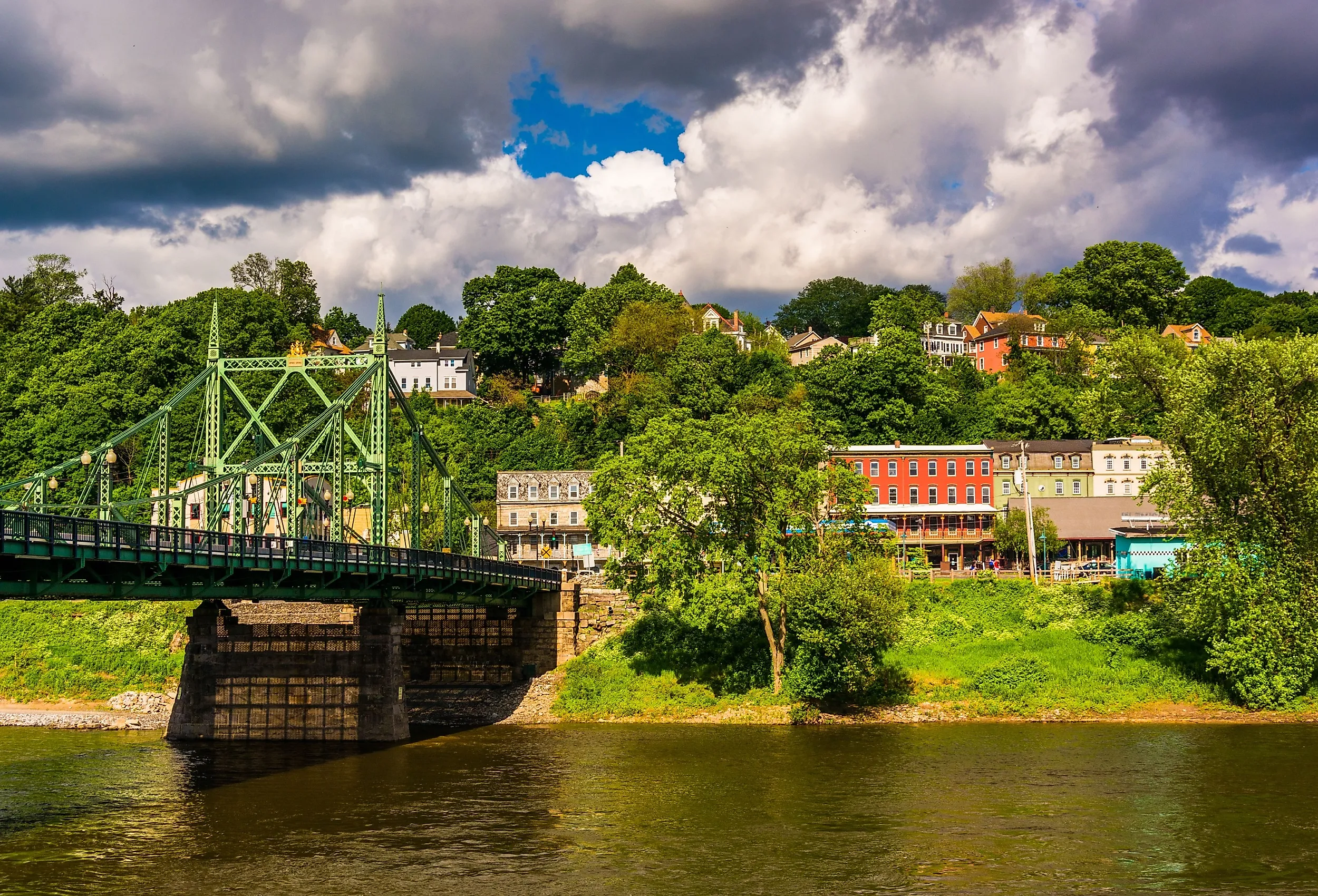
Phillipsburg is the most affordable town on this list, and it is not close. The typical home in this Warren County town of about 15,000 runs around $235,000, roughly half the state median, and it sits right on the Delaware River across from Easton, Pennsylvania. It is a walkable old railroad town, and that heritage is still its calling card: the Delaware River Railroad Excursions run seasonal train trips out of town, and the Phillipsburg Railroad Historians keep a museum of the region's rail history.
The setting is a big part of the appeal, with the river, wooded hills, and a riverfront district that has drawn small businesses, galleries, and restaurants. The Pocono Mountains are about a half-hour drive northwest for day trips, and Phillipsburg has its own hospital, the St. Luke's Warren Campus, so medical care does not mean a long haul. Warren County also runs senior programs, including community meals and social events. For a retiree looking to stretch a fixed income the furthest, this is where the math works best.
Doing the Math on a Jersey Retirement
Affordable is a relative word in New Jersey, and it always comes back to that property-tax bill, so the smartest move is to weigh the whole picture: the home price, the annual tax, and the relief programs you may qualify for once you turn 65. Past that, it comes down to what kind of days you want. Rahway and Phillipsburg keep you connected, one by train to New York and one by bridge to Pennsylvania, while Bordentown does it on foot, pairing a light-rail stop with a compact historic downtown. Hopatcong trades a walkable downtown for a lake out the back door. Hammonton gives you a real main street in farm country, and Hainesport offers quiet above all else. None of these will ever be cheap the way a small town in another state is cheap, but each one makes a New Jersey retirement genuinely doable, which for a lot of people who have spent their lives here is the entire goal.