11 Cool US Small Towns For Escaping The Summer Heat
As you read this, a historic heat dome has parked itself over the central and eastern United States like a lid on a pot, and roughly half the country is in it. More than 160 million Americans are under heat alerts this Fourth of July week, heat indices are pushing 110 degrees Fahrenheit from the Plains to the East Coast, and the National Weather Service is using phrases like "potentially historic," which is meteorologist for "please stop going outside." The good news: America is a big country, and some corners of it never got the heat memo. Coastal fog belts, high mountain valleys, and big-lake shorelines are all quietly holding at temperatures the rest of the country would currently commit crimes for. Here are 11 small towns where summer still behaves itself.
Woods Hole, Massachusetts

Woods Hole, population just under 800, occupies the southwestern corner of Cape Cod in Massachusetts, where the Atlantic functions as a village-sized air conditioner. Summer highs hover in the upper 70s Fahrenheit, tempered by sea breezes that mainland Boston would pay good money for. This is also one of the brainiest villages in America: it hosts the Woods Hole Oceanographic Institution and the Woods Hole Science Aquarium, one of the oldest public aquariums in the country, dating to 1885. Between the seal tanks, the 19th-century Nobska Lighthouse, and the shops and seafood along the waterfront, it is a town where you can spend an entire July day outdoors and never once check the heat index.
Hood River, Oregon

About 60 miles east of Portland, Hood River sits where its namesake river meets the Columbia River, in the heart of the Columbia River Gorge. The Gorge works like a natural wind tunnel: pressure differences between the cool, marine west side of the Cascades and the hot interior funnel a strong, reliable wind straight down the river, which keeps the air moving and has made this town one of the windsurfing and kiteboarding capitals of the world. Days can get warm, but that ever-present breeze plus a cold river means nobody here is suffering. Surrounding the town are fruit orchards, the wineries of the Hood River Valley, and the waterfall-lined walls of the Gorge, all within a short drive.
Carmel-by-the-Sea, California

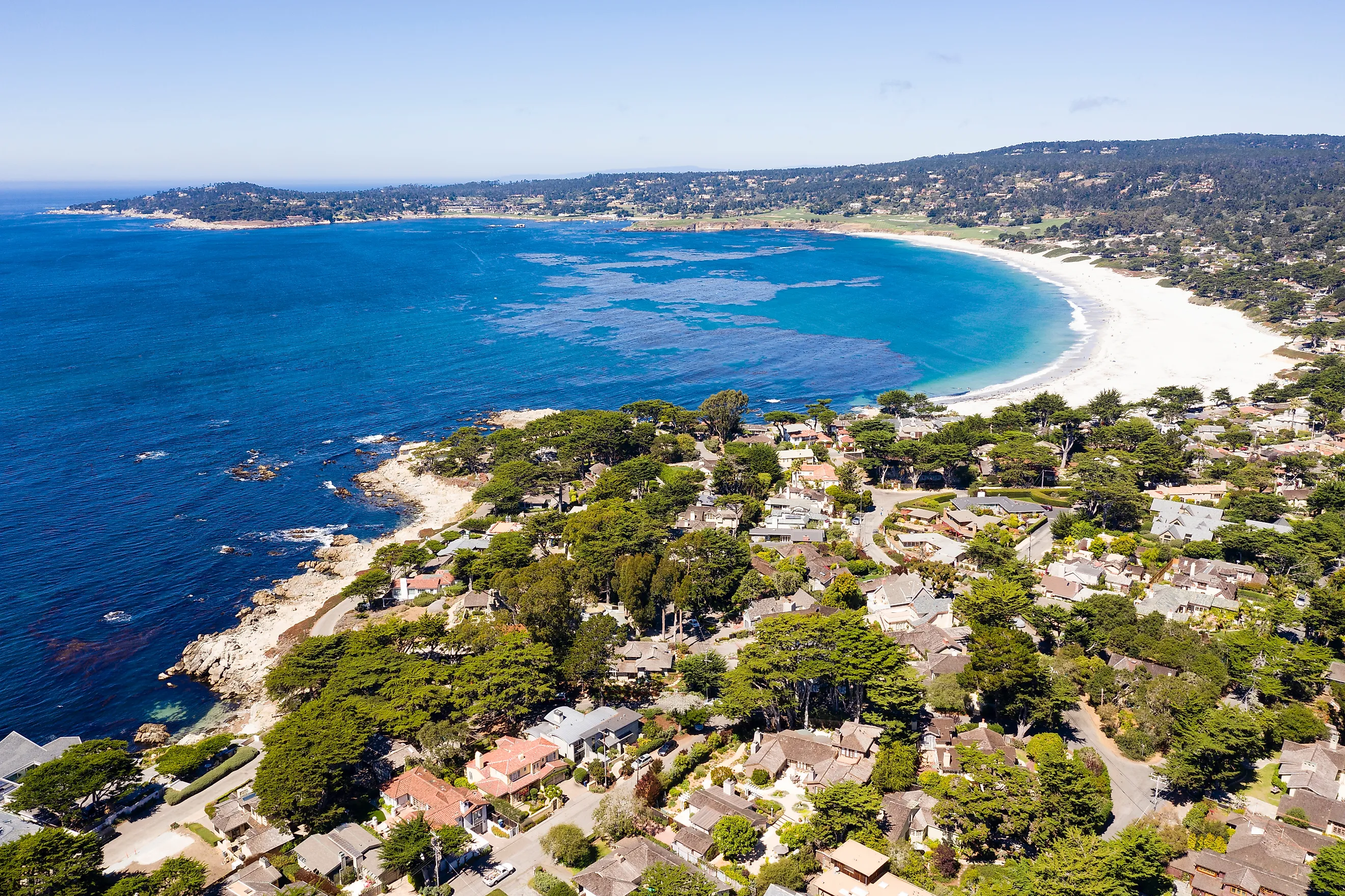
While Sacramento bakes, Carmel-by-the-Sea spends its summers in the 60s and low 70s Fahrenheit, courtesy of the Pacific fog that rolls in on schedule. Just south of Monterey Bay on California's coastal Highway 1, this one-square-mile village of gingerbread cottages has been a haven for artists and writers for a century, and it remains gloriously eccentric: galleries and studios outnumber traffic lights, which is easy, because there are no traffic lights. Walk the white sand of Carmel Beach in July and you may actually want the sweater you packed ironically.
Traverse City, Michigan

Traverse City sits at the foot of Grand Traverse Bay, an arm of Lake Michigan, and that enormous body of cold freshwater keeps summer days around the low 80s Fahrenheit with a lake breeze doing steady overtime. The self-proclaimed "Cherry Capital of the World" backs up the title: the surrounding countryside grows a huge share of the nation's tart cherries, and every July the National Cherry Festival pulls in around half a million visitors for a week of parades, air shows, and pie. The nearby peninsulas are lined with vineyards, and when the afternoon peaks, the bay is right there, cold enough to reset your core temperature in about four seconds.
Bar Harbor, Maine

While the I-95 corridor melts, Bar Harbor tops out around the mid-70s Fahrenheit, with the frigid North Atlantic handling the air conditioning free of charge. Perched on Mount Desert Island at the doorstep of Acadia National Park, the town pairs a walkable, lobster-forward waterfront with the park's carriage roads, pink-granite peaks, and the summit of Cadillac Mountain, which for part of the year is the first spot in the country to catch the sunrise. At low tide you can walk the exposed sand bar out to Bar Island and back, which is about the only heat-related hazard summer here offers: forgetting the tide schedule.
Highlands, North Carolina

Highlands is the rare town on this list that was founded specifically to beat the heat. In 1875, two developers drew one line on a map between Chicago and Savannah and another between New York and New Orleans, and built a resort town where they crossed, at 4,118 feet on a plateau in the southern Appalachians. It has been the South's summer refrigerator ever since: highs generally hold in the 70s Fahrenheit while the lowlands three thousand feet below roast. Surrounded by the Nantahala National Forest, the town pairs a lively Main Street of galleries and southern kitchens with an absurd density of waterfalls, including Dry Falls, where the trail passes directly behind a 75-foot curtain of water, which is the most refreshing thing you can legally do in the South in July.
Ouray, Colorado
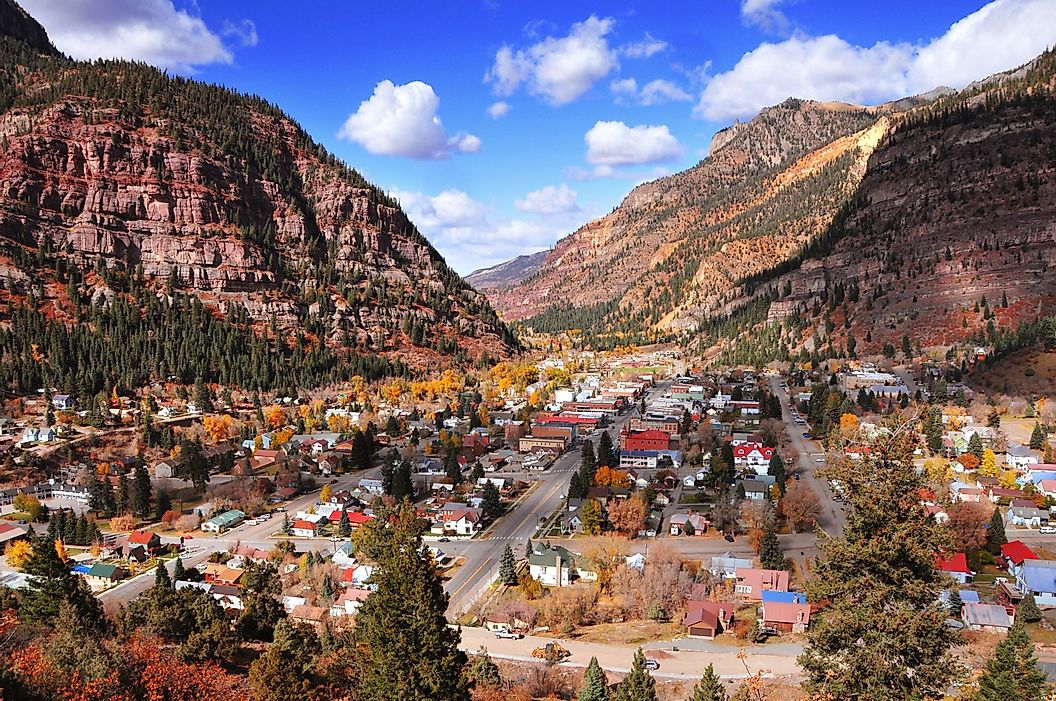
Ouray sits at nearly 7,800 feet, packed into a box canyon so tight the surrounding San Juan peaks seem to lean over Main Street, which is how the town earned its unofficial nickname, the "Switzerland of America." Summer highs generally hold in the upper 70s Fahrenheit, and the shade arrives early when the sun drops behind the canyon walls. The entire Main Street area is a designated National Historic District, lined with Victorian buildings from the silver-mining boom, and the hiking, climbing, and jeep roads radiating out of town come with panoramic mountain views that no amount of air conditioning can compete with.
Cannon Beach, Oregon

If you want to weaponize your escape from the heat dome, come to the Oregon coast, where the Pacific's marine layer holds Cannon Beach's summer highs in the mid-60s Fahrenheit and a 75-degree afternoon qualifies as local news. About 90 minutes from Portland, the town sits on a four-mile sweep of sand anchored by Haystack Rock, a 235-foot sea stack whose protected tidepools fill with sea stars and anemones at low tide, and whose ledges host nesting tufted puffins in spring and summer. Galleries, bakeries, and a famously dog-friendly beach round it out. Pack a fleece. In July. On purpose.
Jackson, Wyoming

Sitting above 6,200 feet in the Jackson Hole valley, Jackson runs on classic mountain math: days around 80 degrees Fahrenheit, nights that plunge into the 40s, and essentially zero humidity. It is the gateway to both Grand Teton and Yellowstone National Parks, which puts moose, elk, and two of America's marquee landscapes within an easy morning drive. The town itself keeps its Old West bones, with wooden boardwalks, elk-antler arches, and saloons downtown, alongside galleries, theaters, and restaurants. Hiking, horseback riding, and whitewater rafting on the Snake River fill the warm hours; by the time the campfire is lit, you will want a jacket.
Stowe, Vermont

Stowe is famous for snow, but its summers are the quiet flex: highs typically stay in the 70s Fahrenheit at the foot of Mount Mansfield, Vermont's tallest peak, with evenings cool enough for a sweater on the porch. The Stowe Recreation Path winds 5.3 miles (8.5 kilometers) along the West Branch river, crossing wooden pedestrian bridges and connecting swimming holes, boutiques, and restaurants along Mountain Road. Stowe Mountain Resort keeps its lifts running through summer, and the surrounding Green Mountains supply enough shaded trail miles to outlast any heat advisory issued three states south.
Sun Valley, Idaho

Yes, it is called Sun Valley, and yes, it is on a list about escaping the heat. The resort town sits at nearly 6,000 feet in the mountains of central Idaho, part of the greater Rocky Mountain West, where abundant sunshine coexists with dry air, low-80s afternoons, and nights cold enough to make you forget it is July. America's first destination ski resort spends its summers on horseback rides, fly fishing on Silver Creek and the Big Wood River, golf, and mountain trails under enormous blue skies. The sun here is a feature; the swelter never made it past the mountains.
Staying Cool Until It Breaks
The heat dome will eventually move on, because they always do, but summers like this one are getting more frequent, and it pays to know where the thermostat behaves. The pattern behind these 11 towns is simple physics: cold oceans, big lakes, and thin mountain air do not care what the jet stream is doing. Whether your version of relief is fog rolling over Carmel, a North Carolina town built 4,000 feet up in 1875 precisely to dodge weather like this, or a Wyoming night that sends you looking for a blanket in July, the cooler corners of the country are open for business, and right now, they have never looked better.