11 Best Downtowns In Victoria
Victoria is filled with small towns where the downtown is more than a collection of shops. It is often the heart of the community and a showcase for the state's history. Whether they feature gold-rush-era streets lined with ornate facades or coastal villages surrounded by beaches and rivers, these communities offer a compelling mix of architecture, heritage, and scenery without the crowds or pace of a major city. For this list, the focus is on small towns that still have enough cafes, galleries, shops, attractions, and landmarks to make a visit worthwhile. The towns below were chosen especially for the character of their downtowns and the historic or natural attractions surrounding them. Several are former gold-mining communities, while others have coastal, alpine, or forest settings that give their main streets an especially scenic backdrop.
Beechworth

This town is one of Victoria's strongest examples of a small town where the downtown itself is a major attraction. With about 4,300 residents in the 2021 Census, it remains comfortably small while offering an impressive concentration of historic buildings, restaurants, cafes, boutiques, and galleries. Ford Street and the surrounding historic precinct are particularly attractive, with gold-rush-era granite buildings and preserved shopfronts giving the centre a cohesive 19th-century appearance. Tourism Victoria highlights Beechworth's gold-rush architecture, boutiques, and well-established food and wine scene.
The town's historic character extends beyond its commercial streets. The Beechworth Historic and Cultural Precinct includes the courthouse, the telegraph station, and other significant government buildings, while the Old Beechworth Gaol provides a look into the area's association with bushranger Ned Kelly. For natural scenery, Beechworth Historic Park offers walking tracks, waterfalls, and gorge landscapes close to town. The combination of a photogenic downtown, substantial heritage landmarks, and nearby bushland makes Beechworth particularly well-rounded for visitors.
Bright

This town has the kind of downtown that changes dramatically with the seasons. Home to about 2,600 people in the 2021 Census, the High Country town is surrounded by mountains and forests, while the Ovens River runs directly through the community. Its streets are lined with cafes, restaurants, breweries, and local businesses, giving the centre plenty of activity despite its small population. Tourism Victoria highlights Bright's riverside setting, nearby forests, and spectacular autumn colours.
Nature is arguably Bright's biggest advantage. Visitors can walk along the river, cycle the Murray to Mountains Rail Trail, explore the Canyon Walk, and use the town as a base for Mount Buffalo and the Victorian Alps. In autumn, the surrounding deciduous trees turn the town into one of Victoria's most visually striking small-town destinations.
Kyneton

This is a larger small town, but its population of about 7,500 still keeps it far below the 50,000-person cutoff. Its downtown is particularly appealing because historic architecture and contemporary businesses exist side by side. Piper Street is the centrepiece, with heritage buildings now occupied by independent retailers, galleries, cafes, and restaurants. The town's historic streets, botanical gardens, and attractive stone buildings give Kyneton considerably more visual and architectural interest than its population might suggest.
The town also benefits from its position in the Macedon Ranges, where visitors can combine a downtown stroll with gardens, countryside, and nearby historic attractions. Kyneton's heritage landmarks include its historic post office, bluestone buildings, Mechanics Institute, and botanical gardens. That combination of an attractive commercial centre, heritage landmarks, and surrounding greenery makes Kyneton a particularly strong choice for travellers who want a small town that does not feel isolated.
Port Fairy

This town offers something different from Victoria's inland gold-rush towns, a historic downtown paired with a dramatic coastal setting. The town had 3,742 residents in the 2021 Census, yet its streets contain an unusually rich collection of heritage buildings. More than 60 19th-century buildings are recognised by the National Trust, and the historic centre includes cottages, former banks, hotels, warehouses, and civic buildings. The Port Fairy Heritage Trail makes it possible to explore dozens of these landmarks on foot.
The surrounding landscape is just as important. The Moyne River and Port Fairy's harbour give the town a maritime character, while nearby Griffiths Island combines coastal scenery, wildlife, and history. The island contains a historic lighthouse dating to 1859 and supports native birds and other wildlife. With beaches, waterfront scenery, historic streets, and a lively tourism scene, Port Fairy avoids the feeling of being a remote rural settlement while still maintaining a distinctly small-town atmosphere.
Daylesford

This town is one of Victoria's best-known small-town destinations, but its popularity does not diminish the appeal of its downtown. The town had 2,781 residents in the 2021 Census and has a commercial centre concentrated around Albert and Vincent streets. Historic buildings, including the 1867 post office, 1882 town hall, hotels and shops, give the centre considerable architectural character, while cafes, restaurants, galleries, and specialty businesses make the streets feel active rather than museum-like.
Daylesford's natural attractions are what elevate it further. Lake Daylesford sits only a short walk from the town centre and is surrounded by walking paths, picnic areas, and mineral springs, while Wombat Hill Botanic Gardens occupies an extinct volcano overlooking the countryside. Nearby Hepburn Springs adds even more mineral springs, forests, and scenic landscapes. This blend of historic downtown architecture, wellness attractions, gardens, and waterways makes Daylesford one of the easiest small towns in Victoria to spend an entire day exploring.
Maldon

The 2021 Census recorded about 1,700 residents, which makes this town tiny, but its downtown is remarkably intact. The town's historic centre preserves weatherboard homes, stone buildings, and decorative shopfronts dating largely from the gold-rush era. Tourism Victoria notes that Maldon was previously recognised by the National Trust for having one of Australia's most intact heritage streetscapes. Today, those historic buildings house antique stores, boutiques, cafes, and businesses, allowing visitors to experience the old streetscape as a functioning town rather than simply a preserved museum.
Maldon's attractions extend beyond High Street. Visitors can explore museums, local galleries, food and wine businesses, and the Victorian Goldfields Railway, while the surrounding countryside offers opportunities to explore the area's former mining landscape. Its combination of remarkably preserved architecture, a functioning commercial centre and goldfields scenery makes Maldon especially photogenic and distinctive among Victoria's smaller towns.
Clunes

This town is another small gold-rush town where the downtown is essentially an attraction in its own right. With 1,844 residents recorded in the 2021 Census, it remains genuinely small, yet Fraser Street has an impressive collection of preserved 19th-century buildings and shopfronts. Historic hotels, the former Union Bank and other period buildings give the street an unusually cohesive appearance. The town has also become known as an internationally recognised Booktown, bringing bookstores, cafes, galleries, and literary events into its historic centre.
The natural and historic attractions continue beyond Fraser Street. Queens Park provides gardens and shaded spaces near the centre, while Esmond Park contains former mining sites, a lookout and a creek walk with views across the township. Clunes has also been used as a filming location because of its remarkably authentic streetscape.
Creswick

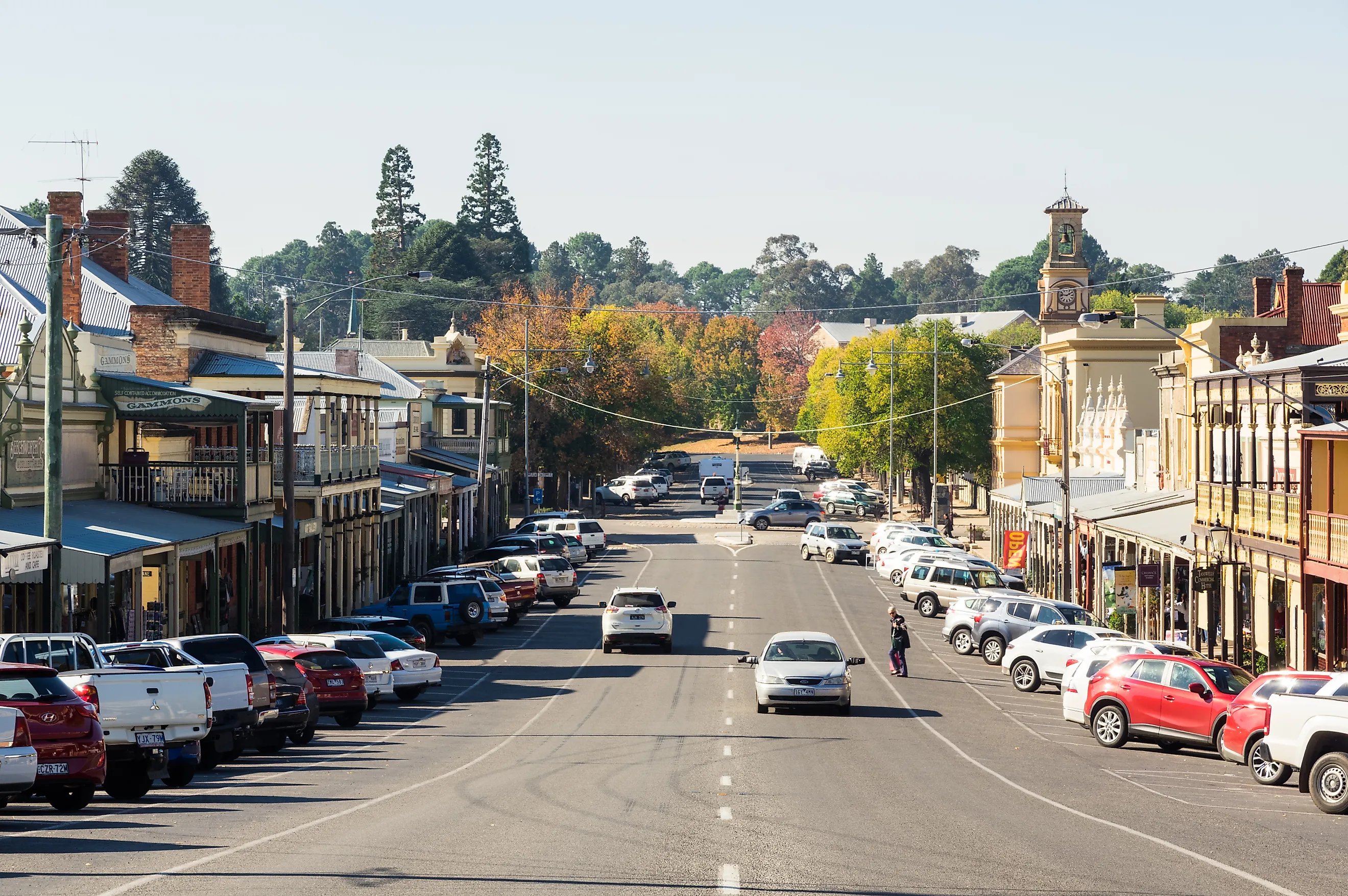
This town has a more substantial town-centre feel than some of the smaller communities on this list, while remaining comfortably below 50,000 residents. Its broad, gently curved main street is one of its most distinctive features, with historic buildings dating to the gold-rush era. The town's heritage includes the old Masonic Lodge, State Savings Bank, library and post office, while the Creswick Museum provides additional insight into its history.
What makes Creswick especially appealing is the amount of greenery around its historic centre. Creswick Regional Park surrounds the town with forests and walking opportunities, while Calambeen Park and Park Lake Botanical Reserve provide additional places for recreation and scenery. The combination of a substantial historic main street, public gardens, forests, and nearby attractions gives Creswick the feel of a complete destination rather than simply a place to stop for coffee.
Castlemaine

This town is one of the liveliest towns on this list and proves that a small population does not necessarily mean a sleepy downtown. The former gold-mining town has a compact, walkable centre filled with grand public buildings, historic hotels, century-old shops, cafes, galleries, and independent businesses. Its streetscape is recognised by the local council as an important part of the town's 19th-century character, while tourism authorities highlight its heritage walks and extensive collection of shops and restaurants.
The historic centre is complemented by major green spaces and cultural landmarks. Castlemaine Botanical Gardens, with its mature trees, lawns and Lake Joanna, provides an attractive break from the commercial streets, while Buda Historic Home and Garden adds another layer of 19th-century history. The nearby Castlemaine Diggings National Heritage Park also preserves mining landscapes and walking opportunities. It is therefore one of the strongest picks for travellers who want a small-town downtown with plenty happening around it.
Yackandandah

This town is a tiny High Country village with an unusually impressive commercial centre. Its population is only around 1,000, yet much of the downtown has been preserved since the gold-rush period. High Street features original bluestone gutters, ornate facades and historic buildings that now house galleries, antique shops, cafes, and other local businesses. The entire commercial centre has been classified by the National Trust, giving the town an especially strong heritage identity.
The town is also surrounded by the scenery of northeastern Victoria. Commissioners Creek runs through Yackandandah Gorge, providing opportunities to experience the landscape beyond the historic centre. The local tourism organisation describes it as one of Australia's prettiest villages and highlights its galleries, studios, shops, antiques, and active community. Its leafy streets and preserved storefronts add to the town's appeal.
Trentham

This town is a particularly strong choice for anyone looking for a scenic small-town downtown with easy access to nature. The village is surrounded by the Wombat Forest and has a compact centre characterized by preserved 19th-century cottages and historic civic buildings. Despite its small size, Trentham has developed a strong food scene, with cafes, restaurants, a historic bakery, and local producers giving the centre plenty of life. Tourism Victoria describes it as a tiny town high in the Great Dividing Range, while local tourism sources emphasize its preserved architecture and proximity to Melbourne and other regional destinations.
Its biggest natural draw is Trentham Falls, only a few minutes from the historic town centre. The waterfall drops more than 32 metres over a basalt cliff. The surrounding Wombat Forest provides walking trails and opportunities for nature-based recreation. That close relationship between an appealing historic downtown and substantial natural scenery is exactly what makes Trentham stand out, and the town's recent recognition as Australia's Top Tiny Tourism Town in 2025 reinforces its appeal as a destination rather than merely a rural settlement.
Small Towns, Outsized Character
Victoria's best small-town downtowns demonstrate that population size has little to do with how much character a place can offer. Beechworth and Maldon showcase exceptionally well-preserved gold-rush streetscapes, and Port Fairy adds coastal scenery and maritime heritage, while Bright and Trentham bring alpine and forest landscapes directly into the equation. Meanwhile, places such as Kyneton, Daylesford, and Castlemaine offer particularly strong commercial centres, ensuring visitors have plenty of cafes, restaurants, galleries, and shops alongside their historic attractions.
For the most visually impressive combination of downtown architecture and surrounding scenery, Beechworth, Bright, Port Fairy, Daylesford, and Yackandandah stand out especially strongly. Clunes, Maldon, and Creswick are excellent choices for heritage-focused travellers, while Castlemaine and Kyneton are better suited to visitors who want a livelier small-town centre. Across the list, the common thread is the same. These are not isolated settlements with little to do, but handsome Victorian towns where history, nature, and everyday community life remain closely connected.