10 Tiny Off-Grid Towns In North Carolina
North Carolina welcomes nearly 40 million visitors annually who discover attractions beyond metropolitan centers. The Tar Heel State ranks fifth for domestic tourism behind California, Florida, Texas, and New York, and the credit belongs not only to Charlotte or Raleigh but also to off-the-grid places that define its allure more accurately. From Outer Banks villages accessible only by ferry to Appalachian communities where potters still fire kilns with cordwood, these lesser-known municipalities develop identities around singular pursuits rather than attempting broad tourist appeal. These unsung North Carolina towns cultivate niche reputations through dedication to specific crafts, historic preservation, or natural phenomena that cannot be replicated elsewhere.
Wanchese

Wanchese sustains working waterfront traditions where commercial fishing boats unload daily catches at harbor docks that supply restaurants throughout the Outer Banks. O'Neal's Sea Harvest operates the village's largest seafood market, processing tuna, flounder, and shellfish while their on-site restaurant prepares blackened tuna tacos and fried crab cake sandwiches from morning hauls. Fresh Catch Seafood sells swordfish steaks and tuna loins directly to consumers while wholesaling across the Eastern Seaboard. The wetlands of the Roanoke Island Marshes Nature Preserve offer a unique glimpse into the diverse wildlife of the region. Birdwatchers can enjoy observing these creatures from a respectful distance, ensuring that they don’t disturb their nesting areas.
Wanchese Marina coordinates charter fishing trips, shrimping excursions, and dolphin-watching tours departing from docks where captains maintain citation weigh stations. The Landing Grill inside the marina delights the adventurers with breakfast skillets and custom pizzas from early morning through evening hours. Island House of Wanchese and Wanchese Inn, the village's two bed-and-breakfasts, rent rooms inside century-old homes where guests wake to sounds of fishing boats departing before dawn, continuing rhythms that Chief Wanchese's descendants established when English explorers first arrived.
Hiddenite

Hidden gems exist in the most literal sense at Hiddenite, where the rare green gemstone hiddenite was discovered in the late 1800s. Among the town's most exclusive features is Emerald Hollow Mine, allowing guests to try their luck digging for emeralds, aquamarine, and the namesake hiddenite in buckets of ore trucked from active mines. Children and adults alike sift through dirt with screens, hoping treasure emerges from mud and rock fragments. But the adventure is not without education either. The Hiddenite Arts & Heritage Center delves into the fascinating characteristics of the namesake gemstone. Through captivating exhibits, aspiring miners embark on a journey to grasp how these minerals formed deep underground, only to be gradually exposed by the relentless forces of erosion.

To accompany practice and education, celebration knocks on Hiddenite's cultural scene each May with the North Carolina Emerald Festival. Gem dealers, jewelry makers, and miners gather for competitions, judging the finest local stones. Lucas Mansion, a Queen Anne Victorian from 1900, operates as a museum where original furnishings and family heirlooms tell the story of the town's founding families. The adjacent grounds maintain period gardens where heirloom roses bloom beneath magnolia trees that predate the Civil War.
Blowing Rock

Blowing Rock has rightfully earned its name through natural defiance. The eponymous rock juts from a cliff where winds rushing up the gorge cause an upward draft strong enough to return lightweight objects tossed over the edge. And then there's Mystery Hill, which amplifies this geological peculiarity through optical illusions where water appears to flow uphill, and visitors lean at impossible angles without falling. Not only humans but other participants of nature also relish Blowing Rock's quirks together at Broyhill Equestrian Preserve, where horses graze beneath peaks and riders explore wooded paths that wind through rhododendron thickets.
Additionally, a part of history also resides in Blowing Rock with the narrow-gauge Tweetsie Railroad theme park, where Wild West reenactments entertain families throughout the summer with stunt-filled train rides, can-can dancers, and cowboy shows that turn the mountains into a frontier stage. Though temporarily closed for Hurricane Helene recovery, the historic coal-fired locomotives will chug once again to continue a tradition since 1957. Moses Cone Memorial Park preserves a Gilded Age country estate where Moses Cone, a textile baron, built his summer retreat. The mansion now functions as a craft center where regional artisans sell handwoven textiles and carved wooden sculptures.
Lumberton

Theater culture thrives in unexpected places, and Lumberton proves this through performance venues that defy its modest population. Givens Performing Arts Center stages regional productions and national touring acts inside a 1,600-seat auditorium that rivals venues in larger cities. The Carolina Civic Center Historic Theater sustains community performances and classic film screenings within a restored auditorium, meticulously preserved to retain its original architectural details despite a century of use. The Exploration Station, a children's museum downtown, keeps families engaged through hands-on science exhibits and rotating educational programs.
The Lumber River, designated a National Wild and Scenic River, cuts through Lumberton and opens waters for kayaking, fishing, and riverside afternoons that cost nothing beyond time. Luther Britt Park unfolds across waterfront acres, with its walking paths winding through hardwoods, and fishing lakes attracting regulars who know exactly which spots produce largemouth bass. Downtown Lumberton concentrates along Elm Street, enticing collectors to hunt for Depression-era glassware and mid-century furniture that dealers price below metropolitan markups.
Calabash

Fishing heritage matters more than high-rise development in Calabash, the "Seafood Capital of the World" that remembers when coastal towns valued working waterfronts over condominium towers. Calabash Marina cascades across waterfront acres where kayak launches, boardwalks, and, not to be left behind, fishing piers allow afternoons that cost nothing beyond gas money. This, alongside the charter, Calabash Fishing Fleet, is the town's hotbed for anglers exploring protected waters for tarpon, redfish, and flounder. The latter in particular operates from the bustling waterfront at 9945 Nance Street, where headboats depart daily for half-day, full-day, and gulf-stream charters.
Calabash's seafood also sets itself as the center of attention when the North Carolina Oyster Festival arrives each October, bringing shucking competitions, regional farm samples, and musicians performing throughout the grounds. Beck's Restaurant and The Calabash Creamery maintain loyal followings among families who prefer establishments where servers take good care of their dietary preferences. Sunset Beach waits 10 minutes south when ocean swimming becomes irresistible, though the town's very own Calabash River brings calmer waters for paddling without fighting Atlantic waves. The Kindred Spirit Mailbox, hidden among dunes at the beach's western tip, invites visitors to leave handwritten notes and read strangers' reflections on life, love, and loss in notebooks that strangers maintain year after year.
Mount Airy

The real-life Mayberry that inspired Andy Griffith's fictional television town, Mount Airy is that idyllic place where the television legend not only spent his childhood but also conceived the characters who would later populate his show. You can see bronze statues of Sheriff Taylor and Opie outside the Andy Griffith Playhouse, just like those old TV screens from five decades ago. Squad Car Tours depart from Wally's Service Station in replica patrol cars that cruise past Snappy Lunch, the diner where Griffith ate pork chop sandwiches before schools operated cafeterias. The Andy Griffith Museum curates costumes, props, and personal items collected by Griffith's lifelong friend Emmett Forrest, who made the landmark a reality via donations.
Fall tradition mirrors television's new season launches, as Mayberry Days renews the fun with week-long celebrations. Actors from the original show appear for trivia contests, golf tournaments, and nightly concerts at Blackmon Amphitheatre. The parade down Main Street witnesses thousands who remember when television sheriffs didn't carry firearms. Pilot Mountain State Park rises beyond town limits, where hiking trails climb toward the distinctive peak that the show calls Mount Pilot.
Ocracoke

Ocracoke preserves history through Banker ponies that descended from shipwrecked Spanish mustangs centuries ago. These small, sturdy horses graze within protected pastures where National Park Service rangers maintain their health. Different from modern horses due to unique skeletal anatomy, the herd occupies soundside acres along Highway 12 where tourists pause at observation platforms. Morning feeds bring the ponies close to the fencing, though they remain wild animals protected from human interaction. Outer Banks Forever coordinates symbolic adoptions that fund veterinary care and feed costs.
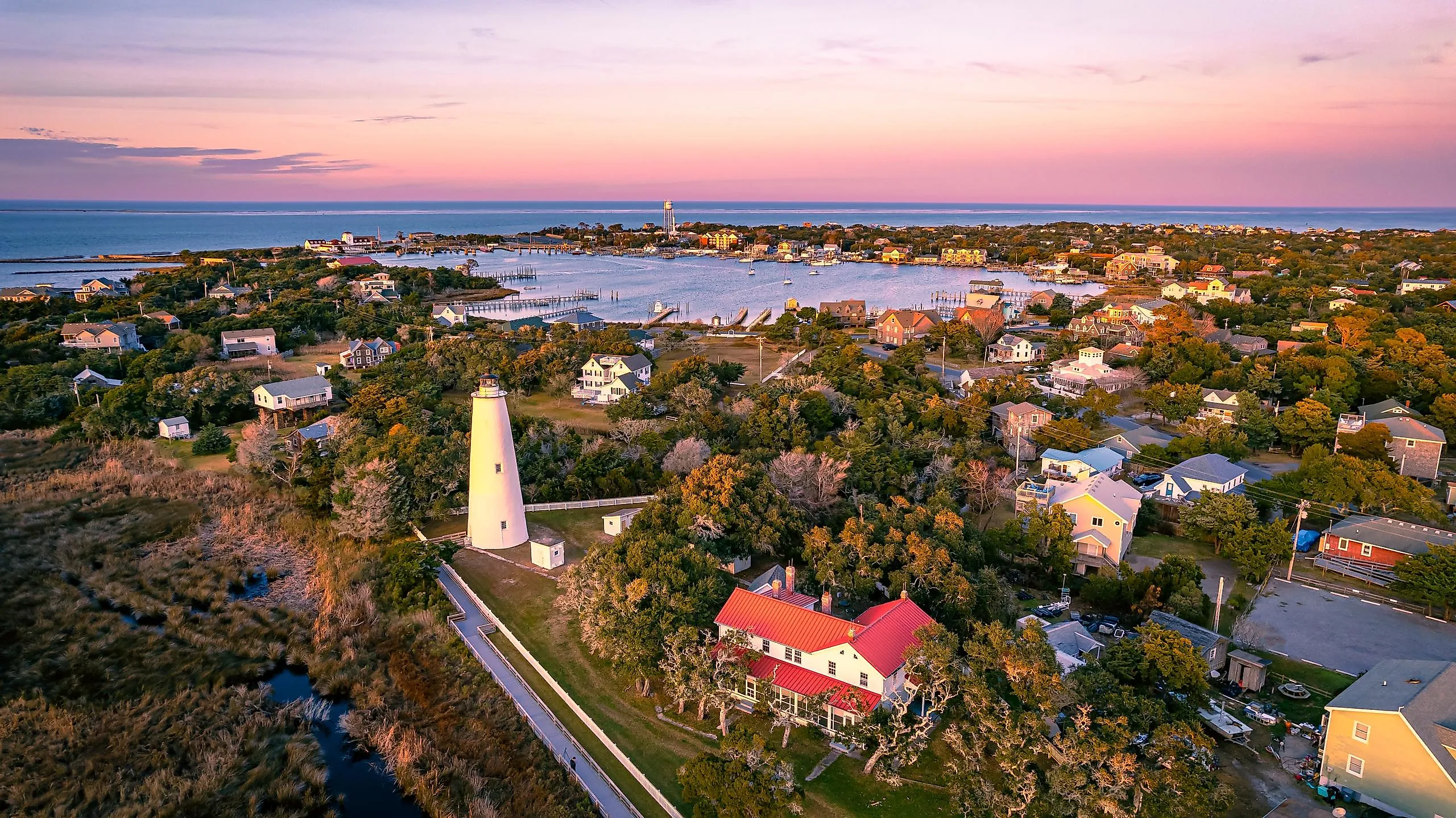
Ocracoke Lighthouse, continuously operational since the 1820s, rises from the village center where foot traffic navigates between art galleries and seafood counters. While temporarily closed over the winter season, Howard's Pub pours local brews and fried seafood platters that regulars crave during storm season. British Cemetery commemorates four Royal Navy sailors killed by German submarines offshore during wartime, their graves maintained under perpetual lease from the Commonwealth. Ferry access from Hatteras Island or the mainland keeps visitor numbers manageable, while Ocracoke's distinctive brogue, an endangered dialect developed through centuries of isolation, still emerges in conversations between multigenerational island families.
Bryson City

Bryson City revives its vintage railroad heritage through the Great Smoky Mountains Railroad, where diesel and steam locomotives depart daily from the historic depot downtown for excursions along river gorges and across trestles that automobiles cannot reach. The Nantahala Gorge route rolls passengers beside rushing waters where kayakers navigate rapids, crossing Fontana Lake via the historic Fontana Trestle before stopping at Nantahala Outdoor Center for riverside layovers. The Tuckasegee River excursion travels through Cowee Tunnel, passing the movie set where Harrison Ford filmed The Fugitive during his memorable train sequence, before reaching Dillsboro for downtown browsing and lunch.
The Smoky Mountain Trains Museum, across from the depot, curates thousands of Lionel model engines and accessories around an operating layout that children command through push-button controls. The Polar Express themed ride from November through December sells advance tickets months ahead as families queue for hot chocolate, cookie treats, and Santa's silver bell distribution. Deep Creek Trail just outside town loops hikers past three waterfalls, with tube rental stands supplying inflatable rides down creek rapids during the summer months.
Seagrove

Seagrove sustains a pottery legacy rooted in clay-rich soil from the ancient Uwharrie Mountains, where mineral deposits drew artisans more than a century ago and continue supporting the nation's densest concentration of potters outside Japan. Highway 705, officially designated the North Carolina Pottery Highway, connects workshops where eighth and ninth-generation families like the Coles, Aumans, and Owens still throw vessels on kick wheels and fire kilns with cordwood. The North Carolina Pottery Center chronicles regional ceramic traditions through permanent exhibits explaining salt-glaze techniques, crystalline patterns, and face jug origins while displaying representative pieces from area studios.
Jugtown Pottery, which has been running strong since Jacques and Juliana Busbee brought back ancient crafts, invites you to explore its sales cabin. Here, you can watch artisans showcase their skills in hand-building, a technique that has been passed down through six generations within their family. Every Thanksgiving weekend, the Celebration of Seagrove Potters brings studios all over town to life. You can find potters showing off their skills in demonstration kilns and offering special deals on second-hand pieces. Seagrove Creations Gallery consolidates work from multiple local studios for travelers who cannot tour scattered workshops.
Duck

Migrating waterfowl christened Duck centuries ago when hunters flocked to Currituck and Albemarle Sounds for game birds whose colorful feathers supplied fashionable hat markets. Today, the incorporated village limits beach access to residents and rental guests, preserving uncrowded shorelines that Travel Channel repeatedly ranks among America's best. The area’s good reputation only draws more attention and lots of tourists, which sees summer months swelling the population considerably, though even peak season retains the quiet residential atmosphere families seek when escaping metropolitan chaos. Duck Town Park sprawls across soundside acres, where a boardwalk winds nearly a mile past boutiques and galleries operated by local owners without chain-store interference. Sunset views from park benches along the boardwalk reveal herons and egrets fishing in the shallows as kayakers paddle beneath. North of town, Sanderling Resort offers oceanfront suites where guests enjoy spa treatments and waterfront dining. The Duck Jazz Festival, each fall, turns the town park into an outdoor concert venue.
The Old North State's Niche Escapes
While the impact cities of the caliber of Raleigh and Charlotte have is undeniable, most municipalities in North Carolina remain small, with 85 percent maintaining populations below 10,000 residents. But the culture these communities bring forth is by no means small. Duck maintains uncrowded beaches despite summer swells, while Seagrove potters fire kilns using techniques unchanged for generations. Ocracoke's wild ponies graze soundside pastures where ferry schedules still dictate island rhythms, and Mount Airy fully embraces its fictional caricature without apologizing for nostalgia. Wanchese fishing boats unload daily catches that supply restaurants across the Outer Banks, while Bryson City's vintage trains roll passengers through gorges that automobiles cannot reach. All in all, these communities demonstrate the commitment to preserving what makes a place irreplaceable. As these North Carolina towns resist homogenization and instead cultivate their peculiarities, travelers can't help but respond by returning generation after generation.