9 Most Walkable Town Centers In Italy
Italy was practically built for walking. Long before the automobile, its towns grew up as tight clusters of stone lanes, shaded piazzas, and streets sized for people rather than traffic, and many of them still keep cars firmly out of the historic core. That makes exploring on foot not just possible but the entire point, wandering from an espresso at a corner bar to a cathedral to a gelato by the water without ever touching a steering wheel. We have gathered nine of the most walkable town centers in the country, spread from the Ligurian coast to the tip of Sicily. Comfortable shoes strongly recommended.
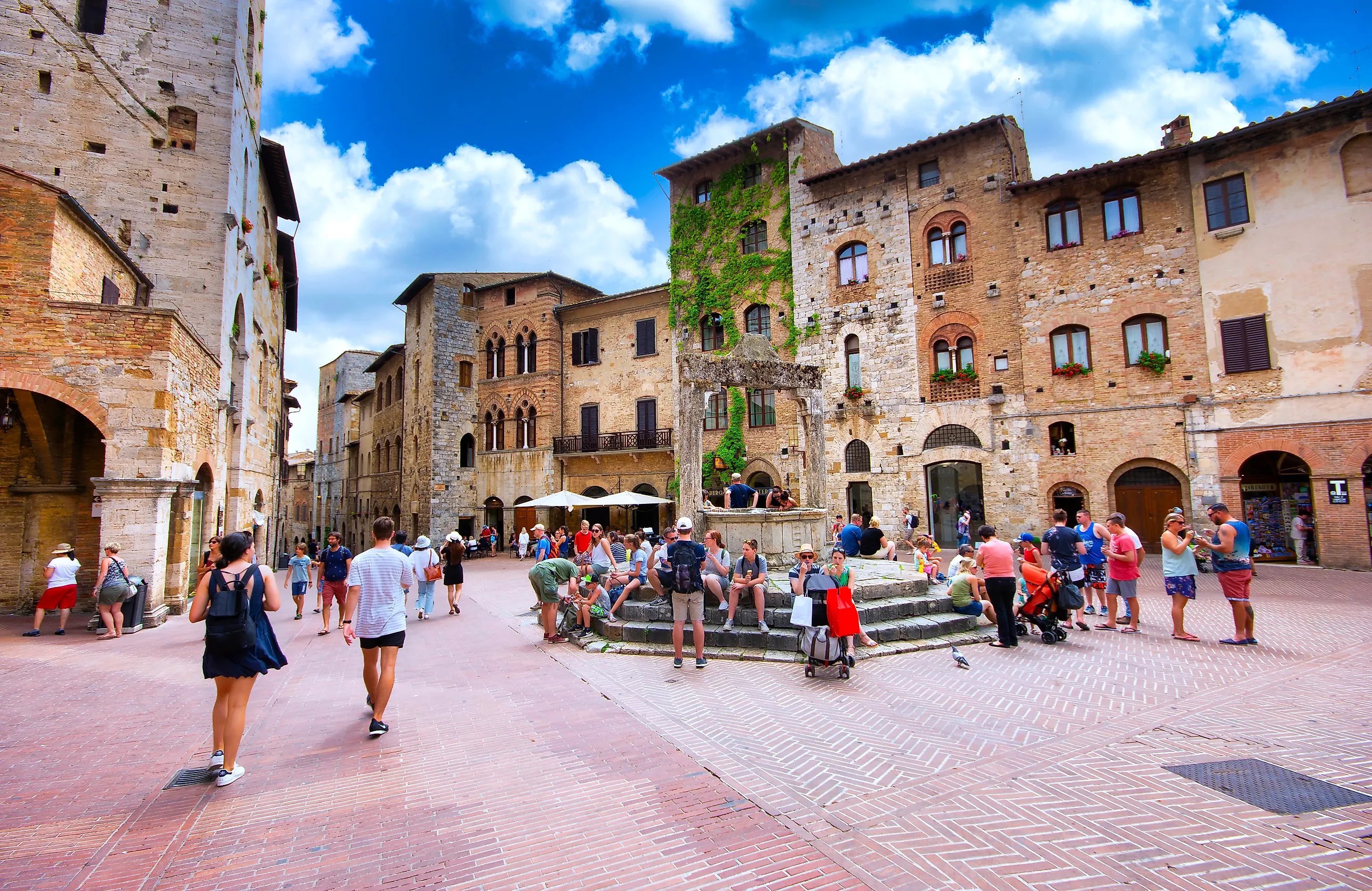
San Gimignano, Tuscany

Often called the "Medieval Manhattan" for the cluster of stone towers rising from its hilltop, San Gimignano is one of the most rewarding walks in Tuscany. Its compact, walled center is closed to regular traffic, so you leave the car outside the gates and step straight into the Middle Ages. The main lane, Via San Giovanni, leads you gently uphill past wine shops and gelaterias to the linked piazzas at the town's heart, where 14 surviving towers still spike the sky. The whole UNESCO-listed center can be crossed in about ten minutes, but the pleasure is in not rushing, ducking down side alleys and out to the ramparts for views over the vineyards.
Vernazza, Liguria

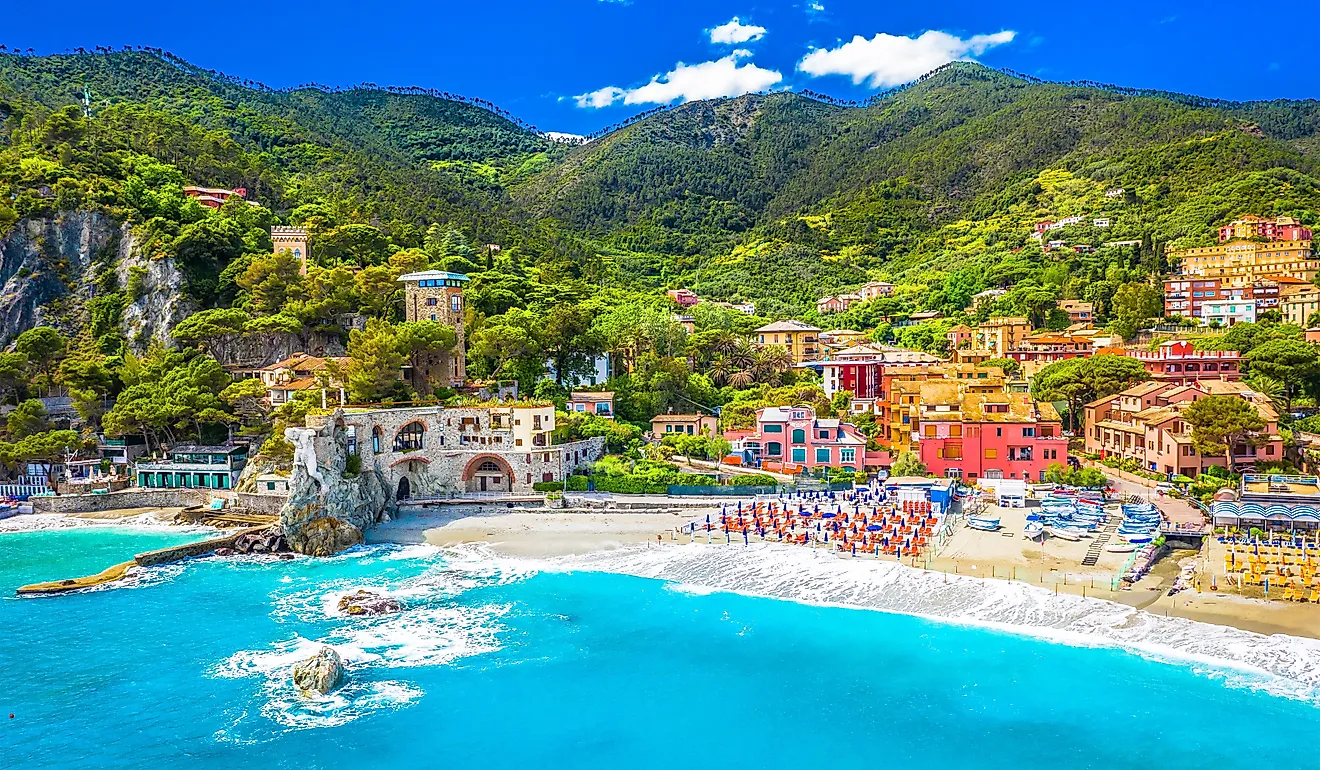
Vernazza is many people's favorite of the Cinque Terre, the string of five cliff-hugging fishing villages on the Ligurian coast, and it is walkable for the simplest of reasons: cars basically cannot get in. Visitors arrive by train or boat, then everything happens on foot. A single sloping main street, Via Roma, runs down through pastel houses to a tiny natural harbor ringed by seafood restaurants, where the fishing boats are pulled right up onto the piazza. From there you can pick up the famous coastal trail and walk on to the next village entirely, which is genuinely one of the great town-to-town strolls anywhere in Europe.
Alberobello, Puglia

There is nowhere else on Earth quite like Alberobello, a town in the southern region of Puglia famous for its trulli, whitewashed limestone houses topped with conical gray stone roofs. More than 1,500 of them are packed into the town, and the most concentrated and historic quarter, Rione Monti, is a car-light warren of narrow lanes that practically demands to be explored on foot. Wandering between the little cone-roofed shops, homes, and cafes, all so tidy and storybook they scarcely look real, is the whole experience here. The trulli have been a UNESCO World Heritage Site since 1996, and slow footsteps are the only sensible way to take them in.
Matera, Basilicata

Matera is one of the oldest continuously inhabited settlements in the world, and walking through it feels like stepping into the ancient past. Its two Sassi districts are a honeycomb of homes, churches, and passageways carved directly into the soft rock of a ravine, all connected by steps, alleys, and terraces rather than roads. There is no way to see the Sassi except on foot, climbing and descending through the pale stone maze as it glows gold at sunset. Once written off as a place of poverty, this UNESCO-listed town has been reborn as a destination of cave hotels and restaurants, and its otherworldly streets have stood in for ancient Jerusalem in more than one film.
Orta San Giulio, Piedmont

Set on a small promontory on the shore of Lake Orta, this medieval village is one of northern Italy's most peaceful walks. Cars are kept out to the edge of town, so the cobbled lanes leading down to the water stay hushed and unhurried. At the center sits Piazza Motta, an elegant lakeside square opening straight onto the water, from which little boats ferry visitors across to the tiny island of San Giulio and its ancient basilica. With its frescoed palazzi, wrought-iron balconies, and views across the lake to the wooded hills beyond, Orta San Giulio rewards aimless wandering as much as anywhere in the country.
Noto, Sicily

Down in southeastern Sicily, Noto is widely considered the capital of Sicilian Baroque, and it is a joy to explore on foot. After an earthquake leveled the area in 1693, the town was rebuilt from scratch in a warm, honey-colored limestone, and its designers laid it out around a grand main axis lined with churches, palaces, and grand staircases. Strolling that central street at golden hour, when the stone seems to catch fire in the low sun, is one of the great pleasures of the island. Cafe terraces spill across the pavement, and the whole graceful, UNESCO-listed center feels like an open-air stage set meant to be walked through slowly.
Arezzo, Tuscany

A little off the usual tourist trail, the hill town of Arezzo offers a wonderfully authentic Tuscan walk without the crowds. Its historic center rises gently to the Piazza Grande, a beautiful sloping square ringed by medieval and Renaissance buildings that famously appeared in Roberto Benigni's film Life Is Beautiful. The pedestrian-friendly streets climb past antique shops toward the cathedral and a leafy park at the summit, and on the first weekend of each month the whole town fills with the stalls of Italy's oldest antiques fair. It is the kind of place where the walk itself, uphill through honey-stoned lanes, is half the reason to come.
Polignano a Mare, Puglia

Perched dramatically on limestone cliffs above the turquoise Adriatic, Polignano a Mare has one of the most spectacular settings of any town in Puglia. Its whitewashed old town is a tangle of narrow pedestrian lanes that suddenly open onto terraces and balconies hanging right over the sea, so half the fun is simply getting pleasantly lost and stumbling onto the next viewpoint. Poems are painted onto the steps and walls throughout the center, turning an ordinary walk into a kind of treasure hunt. Birthplace of the singer behind the classic song "Volare," this is a town that seems designed to be strolled, ideally with a gelato in hand.
Brisighella, Emilia-Romagna

Rounding out the list is a hidden treasure in Emilia-Romagna that walkers will especially love. The medieval village of Brisighella, watched over by three hilltop landmarks, a clock tower, a fortress, and a sanctuary, is home to one of Italy's most unusual streets: the Via degli Asini, or "Donkeys' Road." This raised, covered walkway, lined with arches and once used to move goods by donkey, runs above the main street and can still be strolled today. Consistently ranked among the most beautiful villages in Italy, Brisighella pairs that curiosity with a relaxed, walkable center of small squares and family-run trattorias, well off the tourist track.