10 Of The Most Adorable Small Towns In The Ozarks
The Ozarks are a highland region stretching across Missouri, Arkansas, and small parts of Oklahoma and Kansas. The landscape is defined by tree-covered hills and dense oak-hickory forests that turn shades of red and orange in autumn. Unlike the jagged peaks of the Rockies, the Ozarks are a deeply eroded plateau, creating steep, flat-topped ridges, deep valleys called hollers, and limestone bluffs. The region has thousands of caves, underground springs, crystal-clear rivers, and several large man-made lakes. Within these mountains are small towns with historic Main Streets, easy access to outdoor recreation, and a slower pace of life.
Eureka Springs, Arkansas

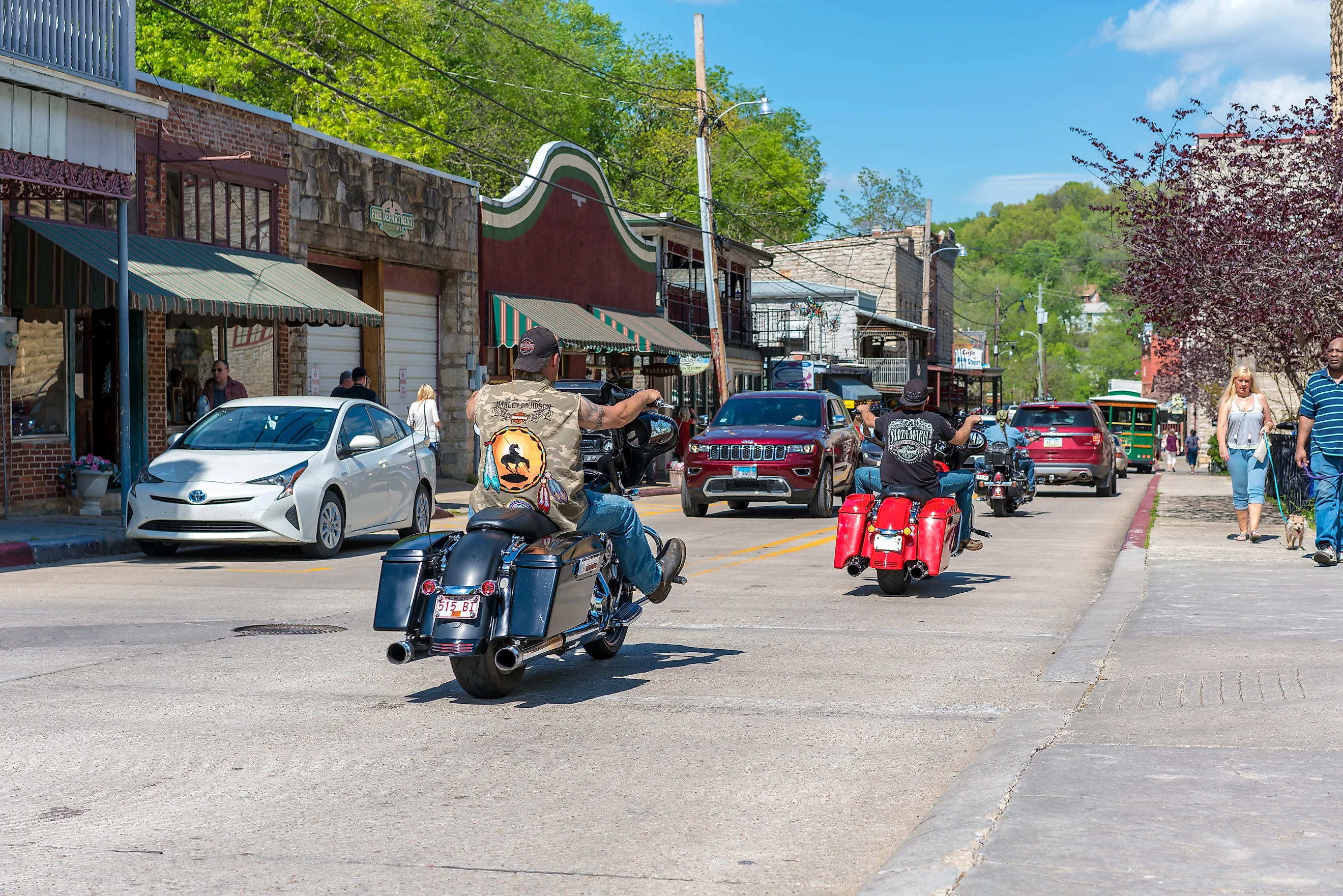
If there is a capital city of “adorable” in the Ozarks, it is Eureka Springs. Entirely listed on the National Register of Historic Places, this town of about 2,200 is an architectural marvel built onto steep hillsides. Victorian cottages and limestone buildings line winding streets that loop back on themselves. There are no traffic lights, only history, art, and a bohemian atmosphere shaped by the town’s famous healing springs.

Historic Downtown features steep, narrow streets filled with boutiques, art galleries, and cafes. Thorncrown Chapel is a glass chapel set in the woods, recognized for its distinctive architecture. Nearby, Turpentine Creek Wildlife Refuge operates as a sanctuary for rescued big cats, including tigers, lions, and leopards. Beaver Lake, just a short drive away, offers boating, fishing, and scuba diving opportunities.
Hermann, Missouri

Hermann, Missouri, feels less like the American Midwest and more like the Rhine Valley of Germany. Founded by German settlers in the 1830s, this town of about 2,300 sits along the Missouri River and is surrounded by vine-covered hills. It is the center of Missouri wine country and is known for its brick architecture, strong German heritage, and annual Oktoberfest celebrations.

Visitors can visit wineries such as Stone Hill and Hermannhof Winery, which offer tastings overlooking the river valley. The Deutschheim State Historic Site features restored 19th-century German buildings that interpret the town’s immigrant history. The Katy Trail runs along the riverfront and passes directly through town, providing access for walking and biking. Nearby, Hermann Farm operates as a large living history farm with guided tours conducted by tram and draft horses.
Jasper, Arkansas

Jasper, Arkansas, is a small mountain community of fewer than 500 people and serves as a gateway to the Buffalo National River, the country’s first designated national river. Set deep in a valley and surrounded by some of the highest peaks in the Arkansas Ozarks, the town functions as a base for visitors seeking rugged landscapes and remote terrain. Its character remains straightforward and closely tied to the surrounding environment.

The Buffalo National River offers opportunities for kayaking beneath limestone bluffs on clear water, while nearby trails lead to the tallest waterfall between the Rockies and the Appalachians. West of town, a large herd of Rocky Mountain elk grazes in Boxley Valley during autumn and spring. Just south of Jasper, the Arkansas Grand Canyon overlook provides expansive views of the surrounding hills and valleys.
Ste. Genevieve, Missouri

While many Ozark towns feel culturally Southern or Appalachian, Ste. Genevieve, Missouri, reflects a distinctly French influence. Founded around 1735, it is the oldest permanent European settlement in the state. The town of about 4,300 sits along the Mississippi River and is known for its rare French Colonial vertical-log architecture, much of which has been carefully preserved.

Historic home tours include the Bolduc House Museum and the Felix Vallé House State Historic Site, both offering insight into early French settlement patterns. Nearby, Hawn State Park features scenic hiking trails and natural swimming areas along Pickle Creek. Downtown Ste. Genevieve remains compact and walkable, with antique shops and local boutiques clustered around the historic center. Several wineries along the Route du Vin highlight the area’s long agricultural and winemaking traditions.
Mountain View, Arkansas

Mountain View, Arkansas, is known as the “Folk Music Capital of the World.” Nestled in a valley surrounded by forests, the town’s identity is closely tied to music and long-standing Ozark traditions. On warm evenings, informal jam sessions often take place around the courthouse square, with locals playing fiddles, banjos, and mandolins.

The town of approximately 2,800 is home to the Ozark Folk Center State Park, which operates from mid-April to late-October, a living history site dedicated to traditional crafts, music, and herbal practices. Free folk music performances frequently occur on the courthouse lawn, drawing both residents and visitors. Just outside town, Blanchard Springs Caverns offers guided tours through a large, active cave system. The White River, a short drive north, is known for trout fishing and other outdoor recreation.
Eminence, Missouri

Eminence, Missouri, refers to itself as the “Canoe Capital of the World.” The town sits at the confluence of the Jack’s Fork and Current Rivers, both federally protected scenic waterways fed by large underground springs. Its setting and identity are closely tied to water-based recreation and the geology of the Ozarks.

One of the most photographed sites in Missouri is nearby Alley Spring and Mill, which features a red historic mill beside a vivid blue spring. Outfitters in and around town rent canoes, kayaks, and tubes for float trips along the Current and Jack’s Fork Rivers. In the surrounding river valleys, wild horses are sometimes seen grazing near the water. Trails in the area also lead to Blue Spring, one of the deepest springs in the state, known for its intense blue color.
Heber Springs, Arkansas

Heber Springs, Arkansas, is a lake town with a historic downtown square that distinguishes it from nearby resort areas. The town sits along the shores of Greers Ferry Lake, a large reservoir known for its deep, clear water, and at the base of Sugarloaf Mountain. Its layout and setting reflect a balance between seasonal recreation and everyday small-town life.

Greers Ferry Lake supports boating, swimming, and access to parks along the shoreline, including the Dam Site Park Recreation Area & Campground. Sugarloaf Mountain rises just outside town and features a short but steep trail leading to panoramic views of the surrounding area. Below the Greers Ferry Dam, the Little Red River flows through town and is widely known as a trout fishery, supporting both guided and independent fishing throughout the year.
Carthage, Missouri

Carthage, Missouri, has a population of about 15,000 and is sometimes called “America’s Maple Leaf City” for its autumn color. While larger than other towns on this list, its historic core reflects a well-preserved Victorian-era community. Carthage prospered during the mining boom, leaving behind notable architecture built from local gray marble.

The Jasper County Courthouse, designed in the Romanesque Revival style, stands at the center of town and is one of the most photographed courthouses in the Midwest. Carthage is also located along historic Route 66, which shapes much of its cultural identity. The Battle of Carthage State Historic Site marks an early Civil War engagement in the area. Just outside town, the Precious Moments Chapel features landscaped grounds and religious artwork created by Samuel Butcher. The 66 Drive-In Theatre remains a restored historic movie venue that operates seasonally.
Siloam Springs, Arkansas

Siloam Springs, Arkansas, is on the western edge of the Arkansas Ozarks and has a population of about 18,000. The town features a well-maintained historic downtown centered along Sager Creek, which runs directly through the commercial core. Decorative stone walls, walking paths, and landscaped banks shape much of the downtown setting. Siloam Springs is also home to John Brown University, contributing to a mix of long-standing residents and student life.

Sager Creek Walk follows the creek through downtown and connects parks, shops, and public spaces. Nearby, Siloam Springs Kayak Park sits along the Illinois River and is designed for whitewater kayaking and tubing. City Lake Park offers additional outdoor access, including soft-surface trails used for mountain biking and areas suitable for flatwater kayaking.
Tahlequah, Oklahoma

Tahlequah, Oklahoma, sits in the foothills of the western Ozarks and serves as the capital of the Cherokee Nation. The town is situated along the Illinois River and combines Native American heritage with elements of a university town through Northeastern State University. Its identity is shaped by cultural institutions, seasonal river activity, and its role in regional history.

Several Cherokee Nation museums are in town, including the Cherokee National Supreme Court Museum and the Cherokee National Prison Museum, both documenting the history of the Cherokee people. During warmer months, the Illinois River draws visitors for floating and rafting beneath wooded bluffs. Lake Tenkiller lies a short drive away and is known for its clear water and recreational use. Hunter’s Home, the only remaining pre-Civil War plantation home in Oklahoma, offers additional historical context.
Where the Ozarks Slow Down
Whether you are drawn to wild rivers, quiet front porches, or towns shaped by long-standing traditions, these Ozark communities reflect a slower and more place-centered way of life. Their appeal lies not only in limestone bluffs and clear springs, but also in historic downtowns and everyday rhythms shaped by generations of residents. Together, they present a region where natural landscapes and small-town life remain closely connected, offering a sense of continuity that is increasingly rare.