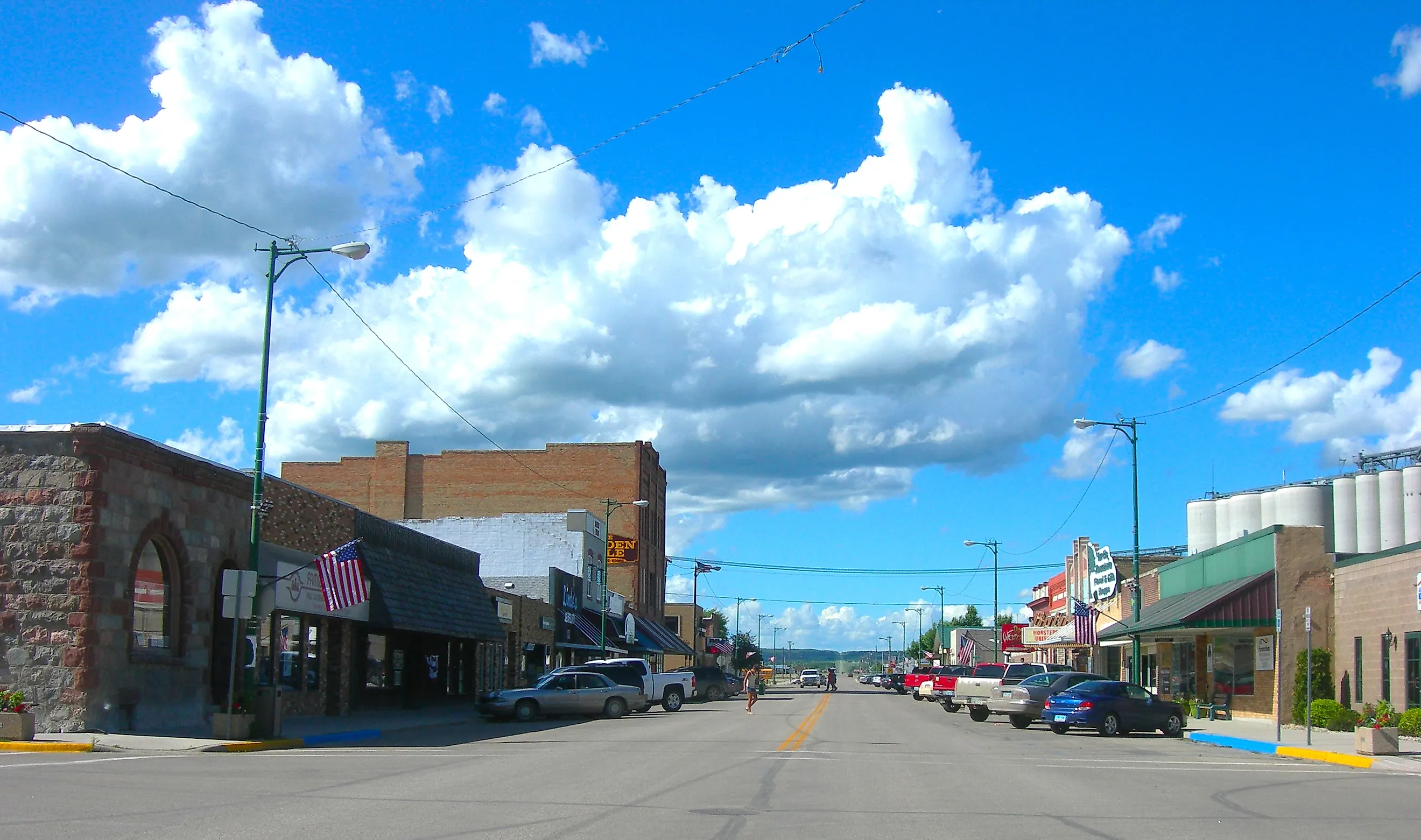
10 North Dakota Small Towns With Unmatched Friendliness
In Medora the whole town turns out for the North Dakota summer, and barely 100 people live there year round. That ratio says a lot about how these towns treat a visitor. Rugby has spent decades telling travelers they are standing at the center of the continent. Mandan still hosts a summer gathering where Mandan tribal members teach flute music and earthlodge skills by hand. Jamestown named itself after a buffalo and built a museum to keep the welcome going. The friendliness here lives in the people who staff the fairs and keep the cultural calendars full.
Medora

Medora is North Dakota's smallest city and one of its most remarkable, a frontier town at the gateway to Theodore Roosevelt National Park that fills up each summer with energy well beyond its permanent population of around 100. The park's South Unit covers more than 46,000 acres of Badlands terrain where visitors may see bison, feral horses, and elk, with trails that drop off the ridgelines toward the river bottoms.
At the edge of town, the Chateau de Mores State Historic Site preserves the 26 room summer home built in 1883 by French nobleman Antoine de Mores, who founded Medora and established a cutting edge refrigerated meatpacking operation here. Each summer evening, the Medora Musical fills the open air Burning Hills Amphitheatre with a long running outdoor variety show that has become the most attended ticketed event in the state. The North Dakota Cowboy Hall of Fame, on Medora's main street, rounds out the visit with rotating exhibits on ranching traditions, rodeo, and Native American culture across the region.
Jamestown

Jamestown calls itself "Buffalo City" without exaggeration. A 26-foot-tall, 60-ton concrete buffalo statue, erected in 1959 and visible from across the south side of town, sets the tone for a community whose identity runs deep in the story of the American bison. The city anchors an entire complex that includes the World's Largest Buffalo monument, the Frontier Village, and the North American Bison Discovery Center, formerly the National Buffalo Museum, relaunched in 2024 under a new name with updated exhibits. The Bison Discovery Center documents the near extinction and conservation recovery of the North American bison, with a live plains bison herd grazing the pasture beside the grounds. The center is also tied to White Cloud, the rare albino bison who lived with that herd for nearly two decades until her death in 2016 and is now preserved on display inside the museum.
Frontier Village has a collection of historic buildings, including a schoolhouse, church, general store, and railroad depot. The Arrowwood National Wildlife Refuge, located north of town, provides birding, fishing, and wildlife viewing across 15,934 acres along the James River. Each summer, the Stutsman County Fair brings the wider community together for livestock events, entertainment, and fairground attractions.
Mandan

Mandan sits just across the Missouri River from the state capital, Bismarck. Fort Abraham Lincoln State Park, established in 1907, North Dakota's oldest state park, encompasses two major historic sites within its grounds. On A Slant Village, a Mandan settlement occupied from the late-16th century until a devastating smallpox epidemic in 1781, is preserved with six reconstructed earth lodges, including a large Council Lodge. Self-guided and ranger led tours interpret daily life in the village, which the Mandan people still consider sacred today. Each August, the park hosts Earthlodge Traditions, a full day cultural event featuring hands on activities, traditional skills demonstrations, Mandan flute music by enrolled tribal member Matt Schanandore, and storytelling inside the reconstructed earth lodges.
Bottineau

Bottineau is a small county seat in North Dakota's Turtle Mountains and serves as the essential base for two of the region's most singular destinations. Lake Metigoshe State Park, located 14 miles northeast of town, covers 1,500 acres on the shores of a glacier formed lake within a mixed Turtle Mountain forest. Over 13 miles of trails wind through woodlands and wetlands that support plant and bird species rarely found elsewhere in the state, and several are on North Dakota's rare species list.
Kayaking, canoeing, and fishing occupy the warmer months, while winter delivers cross country skiing, snowshoeing, fat tire biking, and ice fishing. The park also contains the Old Oak Trail, North Dakota's first nationally recognized trail. A 3.7-mile snowmobile trail corridor connects the park northeast to the nearby International Peace Garden, a 2,339-acre, cross-border park established in 1932 along the US-Canada border. The garden plants tens of thousands of flowers annually and features an 18-foot floral clock, formal gardens, a peace chapel, and international displays.
Minot

Minot is North Dakota's fourth largest city with a hint of Scandinavian cultural heritage. The Scandinavian Heritage Park, curated year round by the Scandinavian Heritage Association, is the only outdoor museum honoring all five Nordic countries. The park's centerpiece is a full scale replica of Norway's 1250 Gol Stave Church, accompanied by a 25-foot Dala horse, a Heritage House Museum, and the Larson Visitors Center, all telling the story of Nordic settlement on the northern plains.
The North Dakota State Fair, held each July on the Minot State Fairgrounds, is the largest annual event in North Dakota, drawing more than 300,000 attendees across nine days of live music, agricultural exhibits, rodeo, and carnival programming. The Magic City Discovery Center, a hands on children's museum, and the Dakota Territory Air Museum add further depth to a city that consistently delivers more than visitors expect.
Rugby

Rugby is the geographic center of North America, or close enough that the town has held the designation for decades and built a genuine identity around it. The Geographical Center of North America marks the spot, and as the North Dakota Geological Survey has noted, the site continues to draw travelers from across the continent who stop specifically to say they've stood in the middle of the landmass. The monument is free, accessible year round, and consistently popular with cross country road trippers.
Prairie Village Museum preserves more than 20 historic buildings and exhibition spaces arranged around a recreated prairie town setting near Highway 2. Open May 15 through September 15, the complex includes a schoolhouse, church, depot, and general store staffed by knowledgeable guides. The hand-painted interior dome of Rugby's Pierce County Courthouse, built in the early 20th century, depicts scenes from North Dakota's history.
Valley City

Valley City has earned the nickname "City of Bridges" through its collection of bridges over the Sheyenne River, including the Hi-Line Railroad Bridge, completed in 1908 at 3,860 feet long. The Sheyenne River Valley National Scenic Byway, North Dakota's first nationally recognized scenic byway, covers 63 miles of rolling valley terrain with 41 interpretive panels along the route.
The Barnes County Museum, housed in a converted downtown department store of about 18,000 square feet, greets visitors with Gundy the Triceratops, a complete fossil skeleton discovered in the Dakotas. Valley City proudly holds North Dakota's only WWII Heritage City designation. Each March, the North Dakota Winter Show, one of the state's oldest and longest-running agricultural shows, draws ranchers, exhibitors, and visitors for a week of competitive events and community programming.
Wahpeton

Wahpeton sits where the Bois de Sioux and Otter Tail rivers form the Red River in southeastern North Dakota; the town is named after a Dakota word meaning "leaf dwellers." Chahinkapa Zoo, established in 1933, is the first zoo ever built in North Dakota. The zoo houses over 200 animals representing roughly 70 species across six continents, including Bengal tigers, orangutans, lemurs, kangaroos, camels, and North Dakota's only white rhinos, two Southern white rhinos that arrived in 2018. "Wahpper," a large fiberglass catfish sculpture near the riverfront, celebrates the region's strong fishing culture along the Red River corridor and qualifies as a genuine roadside landmark.
Devils Lake

Devils Lake is anchored by a 165,000-acre, inland lake that supports some of the most productive freshwater fishing in the American West, drawing anglers year round in pursuit of walleye, yellow perch, northern pike, and white bass. Fort Totten State Historic Site, located 14 miles south on the Spirit Lake Nation Reservation, is widely recognized as one of the best preserved frontier military posts in the Trans Mississippi West. Built beginning in 1867, with construction continuing into the early 1870s, the fort subsequently served as a Native American boarding school, tuberculosis preventorium, and reservation school.
White Horse Hill National Game Preserve, formerly Sullys Hill National Game Preserve, protects bison, elk, prairie dogs, and waterfowl across nearly 1,700 acres. A 4.5-mile auto tour and self-guided walking trails make the preserve accessible to all visitors. Grahams Island State Park, on the north shore of the lake, offers camping, swimming beaches, hiking trails, and a full boat launch facility. Fort Totten Days, an annual powwow and cultural celebration hosted by the Spirit Lake Nation each summer, draws participants and spectators from across the region.
Dickinson

Dickinson is the economic hub of western North Dakota and the most practical base for exploring the state's Badlands interior. The Badlands Dinosaur Museum at Dickinson Museum Center brings paleontology to the public in a 13,400-square-foot facility housing complete dinosaur skeletons, fossilized specimens excavated from the Judith River Formation, international award winning feathered dinosaur models, and an open public preparation lab where active research is visible to visitors. Established in 1992 as the Dakota Dinosaur Museum and later incorporated into the Dickinson Museum Center, the Badlands Dinosaur Museum is open year-round.
For those who want to go further, the North Dakota Geological Survey offers annual Public Fossil Dig programs in the Little Badlands south of Dickinson, a 30-million-year-old Oligocene site where participants have uncovered hornless rhinos, three toed horses, and fossil species new to science. The Patterson Lake Recreation Area provides swimming, fishing, picnicking, and disc golf just outside of downtown. Each summer around Independence Day, Roughrider Days draws the broader community together for western heritage events, including PRCA rodeo, parades, live entertainment, and carnival programming.
Fabulous, Friendly North Dakota
North Dakota's small towns ask very little of the visitor, no advanced planning, no peak season timing, and no reservation months ahead. What they offer in return is specificity and sincerity in equal measure. Valley City earns its "City of Bridges" nickname through its collection of bridges over the Sheyenne River, backs it with North Dakota's first nationally recognized scenic byway, and adds a Barnes County Museum anchored by a complete triceratops skeleton that most visitors stumble upon with genuine surprise.
Wahpeton's Chahinkapa Zoo houses over 200 animals, including the state's only white rhinos, all within a park that also runs a restored antique carousel each summer. Devils Lake places visitors within reach of one of the best-preserved frontier military posts in the Trans-Mississippi West, White Horse Hill National Game Preserve, with free-roaming bison and elk, and a lake known for walleye fishing in every season. North Dakota's friendliest communities have been quietly building their case for years, and the 10 towns on this list make it convincingly.