10 Most Peaceful Small Towns In Upstate New York
Between the concrete canyons of New York City and the Canadian border lies a region that moves at a fundamentally different pace. Upstate New York spreads across glacial valleys, along ancient mountain ridges, and around lakes so clear you can count stones on the bottom. The small towns here grew up around health resorts, Olympic dreams, artistic colonies, and farmland so rich it once fed a young nation. Many have populations measured in the low thousands, sidewalks that end at forest trails, and main streets where the same families have run businesses for generations. What follows are ten places where the landscape itself seems to slow time down.
Lake Placid

Framed by the High Peaks of the Adirondacks, Lake Placid is known for its Olympic history. The Olympic Center, home of the Herb Brooks Arena where the famous Miracle on Ice took place, still draws visitors who sit in those same seats and imagine the roar of the crowd. The Lake Placid Olympic Museum displays medals, uniforms, and artifacts from both games. Main Street runs alongside Mirror Lake, whose surface on still mornings reflects the High Peaks so precisely that photographs appear doubled. Winter brings cross-country skiers to Mount Van Hoevenberg and alpine enthusiasts to Whiteface Mountain, which boasts the highest vertical drop east of the Rockies. Summer transforms Mirror Lake into a swimming and paddling destination, with kayak rentals available along the shore. The John Brown Farm State Historic Site, the final resting place of the famed abolitionist, sits just outside the village center.
Skaneateles

Skaneateles' name comes from an Iroquois word meaning "long lake," and Skaneateles Lake stretches 16 miles through three counties, its waters so pristine they supply drinking water to Syracuse without filtration. The village sits at the northern tip, where 19th-century storefronts house boutiques and restaurants along Genesee Street. The Sherwood Inn, operating since 1807, serves dinner with views of the north shore. The Krebs, founded in 1899 and revived in 2010, remains one of the finest farm-to-table dining experiences in the Finger Lakes. Thayer Park and Clift Park provide lakefront access for picnics and sunset watching. Boat cruises aboard the Judge Ben Wiles depart from the village pier, offering sightseeing and dinner options. The Charlie Major Nature Trail follows a former railroad bed through wetlands where herons wade and redwing blackbirds perch. Each December, Dickens-costumed characters populate the streets for a holiday celebration that feels lifted from another century.
Cooperstown

Set on the serene shores of Otsego Lake, Cooperstown carries a reputation that far exceeds its small size. The National Baseball Hall of Fame and Museum draws hundreds of thousands of visitors annually to its three floors of artifacts and exhibits, though the myth that baseball was invented here has long been debunked. Beyond the diamond, the Fenimore Art Museum houses American folk art and Native American collections in a stone manor overlooking the lake. Across the road, Fenimore Farm and Country Village recreates mid-19th-century rural life with costumed interpreters demonstrating blacksmithing, broom-making, and printing. Brewery Ommegang, a Belgian-style farmstead brewery four miles south of the village, hosts summer concerts on its grounds. The Glimmerglass Festival stages opera and musical theater each summer at the Alice Busch Opera Theater, a venue built specifically for performances with the lake visible through open walls.
Cold Spring

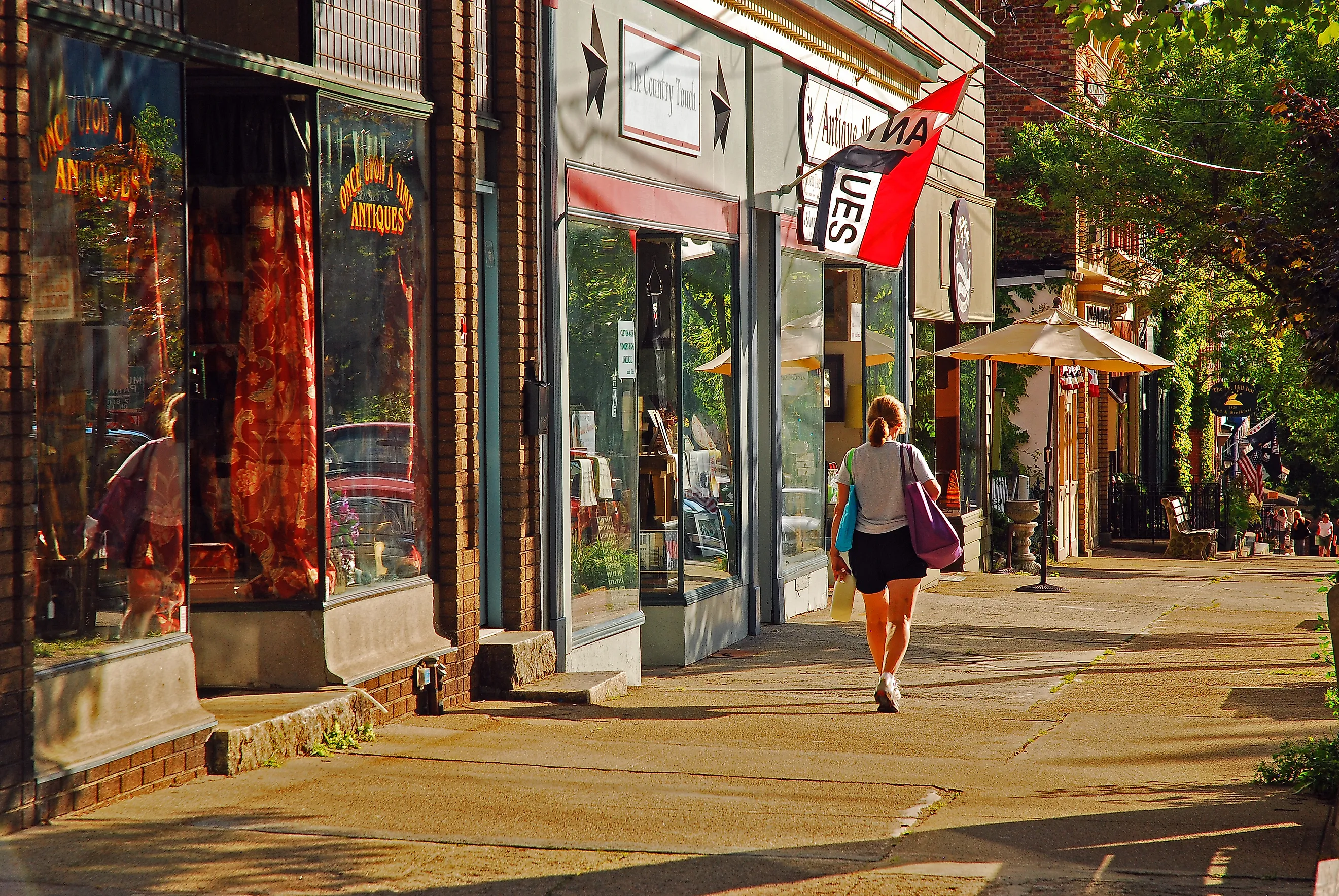
Sitting on the banks of the Hudson River, Cold Spring draws visitors with its well-preserved 19th-century architecture and mountain scenery. The Cold Spring Historic District preserves 19th-century buildings constructed when the West Point Foundry produced cannons and Parrott rifles for the Union Army. That foundry's ruins now form the West Point Foundry Preserve, a waterfront park with interpretive trails through industrial archaeology. Main Street slopes down to a riverside gazebo where Metro-North passengers step off trains from Manhattan and immediately face the Hudson Highlands. Hudson Highlands State Park Preserve encompasses over 8,000 acres and 70 miles of trails, including the Washburn Trail up Bull Hill and the Cornish Estate Trail to abandoned mansion ruins. Rincon Argentino/Cafe Sumak is a cozy cafe known for its authentic Argentinian fare, including a wide variety of empanadas, sandwiches, and traditional desserts like alfajores . A stone's throw from the Hudson River, it's a popular spot for coffee and sweet treats. Meanwhile, just down the street, the Cold Spring Coffeehouse provides hikers with locally roasted coffee and fresh-baked pastries before they head for the trails.
Watkins Glen

Watkins Glen is at the southern tip of Seneca Lake is defined by a dramatic geological wonder and the roar of a legendary racetrack.Watkins Glen State Park funnels visitors along the Gorge Trail, which descends 400 feet past 200-foot cliffs and behind 19 waterfalls in less than two miles. Stone staircases carved by Civilian Conservation Corps workers in the 1930s wind beneath Cavern Cascade and Rainbow Falls. Beyond the park, the Seneca Lake Wine Trail connects over 30 wineries specializing in Riesling and cool-climate varietals. Watkins Glen International raceway, southwest of the village, hosts NASCAR and sports car events where engines echo off the surrounding hills. For a classic Italian meal, Jerlando’s Ristorante & Pizza Co has been a family-run favorite for generations, while Scuteri's Cannoli Connection is the local go-to for freshly filled cannoli and other Italian pastries.
Woodstock

Famed for the 1969 music festival that bore its name (though it was actually held 60 miles away), this town in the Catskill Mountains has long been a haven for artists and free spirits. The creative legacy is visible along Tinker Street, lined with art galleries, unique boutiques, and shops like the Golden Notebook independent bookstore. Woodstock has been a haven for artists and free spirits for over a century, a legacy visible in its Tinker Street galleries and the work shown at the Woodstock Artists Association & Museum. The Byrdcliffe Colony, founded in 1902, brought Arts and Crafts movement practitioners to the mountainsides, and their creative legacy persists in galleries along Tinker Street. The Overlook Mountain Trail climbs 2.5 miles of old carriage road to the ruins of the Overlook Mountain House, a hotel that burned twice before abandonment, and a fire tower with views stretching to five states. Karma Triyana Dharmachakra, a Tibetan Buddhist monastery at the top of Meads Mountain Road, welcomes visitors for meditation and teaching sessions. For a taste of the town's bohemian spirit, Tinker Taco offers inventive tacos and margaritas in a lively setting.
Saranac Lake

In the early 20th century, tuberculosis patients traveled to Saranac Lake for fresh mountain air, and "cure cottages" with wrap-around porches still line residential streets. As the "Capital of the Adirondacks," this town retains a genuine, year-round artistic community. The Ice Palace at the Saranac Lake Winter Carnival, running since 1897, ranks among the oldest winter festivals in the eastern United States. Each February, volunteers cut ice blocks from Lake Flower and stack them into an illuminated palace that draws photographers from across the region. The Adirondack Carousel features hand-carved figures of local wildlife: black bears, moose, loons, and even the infamous Adirondack black fly. The Robert Louis Stevenson Memorial Cottage, where the author spent the winter of 1887 writing The Master of Ballantrae, operates as a museum. The Wild Center, 20 minutes south in Tupper Lake, offers the Wild Walk, a treetop trail with suspended bridges and giant spider web nets. Ampersand Mountain's summit provides panoramic views across the lake-studded landscape.
New Paltz

French Huguenot refugees fleeing religious persecution established this settlement in 1678, and seven of their stone houses still stand along Historic Huguenot Street, a National Historic Landmark District. The village sits beneath the Shawangunk Ridge, whose white quartz cliffs rise dramatically from the surrounding farmland. Mohonk Preserve, with over 8,000 acres of forest and more than 1,000 climbing routes, draws rock climbers from around the world to scale formations known collectively as "the Gunks." The preserve's Lemon Squeeze Trail threads hikers through a narrow rock crevice before emerging at clifftop viewpoints. Mohonk Mountain House, a Victorian castle resort founded in 1869, opens its grounds to day visitors for hiking and lake access. Minnewaska State Park Preserve protects sky lakes, waterfalls, and 50 miles of footpaths along the ridge. The Wallkill Valley Rail Trail passes through town on a converted railroad corridor. Water Street Market, an open-air collection of shops and eateries, occupies renovated buildings near the Wallkill River.
Canandaigua

Canandaigua stretches along the northern shore of its namesake lake, a Finger Lake whose name, meaning "The Chosen Spot," reflects its deep Iroquois significance. The main street, lined with historic buildings, leads directly to Canandaigua City Pier, a popular spot for a walk with water views. Sonnenberg Gardens and Mansion State Historic Park spreads across 50 acres of Victorian gardens surrounding an 1887 summer home, with themed sections including a Japanese garden and rose garden. The Granger Homestead and Carriage Museum preserves an 1816 Federal-style mansion and over 70 horse-drawn vehicles. Kershaw Park provides public beach access, walking paths. The Canandaigua Lady, a replica paddlewheel boat, offers lake cruises from May through October. The Canandaigua Lake Wine Trail loops around the lake with stops at family-owned vineyards, and New York Kitchen offers cooking classes and tastings featuring products from across the state.
Aurora

Overlooking Cayuga Lake, the village of Aurora is distinguished by its historic architecture and the whimsical, hand-painted ceramics of the MacKenzie-Childs flagship store and farm. The Inns of Aurora, a collection of restored 19th-century buildings transformed by philanthropist Pleasant Rowland, includes the Aurora Inn and E.B. Morgan House, both with lakefront dining. The Long Point Winery pours regional varietals on a terrace overlooking the water. Swimming, kayaking, and fishing occupy summer days, while autumn brings leaf-peepers to the slopes above the lake. The village has no chain stores, no fast food restaurants, and no particular hurry to change that. A stroll down Main Street reveals a collection of 19th-century buildings that house boutique shops, while the Morgan Opera House continues its long-standing role as a local cultural venue.
Peaceful Towns Upstate
These ten towns share a common quality that no guidebook metric can capture: the ability to make time feel elastic. An afternoon in Cooperstown stretches across a baseball museum and a lakeside sunset. A morning in Watkins Glen compresses millennia of geological history into a two-mile gorge walk. The distances between these places encourage slow travel along routes that curve around glacial lakes and climb mountain passes where cell signals fade, and radio stations crackle. That disconnect from constant connection may be the most valuable thing upstate New York has to share. Pack a cooler, fill the tank, and leave the itinerary loose.